
Understanding Online Sales Tax in the United States
A practical guide to how sales tax applies to online shopping, for both everyday consumers and ecommerce businesses.
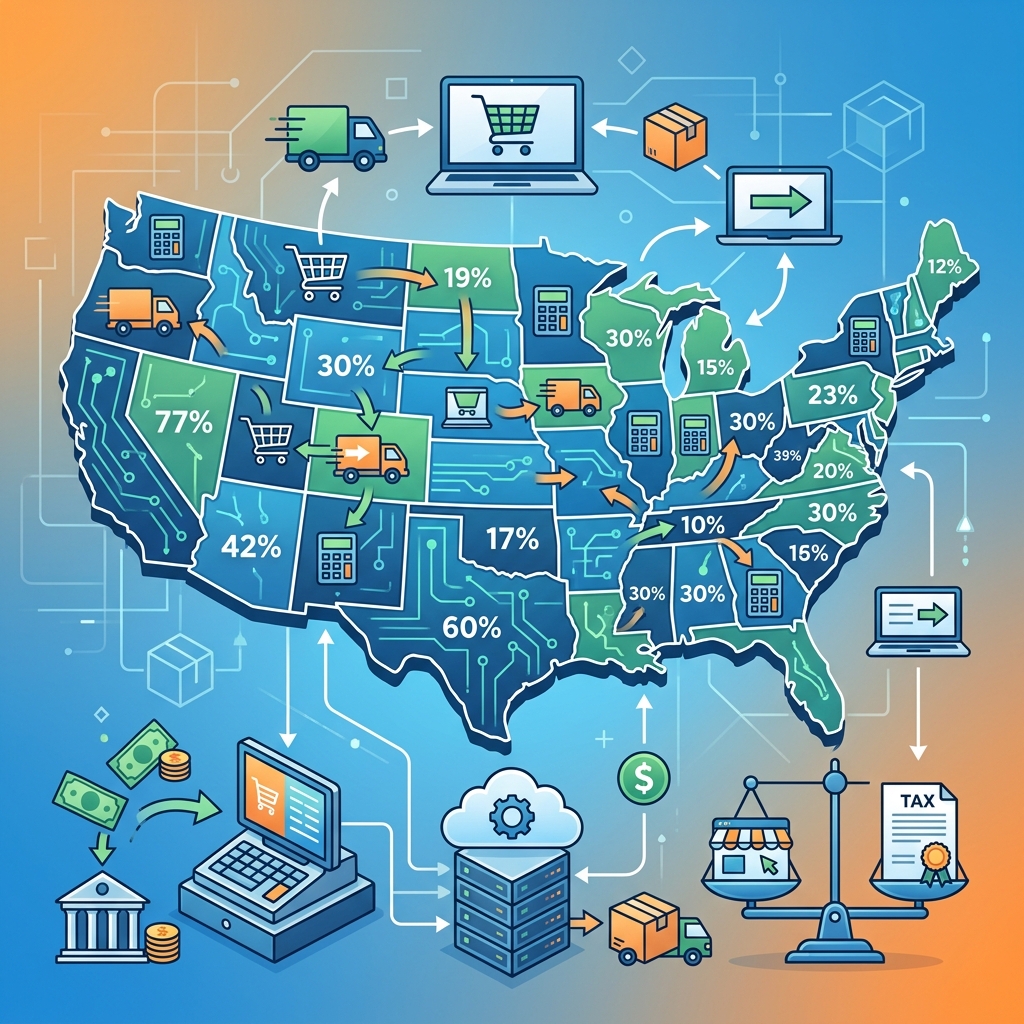
Online shopping has transformed how people buy goods and services, but it has also raised important questions about sales tax and who is responsible for paying it. For years, many consumers assumed that buying on the internet meant tax-free purchases. Today, that assumption is rarely correct. Most states treat online transactions very similarly to purchases made in physical stores, and both buyers and sellers have legal obligations when it comes to sales and use tax.
Sales Tax Basics: What Is Being Taxed?
In the United States, sales tax is generally imposed by states and local governments on the retail sale of tangible personal property and, in some jurisdictions, certain services. State revenue agencies administer these taxes, often alongside local city and county taxes, so the final rate a consumer pays can vary significantly even within the same state.
When a purchase is not taxed at the point of sale, many states impose a companion tax called use tax. Use tax typically applies when a consumer buys taxable items from an out-of-state seller that did not collect sales tax and then uses, stores, or consumes those items in the buyer’s home state.
- Sales tax: Collected by retailers on taxable sales made within their jurisdiction.
- Use tax: Paid by buyers when sales tax was not charged on a taxable item brought into their state.
This framework allows states to tax consumption of goods regardless of whether they are purchased online, in person, by phone, or via mail order.
How Online Purchases Are Treated Under State Law
Despite the growth of ecommerce, states generally do not provide a broad exemption for internet sales. Online purchases are treated similarly to other retail transactions: if the item is taxable and the buyer is located in a state with a sales tax, then tax is usually due.
Key principles that shape how online sales tax works include:
- Taxability of the item – Common consumer goods, electronics, clothing, and many services can be taxable, depending on state law.
- Location of the buyer – Most states apply tax based on where the customer is located or where the item is delivered; this is often called destination-based sourcing.
- Seller’s connection to the state – A seller must typically have nexus, or a sufficient connection to the state, before the state can require the seller to collect tax.
Because every state has its own rules and definitions, online sellers must analyze each jurisdiction where they make sales to determine whether they have obligations to collect, remit, and report tax.
From Physical Nexus to Economic Nexus
Historically, states could only require a business to collect sales tax if the business had a physical presence in that state. This rule came from earlier court decisions involving mail-order retailers. In practice, that meant an out-of-state seller without stores, warehouses, or employees in a state often did not have to collect tax from customers located there.
In 2018, the U.S. Supreme Court’s decision in South Dakota v. Wayfair, Inc. changed this framework. The Court held that states may require remote sellers to collect sales tax even if they lack physical presence, as long as the seller meets thresholds for economic activity in the state.
| Concept | Before Wayfair | After Wayfair |
|---|---|---|
| Physical nexus | Required presence such as a store, warehouse, or employees in the state. | Still relevant: physical presence clearly creates tax obligations. |
| Economic nexus | Not recognized; remote sellers often avoided collection duties. | States can impose collection requirements based on sales volume or transaction count. |
| Remote seller obligations | Limited to states where the seller had physical nexus. | Broader: many states require collection when sellers exceed thresholds (e.g., $100,000 in sales). |
Following Wayfair, nearly all sales-tax states adopted economic nexus rules. Many states use thresholds such as $100,000 in annual sales or 200 separate transactions into the state, while others set higher amounts like $500,000.
Understanding Nexus: When Must Sellers Collect Tax?
Nexus is the legal standard that determines whether a state can require a seller to register, collect, and remit sales tax. A seller may create nexus in several ways:
- Physical presence nexus: Owning or leasing property, operating stores or warehouses, or having employees in the state.
- Economic nexus: Exceeding a state’s sales or transaction threshold over a specified period, even without physical presence.
- Inventory and marketplace presence: Storing goods in third-party fulfillment centers or using marketplace platforms that trigger nexus.
Once a seller has nexus, states generally require several steps:
- Register for a state sales tax permit before collecting tax.
- Charge the appropriate tax rate on taxable sales to buyers in the state.
- File periodic sales tax returns and remit the taxes collected.
- Maintain records showing how tax was calculated and which transactions were taxable or exempt.
Origin-Based vs Destination-Based Tax Rules
States use different methods to decide which tax rate applies to a particular sale. Two common approaches are origin-baseddestination-based sourcing.
- Origin-based sourcing: Tax is calculated based on the seller’s location within the state. If a seller operates from a city with a particular combined state and local rate, that rate may apply to all in-state shipments.
- Destination-based sourcing: Tax is determined by the delivery address or where the buyer takes possession of the goods. This is the more common approach for online sales and ensures the tax matches the buyer’s locality.
Most states follow destination-based rules for remote sellers, but there are exceptions. Understanding which sourcing method applies is critical for correctly calculating tax on online orders and avoiding under-collection or over-collection.
Obligations of Online Sellers
For ecommerce businesses, complying with sales and use tax laws is an ongoing responsibility. States expect sellers to treat taxable online sales the same way as taxable store sales.
Typical obligations for online sellers include:
- Determining where you have nexus: Review physical operations, economic thresholds, and marketplace relationships.
- Registering before collection: Obtain necessary permits or licenses from state revenue agencies.
- Configuring tax on all sales channels: Ensure websites, marketplaces, and point-of-sale systems are set up to collect tax in nexus states.
- Distinguishing taxable versus exempt sales: Apply exemptions for resale, certain categories of goods, or buyers such as nonprofits only where permitted.
- Filing and remitting on schedule: Submit returns and pay collected taxes by the deadlines established by each state.
Marketplace facilitators—platforms that bring buyers and sellers together—may themselves be required to collect and remit tax on behalf of third-party sellers. In many states, these platforms calculate and charge tax, but businesses must confirm which obligations transfer to the marketplace and which remain with the individual seller.
Responsibilities of Buyers: When Use Tax Applies
Even when a seller does not collect sales tax on an online purchase, the transaction is rarely tax-free. In many states, the buyer must self-assess and pay use tax on taxable items brought into the state.
Common scenarios where buyers may owe use tax include:
- Buying from an out-of-state seller that does not collect the buyer’s home state tax.
- Ordering goods online for delivery to a state where the seller lacks nexus.
- Purchasing taxable items for use in a state while traveling, and later bringing those items home.
States often allow individuals to report use tax on their income tax returns or through separate forms provided by the state revenue agency. Businesses may be required to track untaxed purchases and pay use tax periodically.
Examples of State Approaches to Online Sales Tax
Although principles are broadly similar, individual states differ in how they implement online sales tax rules. A few examples illustrate these variations:
- California: Treats internet sales of tangible goods like any other retail transaction; taxable sales delivered in California are generally subject to sales or use tax unless a specific exemption applies.
- Texas: Imposes state and local sales and use tax on taxable items delivered or brought into Texas, including online orders. Sellers must collect tax on taxable items sold online within Texas, and buyers must pay use tax when sellers do not collect.
- Economic thresholds generally: Many states require remote sellers to collect tax once they exceed $100,000 in sales or 200 transactions in a year, while some states set higher thresholds such as $500,000.
These differences mean that a single online retailer may face very different obligations from state to state, depending on sales volume, product mix, and business structure.
Digital Products and Online Services
Online commerce does not only involve physical goods. Many businesses sell digital products, subscriptions, or software as a service (SaaS). States vary widely in whether and how they tax these items.
Factors that influence tax treatment include:
- Whether a digital product is considered a taxable service or a type of tangible property under state law.
- Whether access is temporary (e.g., streaming) or permanent (e.g., downloadable software).
- Where the buyer is located and how nexus is defined for remote digital services.
Because there is no unified federal sales tax system for digital goods, businesses must individually review each state’s statutes and guidance to determine taxability. Misclassifying digital sales can lead to either unpaid tax liabilities or unnecessary charges to customers.
Compliance Tips for Ecommerce Businesses
Given the complexity of online sales tax rules, ecommerce businesses benefit from proactive compliance strategies. A structured approach helps minimize risk and ensures accurate tax collection and remittance.
- Map your nexus footprint: Document states where you have physical presence, inventory, marketplace relationships, or meet economic thresholds.
- Centralize tax configuration: Use consistent rules across all selling platforms so that tax is charged correctly regardless of where the order originates.
- Stay informed about law changes: Economic nexus thresholds, marketplace rules, and digital product taxability can change over time.
- Maintain clear records: Keep invoices, exemption certificates, and filing confirmations to support your tax positions in case of audits.
- Consult professionals when needed: Tax advisors and state revenue agency publications can help interpret complex or evolving rules.
Frequently Asked Questions (FAQ)
Do I always pay sales tax when I shop online?
No, not always. Whether tax is charged depends on the taxability of the item, the state where you live, and whether the seller is required to collect tax in that state. However, even if sales tax is not collected, you may still owe use tax on taxable items you bring into your state.
Is online shopping tax-free if the seller is in another state?
Not necessarily. After the Wayfair decision, many states require remote sellers to collect tax once they exceed economic thresholds. If the seller does not collect, the buyer may owe use tax instead.
How can I find the correct tax rate for an online purchase?
The applicable rate often depends on the delivery address. State revenue agencies typically provide online tools or charts to verify combined state and local rates for specific locations.
What is sales tax nexus, and why does it matter?
Sales tax nexus is the level of connection between a business and a state that allows the state to require the business to collect tax. Nexus can arise from physical presence, sales volume, or other activities. It matters because it determines where sellers must register, charge tax, and file returns.
Do marketplace platforms handle sales tax for third-party sellers?
In many states, marketplace facilitators are required to collect and remit sales tax on behalf of the sellers who use their platforms. However, businesses should review state law and marketplace policies to understand which obligations shift to the platform and which remain with the individual seller.
References
- Internet Sales (Publication 109) — California Department of Tax and Fee Administration. 2024-01-01. https://cdtfa.ca.gov/formspubs/pub109/
- Online Orders – Texas Purchasers and Sellers — Texas Comptroller of Public Accounts. 2023-06-01. https://comptroller.texas.gov/taxes/publications/94-171.php
- Ecommerce Sales Tax in 2026: State Breakdown + Requirements — BigCommerce. 2026-02-15. https://www.bigcommerce.com/articles/ecommerce/sales-tax/
- Online Sales Tax: Who Needs To Collect It & How? — Paychex. 2025-11-10. https://www.paychex.com/articles/payroll-taxes/the-need-to-know-about-online-sales-taxes
- A Detailed Guide to eCommerce Sales Tax for U.S. Merchants — Bean Ninjas. 2024-09-01. https://beanninjas.com/blog/us-sales-tax-compliance/
- Sales taxes in the United States — U.S. Supreme Court summary via public sources (Wayfair decision). 2018-06-21. https://en.wikipedia.org/wiki/Sales_taxes_in_the_United_States
- The Complete Guide to Ecommerce and Sales Tax Online — Avalara. 2025-03-01. https://www.avalara.com/us/en/learn/whitepapers/the-complete-guide-to-ecommerce-online-selling.html
Similar Articles








Read full bio of Sneha Tete




