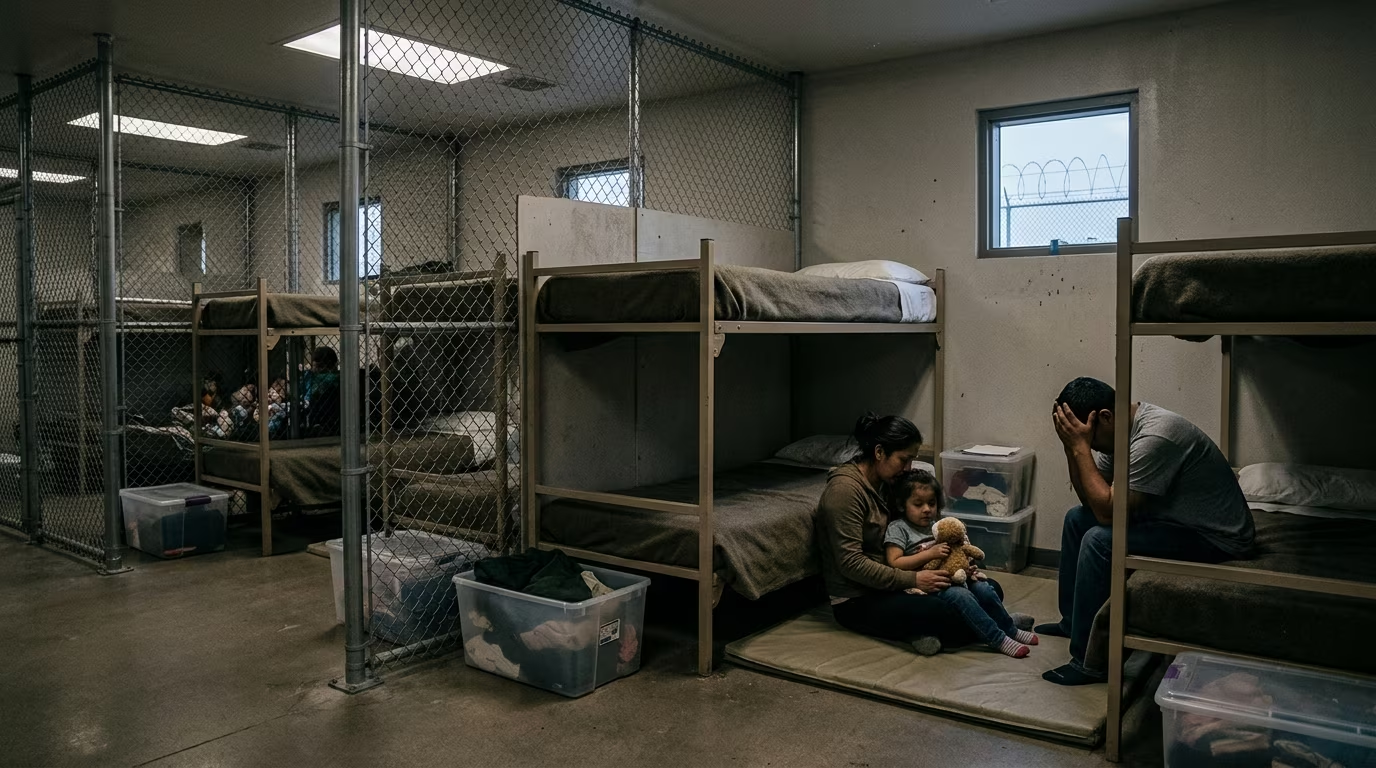
Across the globe, families flee unimaginable circumstances—including targeted violence, extreme poverty, and political instability—in search of safe harbor. Upon arriving at borders seeking asylum, however, a profound and distressing reality often awaits them: institutional confinement. The practice of placing migrant families, including young children and infants, into immigration detention centers has sparked intense humanitarian and legal debates. Instead of finding a supportive environment to process their trauma and navigate complex legal proceedings, many vulnerable populations find themselves subjected to prison-like conditions. This sweeping approach to immigration enforcement raises fundamental questions about human rights, child welfare, and the moral responsibilities of host nations.
This article comprehensively examines the lived realities within family detention facilities, scrutinizing the multifaceted impacts of confinement. We explore how substandard living conditions, restricted access to medical care, and the overarching psychological weight of indefinite detention systematically dismantle family structures and inflict lasting harm on developing minds. By analyzing the structural deficiencies of these facilities and reviewing the consensus of medical and human rights experts, we aim to shed light on why family detention remains one of the most contentious issues in modern immigration policy, and why advocates fervently push for community-based alternatives.
The Intersection of Migration and Institutionalization
For families undertaking perilous journeys to escape severe localized threats, the expectation of a humanitarian reception is frequently replaced by the harsh logistics of institutionalization. Family residential centers—the bureaucratic terminology often used to describe these detention facilities—operate with strict security protocols that closely mirror traditional carceral environments. High fences, heavily monitored movements, constant surveillance, and unyielding daily schedules redefine the existence of those held within.
When a family transitions from being asylum seekers to detainees, they undergo a rapid and disorienting loss of autonomy. The basic tenets of family life are immediately disrupted. Parents, who have spent months or even years protecting their children through harrowing circumstances, are suddenly stripped of their authority and ability to make basic decisions. They cannot determine when their children sleep, what or when they eat, or how they spend their daylight hours. This profound disempowerment is not merely an administrative byproduct; it fundamentally alters family dynamics and deeply unsettles children who rely on their guardians for a sense of safety and predictability.
Moreover, the physical environment of detention inherently breeds anxiety. Facilities are frequently located in remote geographic areas, severely limiting access to outside legal counsel, independent medical professionals, and community support networks. This isolation compounds the inherent stress of navigating a foreign legal system while managing the trauma of their past experiences. The looming threat of deportation, combined with the daily indignities of institutional life, creates an atmosphere characterized by chronic uncertainty and fear. The psychological burden of not knowing when, or if, they will be released weighs heavily on every individual, transforming these spaces into incubators of distress rather than temporary holding solutions.
Medical Care and the Hidden Health Crisis
One of the most alarming aspects of family detention is the systemic failure to provide adequate, timely, and specialized medical care. Within these heavily populated facilities, the health requirements of a diverse and vulnerable population frequently overwhelm the available resources, leading to dangerous lapses in treatment.
Inadequate Healthcare Responses
Detention centers often operate with a generalized approach to healthcare that is ill-equipped to handle the specific needs of pediatric patients or individuals carrying deep physical and psychological traumas from their migration journeys. Reports consistently highlight significant delays in accessing medical professionals, misdiagnoses, and a heavy reliance on rudimentary treatments like over-the-counter pain relievers for severe ailments. Language barriers further complicate this issue; when medical staff cannot effectively communicate with patients, the nuances of a child’s symptoms are easily missed or dismissed.
The U.S. Government Accountability Office reported that oversight and management of immigration detention facilities face ongoing challenges, particularly concerning compliance with national detention standards and the proper analysis of inspection data to address systemic deficiencies. Without rigorous and independent medical oversight, preventable conditions can rapidly escalate. Children suffering from respiratory infections, gastrointestinal issues, or fevers often wait days to see a doctor, while their parents watch helplessly.
Nutritional Lapses and Food Safety
Equally concerning is the nutritional intake provided within these institutions. Proper nutrition is critical for child development, yet the food served in family detention centers is routinely criticized for lacking necessary vitamins, being culturally unfamiliar, or even being served undercooked or spoiled. Reports of dramatic weight loss in young children are common. Toddlers and infants have unique dietary requirements, including access to formula, milk, and soft foods, which are not always consistently or adequately supplied. The inability of mothers to secure safe, nutritious food for their children acts as a constant source of maternal distress and contributes significantly to the physical deterioration of the family unit while in custody.
The Deep Psychological Scars on Migrant Youth
The most devastating and long-lasting impacts of family detention are undoubtedly the psychological scars inflicted upon young, developing minds. Children are exceptionally sensitive to their environments, and the strict, unpredictable, and inherently stressful nature of a detention center is fundamentally incompatible with healthy cognitive and emotional development.
In its foundational 2017 policy statement, which remains the definitive medical standard on the issue, the American Academy of Pediatrics emphasized that no amount of time in detention is safe for a child. Even brief periods of confinement can trigger profound psychological distress. Children in these settings frequently exhibit severe signs of trauma and toxic stress. Unlike normal stress, which can be buffered by the comforting presence of a parent, toxic stress occurs when a child experiences strong, frequent, or prolonged adversity without adequate adult support—because the adults themselves are equally traumatized and disempowered.
Clinical observations of detained children reveal an array of deeply troubling symptoms, including:
- Behavioral Regressions: Loss of previously acquired milestones, such as toilet training or language abilities.
- Emotional Distress: Severe anxiety, debilitating depression, and persistent separation anxiety from parents.
- Sleep Disturbances: Insomnia, frequent night terrors, and an inability to rest securely in loud environments.
Children quickly internalize the powerlessness of their parents and the hostility of their surroundings. They see guards in uniforms dictating their lives, leading to a pervasive sense of fear and a loss of trust in the world around them. The mental health consequences extend far beyond their release. The trauma compounded by detention often requires extensive, long-term psychological intervention to untangle. Post-traumatic stress disorder (PTSD), chronic depression, and severe attachment disorders are frequently diagnosed in youth post-detention. By subjecting children to these environments, systems of immigration enforcement actively jeopardize the future well-being of the very individuals they should be protecting.
Living Conditions: Overcrowding and Lack of Autonomy
The structural and daily living conditions within family detention facilities further exacerbate the trauma of confinement. Many centers utilize dormitory-style housing or large, open pods where multiple families are packed into confined spaces. This lack of privacy means that families are forced to navigate their most vulnerable moments—grieving, dressing, caring for sick children, and experiencing emotional breakdowns—in full view of strangers and facility staff.
Hygiene and sanitation are frequent casualties of overcrowding. Shared bathroom facilities, inadequate access to clean clothing or diapers, and the rapid spread of communicable diseases in close quarters are persistent issues. Sleep deprivation is rampant; constant headcounts, bright fluorescent lights that remain on throughout the night, and the noise of hundreds of distressed individuals make restful sleep impossible.
Moreover, the environment strips away the simplest joys and routines of childhood. Playtime, education, and social interaction are highly restricted and heavily regulated. Educational programs, when they exist, are often rudimentary and fail to meet state standards or accommodate the diverse linguistic and educational backgrounds of the children. The physical space is typically devoid of natural elements, emphasizing concrete, fencing, and locked doors. This sterile, heavily controlled environment stifles a child’s natural curiosity and need for physical activity, replacing it with a mandated docility that is unnatural and harmful to their overall well-being.
Exploring Humanitarian Alternatives to Detention
Given the extensive evidence of the harm caused by family detention, human rights advocates, medical professionals, and legal experts universally call for alternative approaches. Detention is an incredibly costly endeavor, both financially to the taxpayer and morally to society, and it is largely unnecessary for ensuring compliance with immigration proceedings.
The UNHCR’s comprehensive 2012 guidelines remain the authoritative international standard, establishing that detention should always be a measure of last resort and highlighting the necessity of alternatives. Alternative-to-detention (ATD) programs provide a more humane and pragmatic solution. These programs typically involve community-based case management, where families are permitted to live in the community while their asylum claims are processed.
| Aspect | Family Detention Centers | Alternatives to Detention (ATD) |
|---|---|---|
| Environment | Carceral, restricted movement, prison-like | Community-based, open, supportive |
| Cost to Taxpayers | High daily operational costs per person | Significantly lower daily costs |
| Child Welfare | High risk of toxic stress and trauma | Preserves family structure and mental health |
Case managers connect families with legal representation, medical care, school enrollment for children, and necessary social services. This supportive approach significantly reduces the trauma inflicted on vulnerable populations while simultaneously maintaining extraordinarily high rates of compliance with immigration court appearances. By shifting the paradigm from coercion and confinement to support and case management, nations can uphold their border security and immigration processes without sacrificing human dignity and child welfare.
Frequently Asked Questions (FAQs)
What exactly is family immigration detention?
Family immigration detention refers to the government practice of holding noncitizen families—parents and their minor children—in secure, prison-like facilities while their immigration status or asylum claims are being processed. These facilities restrict freedom of movement and dictate daily schedules, operating much like a penal institution despite housing civil immigration cases.
How does confinement affect a child’s mental health?
Confinement has a devastating impact on a child’s mental health. The medical community broadly agrees that detention causes severe trauma. Children often exhibit behavioral regression, depression, anxiety, night terrors, and symptoms of PTSD. The stressful environment and the disempowerment of their parents lead to toxic stress, which can impair long-term cognitive and emotional development.
Are there alternatives to keeping families in detention centers?
Yes, there are highly effective and less expensive alternatives to detention (ATD). These include community-based case management programs where families live in normal communities and receive support from social workers and legal aids. These programs have proven to yield very high compliance rates for court hearings without inflicting the trauma associated with lock-up.
Who monitors the conditions inside these facilities?
Conditions are monitored by a mix of internal government watchdog agencies, such as the Office of Inspector General (OIG) and the Government Accountability Office (GAO), as well as by independent human rights organizations and legal advocacy groups. However, advocates frequently point out that oversight is often insufficient, and systemic issues regarding medical care and living conditions persist despite regular inspections.
References
- Detention of Immigrant Children — American Academy of Pediatrics. 2017-05-01. https://doi.org/10.1542/peds.2017-0483
- Immigration Detention: ICE Can Improve Oversight and Management (GAO-23-106350) — U.S. Government Accountability Office. 2023-01-09. https://www.gao.gov/products/gao-23-106350
- Guidelines on the Applicable Criteria and Standards relating to the Detention of Asylum-Seekers and Alternatives to Detention — UN High Commissioner for Refugees (UNHCR). 2012-01-01. https://www.refworld.org/policy/legalguidance/unhcr/2012/en/87342