
Teen Yearbook Controversy, Underage Parties, and the Law
How a banned yearbook photo, a house party, and underage drinking collided with criminal law and parental responsibility.
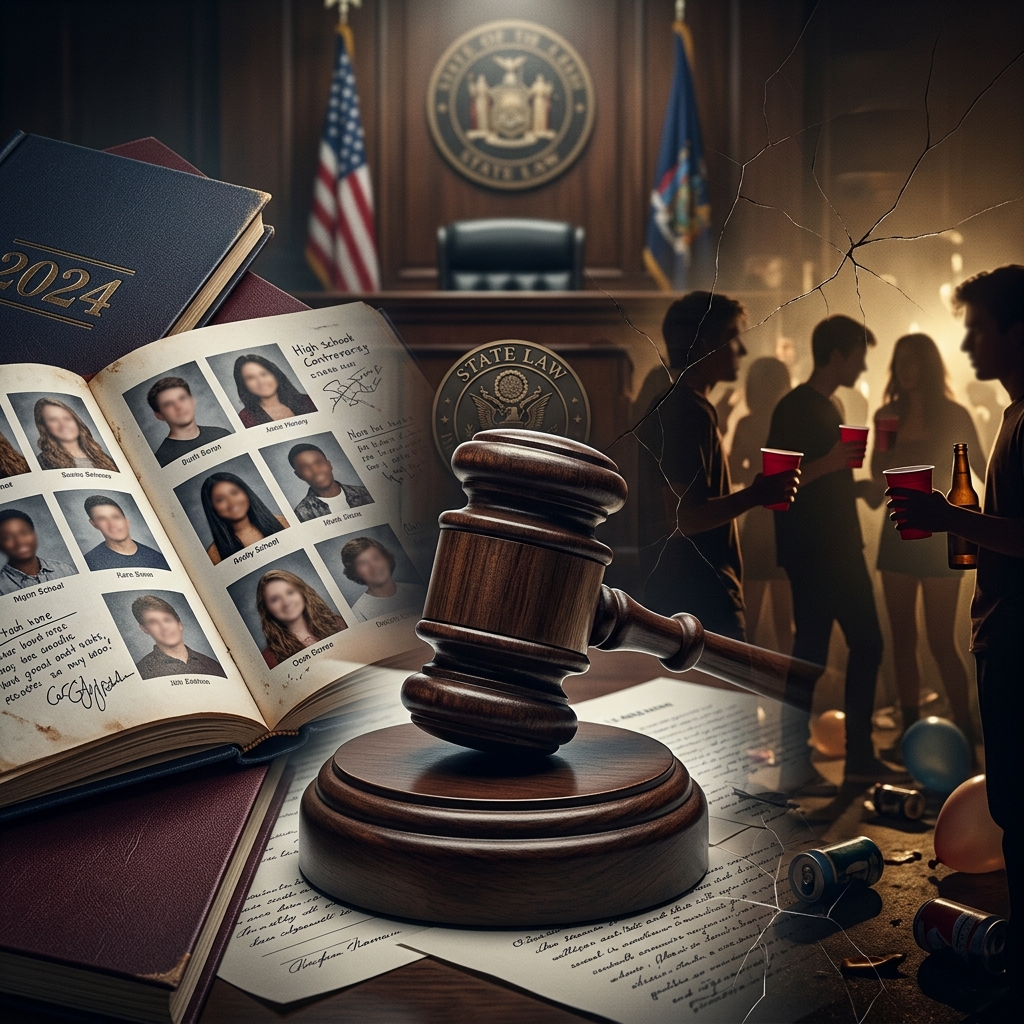
When a high school senior’s provocative yearbook photo was rejected by school officials, the story initially sounded like a familiar clash between student expression and institutional rules. Months later, that same teen and her mother were arrested after police broke up a house party where underage drinking was allegedly widespread, transforming a media curiosity into a cautionary case study in criminal law, parental responsibility, and social host liability.
This article uses that incident as a jumping-off point to explore how the law treats underage drinking, what risks parents face when parties happen at home, and how a public controversy can sometimes overshadow the more serious legal issues underneath.
From Yearbook Dispute to Criminal Charges
To understand why this case attracted attention, it helps to separate two events that became intertwined in media coverage:
- The yearbook photo controversy: a high school senior’s request to include a revealing or “racy” portrait in the senior section of the yearbook was denied by school authorities, sparking debate about student expression and school standards.
- The later house party arrest: several months after graduation, the teen and her mother were arrested when police responded to a late-night party at their home, where officers reported significant underage alcohol consumption.
The media quickly linked these two events, but legally they are distinct. The yearbook dispute was primarily about school discretion and free expression. The party incident, by contrast, involved alleged violations of criminal and public safety laws governing underage drinking and hosting gatherings.
What Happened at the House Party?
According to news reports, officers arrived at a residence following complaints about a large party. They found numerous attendees who appeared to be under the legal drinking age consuming alcohol. The teen, now 18, and her mother were present and both were ultimately arrested.
While details vary by jurisdiction, typical allegations in such scenarios include:
- Underage individuals drinking or possessing alcohol.
- Adults suspected of knowingly permitting or facilitating underage drinking in a private residence.
- Additional conduct such as failure to cooperate with officers, potentially leading to charges like obstructing a police officer or similar offenses.
In coverage of this case, the teen was reported to have been charged with obstructing a police officer, while her mother faced suspicion of contributing to an environment where underage drinking occurred. The specifics of the local charges depend on state and municipal law, but the broad themes match what many U.S. jurisdictions call “social host” or “furnishing alcohol to minors” violations.
Key Legal Concepts: Underage Drinking and Social Host Liability
Almost every U.S. state prohibits possession or consumption of alcohol by individuals under 21, with limited exceptions such as religious use or parental supervision in some jurisdictions. Beyond that, states increasingly focus on the role of adults who provide the setting or the alcohol for underage drinkers.
Underage Drinking Laws
Although statutes vary, common elements include:
- Minimum legal drinking age: 21 in all U.S. states, partly due to the federal National Minimum Drinking Age Act of 1984, which incentivized states to adopt 21 as the minimum age.
- Possession and consumption offenses: minors can be cited or arrested for possessing or consuming alcoholic beverages, often resulting in fines, community service, or diversion programs.
- Fake identification: using false IDs to purchase alcohol is a separate offense and may carry higher penalties.
Social Host and Furnishing Laws
Many states impose liability on adults who host or enable underage drinking, even if they are not the ones physically handing over the alcohol. These laws may target:
- Adults who serve or provide alcohol to minors.
- Adults who knowingly allow underage drinking in their home or on property they control.
- Situations where underage drinking leads to injury or death, potentially raising civil liability (lawsuits) alongside criminal charges.
In some jurisdictions, parents can face charges simply for permitting minors to drink at a party in their home, regardless of whether they personally supplied the alcohol. While intent and knowledge are usually important, enforcement practices can be strict when large gatherings attract police attention.
Parental Responsibility: Where Does the Law Draw the Line?
Cases involving a parent and teen being arrested together tend to raise questions about where parental discretion ends and criminal liability begins. The law generally expects parents to safeguard minors’ wellbeing and not facilitate illegal activity, especially when it involves predictable risks like alcohol and late-night parties.
Key points about parental responsibility in this context include:
- Duty of care: parents have a legally recognized duty to protect minors from foreseeable harm, which often includes preventing underage drinking in their home.
- No “safe” exception for home parties: some parents believe that allowing teens to drink “safely” at home reduces risk. However, many states explicitly reject this approach and still penalize adults who host such gatherings.
- Overlap of criminal and civil liability: if an underage guest is injured or causes harm after leaving a party (for example, a drunk driving crash), parents or hosts may face lawsuits in addition to criminal charges.
The case involving the yearbook photo teen highlights how quickly a parent’s decisions during a social event can move from private judgment to public scrutiny and legal consequences.
Media Narratives vs. Legal Reality
Because the teen had already drawn attention over her banned yearbook photo, later reports about her arrest with her mother tended to frame the story as a continuation of a rebellious narrative. Yet the legal system is less interested in the symbolism of a senior portrait and more focused on concrete behaviors like supplying alcohol, hosting large parties, and responding to police commands.
| Media Angle | Legal Angle |
|---|---|
| Teen identity as “racy yearbook photo” student | Assessment of conduct at a specific party (underage drinking, obstruction, hosting) |
| Debates about expression, sexuality, and censorship | Application of statutes on alcohol, minors, and police interaction |
| Human-interest storyline linking school history and later arrest | Discrete criminal case with defined charges and potential penalties |
Understanding this difference can help observers avoid conflating moral debates over clothing or photography with the more concrete legal standards that govern public safety and criminal responsibility.
Common Charges in Underage Party Situations
Based on comparable cases and general patterns, a house party involving minors and alcohol can lead to a range of charges or citations:
- Minor in possession of alcohol: against guests under the legal drinking age.
- Obstructing a police officer: against individuals who interfere with or refuse lawful commands during an investigation.
- Contributing to the delinquency of a minor: against adults who encourage or allow unlawful behavior by minors.
- Furnishing alcohol to minors: when adults provide or make alcohol available to those under 21.
- Noise or nuisance violations: tied to loud or disruptive gatherings, often handled at the municipal level.
Even when no one is injured, these charges can have lasting consequences, from fines and probation to a criminal record that may require later expungement.
Preventive Lessons for Families and Teens
While each case is shaped by local law and specific facts, families can draw several practical lessons from incidents like the yearbook-photo teen and her mother’s arrest:
- Know your state’s social host rules: some states impose strict liability on adults who allow underage drinking in their homes, even if they believe they are supervising responsibly.
- Limit party size and composition: large, open-invite gatherings dramatically increase the risk of complaints, police response, and loss of control over who attends and drinks.
- Set clear boundaries with teens: communicate that hosting or enabling underage drinking carries legal risks for both the teen and the parent.
- Plan for safe alternatives: encourage events that do not center on alcohol, especially during key milestones like graduation or prom season.
- Cooperate with officers: regardless of one’s view of a law, resisting or obstructing police often adds separate charges that can be avoided by calm and lawful cooperation.
Yearbook Standards and Student Expression
Although the criminal case is distinct, the original yearbook dispute illustrates how school policies and student self-presentation can clash. Schools typically have written guidelines for acceptable yearbook content, including dress codes and restrictions on images considered sexually explicit or otherwise inappropriate for a school publication.
When a student’s preferred image is rejected, the legal questions revolve less around criminal law and more around:
- School authority: schools generally have broad discretion to set editorial standards for official publications.
- Free expression concerns: while public schools are bound by the First Amendment, courts often permit them to regulate school-sponsored speech more closely than private, personal expression.
- Community norms: administrators consider local expectations about modesty, age-appropriate portrayal, and the school’s public image.
For students, the lesson is that even legally protected expression may not always be welcome in school-sponsored media, especially when it conflicts with established codes of conduct.
Frequently Asked Questions
FAQ 1: Can parents legally host parties where teens drink at home?
In many states, parents cannot legally host parties that involve underage drinking, even in their own home. Some jurisdictions allow limited exceptions (for example, a parent giving alcohol to their own child in a private setting), but these exceptions rarely extend to large gatherings with other minors present. It is essential to check local law rather than assume that supervision makes such parties lawful.
FAQ 2: Does a parent face charges if they did not personally serve the alcohol?
Yes, in some cases. Social host laws often focus on whether the adult knew or should have known that minors were drinking on their property. If a parent permits the party to proceed or ignores obvious signs of underage consumption, they may still face charges, even if the alcohol came from guests rather than the host.
FAQ 3: What does “obstructing a police officer” usually mean?
Obstruction charges typically arise when a person interferes with an officer’s lawful duties, such as refusing repeated commands, giving false information, or attempting to hide evidence. The exact definition is set by statute, but it often does not require physical resistance; verbal or behavioral interference can be enough.
FAQ 4: Is a controversial yearbook photo a criminal issue?
Generally, no. Disputes over yearbook content are usually handled through school policies and administrative processes, not criminal courts. A student may feel censored or treated unfairly, but the legal system typically views such disputes as matters of school governance rather than criminal conduct.
FAQ 5: How serious are underage drinking charges for teens?
Consequences vary widely. Some teens receive citations with fines or mandatory education; others may face probation or have a record that could affect college or employment, depending on whether the offense is later sealed or expunged. While often considered minor, underage drinking charges can accumulate and become more serious when combined with other offenses like driving or obstructing police.
Practical Takeaways for Parents, Students, and Communities
Incidents like the one involving the teen with the racy yearbook photo underscore a broader reality: high-profile controversies can mask everyday legal risks. A photo dispute may grab headlines, but the long-term consequences more often stem from decisions about parties, alcohol, and interactions with law enforcement.
For families, the most constructive response is preventive:
- Explain clearly that underage drinking laws apply at home, not just in bars or public spaces.
- Recognize that hosting parties carries responsibility for guests’ safety, especially when minors are present.
- Encourage teens to express themselves in ways that do not expose them—or their parents—to unnecessary legal risk.
- Stay informed about local ordinances related to noise, gatherings, and alcohol, which are often enforced strictly after complaints.
Although each case is unique, the patterns that emerge from this and similar incidents provide a clear message: understanding the law before a party starts is far easier than explaining decisions after an arrest.
References
- Teen in Racy Yearbook Photo Arrested with Mom — FindLaw. 2012-08-10. https://archive.findlaw.com/legalblogs/criminal-defense/teen-in-racy-yearbook-photo-arrested-with-mom/
- Teen who stirred yearbook photo flap arrested with mom — TODAY. 2012-08-09. https://www.today.com/news/teen-who-stirred-yearbook-photo-flap-arrested-mom-1b5379079
- Sydney Spies, Racy Yearbook Photo Teen, Arrested With Mom — ABC News. 2012-08-09. https://abcnews.go.com/blogs/headlines/2012/08/sydney-spies-racy-yearbook-photo-teen-arrested-with-mom
- Durango Teen With Racy Yearbook Photo & Her Mom Arrested — 99.9 The Point / The Denver Post (reported). 2012-08-09. https://999thepoint.com/durango-teen-with-racy-yearbook-photo-her-mom-arrested-dumb-criminal-of-the-day/
- National Minimum Drinking Age Act — U.S. Department of Transportation / NHTSA (background on minimum drinking age). n.d. https://www.nhtsa.gov
Similar Articles








Read full bio of medha deb


