
Ending Patent Trolls: Supreme Court Solutions?
Can the U.S. Supreme Court finally dismantle the patent troll menace plaguing innovators and businesses?
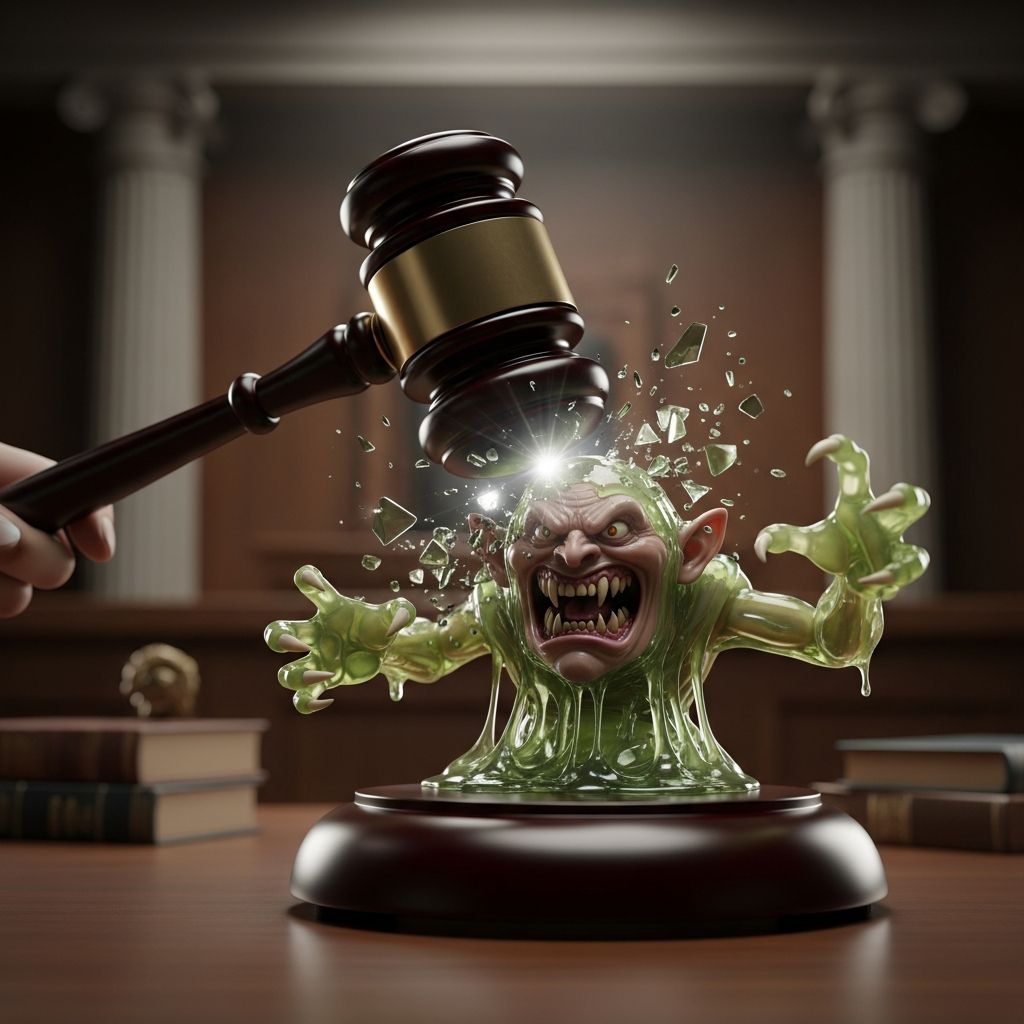
Patent trolls, also known as non-practicing entities (NPEs), acquire patents not to produce products but to extract settlements through aggressive litigation. These entities target small businesses and startups, draining resources with weak claims and driving up costs for innovation. The U.S. Supreme Court has emerged as a pivotal force in addressing this issue, with landmark rulings reshaping venue rules and litigation standards. While not a complete fix, these decisions signal a judicial pushback against abusive practices.
The Rise of Patent Assertion Entities and Their Impact
Patent trolls exploit ambiguities in patent law to file suits in favorable courts, often far from the defendants’ locations. This strategy forces settlements to avoid expensive trials. Small businesses suffer disproportionately, as legal fees can exceed potential judgments. According to analyses, troll activity peaked in districts like the Eastern District of Texas, where pro-plaintiff judges expedited cases.
These entities thrive on low-quality patents, particularly vague software claims, issued by the U.S. Patent and Trademark Office (USPTO). Operating companies face “nuisance suits,” where the cost of defense prompts quick payouts rather than fighting meritless claims. This distorts the patent system’s goal of rewarding genuine inventors.
- High litigation costs: Defendants spend millions even on weak cases.
- Forum shopping: Trolls select venues with plaintiff-friendly juries.
- Innovation chill: Startups avoid R&D fearing troll ambushes.
Supreme Court Strikes at Venue Shopping: The TC Heartland Ruling
In 2017, the Supreme Court in TC Heartland LLC v. Kraft Foods Group Brands LLC clarified venue rules under 28 U.S.C. § 1400(b). Patent infringement suits can only be filed where the defendant resides (i.e., is incorporated) or has a regular place of business and committed infringement acts. This overturned a Federal Circuit expansion that allowed suits nationwide based on minimal sales.
The decision crippled troll havens like Texas’s Eastern District, where over 25% of patent cases clustered. Post-ruling, filings there plummeted, redirecting cases to Delaware, where many corporations incorporate. While trolls adapted by incorporating in Delaware or targeting local venues, the ruling reduced convenience for predatory suits.
| Pre-TC Heartland | Post-TC Heartland |
|---|---|
| ED Texas: Troll hotspot | Decline in troll filings |
| Broad venue access | Limited to incorporation or business sites |
| Easy forum shopping | Defendants in home courts |
Fee-Shifting and Deterrence: Octane Fitness and Beyond
The Supreme Court in Octane Fitness, LLC v. ICON Health & Fitness, Inc. (2014) lowered the bar for awarding attorney fees in “exceptional” patent cases. Previously, fees required proving subjective bad faith; now, courts assess objective unreasonableness or litigation misconduct. This empowers judges to penalize frivolous suits, deterring trolls.
Similarly, eBay Inc. v. MercExchange (2006) ended automatic injunctions for patentees, requiring equitable balancing. Trolls lost their leverage to halt sales, weakening settlement pressure. These rulings promote merit-based litigation over extortion.
Legislative Pushback: Federal Bills Targeting Trolls
Congress has responded with bills like the Innovation Act (H.R. 9), mandating plaintiff disclosure of patent owners to expose shell companies, detailed infringement claims, and early validity checks. It also limits discovery costs and offers stays for small businesses while upstream sellers litigate.
The PATENT Act (S. 1137, 2015) introduced fee-shifting for weak cases, giving courts discretion to award fees unless positions were “reasonably justified.” Though not fully enacted, these built on the America Invents Act’s post-grant reviews, invalidating many troll patents.
State-Level Innovations: Anti-Troll Statutes
Federal gridlock prompted states to act. Over a dozen enacted laws creating bad-faith claims against trolls, imposing fees, bonds, or damages for meritless assertions. These target objective troll traits like demand letters without evidence or serial litigation.
Vermont’s pioneering statute survived challenges, influencing others. Recent Federal Circuit avoidance of preemption rulings suggests viability. States leverage diversity to test reforms, refining tactics against federal inaction.
- Fee recovery for prevailing defendants.
- Bad-faith standards based on litigation history.
- Protection for end-users reselling products.
Reviving Historical Safeguards: The Case for Patent Models
One overlooked reform revives pre-1880 requirements for physical models demonstrating inventions. Trolls struggle with software patents lacking tangible prototypes, filtering vague claims. This restores patent integrity without overhauling statutes.
Global Perspectives and Ongoing Challenges
Internationally, Europe’s Unified Patent Court centralizes enforcement, risking troll abuse but enabling swift remedies. U.S. reforms like Inter Partes Review (IPR) invalidated weak patents, yet trolls persist via better patents and funding.
Challenges remain: uneven fee awards, adaptive trolls, and USPTO’s vague patent issuance. Broader reform needs Alice Corp. v. CLS Bank enforcement against abstract ideas.
Implications for Small Businesses
Reforms shield entrepreneurs by cutting defense costs 30-50% in some districts. Startups can focus on growth, not litigation fears. However, comprehensive USPTO changes are essential for lasting impact.
Frequently Asked Questions
What is a patent troll?
A patent troll buys patents to sue for infringement without making products, seeking settlements over innovation.
Did TC Heartland end patent trolling?
No, it limited venues but trolls shifted to Delaware; it’s a step, not a cure.
Can states regulate patent trolls?
Yes, via anti-bad-faith laws targeting abusive practices without preempting federal rights.
How effective are fee-shifting rules?
They deter weak suits but depend on judicial discretion, yielding mixed results.
What next for patent reform?
Stricter USPTO exams, model requirements, and consistent court standards.
References
- Supreme Court Ends Texas’ Grip On Patent Cases — Electronic Frontier Foundation (EFF). 2017-05-22. https://www.eff.org/deeplinks/2017/05/supreme-court-ends-texas-grip-patent-cases
- On the Hill: PATENT Act Aims To Curb Patent Trolls — Judicature (Duke University). 2015 (approx.). https://judicature.duke.edu/articles/on-the-hill-patent-act-aims-to-curb-patent-trolls/
- Bring Back the Models – Shut Down the Patent Trolls — JD Supra / Kilpatrick. Recent (post-Alice). https://www.jdsupra.com/legalnews/bring-back-the-models-shut-down-the-8943924/
- Closing in on the Patent Troll: State Legislatures’ Role — Minnesota Law Review. 2025. https://minnesotalawreview.org/article/closing-in-on-the-patent-troll-state-legislatures-role-in-combatting-trolling-behavior/
- Closing in on the Patent Troll [PDF] — University of Minnesota Law Scholarship. 2025. https://scholarship.law.umn.edu/cgi/viewcontent.cgi?article=1167&context=minnlrev
- Patent Trolls vs. Patent Justice: Reform Efforts Globally — eInfolge. Recent. https://www.einfolge.com/case-studies/patent-trolls-vs-patent-justice-a-look-at-reform-efforts-globally
- The Innovation Act — U.S. House Judiciary Committee. 2015 (ongoing relevance). http://judiciary.house.gov/the-innovation-act
Similar Articles








Read full bio of medha deb




