
State Laws and the Fight for Free Speech in Schools
Exploring the legal and social impacts of educational gag orders on students.
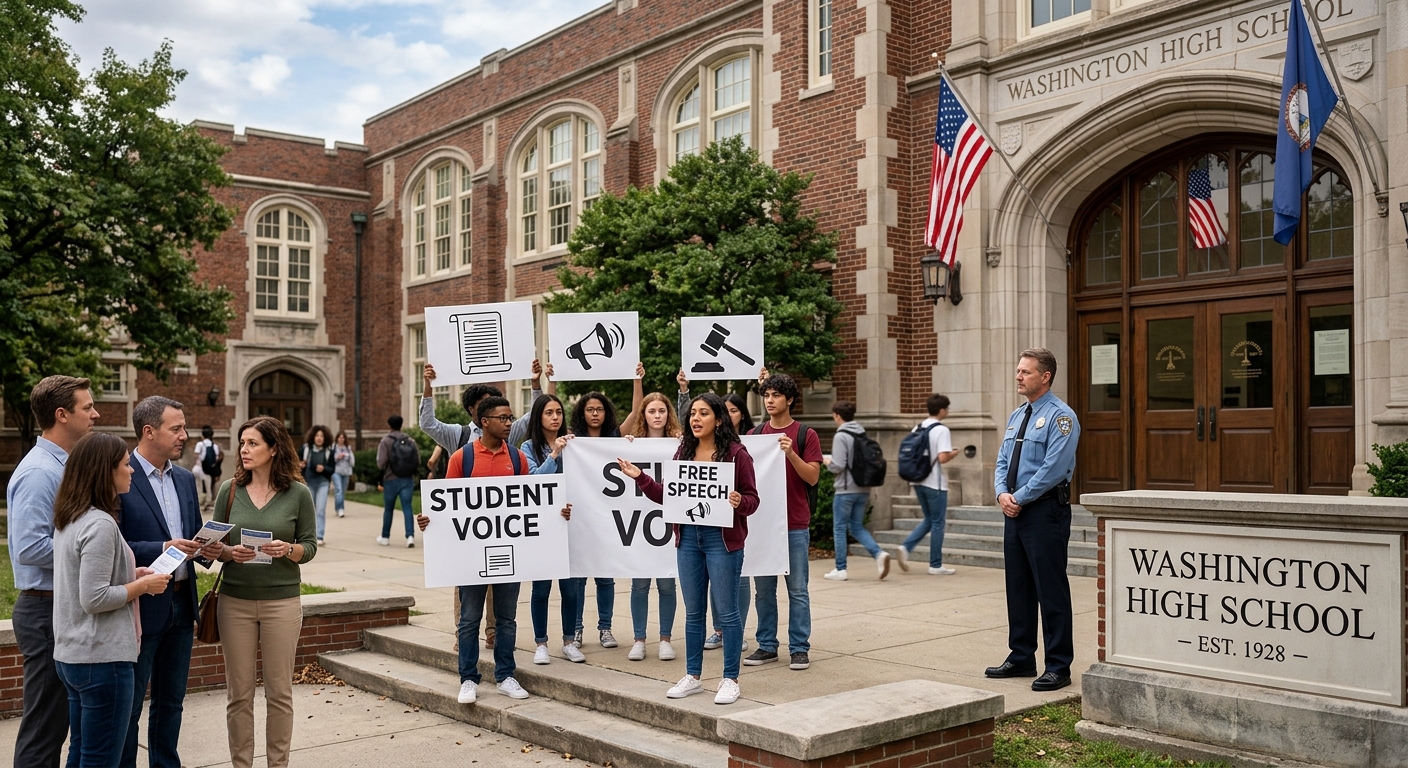
Across the United States, an intense legislative battle is being waged over the words spoken, the books read, and the history taught inside public school classrooms. State legislators are increasingly introducing and passing laws designed to restrict or outright ban discussions related to race, systemic inequality, and gender identity. Often broadly categorized by political proponents as bans on “Critical Race Theory” (CRT), these sweeping legislative efforts are fundamentally altering the American educational landscape. Civil rights organizations, educators, and legal scholars argue that these laws not only whitewash American history but also pose a severe, unconstitutional threat to First Amendment rights—specifically, the right to free speech and the student’s fundamental right to receive an inclusive, fact-based education.
The Legislative Push to Redefine Classroom Discourse
Since the beginning of 2021, a tidal wave of bills has swept through statehouses nationwide, aiming to heavily regulate public education curricula from the top down. These pieces of legislation—frequently referred to by free speech advocates as “educational gag orders”—seek to prohibit teachers from introducing topics that might make students feel “discomfort, guilt, anguish, or any other form of psychological distress” on account of their race or sex. While supporters of these bills argue that such measures prevent ideological indoctrination and protect children from inherently divisive concepts, the practical application and enforcement of these laws tell a remarkably different story.
PEN America, a prominent literary and human rights organization, has extensively documented this legislative trend. In its comprehensive analyses, PEN America highlights that dozens of states have enacted educational gag orders, directly affecting millions of public school students. The restrictions are not isolated solely to K-12 public schools; several state legislatures have forcefully attempted to extend these limitations into higher education. By targeting university diversity, equity, and inclusion (DEI) programs, these laws threaten the foundational concept of academic freedom in public universities.
The intentional vagueness of these laws is perhaps their most defining and legally problematic feature. By utilizing broad, undefined terminology like “divisive concepts,” the legislation creates a vast gray area of legal liability. Educators are left entirely guessing whether a standard historical lesson on the civil rights movement, the economic history of redlining, or the brutal legacy of Jim Crow laws crosses an invisible legal line. This ambiguity serves a distinct political purpose: it shifts the burden of compliance entirely onto individual teachers, fostering an environment governed by extreme fear rather than open academic inquiry.
In addition to individual penalties, some state legislations explicitly threaten institutional funding. Schools or entire university systems found to be in violation of these educational gag orders risk losing substantial state funding. This financial coercion forces educational administrators to act as censors, aggressively policing the speech and lesson plans of their own faculty to protect their institution’s financial survival. The result is a top-down suppression of academic freedom that fundamentally alters the educational environment from one of exploration to one of strict ideological compliance.
Understanding Critical Race Theory Versus Divisive Concepts
To fully grasp the insidious nature of this educational censorship, one must critically examine the term that initially catalyzed the movement: Critical Race Theory. Originating in the 1970s and 1980s among brilliant legal scholars like Derrick Bell and Kimberlé Crenshaw, CRT is an advanced academic and legal framework typically taught exclusively in law schools and graduate-level university programs. It posits that racism is not merely the product of individual prejudice but is deeply embedded within legal systems, societal structures, and institutions, thereby perpetuating massive disparities in areas such as housing, criminal justice, and employment.
However, in the context of recent legislative bans, the term “Critical Race Theory” has been purposefully co-opted and radically redefined by political operatives. As noted by sociologists and researchers at the Brookings Institution, CRT has become a catch-all bogeyman used to broadly restrict any curriculum that acknowledges systemic racism or the ongoing societal impacts of America’s deeply racist history. The laws being enthusiastically passed by state legislatures rarely, if ever, target the actual legal framework of CRT, which was never a foundational staple of K-12 education. Instead, they actively target essential lessons about implicit bias, white privilege, and the systemic nature of historical injustices.
When state lawmakers ban “divisive concepts,” they are effectively mandating a sanitized, historically inaccurate version of the American story. This sanitized curriculum completely removes the necessary historical context required for understanding the contemporary United States. By banning discussions that acknowledge how historical inequities continue to dynamically shape modern public policy and social conditions, these states are actively depriving students of the critical thinking skills required to participate fully and intelligently in a diverse, democratic society. The deliberate conflation of CRT with standard, inclusive historical education has proven to be a highly effective political tool, successfully galvanizing grassroots support for outright censorship under the comforting guise of protecting innocent students.
The First Amendment and the Right to Receive Information
At the absolute center of the legal resistance against these classroom censorship laws is the United States Constitution, specifically the bedrock protections of the First Amendment. While state governments and local school boards possess significant and recognized authority to determine public school curricula, that authority is not absolute or immune to judicial oversight. It remains strictly subject to constitutional limitations. The First Amendment protects not only the right of an individual to speak freely but also the corollary “right to receive information and ideas.”
When state legislatures enact sweeping laws that forcefully remove specific historical facts, diverse viewpoints, or literature from the classroom based solely on partisan ideological disagreement, they blatantly run afoul of this constitutional protection. Civil rights advocates and constitutional scholars fiercely argue that educational gag orders are inherently viewpoint-discriminatory. They do not ban all discussions of race or history; they exclusively ban discussions that acknowledge systemic racism or challenge traditional majoritarian narratives. For instance, a teacher could legally and safely praise the founding fathers, but might face immediate disciplinary action for accurately discussing the historical fact that many of those same founders were enslavers, simply because such a factual discussion is deemed to cause “discomfort.”
The Tinker Precedent and Student Free Speech
The established legal framework protecting students’ rights in public educational institutions is heavily anchored by the landmark 1969 Supreme Court case, Tinker v. Des Moines Independent Community School District. In this historic ruling, the Court famously and unequivocally declared that students do not “shed their constitutional rights to freedom of speech or expression at the schoolhouse gate.” While the Tinker decision primarily dealt with active student expression, its underlying foundational principle is that public schools cannot legally function as “enclaves of totalitarianism.”
State educational officials cannot dictate a rigid, mandatory orthodoxy in politics, nationalism, religion, or matters of historical opinion. When lawmakers unilaterally ban discussions of race and gender, they are overtly attempting to establish a state-sanctioned historical orthodoxy. Lawsuits currently challenging these state bans heavily rely on First Amendment jurisprudence and the equal protection clause of the Fourteenth Amendment. Plaintiffs in these complex civil rights cases vehemently argue that state-sponsored censorship severely chills free speech and discriminates on the basis of race by deliberately and systematically targeting the histories and realities of marginalized groups.
The Chilling Effect on K-12 and Higher Education
The most immediate, pervasive, and devastating consequence of these legislative bans is the “chilling effect” they cast over the entire teaching profession. In legal terminology, a chilling effect occurs when individuals preemptively self-censor their legally protected speech out of immense fear of facing punitive consequences. Because the language in educational gag orders is notoriously vague and the enforcement mechanisms are severe, teachers are systematically forced to err on the side of caution.
Self-Censorship Among Educators
Rather than risking an aggressive parent complaint, a state-level investigation, or the immediate loss of their livelihood and pension, many brilliant educators simply choose to bypass complex but utterly essential topics. A standard lesson on the history of American slavery might be stripped of its brutal, necessary realities; crucial discussions about the Trail of Tears or the Japanese American internment camps might be briefly glossed over; acclaimed books featuring LGBTQ+ protagonists or addressing racial injustice are quietly and rapidly removed from classroom reading lists to avoid administrative scrutiny.
This widespread self-censorship drastically undermines the fundamental purpose of public education. Teachers are highly trained professionals equipped to facilitate difficult conversations and actively help students navigate complex historical and social realities. When they are muzzled by overreaching state laws, the classroom is tragically transformed from a vibrant laboratory of ideas into a sterilized environment devoid of meaningful intellectual discourse. Furthermore, this hostile legislative climate has significantly contributed to a mass exodus of veteran educators from the teaching profession, severely exacerbating national teacher shortages as professionals refuse to work under the constant, demoralizing threat of ideological policing.
Educational Disparities: Who Pays the Price?
The heavy burden of these sweeping curriculum bans does not fall equally across the student population. The primary, intentional targets of educational gag orders are the histories, literatures, and complex realities that relate specifically to marginalized communities—most notably Black, Indigenous, and LGBTQ+ populations. When these topics are banned or heavily restricted by the state, students from these backgrounds receive a clear, culturally damaging message: their histories do not matter, their identities are taboo, and they are inappropriate for public classroom discussion.
Conversely, white students are also severely and profoundly shortchanged by these laws. An education that willfully avoids the realities of race, systemic inequality, and historical injustice leaves students incredibly ill-equipped to understand the complex world they actually live in. They inevitably enter higher education and the modern global workforce lacking the vital cultural competency, empathy, and critical thinking skills demanded by a diverse, interconnected society.
| Educational Approach | Curriculum Characteristics | Student Outcomes |
|---|---|---|
| Comprehensive Education | Includes full, unvarnished history; explores systemic issues; encourages critical thinking; diverse literature. | Increased empathy; strong analytical skills; cultural competency; high civic engagement. |
| Restricted Education (Gag Orders) | Sanitized history; bans on “divisive concepts”; avoids systemic analysis; homogenous literature. | Lack of historical context; reduced critical thinking; poor preparedness for diverse workplaces; marginalized students alienated. |
By legally erasing the vital contributions and immense struggles of marginalized groups from the standard curriculum, state lawmakers are actively and knowingly contributing to an educational disparity that exclusively favors a singular, dominant cultural narrative while actively suppressing all competing viewpoints.
The Ongoing Legal and Social Battleground
The intense fight over educational gag orders is far from resolved. It has aggressively ignited a massive social and legal battleground that spans from highly contentious local school board meetings to federal appellate courtrooms. Civil liberties organizations have boldly filed numerous high-profile lawsuits across multiple states, aggressively seeking preliminary injunctions to halt the immediate enforcement of these laws while their fundamental constitutionality is debated before federal judges.
Simultaneously, fierce grassroots resistance is rapidly growing in communities nationwide. Brave public school students have organized massive walkouts to protest the removal of Advanced Placement African American Studies and the banning of award-winning books by Black and LGBTQ+ authors. Dedicated parents, educators, and community members are actively organizing to push back against extreme school boards that attempt to implement these censorious policies. This powerful resistance highlights a fundamental truth: a massive portion of the American public holds a deep-seated, unwavering belief in the freedom to learn.
The controversy has fundamentally transformed local school board meetings—historically mundane administrative gatherings—into highly volatile partisan arenas. National political action committees and well-funded advocacy groups have begun pouring millions of dollars into local elections, exclusively backing candidates who support strict curriculum restrictions and widespread book bans. This aggressive nationalization of local education policy means that the daily educational experiences of children are increasingly dictated by broader, toxic political culture wars rather than sound pedagogical best practices or the specific, authentic needs of the local community. As these pivotal legal battles slowly make their way through the judicial system, the federal courts will ultimately have to reconcile the state’s traditional power to shape curricula with the vital constitutional protections against viewpoint discrimination and ideological censorship.
Frequently Asked Questions (FAQs)
- What is the main legal argument against curriculum restriction laws?
Opponents vigorously argue that these laws violate the First Amendment by actively engaging in viewpoint discrimination. They assert that the government cannot constitutionally ban the discussion of specific historical facts or social ideas simply because lawmakers find them disagreeable or because they might cause subjective discomfort among certain students. - How do these laws specifically affect teachers?
The intentionally broad and exceptionally vague language of these laws creates a severe, widespread chilling effect. Out of intense fear of being fired, sued, publicly harassed, or losing their hard-earned teaching licenses, educators frequently self-censor. They actively avoid teaching important historical events and modern social issues entirely to ensure they do not accidentally violate the law. - Does the First Amendment apply to K-12 public school curricula?
Yes, though it is a highly complex area of constitutional law. While states and school boards definitely have significant control over what is taught in public schools, the Supreme Court has explicitly indicated that schools cannot operate as “enclaves of totalitarianism” and cannot forcefully remove ideas from the classroom purely to enforce a specific ideological or political orthodoxy. - Are these state laws actually banning Critical Race Theory?
In practical reality, no. Critical Race Theory is a complex, graduate-level legal framework that is rarely, if ever, taught in K-12 schools. However, lawmakers have successfully co-opted the academic term to justify banning a massive range of standard educational topics related to diversity, equity, systemic racism, and basic American history. - What exactly is an educational gag order?
An educational gag order is a precise term utilized by free speech and civil rights organizations to describe state legislation or local policies that strictly restrict the freedom to learn and teach. These legally binding orders typically prohibit educators from discussing specific topics related to race, sex, gender, and the historical realities of the United States.
References
- America’s Censored Classrooms 2024 — PEN America. 2024-10-08. https://pen.org/report/americas-censored-classrooms-2024/
- Why Are States Banning Critical Race Theory? — Brookings Institution / Rashawn Ray and Alexandra Gibbons. 2021-11-21. https://www.brookings.edu/articles/why-are-states-banning-critical-race-theory/
- Tinker v. Des Moines Independent Community School District, 393 U.S. 503 — U.S. Supreme Court. 1969-02-24. https://supreme.justia.com/cases/federal/us/393/503/
- High school teacher and students sue over Arkansas’ ban on critical race theory — AP News / Andrew DeMillo. 2024-03-25. https://apnews.com/article/arkansas-critical-race-theory-ban-lawsuit-645ec92f44a37f5f2420f86b72a4454b
Similar Articles








Read full bio of medha deb


