
Speeding and Red Light Camera Tickets Explained
A practical guide to how speeding and red light cameras work, what tickets mean for drivers, and options for responding or challenging citations.
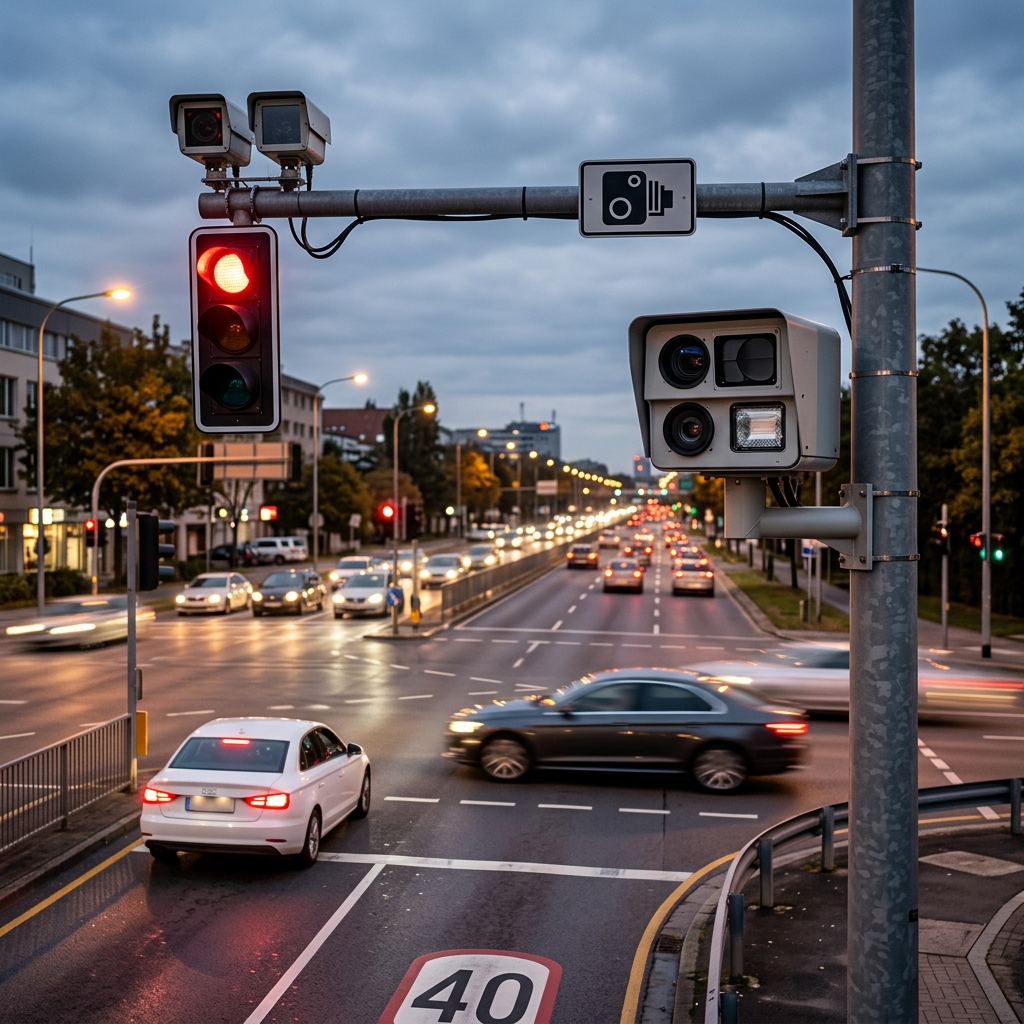
Automated traffic cameras are now common at busy intersections and along high-risk roads in many parts of the United States. These systems capture alleged violations such as running a red light or speeding and can lead to tickets arriving by mail, even when a police officer was never present at the scene. Drivers often have questions about how these cameras work, what penalties they face, and whether they can fight these tickets.
This guide provides a clear overview of speeding and red light camera tickets, including how automated enforcement functions, typical fines and consequences, common legal issues, and practical strategies for responding to a citation. It is intended for information purposes only and is not a substitute for legal advice about your specific situation.
What Are Automated Speed and Red Light Cameras?
Automated enforcement refers to technologies that use cameras and sensors to detect and document traffic violations without direct police observation. These systems are most often used to enforce:
- Red light signals – detecting vehicles that enter an intersection after the signal turns red.
- Speed limits – measuring vehicle speed over a known distance to identify drivers exceeding posted limits.
When a violation is detected, the system typically records:
- Photographs of the vehicle, often including the license plate.
- Time and date of the alleged violation.
- Location and lane information.
- Signal phase (for red light cameras) or measured speed (for speed cameras).
In most jurisdictions that use cameras, the images and associated data are reviewed by a traffic authority or law enforcement representative before a citation is issued. If they conclude a violation occurred, a notice is mailed to the registered vehicle owner.
Where Are Traffic Cameras Allowed?
Whether speeding and red light cameras can be used — and how tickets are handled — is determined by state and local law. Some states permit widespread use of automated enforcement, others restrict cameras to school zones or construction areas, and a few limit or prohibit their use.
Common patterns in state laws include:
- General authorization: States that broadly allow cameras for red light and speed enforcement, usually subject to technical standards and public notice requirements.
- Limited authorization: States that permit cameras only in specific contexts (for example, school zones or highway work zones).[10]
- Local discretion: States that allow cities or counties to decide whether to adopt automated enforcement programs.
Regardless of these differences, running a red light or stop sign is illegal in every state, and exceeding posted speed limits is a violation in all jurisdictions. What varies is the method of enforcement and the consequences tied to camera-generated tickets.
Owner vs. Driver Responsibility
An important legal distinction is whether the citation is treated as a responsibility of the vehicle owner or the driver who committed the violation. In many camera programs, the registered owner is liable regardless of who was driving at the time. In contrast, traditional officer-issued tickets often attach to the driver’s license and record, not just the vehicle.
| Liability Model | Who Is Responsible? | Typical Consequences |
|---|---|---|
| Owner-based | Registered owner of the vehicle | Civil fine only; usually no points or insurance impact |
| Driver-based | Person proven to be driving at the time | Fine plus potential points, higher insurance, and moving violation record |
How Red Light Camera Tickets Work
Red light cameras are placed at intersections and activated by sensors that detect a vehicle crossing the stop line after the signal has turned red. If the system records an apparent violation, it stores images and often a short video clip showing the vehicle entering the intersection.
After review, the enforcing agency sends a notice of liability to the vehicle owner with information such as:
- Intersection location and date of the violation.
- Time stamp and signal phase.
- Photographs showing the vehicle at or beyond the crosswalk.
- Instructions for viewing video or additional evidence online.
- Amount due and deadline for payment.
Some jurisdictions classify camera-based red light violations as non-moving infractions that carry a civil fine but no points on the driver’s record. Others treat them more like traditional moving violations, including points and possible insurance implications.
Example: City and State Practices
Policies differ widely between locations, even within the same state:
- In New York City, red light camera tickets are owner-based, do not carry points, and are handled through a civil process.
- In Colorado Springs, a red light camera citation results in a fixed fine and is categorized as a non-moving infraction with no points.
- In some jurisdictions, like parts of Illinois, camera tickets are typically set at a fixed amount (for example, about $100), but failure to pay can quickly double the fine and lead to additional enforcement measures.
Speeding Tickets from Cameras
Speed cameras measure how quickly vehicles are traveling, either with radar, lidar, or through timing devices at two points along the roadway. If a vehicle exceeds the threshold set by law or policy, the system records an image and data similar to that of red light cameras.
Common locations for speed cameras include:
- School zones, where lower speed limits are enforced to protect children.[10]
- Construction or work zones, to protect workers and manage traffic around lane closures.[10]
- High crash corridors, where speeding has historically contributed to serious collisions.
The fine amount for speed camera tickets depends on state law and local ordinances. Some places use a flat rate, while others apply a tiered schedule based on how far over the limit the driver was traveling.[10] In certain states, a camera-based speeding ticket may only create a civil obligation with no points, while in others, it can add points and affect insurance, particularly when speeds far exceed the limit.
Typical Penalties and Consequences
Penalties for camera-generated tickets vary, but common consequences include:
- Fines: Ranging from relatively modest amounts in some cities to several hundred dollars or more in others, depending on state law and the type of violation.
- Additional fees: Possible administrative charges or late penalties if payment is not made by the due date.
- Points on a driver’s license: In some jurisdictions, camera tickets carry points and can contribute to license suspension if too many accumulate.
- Insurance impacts: Where camera violations are treated as moving offenses, they may influence insurance rates; where they are civil owner-based fines, they often do not.
- Enforcement actions: Continued nonpayment can lead to collection efforts, holds on registration renewals, or other measures authorized by law.
Many cities and states clearly distinguish between officer-issued tickets and camera-based citations. For instance, some municipalities emphasize that no points are assessed for camera violations, even though similar conduct observed by a police officer would produce points on the driver’s record.
Legal and Procedural Issues with Camera Tickets
Automated enforcement raises important questions about accuracy, fairness, privacy, and due process. While specific rules vary, several recurring legal concerns appear across jurisdictions.
Accuracy and Evidence
Defendants and lawyers often scrutinize the technical reliability of camera systems and the clarity of the photographic evidence. In a contested case, the prosecution usually relies on the images and system records to prove a violation.
Key evidentiary points include:
- Whether the photographs clearly show the vehicle and license plate.
- Whether the images identify the driver, when driver liability is required.
- Proper authentication of photos and data — that is, showing the system was functioning correctly and that records were maintained appropriately.
In some cases, defendants have challenged tickets by questioning whether the enforcement authority brought qualified witnesses to authenticate the images and explain how the system operates. If critical evidence is excluded, the case may fail for lack of proof.
Privacy and Policy Considerations
Beyond individual cases, camera enforcement programs have prompted broader policy debates. Critics express concern about continuous surveillance, data retention, and potential misuse of images and license plate information. Supporters argue that cameras improve safety by deterring dangerous behavior like red light running and speeding, especially where traditional enforcement is difficult or resource-intensive.
Options When You Receive a Camera Ticket
Receiving a ticket in the mail can be stressful, but there are several typical pathways for responding. Exact procedures depend on the jurisdiction and the specific program, so always read the notice carefully.
1. Paying the Fine
Most notices provide instructions for paying the fine within a set period, such as 30 days. Payment options often include:
- Online portals operated by municipal or court systems.
- Telephone payments using credit or debit cards.
- Mailing a check or money order to the specified address.
- In-person payment at a courthouse or city office.
Paying on time typically closes the matter, but be aware that late payments can trigger additional penalties or collection activity.
2. Requesting a Hearing or Contesting the Ticket
Many jurisdictions allow vehicle owners or drivers to challenge camera tickets before an administrative hearing officer or judge. Grounds for contesting may include:
- Identity issues: Arguing that you were not the driver, if the law requires proof of driver identity.
- Image quality problems: Claiming that photos do not clearly show the vehicle or license plate.
- Technical or procedural defects: Questioning whether the system was maintained, calibrated, or operated according to legal and policy requirements.
- Necessity or emergency: In some cases, asserting that running a light or exceeding the speed limit was necessary to avoid serious harm, such as preventing a crash or transporting a critically ill person.
To prepare for a challenge, you may need to obtain copies of the photographs and any available video footage, either from the notice or through discovery procedures. Reviewing this evidence carefully can help you decide whether contesting is worthwhile.
3. Consulting Legal Counsel
For higher-stakes situations — such as tickets with substantial fines, potential points, or multiple accumulated citations — speaking with a traffic attorney may be helpful. A lawyer can evaluate local law, explain possible defenses, and represent you at a hearing if needed.
Practical Tips to Reduce Camera Tickets
Regardless of how you feel about automated enforcement, the safest and most cost-effective approach is to avoid violations in the first place. The following practices can reduce your risk of receiving camera tickets and improve overall road safety.
- Approach intersections cautiously: Begin slowing as you reach a yellow light, and avoid accelerating to “beat” a signal change.
- Respect posted speed limits: Pay particular attention near schools, construction zones, and known enforcement corridors.[10]
- Leave extra time for trips: Rushing often leads to risky decisions, including speeding and last-second attempts to clear an intersection.
- Maintain situational awareness: Watch for signs indicating photo enforcement zones and be prepared for regulated speeds or strict signal enforcement.
- Keep registration and contact information current: Ensuring your mailing address is up to date helps you receive notices promptly, reducing the chance of late penalties.
Frequently Asked Questions
Do camera tickets always add points to my license?
No. In many jurisdictions, camera-based red light and speed violations are treated as civil infractions against the vehicle owner and do not carry points. However, some states do assign points for certain camera-recorded speeding or signal violations, especially at higher speeds or when treated as moving offenses. Check your state’s laws or consult a local attorney.
Can I ignore a red light camera ticket?
Ignoring a ticket is usually not advisable. Unpaid citations can lead to late fees, doubled fines, collection efforts, or additional enforcement actions authorized by local law. Even if the violation does not carry points, failure to respond may create financial and administrative consequences.
What if someone else was driving my car?
If your jurisdiction uses owner-based liability, you may still be responsible for the fine as the registered owner, regardless of who was driving. In places where liability attaches to the driver, you may be able to contest the ticket by showing that another person was behind the wheel and that you were not the one who committed the violation.
How can I see the evidence against me?
Most programs allow you to review photographs and often video footage online using a website listed on the notice or in person at a designated office. Doing so can help you determine whether the images clearly show a violation and whether you want to pay or contest the ticket.
Are cameras really about safety, or just revenue?
Public debate continues on this issue. Safety advocates emphasize that cameras can reduce dangerous behaviors such as speeding and red light running, particularly in high-risk zones.[10] Critics argue that some programs are structured to maximize revenue rather than safety. Whether a particular camera program is balanced and effective depends on its design, enforcement policies, and how collected funds are used.
References
- Traffic and Red Light Camera Laws by State — FindLaw. 2024-01-05. https://www.findlaw.com/traffic/traffic-tickets/state-traffic-camera-restrictions.html
- Speed & Red Light Cameras — Governors Highway Safety Association. 2023-06-01. https://www.ghsa.org/state-laws-issues/speed-red-light-cameras
- Red Light Camera Violations — NYC Department of Finance. 2023-09-15. https://www.nyc.gov/site/finance/vehicles/red-light-camera-violations.page
- Red-Light Safety Camera Violations — City of Colorado Springs. 2024-02-20. https://coloradosprings.gov/police-department/page/red-light-safety-camera-violations
- Camera Radar Information — City of Fort Collins Municipal Court. 2024-03-10. https://www.fortcollins.gov/Government/Municipal-Court/Camera-Radar
- Red Light Traffic Tickets & Drivers’ Legal Options — Justia. 2022-11-18. https://www.justia.com/traffic-tickets/types-of-moving-violations/red-light-violations/
- Automated Traffic Violation Enforcement System — Baltimore City Department of Transportation. 2023-10-01. https://www.baltimorecity.gov/transportation/bcdot-divisions/automated-traffic-violation-enforcement-system
Similar Articles








Read full bio of Sneha Tete


