
South Dakota Real Estate & Housing Law Guide
A practical overview of South Dakota’s real estate, housing, and property rules for buyers, sellers, landlords, and tenants.
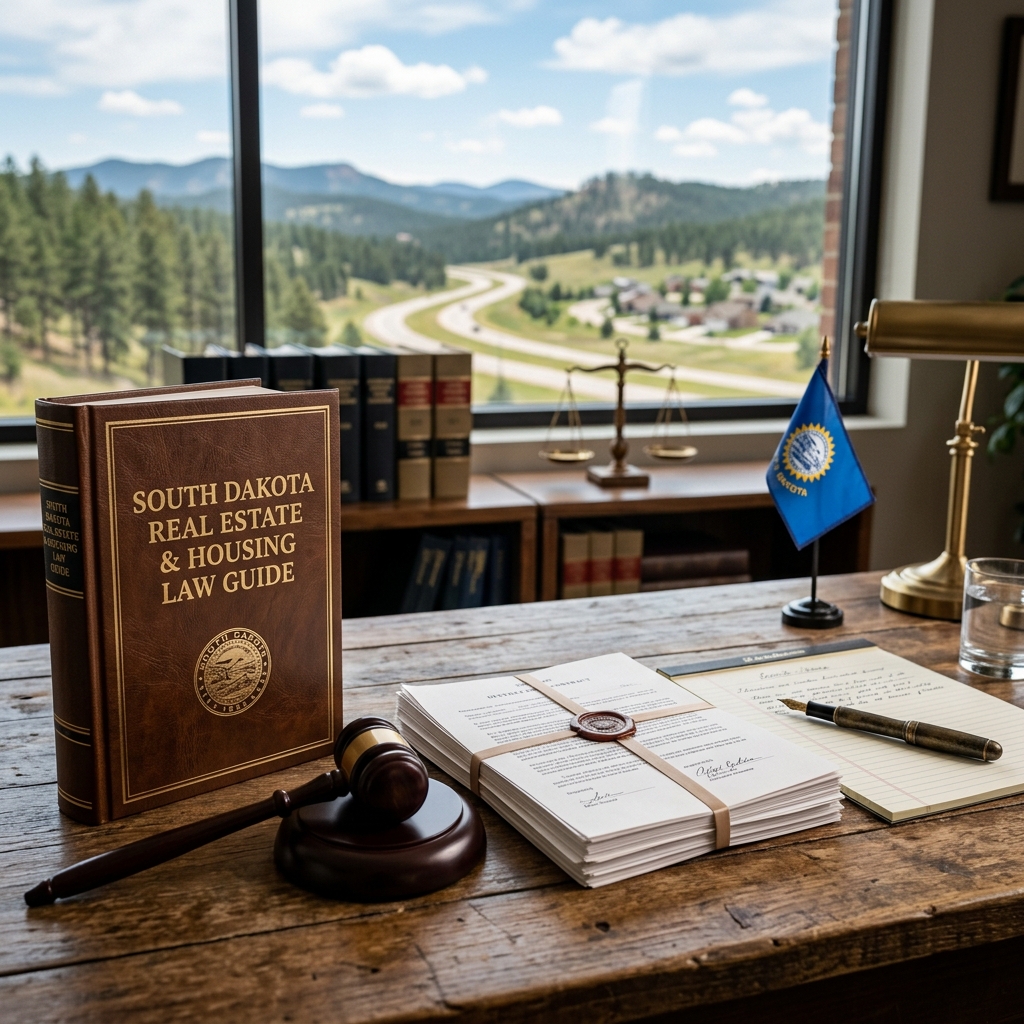
South Dakota’s real estate and housing laws shape how land is bought, sold, rented, and used across the state. Understanding these rules is essential for homeowners, landlords, tenants, and investors who want to protect their rights and avoid costly legal disputes.
This guide offers a clear, practical overview of the main legal concepts governing property and housing in South Dakota, with a focus on everyday situations such as buying a home, signing a lease, resolving neighbor conflicts, and complying with local land‑use restrictions.
Legal Foundations of Property Rights in South Dakota
Real estate law in South Dakota is built on a combination of state statutes, court‑made rules, and local regulations. The central statutory framework is found in South Dakota Codified Laws (SDCL) Title 43, Property, which defines what property is and how rights in land are created, transferred, and enforced.
Key Sources of Law
- SDCL Title 43 – Property: Covers classes of property, ownership, transfers, recording, and related topics.
- SDCL Title 36, Chapter 36‑21A: Regulates real estate brokers, salespersons, and licensing standards for professionals involved in property transactions.
- Local ordinances: Cities and counties adopt zoning, building, and nuisance codes that directly affect how land may be used.
- Common law principles: Court decisions interpret statutes and fill gaps in areas such as easements, adverse possession, and landlord‑tenant disputes.
Real Property vs. Personal Property
South Dakota law distinguishes between real property and personal property.
- Real property typically includes land, permanent buildings, and rights connected to the land like easements, mineral rights, and certain fixtures attached to structures.
- Personal property covers movable items such as furniture, vehicles, and equipment that are not permanently affixed to real estate.
This distinction matters because different rules apply to buying, selling, taxing, and securing interests in real versus personal property.
Forms of Property Ownership and Interests
People can hold title to South Dakota real estate in several ways, each with different consequences for control, inheritance, and liability.
Common Ownership Structures
- Fee simple ownership: The broadest form of ownership, giving the holder long‑term control over the property, subject only to restrictions such as zoning, easements, and taxes.
- Co‑ownership (joint ownership): Two or more people can own property together, often as joint tenants or tenants in common; rights of survivorship and division depend on the form chosen.
- Life estates: One person (the life tenant) has the right to use and occupy property during their lifetime, while another person (the remainderman) is entitled to ownership after the life tenant dies.
- Leasehold interests: Tenants receive the right to occupy and use property for a specified period in exchange for rent, while the landlord retains underlying ownership.
Non‑Ownership Interests
South Dakota law also recognizes non‑ownership interests that allow limited uses of land.
- Easements: Legal rights to use another person’s land for a specific purpose, such as utility lines or driveway access.
- Covenants and restrictions: Private agreements, often in subdivisions, that limit how property may be used (for example, prohibiting certain types of structures).
- Mortgages and liens: Security interests that give creditors legal claims against property when debts are not repaid.
Buying and Selling Real Estate in South Dakota
Real estate transactions in South Dakota follow a structured process designed to ensure clarity of ownership and protect buyers and sellers.
Essential Steps in a Typical Transaction
- Written purchase agreement: South Dakota’s Statute of Frauds requires contracts for the sale of real estate to be in writing and signed by the party to be charged.
- Title examination: Buyers or their attorneys review county records to confirm who owns the property and identify any liens, easements, or competing claims.
- Closing and conveyance: At closing, the seller signs a deed transferring title, and the buyer delivers payment, often assisted by a lender.
- Recording: The new deed and any mortgage are recorded in the county Register of Deeds office to give public notice and establish priority.
Recording and Priority Rules
South Dakota uses a race‑notice system to determine whose claim to property is honored when multiple parties assert interests.
| Key Concept | Practical Effect |
|---|---|
| Subsequent purchaser | A later buyer who acquires an interest in the property. |
| Without notice | The buyer did not know of the earlier unrecorded interest. |
| Recording first | The buyer records their deed or mortgage before any competing claims are recorded. |
| Outcome | If the subsequent purchaser lacks notice and records first, their interest usually takes priority over earlier unrecorded claims. |
Failure to record a deed does not invalidate the transfer between the parties, but it can cause serious problems when a later purchaser or lender acquires and records an interest in the same property.
Transfer Tax and Costs
South Dakota imposes a real property transfer tax, calculated on the value of the transaction and typically collected when the deed is recorded. Buyers and sellers should also plan for closing costs such as title insurance, attorney fees, and recording charges.
Licensing and Regulation of Real Estate Professionals
Real estate brokers and salespersons in South Dakota must be properly licensed and follow strict professional standards. Licensing requirements are found in SDCL Chapter 36‑21A, and enforcement is handled by the South Dakota Real Estate Commission.
Role of the South Dakota Real Estate Commission
- Issues and renews licenses for brokers, salespersons, and firms.
- Adopts administrative rules that govern practice, advertising, trust accounts, and supervision of agents.
- Investigates complaints and can impose sanctions such as fines, suspension, or revocation of licenses when violations occur.[10]
Professional standards are reinforced by the Code of Ethics used by Realtor organizations in the state, which sets expectations for honesty, loyalty to clients, and fair dealing with the public.
Landlord–Tenant Law and Residential Housing
Landlord–tenant relationships in South Dakota are governed by a mix of statutes and common law rules that define rights and responsibilities on both sides.
Core Duties of Landlords
- Provide the tenant with possession of the premises at the start of the lease term.
- Maintain basic structural components and major systems (such as plumbing and heating) in reasonable repair, subject to the lease terms.
- Comply with applicable building, health, and safety codes adopted by local governments.
- Follow proper procedures for collecting and returning security deposits.
Core Duties of Tenants
- Pay rent in full and on time under the lease agreement.
- Keep the rental unit reasonably clean and avoid damaging the property beyond normal wear and tear.
- Respect neighbors and avoid activities that create nuisances or violate local ordinances.
- Notify the landlord of significant maintenance issues promptly.
Evictions and Remedies
When serious disputes arise—such as nonpayment of rent or major lease violations—the landlord may seek to terminate the tenancy through court procedures. Self‑help evictions (like changing locks without a court order) are generally disfavored, and landlords must comply with statutory notice and filing requirements to lawfully regain possession.
Zoning, Land Use, and Local Regulation
Beyond state statutes, South Dakota property owners must pay close attention to local zoning and land‑use rules. Cities and counties use zoning ordinances to separate land into districts (residential, commercial, agricultural, industrial) and control permitted uses.
Typical Local Controls
- Permitted and conditional uses: Some activities are allowed by right in a zone; others require special approval from planning or zoning boards.
- Setbacks and height limits: Rules on how close structures can be to property lines and how tall they may be.
- Subdivision regulations: Standards for creating new lots, roads, and utilities in developments.
- Nuisance and property maintenance codes: Provisions to address unsafe or unsightly conditions, such as junk vehicles or overgrown lots.
Violations of local land‑use rules can lead to fines, denial of building permits, or enforcement actions that require changes to existing structures or uses.
Risk Management and Legal Representation
Real estate disputes can be expensive and disruptive. Many individuals and businesses in South Dakota choose to work with experienced real estate lawyers to assist with transactions, leases, and conflict resolution.
When to Consult a Real Estate Attorney
- Buying or selling high‑value residential or commercial property.
- Negotiating complex leases, easements, or development agreements.
- Facing disputes over boundaries, access roads, or utility easements.
- Involved in landlord–tenant conflicts or potential evictions.
- Dealing with foreclosures, title defects, or questions about ownership.
Legal counsel can help interpret state statutes, local ordinances, and contract terms, and can represent clients in negotiations, administrative hearings, and court actions.
Frequently Asked Questions About South Dakota Property Law
1. Do I need a written contract to buy real estate in South Dakota?
Yes. South Dakota’s Statute of Frauds requires a written, signed agreement for the sale of real property. Oral promises are generally not enforceable in court for real estate transactions.
2. What is the role of the county Register of Deeds?
The Register of Deeds maintains official records of deeds, mortgages, easements, and other instruments affecting real property. Recording documents there gives public notice and helps establish priority of competing claims.
3. Are real estate agents regulated in South Dakota?
Yes. Brokers and salespersons must be licensed under SDCL Chapter 36‑21A and comply with rules adopted by the South Dakota Real Estate Commission. The Commission enforces regulations, investigates complaints, and can impose penalties for violations.[10]
4. What happens if two people claim to own the same property?
South Dakota’s race‑notice system generally favors a subsequent good‑faith purchaser who records first without knowing about a prior unrecorded interest. Courts will examine the timing of deeds, knowledge of the parties, and recording dates to resolve such disputes.
5. How can landlords and tenants reduce the risk of disputes?
Clear written leases, careful documentation of the property’s condition, prompt communication about problems, and adherence to state and local rules significantly reduce conflict. When serious issues arise, speaking with a qualified real estate or landlord‑tenant attorney can provide guidance.
References
- TITLE 43. PROPERTY — South Dakota Legislature. 2024-01-01. https://sdlegislature.gov/Statutes/43
- Codified Law 36‑21A – Real Estate Licensing — South Dakota Legislature. 2024-01-01. https://sdlegislature.gov/Statutes/36-21A
- South Dakota Laws and Rules – Real Estate Commission — South Dakota Real Estate Commission / DLR. 2023-06-01. https://dlr.sd.gov/realestate/laws_rules.aspx
- South Dakota Property and Real Estate Laws — FindLaw. 2022-05-10. https://www.findlaw.com/state/south-dakota-law/south-dakota-property-and-real-estate-laws.html
- South Dakota Property and Real Estate Law Fundamentals — South Dakota Legal Services Authority. 2023-04-15. https://southdakotalegalservicesauthority.com/southdakota-property-and-real-estate-law
- Code of Ethics & Professional Standards — South Dakota Realtors. 2023-01-01. https://www.sdrealtor.org/your-sdr/benefits/risk-management/ethics-professional-standards/
- Real Estate Hearings, Penalties & Appeals in South Dakota — Study.com. 2021-09-30. https://study.com/academy/lesson/real-estate-hearings-penalties-appeals-in-south-dakota.html
Similar Articles








Read full bio of Sneha Tete


