
Social Media Censorship and U.S. Free Speech Law
How the First Amendment, tech platforms, and new regulations collide in the debate over social media censorship and online speech.
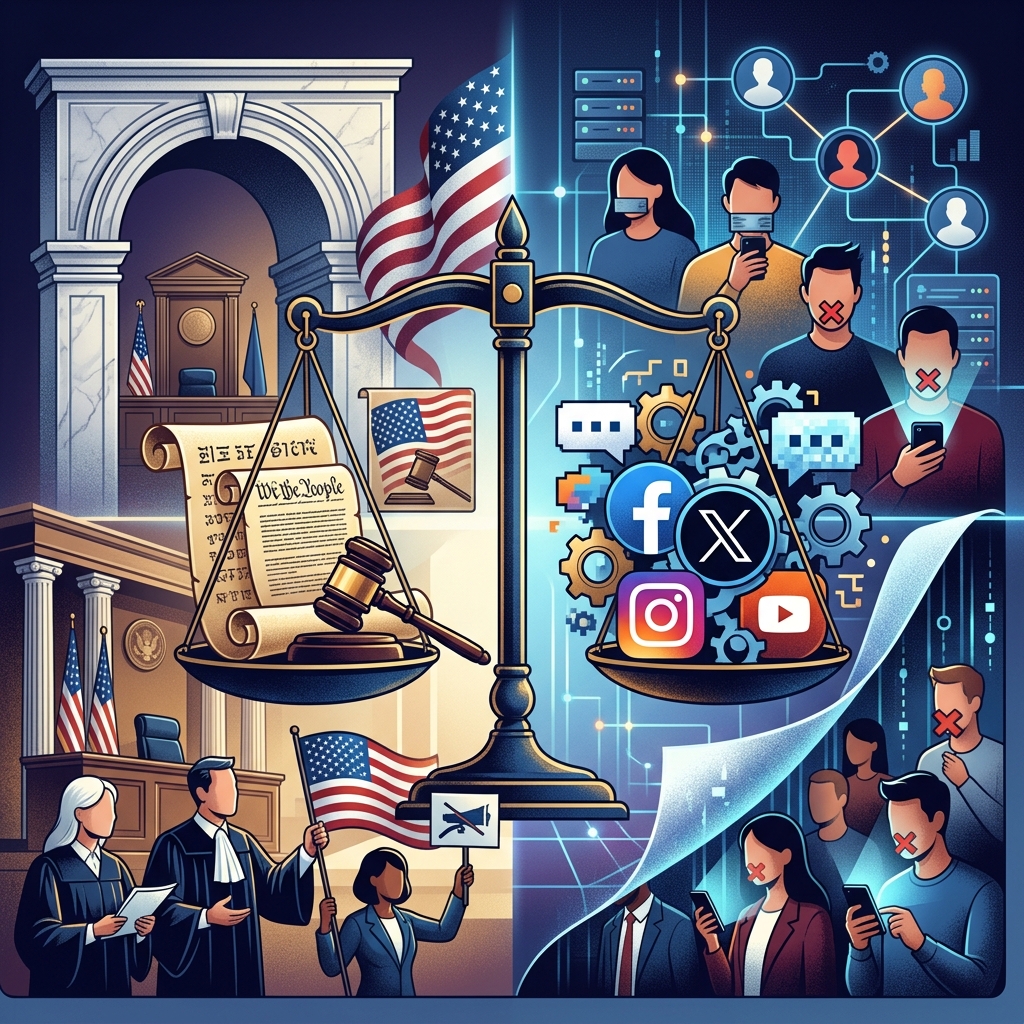
Social media has become the primary arena for modern public debate, yet the legal rules that govern what platforms may remove, label, or amplify remain widely misunderstood. This article explains how U.S. free speech law applies to social media censorship, the limits of the First Amendment, the difference between government and private platform action, and the emerging battles over regulation and civil rights online.
Why Social Media Censorship Is Legally Complex
Debates about online speech often assume that users have a broad constitutional right to say whatever they want on platforms like Facebook, X (formerly Twitter), or YouTube. In reality, the legal landscape is more nuanced. The core distinction is between:
- Government censorship, which is limited by the First Amendment.
- Private platform moderation, which generally falls outside direct constitutional constraints.
Understanding who is acting—government or private company—is the starting point for assessing whether a user’s rights have been violated.
The First Amendment: What It Does and Does Not Protect Online
The U.S. Constitution’s First Amendment provides that government may not abridge freedom of speech. Courts have repeatedly interpreted this to mean that only state actors, not private companies, are directly bound by these protections.
Key implications for social media include:
- Private platforms are not required to host all speech. They may adopt and enforce community standards, remove content, or suspend accounts without violating the First Amendment, because they are private entities.
- Government officials using social media can be constrained. When public officials operate accounts as part of their official duties and open them to public commentary, courts have treated those spaces as public forums for constitutional purposes.
- Viewpoint discrimination by government actors is generally forbidden. Blocking users or deleting critical comments on official pages because of disagreement with their viewpoint can violate the First Amendment.
Government Officials on Social Media: When Moderation Becomes Censorship
Federal and state courts have increasingly confronted situations where elected officials or agencies manage interactive social media pages. When officials invite public participation and then restrict access based on critical views, many courts have concluded that this is unconstitutional viewpoint discrimination.
Typical government actions that raise First Amendment concerns include:
- Blocking individuals from commenting on official profiles.
- Deleting comments solely because they criticize policy or personal conduct.
- Using platform tools to hide or filter out disfavored viewpoints.
In these settings, courts treat the interactive portions of official accounts as limited or designated public forums. Once the government creates such a forum, it must apply neutral rules and may not exclude speech purely based on viewpoint.
Practical Steps When a Government Official Censors You
Civil rights organizations recommend documenting and challenging censorship by government actors. Common steps include:
- Gather evidence: Capture screenshots of the page, your comments, and examples of similar comments that were allowed to remain.
- Assess the situation: Determine whether the account is used for official business and whether comments are generally open to the public.
- Request correction: Politely ask the official to restore access or stop deleting comments.
- Escalate if necessary: If informal resolution fails, consider consulting legal counsel or rights groups about potential First Amendment claims.
Private Platforms: Content Moderation and Community Standards
Unlike government actors, private social media platforms have broad discretion to decide what content they will host. Courts have recognized that platforms themselves possess free speech rights, including the right to curate and organize content.
Most major platforms rely on community standards or terms of service, which typically prohibit:
- Hate speech and harassment.
- Threats and incitement to violence.
- Non-consensual explicit content.
- Misleading or harmful medical misinformation.
Courts have repeatedly rejected attempts to force platforms to host all viewpoints, emphasizing that compulsory hosting would itself interfere with the platforms’ editorial freedom.
Common Moderation Tools Used by Platforms
Social media companies use a range of mechanisms to regulate content:
- Removal or deletion of posts that violate policies.
- Account suspensions or permanent bans.
- Down-ranking or reducing the visibility of certain content.
- Warning labels or fact-check notices attached to posts.
From a legal standpoint, these actions generally remain within the platform’s private contractual relationship with users, rather than implicating constitutional rights.
When Government Pressure on Platforms Raises Constitutional Issues
A newer and more controversial question is what happens when government officials strongly encourage—or threaten—social media companies to remove particular content. Users have argued that such pressure effectively turns private moderation decisions into state action.
In recent litigation, courts have examined whether communications between federal officials and platforms crossed the line from persuasion into coercion. One appellate court applied a multi-factor test focusing on:
- The language and tone of government communications.
- The perception of the platform receiving the requests.
- The degree of authority and implied consequences behind the message.
- Whether officials referred to adverse actions if platforms did not comply.
Where government pressure meets these criteria, affected users may argue that their constitutional rights were violated, even though the removal occurred on a private platform.
State and Federal Efforts to Regulate Social Media Censorship
In response to perceived bias or overreach by platforms, legislators have proposed and enacted laws seeking to limit social media censorship or compel more neutrality. These efforts raise significant constitutional questions.
State-Level Attempts to Restrict Platform Moderation
Several states have introduced or passed laws aimed at protecting users from viewpoint-based moderation. Some bills, for example, create rights of action for users whose content is removed based on alleged hate speech, and offer statutory damages against platforms for certain enforcement decisions.
However, courts have often viewed such laws skeptically. Because they can force private platforms to host speech they would otherwise remove, judges have concluded that these regulations themselves restrict the platforms’ speech rights.
| Actor | Key Legal Constraint | Examples of Actions |
|---|---|---|
| Government (officials, agencies) | Bound by First Amendment; cannot engage in viewpoint discrimination in public forums. | Blocking critics on official pages; threatening platforms over lawful content; shaping what viewpoints can be expressed in public comment spaces. |
| Private platforms (e.g., Facebook, X) | Have their own free speech rights; may set and enforce content rules via contracts with users. | Removing posts under community standards; suspending accounts; down-ranking misinformation or hate speech. |
Federal Executive Actions and Policy Statements
At the federal level, executive branch policies have oscillated between encouraging aggressive moderation to combat misinformation and warning against governmental involvement in platform decisions. Recent executive orders have emphasized that federal departments should not use their authority to suppress protected speech online and have directed reviews of past government interactions with platforms.
These policy moves underscore a growing recognition that government involvement in content moderation must be carefully constrained to avoid infringing constitutional rights, even when pursued under labels such as national security, child safety, or consumer protection.
International Comparisons: The EU and Beyond
While this article focuses on U.S. law, it is helpful to note that other jurisdictions take different approaches to online speech. In parts of Europe, for instance, privacy and dignity rules—such as the “right to be forgotten”—place stronger obligations on platforms to remove or de-index certain information at users’ request.
These contrasting approaches highlight that the U.S. model is relatively speech-protective, placing more emphasis on preventing government censorship and less on imposing content obligations on private platforms.
Rights and Options for Users Facing Social Media Restrictions
For users, the practical question is what can be done when content is removed or accounts are blocked. The answer depends primarily on who is responsible and what legal framework applies.
When a Government Actor Restricts Your Online Speech
If an elected official, agency, or public employee censors you on an account used for official business, you may have First Amendment arguments. Steps to consider include:
- Confirm the official nature of the account: Look for government insignia, use for official announcements, or links from government websites.
- Document the censorship: Preserve evidence of the blocked status or deleted content and comparable comments that remain visible.
- Seek informal resolution: Contact the office and explain that courts have found viewpoint-based blocking unconstitutional.
- Consult legal assistance: If your access is not restored, rights organizations or lawyers may evaluate potential claims.
When a Private Platform Moderates Your Content
When moderation is purely the result of a private platform enforcing its own rules, First Amendment claims are unlikely to succeed. Instead, users are usually limited to contractual or consumer-law arguments based on the platform’s terms of service.
Common user responses include:
- Appealing moderation decisions through in-platform review processes.
- Adjusting content to better comply with published community guidelines.
- Migrating to alternative platforms with different policies.
Balancing Free Expression and Online Safety
Lawmakers and courts face a difficult balancing act: preserving robust free expression while addressing harassment, disinformation, and exploitation online. Research and policy analysis emphasize that it is not only about the right to speak, but also about the right to participate in digital spaces without being subject to manipulation or abuse.
Regulatory proposals are increasingly framed in terms of:
- Child safety and protection from harmful content.
- Consumer protection against deceptive or manipulative practices.
- Data privacy and control over personal information.
Courts, however, look past the label. If a rule forces platforms to suppress or host lawful speech, it is likely to be treated as a speech regulation subject to rigorous First Amendment scrutiny.
Frequently Asked Questions (FAQs)
Do I have a First Amendment right to post anything I want on social media?
Not on private platforms. The First Amendment restricts government censorship, not content decisions by private companies. Platforms may remove content that violates their rules without infringing your constitutional rights.
Can a mayor or school board member legally block me from their official Facebook page?
Courts have held that when officials use social media as a public forum for official business, blocking users because of their viewpoint can violate the First Amendment. Whether a specific block is unlawful depends on how the page is used and the reasons for the restriction.
What if the federal government pressures a platform to remove my post?
If government officials coerce a platform into removing lawful content, affected users may argue that their speech was censored by state action. Courts analyze the language, context, authority, and implied consequences of government communications to determine whether coercion occurred.
Are there laws that stop social media companies from moderating political viewpoints?
Some states have tried to limit viewpoint-based moderation, but courts have often found that such laws infringe platforms’ own speech rights. Forcing a platform to host content it would otherwise remove is itself a form of regulation of speech.
How do other countries handle online speech compared to the U.S.?
Many democracies regulate harmful or hateful content more aggressively and provide rights like the “right to be forgotten.” The U.S. approach places stronger emphasis on preventing government censorship and gives private platforms more freedom to set their own rules.
References
- Online Censorship: Public Officials Blocking Citizens on Social Media — University of Georgia School of Law, First Amendment Clinic. 2022-03-01. https://firstamendment.law.uga.edu/work/online-censorship-public-officials-blocking-citizens-on-social-media/
- American Censorship: The Future of Social Media and Its Users — Kentucky Law Journal Blog. 2023-10-10. https://www.kentuckylawjournal.org/blog/american-censorship-the-future-of-social-media-and-its-users
- STOP SOCIAL MEDIA CENSORSHIP ACT — North Carolina General Assembly, Legislative Reporting Service. 2021-04-28. https://lrs.sog.unc.edu/bill/stop-social-media-censorship-act
- Social Media Censorship by a Government Official — ACLU of Southern California. 2020-08-15. https://www.aclusocal.org/know-your-rights/social-media-censorship-government-official/
- Free Speech and Social Media: Maintaining the Right Balance — American Public University System. 2022-05-20. https://www.apu.apus.edu/area-of-study/arts-and-humanities/resources/free-speech-and-social-media/
- A Brief History of Efforts to Rebrand Social Media Censorship — Foundation for Individual Rights and Expression (FIRE). 2023-02-07. https://www.fire.org/news/all-glitters-not-gold-brief-history-efforts-rebrand-social-media-censorship
- Restoring Freedom of Speech and Ending Federal Censorship — The White House. 2025-01-20. https://www.whitehouse.gov/presidential-actions/2025/01/restoring-freedom-of-speech-and-ending-federal-censorship/
- Regulating Freedom of Speech on Social Media: Comparing the EU and the U.S. Approach — Stanford Law School. 2019-06-15. https://law.stanford.edu/projects/regulating-freedom-of-speech-on-social-media-comparing-the-eu-and-the-u-s-approach/
Similar Articles








Read full bio of Sneha Tete




