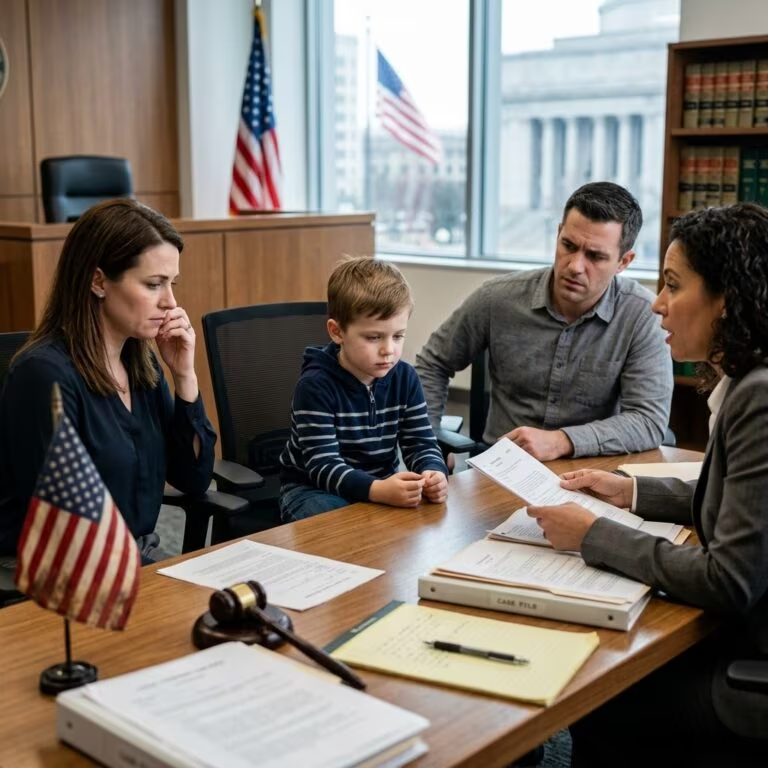
When someone dies owning property in their own name, the legal system needs a way to verify any will, pay outstanding debts and taxes, and transfer what is left to heirs or beneficiaries. That court-supervised procedure is called probate. Although the basic purpose of probate is similar nationwide, each state designs its own rules, deadlines, and shortcuts, which can dramatically change how long the process takes and how much it costs.
This article explains what probate is, identifies which assets must go through the process, and then compares how several states handle probate differently. It is a general educational overview, not legal advice. For specific cases, consulting a licensed attorney in the relevant state is essential.
What Probate Is (and Why It Exists)
The American Bar Association describes probate as the court-supervised procedure that recognizes a will, appoints an executor or personal representative, and oversees the administration and distribution of a deceased person’s property. In other words, probate answers four core questions:
- Is there a valid will? If so, the court ensures it meets the legal requirements and is not the product of fraud or undue influence.
- Who is in charge? The court appoints an executor (if there is a will) or an administrator (if not) to manage the estate.
- What did the decedent own and owe? The personal representative identifies assets, values them, and determines outstanding debts and taxes.
- Who should receive the remainder? Assets are distributed according to the will or, if there is no will, according to the state’s intestacy laws.
Probate matters because it:
- Protects creditors by establishing a formal claims process.
- Provides a public, legal framework for resolving disputes among family members and beneficiaries.
- Ensures that taxes and mandatory expenses are paid before heirs receive property.
Common Steps in a Typical Probate Case
Every state uses its own terminology and forms, but the sequence of events is broadly similar across the country.
1. Opening the Estate
The process usually begins when an interested person files paperwork with the appropriate probate court in the county where the decedent lived at the time of death. That filing commonly includes:
- The original will, if there is one.
- A certified death certificate.
- A petition requesting appointment of a personal representative.
Once the court accepts the filing, it issues official documents (often called letters testamentary or letters of administration) authorizing the personal representative to act on behalf of the estate.
2. Notifying Heirs, Beneficiaries, and Creditors
Most states require that certain people and entities be notified that the estate has been opened. This usually includes:
- Heirs at law and beneficiaries named in a will.
- Known creditors, such as mortgage lenders or credit card companies.
- Potential unknown creditors through publication in a local newspaper, depending on state rules.
Creditors are then given a defined period to file claims. That time window, which varies by state, has a major influence on how long probate lasts.
3. Inventorying and Valuing Assets
The personal representative must prepare an inventory of what the decedent owned that is subject to probate and often must file it with the court. Assets may include:
- Real estate titled solely in the decedent’s name.
- Bank and brokerage accounts without beneficiary designations.
- Vehicles, business interests, and valuable personal property.
Some items require formal appraisals to determine their fair market value, especially real estate and unique or high‑value personal property.
4. Paying Debts, Taxes, and Expenses
Before heirs receive anything, the estate must satisfy valid creditor claims, estate administration expenses, and any tax obligations. Typical obligations include:
- Funeral and burial expenses.
- Final income taxes.
- Property taxes and mortgage payments.
- Medical bills and other unsecured debts.
If there is not enough cash in the estate, assets may need to be sold to generate funds for these payments.
5. Distributing What Remains
After debts and expenses are handled, the personal representative distributes remaining property to the people or entities legally entitled to receive it:
- Under the terms of the will, if one exists and is valid.
- Under the state’s intestacy statute if there is no valid will.
Once distributions are completed and required reports are filed, the court can formally close the estate.
Which Assets Need Probate (and Which Do Not)
Not everything a person owns must pass through probate. The key distinction is between probate assets and non‑probate assets.[10]
Probate Assets
Generally, probate applies to property owned solely by the decedent, with no built‑in mechanism for transfer at death.[10] Examples include:
- A house held only in the decedent’s name, without a survivorship deed.
- A checking account without a pay‑on‑death (POD) beneficiary.
- Personal belongings such as furniture, jewelry, or collectibles.
Non‑Probate Assets
Many assets can pass outside of probate because the law or contract already specifies who receives them when the owner dies. Common non‑probate assets include:
- Life insurance policies with a named beneficiary.
- Retirement accounts, such as 401(k)s and IRAs, with designated beneficiaries.
- Joint accounts with rights of survivorship.
- Certain transfer‑on‑death (TOD) or pay‑on‑death (POD) registrations allowed under state law, such as TOD designations on some vehicle titles and securities accounts.
Proper use of these tools can reduce the amount of property subject to probate and, in some cases, allow smaller or simpler estates to avoid formal probate entirely.
How Having (or Not Having) a Will Changes Probate
Probate can occur whether or not the deceased person left a will. The presence of a will primarily affects who gets what and who is in charge, not whether probate is required.
| Scenario | Who Oversees the Estate? | Who Receives the Property? |
|---|---|---|
| Will (testate) | Executor or personal representative named in the will, if approved by the court. | Beneficiaries specified in the will, subject to spousal or other statutory rights. |
| No will (intestate) | Administrator appointed by the court, usually following an order of priority in state law. | Heirs designated by each state’s intestacy statute, usually starting with spouse and descendants. |
Intestacy rules vary from state to state but typically prioritize spouses, children, and other close relatives in a defined order. These laws operate as a default estate plan for those who die without a valid will.
State‑by‑State Differences That Matter
Although the high‑level structure of probate is similar, states differ in how they implement the details. Important variations include:
- How long creditors have to file claims.
- Whether small estates can use simplified procedures.
- Which courts handle probate cases.
- How much discretion courts give to personal representatives.
These differences influence how quickly an estate can be settled and how much work is required.
Probate Timelines in Selected States
Probate is rarely instantaneous. Even straightforward estates typically require several months, while complex cases can take longer. One comparison of state timelines highlights how wide the range can be:
- Arizona: Often one of the quicker states, with many estates wrapping up within roughly 4–6 months, especially when procedures are straightforward.
- Illinois: Many estates finish in approximately 6–9 months, assuming there are no contested issues.
- Texas and Florida: Probate often falls in the 6–12 month range, though Florida provides summary procedures for smaller estates that may resolve faster.
- New York: Typical cases might take about 9–15 months, reflecting a cautious approach and a relatively long creditor claim period.
- California: Congested courts can result in timelines of 12–18 months or more for many estates, despite the availability of some small‑estate shortcuts.
These ranges are estimates and can change based on county workloads, disputes, and the complexity of the property involved.
Small Estate and Simplified Procedures
Most states offer ways to bypass or streamline full probate for smaller or simpler estates. While threshold amounts and eligibility criteria differ, the goals are similar: reduce court involvement and paperwork where full oversight is unnecessary.
Common simplifications include:
- Affidavits for small estates, which allow heirs to claim certain assets without opening a full probate case.
- Summary or abbreviated administration, often available when the estate’s value is under a statutory limit or when most property is exempt.
- Informal probate procedures, where the court’s role is more limited, used when there is no apparent dispute and the will appears valid.
Because each state sets its own dollar thresholds and qualifications, it is important to check the rules of the state where the decedent lived at death.
How Probate Courts Are Organized
Different states route probate matters through different courts, even though the tasks they perform are similar.
- Some states handle probate in dedicated probate courts at the county level.
- Others use specialized divisions within a broader trial court system, such as superior courts or surrogate’s courts.
Regardless of the structure, the court’s job is to supervise the estate administration, enforce deadlines, resolve disputes, and approve final distributions.
The Role and Responsibilities of the Personal Representative
The executor or administrator, collectively referred to as the personal representative, is the central figure in the probate process. This individual owes fiduciary duties to the estate and its beneficiaries, meaning they must act with loyalty, prudence, and in good faith.
Typical duties include:
- Locating and safeguarding the decedent’s assets.
- Obtaining appraisals where needed.
- Keeping detailed records of all financial transactions.
- Communicating with heirs, beneficiaries, and creditors.
- Filing necessary tax returns and court documents.
Because this role carries legal responsibility, many personal representatives work closely with attorneys and sometimes with accountants or financial advisors, especially in larger or more complex estates.
Planning Strategies to Manage or Reduce Probate
Thoughtful estate planning can minimize the burden of probate on surviving family members. Strategies vary by state but often include:
- Executing a clear, valid will that names an executor, specifies beneficiaries, and coordinates with non‑probate asset designations.
- Using beneficiary designations on life insurance, retirement accounts, and certain bank or investment accounts to transfer assets directly to individuals or trusts.
- Utilizing joint ownership with survivorship rights for appropriate assets, such as a primary residence, when consistent with overall planning goals.
- Establishing revocable or irrevocable trusts where suitable, so that trust‑owned assets generally avoid probate and are managed under the terms of the trust document.
- Exploring state‑specific tools like transfer‑on‑death deeds or vehicle title designations where available.
The best combination of these methods depends on the type of property, family situation, and the particular laws of the state involved.
Frequently Asked Questions About Probate
Does every estate have to go through probate?
No. Probate is usually required only for probate assets, typically property owned solely by the decedent without a direct mechanism for transfer at death.[10] If all property passes by beneficiary designation, joint ownership, trust, or other non‑probate mechanisms, formal probate may not be necessary.
How long will probate take?
Time frames vary widely. Many routine estates in less congested jurisdictions can be completed in under a year, sometimes in as little as several months, while others may take a year or more due to creditor claim periods, court backlog, or disputes. Consulting local counsel provides a more accurate estimate for a specific case.
Is probate always expensive?
Costs depend on state fee schedules, the size and complexity of the estate, and whether disputes arise. Court filing fees, executor compensation, attorney’s fees, and appraisal costs are common components. Using non‑probate transfers and simplified procedures, where appropriate, can help control expenses.
Can I handle probate without a lawyer?
Many states allow personal representatives to proceed without an attorney, particularly for smaller estates. However, legal guidance is often valuable because probate involves strict deadlines, detailed paperwork, and potential liability for mistakes. Complex estates, contested wills, or significant tax issues generally warrant professional representation.
What happens if family members disagree about the will?
Disagreements can lead to a will contest or other litigation in the probate court. The court may need to consider allegations such as lack of capacity, undue influence, or improper execution of the document. Such disputes can significantly lengthen the process and increase costs, which is one reason clear planning and communication during life are so important.
Key Takeaways for Navigating State Probate Systems
While probate serves the same broad purpose across the United States, the specific rules are state‑driven. Knowing where the decedent lived, what they owned, and whether they left a will is crucial to understanding which procedures apply. Appreciating the differences among states—in timelines, court structures, and available shortcuts—can help families set realistic expectations and identify planning opportunities.
References
- The Probate Process — American Bar Association. 2023-04-01. https://www.americanbar.org/groups/real_property_trust_estate/resources/estate-planning/probate-process/
- Guide to Property After Someone Dies — Judicial Council of California. 2024-01-01. https://selfhelp.courts.ca.gov/probate
- Probate: What It Is and How It Works — Investopedia. 2024-02-16. https://www.investopedia.com/terms/p/probate.asp
- Law Facts: Probate — Ohio State Bar Association. 2022-06-15. https://www.ohiobar.org/public-resources/commonly-asked-law-questions-results/law-facts/law-facts-probate/
- What You Need to Know About the New York Probate Process — Rica Forte Law. 2023-09-10. https://www.ricafortelaw.com/library/an-overview-of-the-probate-process-in-new-york.cfm
- The Complete Guide to Florida Probate — Florida Probate Law Group. 2026-01-05. https://www.floridaprobatelawgroup.com/blog/the-complete-guide-to-florida-probate/
- State-Specific Probate Timelines Comparison Explained — Texas Probate Lawyer. 2025-03-12. https://txprobatelawyer.net/state-specific-probate-timelines-comparison/