
Probation Records: How To Access, Review, And Correct Files Now
Understand who can view probation records, when access is limited, and how errors may be challenged.
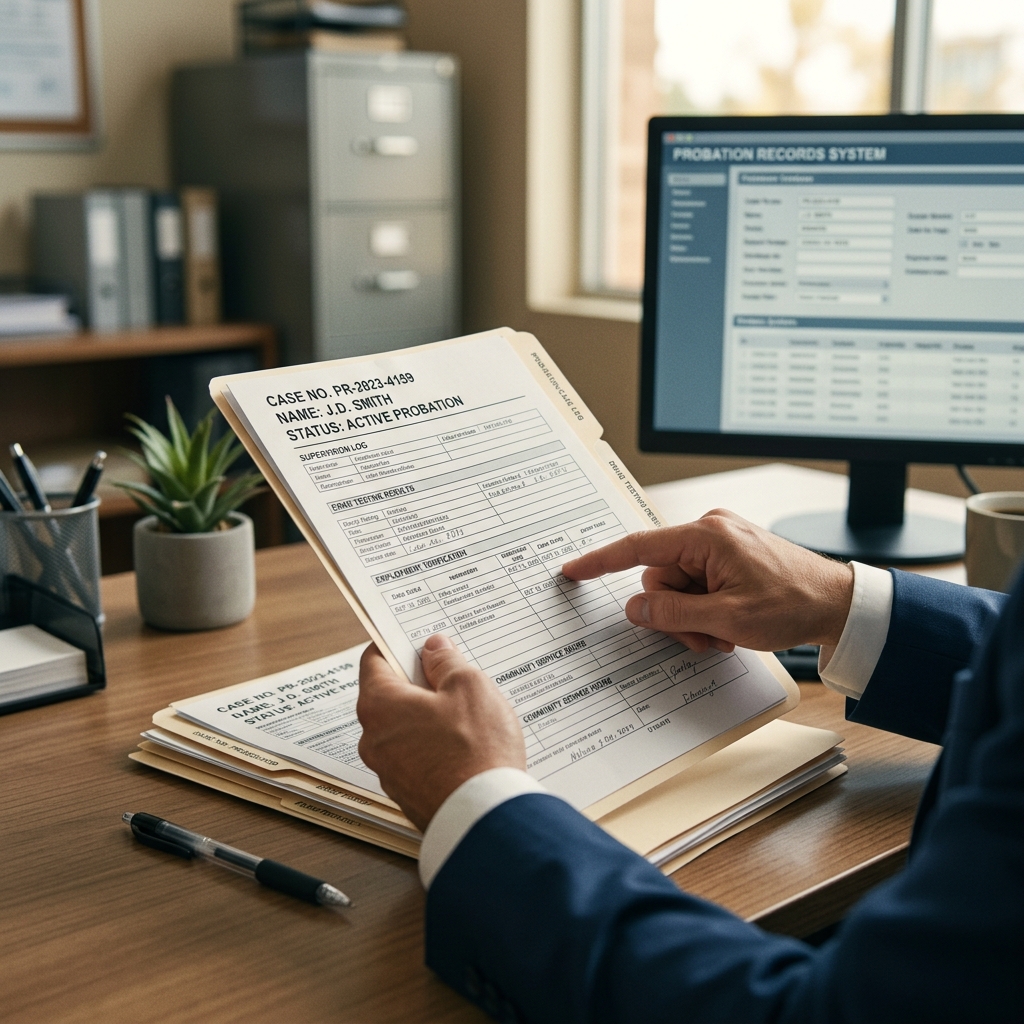
Probation records sit at the intersection of criminal justice oversight and personal privacy. They are created to help probation officers track compliance, document conduct, and support court supervision, but they are not treated like ordinary public files. In most situations, access is limited to the person named in the record and to agencies or officials with a legitimate legal need to review it.
That basic rule has an important practical effect: probation records are often available for inspection only in narrow circumstances, and the right to see them may depend on state law, a court order, or the nature of the request. Some states expressly allow a probationer to review the file, while others treat the records as confidential criminal justice information rather than public records.
Why probation records are kept
When a person is placed on probation, the probation department usually maintains a file that may include reports, notes, compliance information, and communications related to supervision. These records help the officer monitor conditions imposed by the court, confirm attendance at required meetings, and document whether the probationer is following restrictions or completing ordered programs.
Because the purpose of the file is supervisory rather than public informational, the records are usually treated differently from open government records. The privacy interest is especially strong when the file contains sensitive details about criminal history, treatment participation, family matters, employment status, or other information that could be misused if broadly released.
- Probation records help monitor compliance with court-ordered conditions.
- They may contain personal and sensitive information about the probationer.
- They are commonly treated as confidential rather than public records.
Who can usually inspect them
The most common access rule is simple: the person who is the subject of the probation file may request to review it, and in some places may also receive a copy if that is practical. LegalMatch’s discussion notes that Massachusetts gives every person on probation the right to view and, if practical, copy their probation records. That example reflects a broader idea found in many states, though the exact scope of access varies.
Outside the probationer, access is usually limited to probation officers, courts, prosecutors, defense counsel, corrections staff, and other authorized entities. Some agencies also allow disclosure when a court order requires it or when another statute specifically authorizes release. In other words, the person’s right to inspect the file does not automatically make the file public to everyone else.
| Requester | Typical access | Common limit |
|---|---|---|
| Probationer | May inspect, and sometimes copy, the file | Subject to agency procedures and applicable law |
| Court or probation officer | Routine access for supervision | Use limited to official duties |
| Outside member of the public | Usually no access | Probation records are not generally public documents |
Why these records are not normally public
Probation files are usually excluded from open-records laws that apply to ordinary public documents. The reason is that these records relate to criminal supervision and often contain material that the law treats as confidential. Some state statutes expressly identify probation and parole records as nonpublic, and agencies may be required to withhold them unless a law or order says otherwise.
This approach is consistent with the practice described in state legal materials, which often classify probation records as confidential and restrict inspection to people with a right and need to know. The confidentiality rule protects the integrity of supervision, the privacy of the probationer, and sometimes the safety of victims, witnesses, and third parties named in the file.
How a probationer can request review
Although procedures differ, the process usually begins with a written or formal request to the probation department or court clerk. The request should identify the probation file and ask to inspect the record or obtain copies of specific documents. Some agencies may require proof of identity before releasing any material.
If the agency permits inspection, it may set a time and place for review and may redact portions of the file that contain protected information about other people. If copying is allowed, the requester may be charged ordinary duplication fees. Where electronic access is available, the agency may still limit what can be downloaded or printed.
- Make the request in writing if possible.
- Identify the probation case clearly.
- Ask whether inspection, copies, or both are available.
- Be prepared to show identification.
What to do if the file appears inaccurate
A probation record is only useful if it is reliable. If the probationer believes the file contains an error, the first step is usually to ask the probation agency to correct or amend the record. Some states allow a formal petition or administrative request for amendment, especially when the challenged entry could affect supervision, future court decisions, or later criminal justice screening.
Disputes often involve mistakes in dates, missed appointments, program completion, payment history, or compliance notes. If the agency refuses to make the correction, the person may need to rely on counsel, a motion in court, or another legal procedure available under state law. The exact remedy depends on how the record is used and what local rules govern probation files.
When a court order becomes necessary
Even when a probationer has a right to inspect their own file, other people usually do not. For that reason, outside access often requires a court order or a specific statutory exception. California county policy materials, for example, describe probation records and related criminal information as confidential and state that release may occur only under a court order or applicable law. That kind of rule is typical of many jurisdictions.
A court order may also be needed when the request involves sealed materials, juvenile matters, or records containing information protected by privacy or safety laws. Judges may weigh the reason for disclosure against the potential harm from release before deciding whether to permit access.
Probation records in juvenile matters
Juvenile probation records can be even more restricted than adult records because juvenile justice systems often emphasize rehabilitation and confidentiality. Some states open selected juvenile court proceedings to public inspection, but many related records remain protected or only partially accessible. Arizona law, for example, lists certain juvenile proceedings that may be open while still preserving confidentiality for other categories of records.
In practice, this means that juvenile probation files often receive stronger privacy protection than adult probation files. Requests may require a parent, guardian, attorney, or court approval, and broad public disclosure is uncommon unless a statute specifically allows it.
How records may still be shared inside the system
Confidential does not mean invisible to the justice system. Probation departments share information with judges, prosecutors, defense attorneys, corrections officials, and other authorized agencies when the law permits it and when the information is needed for supervision or public safety. That internal sharing helps courts decide whether a person is complying with probation terms or whether a modification, extension, sanction, or revocation is appropriate.
Some agencies also audit or inspect probation records internally to ensure that reporting and supervision practices are being followed correctly. These uses are administrative and do not convert the records into public documents.
How to think about public records laws
People often assume that any government record can be requested under an open-records law. Probation records are a common exception to that assumption. Even where a state public records law is broad, it may expressly exclude probation and parole materials, or it may permit withholding because another statute makes the file confidential.
That means a request submitted under a public records statute may succeed only if the record is actually covered by the law and no exemption applies. If the file is tied to probation supervision, the request is likely to be denied unless the requester is the subject of the record or has a special legal basis for disclosure.
Practical consequences of access limits
Restricted access is not just a technical rule. It can affect employment checks, licensing questions, family disputes, post-conviction relief, and later sentencing or supervision decisions. A probationer who cannot review the file may also have a harder time correcting misinformation that could affect future opportunities or court outcomes.
At the same time, confidentiality helps ensure that probation supervision remains focused on compliance rather than public exposure. The system tries to balance fairness to the person on probation with the need to protect witnesses, victims, and sensitive records from unnecessary disclosure.
What a person should prepare before requesting records
Anyone seeking probation records should be ready to explain the purpose of the request and provide enough detail to locate the file. If the request is for personal review, the requester should bring identification and any case number or court information available. If the request is made through an attorney, the lawyer may need a signed authorization or other proof of representation.
It also helps to decide in advance whether the goal is inspection, copies, or correction. That makes it easier to tailor the request and respond if the agency says only part of the file can be released.
- Gather the case number, sentencing date, or supervision details.
- Bring identification or authorization documents.
- State whether you want to inspect, copy, or challenge the record.
- Ask about fees, redactions, and turnaround time.
Frequently asked questions
Are probation records public?
Usually no. Probation records are commonly treated as confidential criminal justice records rather than open public records.
Can a probationer see their own file?
Often yes, but the exact right depends on state law and agency procedure. Some states expressly allow the probationer to inspect and sometimes copy the file.
Can someone else request a probation record under an open-records law?
Usually not. Most requests from third parties are denied unless a statute or court order allows disclosure.
What if the record is wrong?
The person named in the file may ask the agency to correct it or use a formal petition or court process if the error is not fixed voluntarily.
Do juvenile probation records follow the same rules?
No. Juvenile records are often more tightly protected, and access may depend on special statutes or court approval.
References
- Inspection of Probation Records — LegalMatch. n.d.. https://www.legalmatch.com/law-library/article/inspection-of-probation-records.html
- Disclosure of Criminal Record Information, Probation Records and Files — County of San Luis Obispo. n.d.. https://www.slocounty.ca.gov/departments/probation/forms-documents/education-and-training-materials-documents/policies/sec-ii-administration/disclosure-of-criminal-record-information,-probati
- Section 149.43 — Ohio Laws / Ohio Revised Code. n.d.. https://codes.ohio.gov/ohio-revised-code/section-149.43
- Arizona Revised Statutes § 8-208 — Arizona Legislature / Justia summary. 2025. https://law.justia.com/codes/arizona/title-8/section-8-208/
- Guide to Colorado’s Open Records and Open Meetings Laws — Colorado Freedom of Information Coalition. n.d.. https://coloradofoic.org/open-government-guide/
- Arizona’s Public Records Law — Arizona Ombudsman-Citizens’ Aide. 2023. https://www.azoca.gov/wp-content/uploads/Public-Records-Law-Booklet-2023.pdf
Similar Articles








Read full bio of Sneha Tete




