
What Happens When You’re Stopped for DWI in New York
A practical, step‑by‑step guide to New York DWI traffic stops, charges, penalties, and your legal options after a drunk driving arrest.
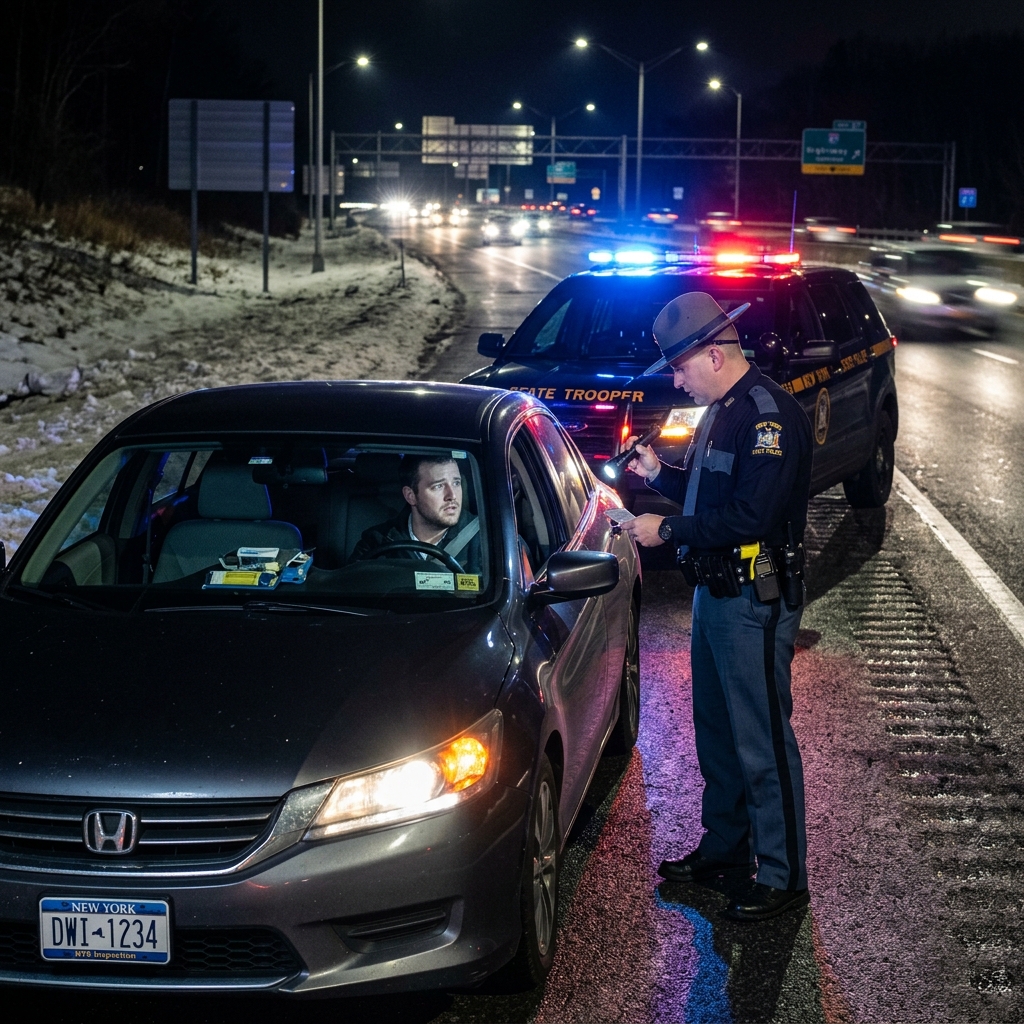
Being stopped on suspicion of drunk or drug-impaired driving in New York can be intimidating and confusing. This guide explains what typically happens during a DWI traffic stop, how police determine impairment, the different offenses you may be charged with, and the penalties that can follow under New York law.
Overview of New York Impaired Driving Offenses
New York does not use a single label like “DUI” for all impaired driving. Instead, the state recognizes several distinct offenses, largely based on your blood alcohol concentration (BAC) and evidence of impairment.
- Driving While Intoxicated (DWI) – BAC of 0.08% or higher, or other evidence that you are intoxicated while driving.
- Aggravated DWI – BAC of 0.18% or higher.
- Driving While Ability Impaired by Alcohol (DWAI-Alcohol) – BAC more than 0.05% but less than 0.07%, or other proof your driving ability is impaired by alcohol.
- DWAI-Drug – Driving while your ability is impaired by a single drug other than alcohol.
- DWAI-Combination – Impairment caused by a combination of alcohol and one or more drugs.
- Zero-tolerance violations – Special rules for drivers under 21 with a BAC of 0.02% or higher.
These distinctions matter because they determine the level of the offense (traffic infraction, misdemeanor, or felony) and the range of penalties you may face, including fines, jail time, and license consequences.
How a New York DWI Stop Typically Begins
Police generally need an observable reason to stop your vehicle. In a suspected DWI situation, the stop may arise from:
- Speeding, failing to signal, or other traffic violations.
- Swerving, drifting between lanes, or erratic driving.
- Driving much slower than the flow of traffic.
- Responding to reports from other motorists or witnesses.
Once the officer activates the lights and you pull over, the officer observes your behavior, appearance, and speech as part of an initial assessment for possible impairment.
Initial Contact: What Officers Look For
During the first few minutes of a stop, the officer gathers clues about whether you may be impaired. These observations can be used later to justify arrest or support charges.
- Odor of alcohol or marijuana from your breath or vehicle.
- Bloodshot, glassy, or watery eyes.
- Slurred or slow speech.
- Difficulty finding your license and registration.
- Trouble following simple instructions.
- Open containers or signs of drug use inside the vehicle.
Even if your BAC later tests below 0.08%, officers can still rely on these observations to charge you with DWAI or DWI based on impairment rather than just a number.
Field Sobriety Tests and Roadside Screening
If the officer suspects impairment, you may be asked to step out of the vehicle and perform field sobriety tests. These are physical and mental tasks designed to expose clues of intoxication.
Common standardized tests include:
- Horizontal Gaze Nystagmus (HGN) – tracking a moving object with your eyes.
- Walk-and-Turn – walking heel to toe along a straight line, turning as instructed.
- One-Leg Stand – standing on one leg while counting aloud.
Officers may also use non-standardized tasks such as reciting part of the alphabet or performing finger-count exercises. The officer scores your performance to decide whether to make an arrest.
In addition, the officer may use a roadside breath screening device (often called a portable breath test). This preliminary device gives an estimate of your BAC and helps the officer establish probable cause, but it is usually not the main evidence at trial.
Arrest and Chemical Testing
If the officer believes there is probable cause that you are driving while intoxicated or impaired, they may place you under arrest. After arrest, New York’s implied consent law becomes central to what happens next.
Implied Consent and Formal Chemical Tests
By driving in New York, you are deemed to have consented to chemical testing of your breath, blood, urine, or saliva after a lawful arrest for DWI-related offenses.
- Formal tests are usually performed at the station or a medical facility.
- The test should generally be administered within a few hours of the alleged offense to be considered valid evidence.
- Results provide the official BAC used to determine charges such as DWI, aggravated DWI, or DWAI.
A DWI per se charge is based solely on a chemical test result of 0.08% or higher. In these cases, the prosecution does not need additional evidence of impairment; the test alone can support the DWI charge.
Refusing the Chemical Test
You can refuse to submit to a chemical test, but refusal carries significant civil penalties in addition to any criminal charges arising from the incident.
- For a first refusal, you may face a one-year license suspension and a substantial civil penalty.
- Repeat refusals within a certain period can result in longer revocations and higher penalties.
- The refusal itself is handled at a separate administrative hearing before the Department of Motor Vehicles.
Importantly, refusal does not guarantee you avoid a DWI conviction. The officer’s observations, field sobriety test performance, and other evidence can still be used against you.
How BAC Levels Translate to Charges
Your BAC reading, combined with other evidence, influences which charge you receive. The table below summarizes common first-offense outcomes under New York law.
| Offense | Typical BAC Range | Level of Offense | Key License Consequence |
|---|---|---|---|
| DWAI-Alcohol | More than 0.05% but less than 0.07% | Traffic infraction | License suspension for about 90 days. |
| DWI or DWAI-Drug | 0.08% or evidence of intoxication | Misdemeanor (first offense) | License revocation for at least 6 months. |
| Aggravated DWI | 0.18% or higher | Misdemeanor (first offense) | License revocation for at least 1 year. |
| Zero-tolerance | 0.02% or higher (under 21) | Civil violation | License suspension for 6 months (first offense). |
Offenses become more serious, including potential felony charges, when there are prior convictions or aggravating factors such as injuries, fatalities, or multiple children in the vehicle.
Penalties and Collateral Consequences
New York imposes strict penalties for DWI-related offenses. They include fines, jail, probation, and mandatory fees, along with long-term consequences for your driving record and insurance.
Common Penalties for a First DWAI-Alcohol
- Mandatory fine of roughly $300–$500.
- Maximum jail term of up to 15 days (often not imposed but possible).
- Driver license suspension for 90 days.
- Mandatory surcharges and fees added to the fine.
Common Penalties for a First DWI or DWAI-Drug
- Mandatory fine typically between $500 and $1,000.
- Maximum jail term of up to 1 year.
- Driver license revocation for at least six months.
- Possible probation, commonly 2–3 years for a misdemeanor conviction.
- Mandatory surcharge and crime victim assistance fees for misdemeanor alcohol offenses.
Penalties for Aggravated DWI (First Offense)
- Fine in the range of $1,000–$2,500.
- Maximum jail term of up to 1 year.
- Driver license revocation for at least one year.
Repeat convictions over ten years can lead to felony charges, higher fines, longer jail terms, multi‑year probation, and extended or permanent license revocations.
Additional Consequences You Should Expect
- Ignition Interlock Device (IID) – In many DWI and aggravated DWI cases, courts require installation of an IID on any vehicle you drive during probation or revocation periods.
- Driver Responsibility Assessment – The state may impose a separate multi‑year assessment you must pay to maintain driving privileges.
- Insurance impacts – Premiums usually increase substantially after a DWI, and some insurers may drop coverage.
- Criminal record – A DWI misdemeanor or felony becomes part of your permanent record, which can affect employment, professional licensing, and background checks.
Special Rules for Drivers Under 21
New York’s zero‑tolerance law applies to drivers under the legal drinking age. The law focuses on lower BAC levels and emphasizes administrative penalties rather than criminal prosecution.
- First zero‑tolerance violation (BAC 0.02% or more): license suspension for six months and a civil penalty of about $125.
- Second violation: license revocation for one year or until you turn 21, whichever is longer.
- If BAC reaches 0.08% or higher, you can be charged with DWI and face adult criminal penalties.
- Refusing a chemical test triggers longer suspensions and doubled civil penalties.
Although these violations are handled differently from adult DWIs, they still carry serious long‑term consequences for young drivers.
Your Rights and Choices During a DWI Stop
Even during a stressful traffic stop, you retain important legal rights. Understanding them can help you make informed decisions and protect your interests.
Key Rights to Keep in Mind
- Right to remain silent – You are not required to answer questions beyond basic identification. Politely declining to discuss where you have been or what you drank can limit self‑incrimination.
- Right to counsel – After arrest, you have the right to speak with an attorney before making detailed statements.
- Protection against unreasonable searches – Vehicle searches generally require consent, a warrant, or a recognized exception. Evidence found during an unlawful search can sometimes be challenged in court.
- Ability to challenge evidence – Field sobriety tests and chemical tests can be attacked later based on improper administration, equipment issues, or medical conditions.
Your decisions during the stop, including whether to submit to testing, can have complex effects on both the criminal case and DMV proceedings. Consulting a knowledgeable attorney soon after arrest is often critical.
Practical Steps After a DWI Arrest in New York
Once you are formally charged, the case moves from the roadside to the courtroom and administrative agencies. Taking immediate, organized steps can improve your ability to respond.
- Document everything – As soon as possible, write down your recollection of the stop: where you were, how much you drank, the officer’s statements, and the timing of tests.
- Preserve evidence – If others observed your condition (for example, that you seemed sober), ask them to write down what they saw. Save receipts or records showing your timeline.
- Track deadlines – DMV hearings related to license suspension or test refusal may have short deadlines. Missing them can lead to automatic consequences.
- Consult a criminal defense lawyer – An attorney can explain the charges, potential penalties, plea options, and possible defenses, including challenges to the legality of the stop or the accuracy of tests.
- Consider treatment or education programs – In some cases, early enrollment in alcohol or drug education or treatment programs may be helpful for both your legal outcome and your long‑term well‑being.
Frequently Asked Questions About New York DWI Stops
Can I be charged with DWI if my BAC is below 0.08%?
Yes. A BAC below 0.08% can still lead to charges. DWAI‑Alcohol typically involves a BAC between 0.05% and 0.07%, and officers may charge DWI if they believe your ability to drive is actually impaired, even if you test under 0.08%.
What happens if I refuse the breath or blood test?
Refusal triggers separate administrative penalties, including at least a one‑year license suspension and increased civil fines for a first refusal, regardless of whether you are ultimately convicted of DWI.
Is a first DWI in New York a misdemeanor or a felony?
A first DWI conviction in New York is generally classified as a misdemeanor, carrying up to one year in jail, fines, surcharges, and minimum six‑month license revocation. Multiple prior convictions or serious aggravating factors can elevate later offenses to felonies.
How long will a DWI stay on my record?
DWI and related impaired driving convictions remain on your driving record for many years and may be considered by the DMV when determining eligibility for relicensing or dealing with future violations. They also remain part of your criminal history unless legally sealed or otherwise addressed.
Can I ever get my license back after multiple alcohol-related convictions?
Three or more alcohol or drug‑related convictions or refusals within ten years can lead to permanent revocation of your license. In some situations, you may request a waiver after a minimum waiting period, but restoration is not guaranteed and depends on DMV review.
References
- Penalties for Alcohol or Drug-Related Violations — New York State Department of Motor Vehicles. 2024-03-15. https://dmv.ny.gov/points-and-penalties/penalties-for-alcohol-or-drug-related-violations
- New York DWI Laws — National College for DUI Defense. 2023-05-10. https://www.ncdd.com/new-york-dwi-laws
- Understanding the Differences Between DUI and DWI in New York — WNY Lawyers. 2025-09-01. https://www.wny-lawyers.com/2025/09/understanding-dui-vs-dwi-new-york/
- New York DWI Laws — FindLaw. 2024-01-05. https://www.findlaw.com/state/new-york-law/new-york-dwi-schools.html
- DRUNK DRIVING PENALTIES — Sullivan County, New York STOP-DWI Program. 2022-11-30. https://www.sullivanny.gov/sites/default/files/departments/stopdwi/NYDWIPenalties.pdf
Similar Articles








Read full bio of Sneha Tete




