
DNA Testing, Criminal Defense, and Clearing the Innocent
How modern DNA testing shapes criminal defense strategies, exposes wrongful convictions, and helps exonerate innocent defendants.
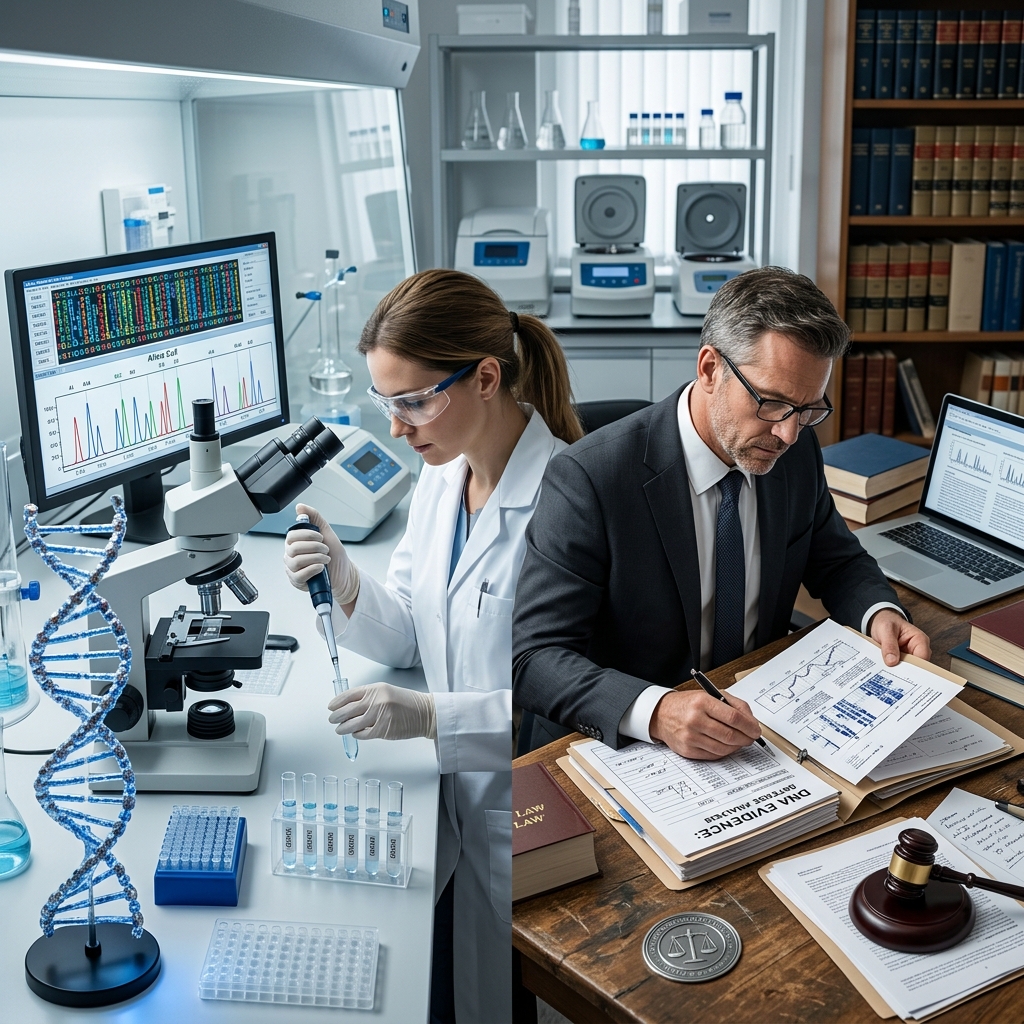
DNA testing has transformed criminal justice by giving courts, prosecutors, and defense lawyers a powerful scientific tool to determine whether a suspect was involved in a crime or wrongly accused. Used correctly, DNA evidence can strengthen a prosecution, bolster a defense, or overturn a conviction that should never have happened.
This article explains how DNA testing works in criminal cases, how it is used strategically by defense attorneys, and why it plays a central role in exonerating people who have been wrongfully convicted.
Understanding DNA Evidence in Criminal Cases
Deoxyribonucleic acid, or DNA, carries the genetic instructions that determine how a human body develops and functions. While humans share nearly all of their DNA, a small portion varies from person to person, allowing forensic scientists to distinguish one individual from another with high reliability.
In criminal investigations, DNA can be recovered from many types of biological material, such as:
- Blood from injuries or contact
- Semen or other bodily fluids in sexual assault cases
- Saliva on cigarettes, drink containers, or bite marks
- Skin cells left on weapons, door handles, or clothing
- Hair strands found at a scene
Laboratories analyze specific regions of the DNA to generate a profile that can be compared to samples from a suspect or to profiles stored in law enforcement databases such as the Combined DNA Index System (CODIS).
How DNA Testing Influences Criminal Defense Strategy
DNA evidence is often thought of as a tool for prosecutors, but it can be equally powerful for the defense. A criminal defense attorney may use DNA testing to test the prosecution’s theory, highlight alternative suspects, or demonstrate that a client could not have committed the crime.
Common defense strategies involving DNA include:
- Exclusion from the crime scene – showing the biological material at the scene does not match the defendant.
- Alternative source explanation – arguing that DNA came from innocent contact or a third party rather than criminal activity.
- Challenging collection and handling – exposing problems in how evidence was seized, stored, or tested.
- Requesting independent testing – sending samples to a different accredited lab for confirmation or reanalysis.
When used thoughtfully, DNA testing can create reasonable doubt, undermine unreliable eyewitness testimony, and counter circumstantial evidence that might otherwise lead to conviction.
DNA as a Shield Against Wrongful Convictions
Wrongful convictions can occur for many reasons, including mistaken identification, false confessions, flawed forensic methods, and official misconduct. Modern DNA analysis offers a method to test these cases against objective, biological evidence.
The United States has seen hundreds of exonerations based primarily on DNA evidence. The Innocence Project reports that more than 375 people were exonerated using DNA between 1989 and 2020, including many who had received long sentences or the death penalty. These cases show how powerful DNA can be in correcting errors that occur elsewhere in the system.
| Aspect | Role of DNA Evidence |
|---|---|
| Identification of suspects | Compares crime scene DNA to individuals or databases to locate or exclude suspects. |
| Testing guilty verdicts | Re-examines biological evidence to confirm or contradict a conviction. |
| Exposure of forensic errors | Replaces or challenges older, less reliable forensic methods that contributed to wrongful convictions. |
| Policy reform | Exoneration cases informed changes in laws governing evidence preservation and post-conviction testing. |
Post-Conviction DNA Testing and Exoneration
Post-conviction DNA testing refers to analyzing biological evidence after a person has already been found guilty, often years later. The goal is to determine whether DNA supports or undermines the original verdict.
Key steps in a typical post-conviction DNA case include:
- Locating biological evidence preserved from the original investigation.
- Verifying chain of custody to ensure the evidence has not been tampered with or contaminated.
- Requesting court authorization for new testing if not previously conducted.
- Comparing DNA profiles from the evidence with the convicted person and, in some jurisdictions, with DNA databases.
When tests show that crime scene DNA cannot have come from the convicted person, it may provide grounds for a new trial, vacating the conviction, or immediate release. Courts may also consider evidence of alternative perpetrators if the DNA matches someone else in a database.
Legal Hurdles in Seeking Post-Conviction DNA Testing
Access to post-conviction DNA testing is not automatic. Laws differ by state and country on when and how a convicted person may obtain testing. Common legal requirements include:
- Proof that biological evidence still exists and is testable.
- Showing that DNA results could be materially relevant to guilt or innocence.
- Demonstrating that the defendant did not deliberately delay seeking testing.
In many jurisdictions, statutes adopted in response to DNA exonerations require the long-term preservation of biological evidence in serious cases and explicitly allow motions for post-conviction DNA testing. Defense lawyers and innocence organizations frequently rely on these laws when advocating for clients claiming wrongful conviction.
Limitations and Risks of DNA Evidence
Although DNA is often regarded as “gold standard” forensic evidence, it is not infallible. Mistakes in collection, handling, testing, or interpretation can lead to misleading or even harmful results.
Important limitations include:
- Contamination – Exposure to DNA from multiple sources can confuse or compromise the sample.
- Degradation – Time, heat, moisture, and environmental factors may break down DNA, making analysis difficult.
- Mixed samples – When multiple people’s DNA is present, interpreting the profile can be complex.
- Secondary transfer – DNA can be transferred indirectly, so presence may not prove physical contact or criminal activity.
- Lab error or misinterpretation – As with any scientific test, human error and flawed methods can cause incorrect conclusions.
Additionally, DNA evidence usually shows that a particular person is or is not a source of biological material—it does not automatically describe how or why the material got there. A defense attorney may argue that even a match does not prove criminal intent, especially in locations where the defendant was legitimately present.
DNA Databases and Their Impact on Criminal Defense
National and state DNA databases allow law enforcement to compare unknown DNA profiles from crime scenes with stored profiles from convicted offenders, arrestees, or other sources. These systems, such as CODIS in the United States, can generate investigative leads and solve previously unsolved crimes.
For defense attorneys, DNA databases are important for several reasons:
- Identification of alternative suspects when a crime scene profile matches someone other than the accused.
- Verification of investigative steps to ensure the police used the database appropriately.
- Privacy and civil liberties concerns when clients’ DNA is taken and stored.
- Challenging partial or low-quality matches that may be treated as stronger evidence than justified.
Defense counsel may seek disclosure of database search results and protocols to understand how a match was generated and whether it should be trusted.
Role of Forensic Science Standards and Oversight
Many wrongful conviction cases have highlighted problems with older or less reliable forensic methods, such as microscopic hair comparison, bite mark analysis, and outdated serology techniques. In contrast, modern DNA analysis is generally more scientifically grounded, but it still requires strict standards and oversight.
Reforms in forensic science policies have focused on:
- Accreditation of laboratories and mandatory proficiency testing.
- Standard operating procedures for collection, storage, and analysis of biological evidence.
- Transparent reporting that explains limitations, statistical strength, and uncertainty.
- Independent review mechanisms to investigate alleged forensic misconduct or systemic errors.
For criminal defense attorneys, these reforms provide a framework to evaluate whether DNA results meet accepted scientific standards and to challenge evidence that falls short.
Practical Considerations for Defendants and Families
Anyone facing criminal charges involving biological evidence, or families of people who believe they were wrongfully convicted, should understand the practical steps involved in pursuing DNA testing.
Key considerations include:
- Preservation of evidence – Confirming that biological samples from the case were saved and stored properly.
- Legal representation – Working with an attorney experienced in forensic evidence and post-conviction relief.
- Funding and resources – Determining whether public funding, legal aid, or innocence organizations can help cover testing costs.
- Realistic expectations – Recognizing that DNA may not exist in every case, and results may be inconclusive.
While DNA cannot resolve all disputes, it continues to play a growing role in modern criminal defense and in efforts to correct miscarriages of justice.
Frequently Asked Questions (FAQs)
1. Can DNA evidence alone prove someone’s innocence?
DNA evidence can strongly support a claim of innocence when it shows that crime scene biological material came from someone other than the defendant. In some cases, courts have relied largely on DNA results to overturn convictions. However, judges often consider DNA alongside other evidence, such as witness statements and new information about the case.
2. What if no DNA was collected during the original investigation?
If no biological evidence was collected or preserved, post-conviction DNA testing may not be possible. In such cases, a defense attorney may focus on other avenues of relief, such as challenging unreliable eyewitness testimony, showing ineffective assistance of counsel, or presenting new non-DNA evidence.
3. How accurate is modern DNA testing?
When properly performed, contemporary DNA testing can be highly discriminating, often providing very strong statistical support for a match or exclusion. Accuracy depends on sample quality, laboratory procedures, and rigorous interpretation. Oversight and accreditation are critical to minimize error.
4. Can DNA be used in minor criminal cases, or only serious offenses?
DNA testing is most commonly associated with serious crimes, such as sexual assault and homicide, where biological evidence is prevalent and stakes are high. However, it can also play a role in other cases where relevant samples exist, including burglary or assault, depending on investigative practices.
5. What happens after DNA testing shows someone was wrongly convicted?
If DNA results clearly contradict a conviction, the defense may file motions for a new trial, to vacate the judgment, or to seek immediate release. Courts then review the evidence and decide whether the original verdict should be overturned. In many exoneration cases, DNA has led not only to release but also to policy changes aimed at preventing similar errors.
References
- DNA Exonerations in the United States — Innocence Project. 2020-08-04. https://innocenceproject.org/dna-exonerations-in-the-united-states/
- Wrongful Convictions and DNA Exonerations: Understanding the Role of Forensic Science — National Institute of Justice, U.S. Department of Justice. 2017-11-21. https://nij.ojp.gov/topics/articles/wrongful-convictions-and-dna-exonerations-understanding-role-forensic-science
- The Use of DNA by the Criminal Justice System and the Federal Role — Congressional Research Service. 2011-05-02. https://www.congress.gov/crs-product/R41800
- DNA as an Exoneration Tool — FindLaw. 2019-06-10. https://www.findlaw.com/criminal/criminal-procedure/dna-as-an-exoneration-tool.html
- DNA Exonerations in the United States (1989–2020) — Innocence Project (summary of NIJ and case data). 2020-08-04. https://innocenceproject.org/dna-exonerations-in-the-united-states/
Similar Articles








Read full bio of medha deb




