Do You Need Civilian Counsel for a Court-Martial?
If you are facing a court-martial, the first question is often whether military defense counsel is enough or whether hiring a civilian lawyer adds real value. The answer depends on the seriousness of the allegations, the complexity of the evidence, your comfort level with the process, and whether you want a second advocate focused only on your defense.
In many cases, the military provides defense counsel at no cost to the accused, and that lawyer can remain on the case even if you also hire civilian representation. That means the choice is not always either-or; many service members use both counsel together.
- Military counsel is generally provided to eligible service members without charge.
- Civilian counsel may be retained in addition to military counsel.
- The decision should be based on the facts of the case, not on fear or pressure alone.
How Civilian and Military Lawyers Work Together
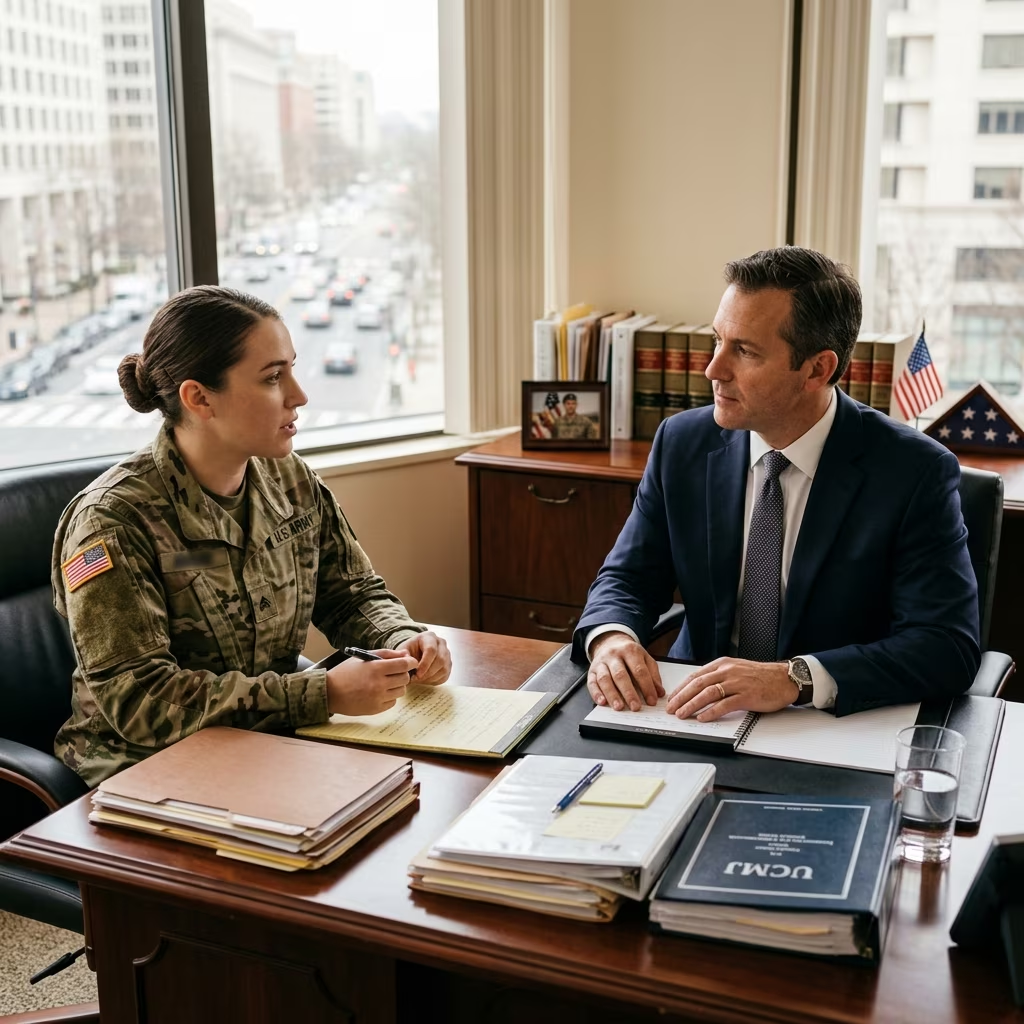
One of the most important points to understand is that hiring a civilian attorney does not usually replace your military defense lawyer. Instead, the civilian lawyer can work alongside the detailed military counsel, or in some situations lead the defense while the military lawyer remains available to assist.
This arrangement can be useful because each lawyer may bring different strengths. A military lawyer may know the command structure, procedure, and internal culture well. A civilian lawyer may bring extensive courtroom experience, more time to devote to the matter, or a practice focused on military criminal defense.
| Option | What it Means | Possible Benefit |
|---|---|---|
| Military counsel only | You rely on the free defense lawyer assigned through the service. | No direct legal fee. |
| Civilian counsel only | You retain a private attorney to represent you. | Independent representation of your choosing. |
| Both together | Civilian and military lawyers share or divide responsibilities. | Two advocates, potentially broader perspective. |
The best fit depends on your goals, resources, and the facts of the case. In some cases, a combined defense team provides the most balanced approach.
Reasons Service Members Consider Hiring Private Defense Counsel
People choose civilian counsel for a variety of practical reasons. No single reason applies to every accused service member, but several common factors often influence the decision.
- More personalized attention: A private lawyer may be able to spend more time on strategy, investigation, and client communication.
- Experience with similar charges: Some civilian attorneys focus heavily on military trials, administrative actions, or related criminal matters.
- Independent perspective: A civilian lawyer is not part of the chain of command and may provide a fresh view of the case.
- Complex evidence: Cases involving digital evidence, forensic issues, witnesses, or multiple allegations may benefit from additional legal support.
- Strategic value: A second lawyer can help challenge assumptions, refine cross-examination, and test the prosecution’s theory.
These advantages are not automatic. A civilian attorney is only helpful if that lawyer has the skill, time, and focus to contribute meaningfully to the defense.
When a Military Defense Lawyer May Be Enough
Not every court-martial requires private counsel. In some cases, the assigned military defense lawyer may already have the experience and availability needed to handle the matter effectively. This may be especially true when the allegations are limited, the evidence is straightforward, or the service member has confidence in the assigned lawyer’s strategy.
A civilian lawyer may not add much if the case is simple, the potential consequences are modest, or the accused cannot reasonably afford private fees. It is also possible for a service member to consult with a civilian attorney for a second opinion without fully retaining one.
- The charges are relatively narrow or factually uncomplicated.
- There is strong trust and communication with assigned military counsel.
- The expected benefit of private counsel does not outweigh the cost.
- You want advice, but not necessarily full representation.
Questions to Ask Before Hiring Anyone
Before selecting counsel, it helps to interview the lawyer carefully. A strong consultation should focus on experience, communication style, and the lawyer’s approach to cases like yours. Asking clear questions can help you compare options objectively.
- How much of your practice is devoted to court-martial and military defense work?
- Have you handled cases similar to mine, and what were the outcomes?
- Will you personally handle my case, or will tasks be delegated?
- How do you communicate with clients during fast-moving criminal matters?
- What fees, retainers, and additional costs should I expect?
- How do you coordinate with military defense counsel if I already have one?
It is also wise to ask whether the lawyer has experience with the specific type of allegation at issue. A general criminal defense background can be useful, but military cases often involve unique rules, procedures, and command-related dynamics.
Cost, Value, and Practical Tradeoffs
Hiring a civilian attorney is a financial decision as much as a legal one. Private defense can be expensive, and the scope of work may include pretrial investigation, motions practice, trial preparation, witness interviews, and post-trial issues. For that reason, service members should think in terms of value, not simply price.
A lower fee does not always mean a better result, and a high fee does not guarantee a stronger defense. The real question is whether the lawyer offers a meaningful advantage for your specific case. That may include courtroom skill, military-law knowledge, responsiveness, and the ability to work well with your detailed counsel.
Financial planning matters because military cases can unfold quickly. You should understand whether the lawyer charges hourly rates, flat fees, or a retainer, and whether extra costs may apply for travel, experts, or digital forensics.
Red Flags During the Search Process
Not every attorney who advertises military-defense services will be the right fit. During your search, pay attention to signs that a lawyer may not be the best choice for a serious court-martial matter.
- The lawyer cannot explain military procedure in plain language.
- The lawyer gives guarantees about outcomes.
- The lawyer seems dismissive of your military counsel without reviewing the case.
- The lawyer does not answer questions about fees or staffing clearly.
- The lawyer appears more interested in sales than in strategy.
A trustworthy attorney should explain the strengths and weaknesses of the defense honestly. That includes acknowledging when military counsel may already be doing a strong job or when private representation is unlikely to change the result materially.
What a Strong Defense Strategy May Include
A capable defense in a court-martial is not limited to standing up in court. It can begin long before trial and may involve a wide range of tasks that shape the result of the case.
- Reviewing the allegations and identifying weaknesses in the prosecution’s theory.
- Investigating witnesses and collecting favorable evidence.
- Challenging unlawful searches, statements, or procedural mistakes.
- Preparing motions to exclude unreliable or improperly obtained evidence.
- Negotiating with prosecutors when resolution is possible.
- Preparing for trial if the case cannot be resolved on favorable terms.
In some cases, the value of civilian counsel is the ability to focus intensely on these tasks while coordinating with military counsel on command issues and service-specific consequences.
How to Decide What Is Right for Your Case
The best decision is based on your situation, not on assumptions about what other service members have done. Start by asking three questions: How serious are the charges? How comfortable are you with the assigned defense counsel? And what additional value would a private lawyer truly provide?
If the allegations are major, the evidence is complicated, or the possible consequences could affect your liberty, career, or benefits, private counsel may be worth serious consideration. If the matter is narrower and your military lawyer is handling it effectively, you may decide that a civilian attorney is unnecessary.
Many service members also choose a middle path: they consult a civilian lawyer early, use military counsel throughout, and decide later whether to formally retain private representation. That approach can provide information without forcing an immediate commitment.
Frequently Asked Questions
Can I keep my military defense lawyer if I hire a civilian attorney?
Yes. In many situations, you can retain civilian counsel and still keep your military defense lawyer on the case to assist.
Do I have to hire a civilian attorney for a court-martial?
No. Eligible service members are generally provided military defense counsel, so private counsel is optional.
Is civilian counsel always better than military counsel?
No. The best defense depends on the lawyer’s experience, the facts of the case, and how well the team works together.
Should I talk to a civilian lawyer before deciding?
Yes. A consultation can help you compare strategies, fees, and likely outcomes before you commit to representation.
What should I bring to the consultation?
Bring any charge sheets, investigative documents, orders, emails, or other records that may help the lawyer understand the case.
Making a Careful Decision Early Can Matter
Military criminal cases can move quickly, and early choices often affect the rest of the case. Whether you rely on military counsel alone or add a civilian lawyer, the key is to get informed representation as soon as possible. A thoughtful decision early on can improve preparation, preserve evidence, and reduce avoidable mistakes.
If you are weighing your options, focus on the lawyer’s actual experience, communication, and fit for your case. The right counsel should help you understand the process and defend your interests with clarity and discipline.
References
- Rules for Courts-Martial Manual for Courts-Martial, United States — United States Department of Defense. 2024-12-20. https://jsc.defense.gov/Portals/99/Documents/MCM%202024.pdf
- Uniform Code of Military Justice — Legal Information Institute, Cornell Law School. 2025-01-01. https://www.law.cornell.edu/uscode/text/10/subtitle-A/part-II/chapter-47
- Military Justice — United States Department of Defense. 2025-05-14. https://www.defense.gov/News/Spotlights/Military-Justice/
- Manual for Courts-Martial, United States — National Defense Authorization/Executive Branch publication record. 2024-12-20. https://jsc.defense.gov/
- Military Justice Overview — United States Navy JAG Corps. 2025-02-11. https://www.jag.navy.mil/