
Rethinking Emergency Interventions: Shifting Mental Health Crisis Care Away from Law Enforcement
Discover why relying on armed police for mental health crises is dangerous and how civilian-led models offer a safer path.
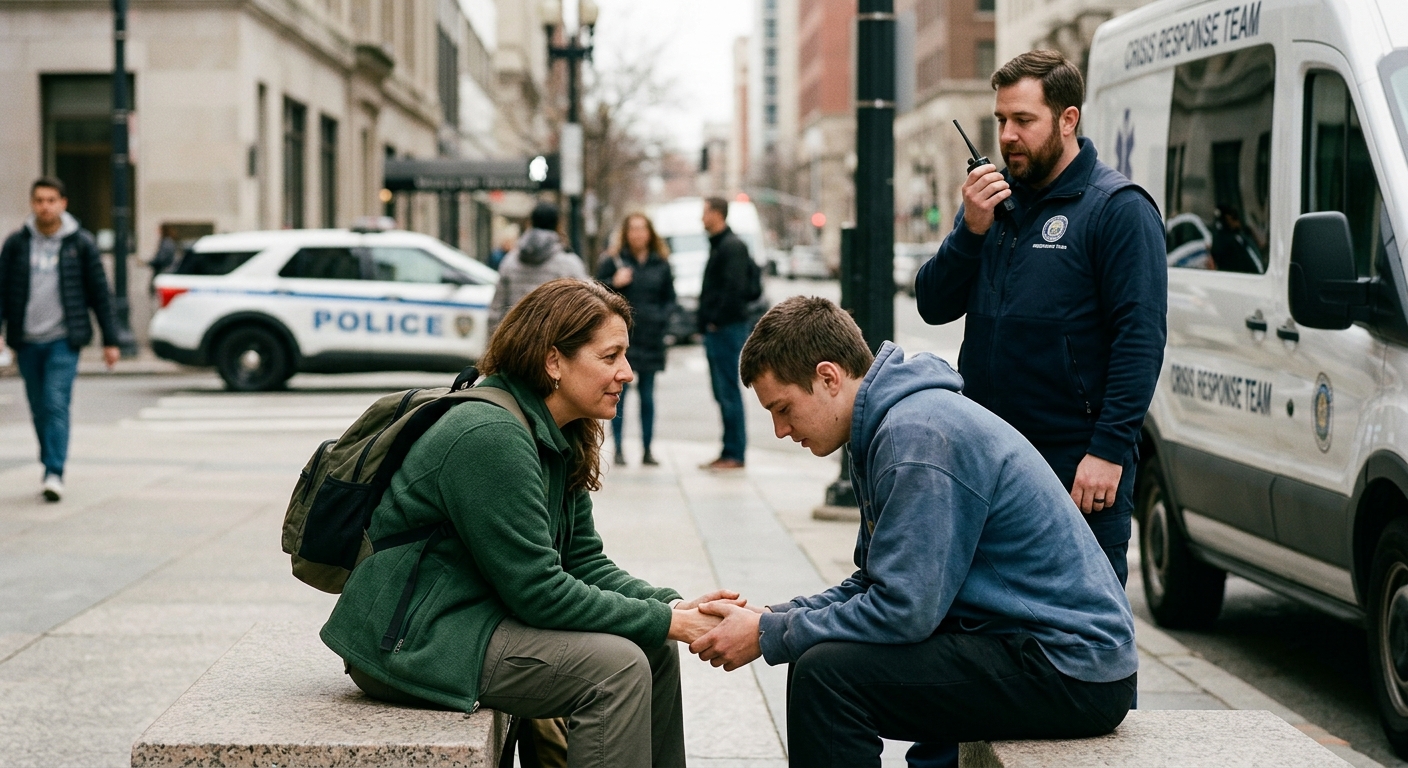
For decades, the default response to a mental health emergency in the United States has been a frantic call to 911, inevitably resulting in the swift dispatch of armed law enforcement officers. Whether an individual is experiencing acute psychosis, intense psychological distress, or a severe depressive episode, the arrival of police cruisers with flashing lights has become an all-too-familiar scene. However, a growing consensus among public health experts, civil rights advocates, and progressive policymakers suggests that police are fundamentally the wrong professionals to handle these fragile and complex situations.
Treating a medical emergency as a public safety threat not only fails to provide the necessary clinical care but also dramatically increases the likelihood of escalation, violence, and tragedy. The paradigm is finally beginning to shift. Across the nation, communities are recognizing that mental health crises require compassionate, specialized interventions rather than command-and-control policing tactics. The time has come to radically rethink our emergency interventions and prioritize medical and social responses over law enforcement.
The Inherent Incompatibility of Armed Responses to Psychological Distress
Law enforcement agencies are primarily trained to enforce laws, secure unpredictable scenes, and neutralize active threats. Their standard operating procedures involve asserting immediate authority, issuing swift verbal commands, and ensuring absolute compliance. While these tactical maneuvers may be necessary in active criminal situations, they are completely counterproductivend frequently dangerousnd frequently dangerousnd frequently dangerousnd frequently dangerousnd frequently dangerousnd frequently dangerousnd frequently dangerousnd frequently dangerousnd frequently dangerous when applied to someone experiencing a behavioral health crisis.
Escalation Versus De-escalation
When an individual is in the throes of a psychological emergency, their cognitive processing and emotional regulation are severely impaired. They may be terrified, experiencing paranoia, or entirely unable to comprehend basic instructions. The sudden introduction of armed, uniformed officers who demand immediate compliance triggers a deeply ingrained fight-or-flight response. The very tools that police use to maintain controlnd frequently dangerousnd frequently dangerousnd frequently dangerousnd frequently dangerousnd frequently dangerousnd frequently dangerousnd frequently dangerousnd frequently dangerousnd frequently dangerousnd frequently dangerousnd frequently dangerousnd frequently dangerousnd frequently dangerousnd frequently dangerousnd frequently dangerousnd frequently dangerousnd frequently dangerousnd frequently dangerousnd frequently dangerousnd frequently dangerousnd frequently dangerousnd frequently dangerousnd frequently dangerousnd frequently dangerousnd frequently dangerousnd frequently dangerousnd frequently dangerousnd frequently dangerousnd frequently dangerousnd frequently dangerousnd frequently dangerousnd frequently dangerousnd frequently dangerousnd frequently dangerousnd frequently dangerousnd frequently dangerousnd frequently dangerousnd frequently dangerousnd frequently dangerousnd frequently dangerousnd frequently dangerousnd frequently dangerousnd frequently dangerousnd frequently dangerousnd frequently dangerousnd frequently dangerousnd frequently dangerousnd frequently dangerousnd frequently dangerousnd frequently dangerousnd frequently dangerousnd frequently dangerous serve only to escalate the distress of a person who is already mentally overwhelmed.
Unlike police officers, behavioral health professionals and clinical social workers are trained extensively in trauma-informed de-escalation techniques. Clinicians employ specific methods to stabilize individuals, such as maintaining non-threatening body language, avoiding continuous direct eye contact if it induces paranoia, and offering simple choices to restore a sense of agency to the person in crisis. Their ultimate goal is not to force immediate compliance, but to establish mutual trust and ensure the individual’s safety. By relying on police, we replace the possibility of medical stabilization with the explicit threat of physical force.
Criminalizing a Health Crisis
Another profound flaw in using police as mental health first responders is the inherent criminalization of illness. When police respond to a psychological crisis, the encounter is inevitably filtered through the rigid lens of the criminal justice system. Behaviors that are recognizable symptoms of a medical conditionnd frequently dangerousnd frequently dangerousnd frequently dangerous such as erratic movements, shouting to oneself, or trespassing while disorientednd frequently dangerousnd frequently dangerousnd frequently dangerous are frequently interpreted as disorderly conduct, resisting arrest, or assault.
Consequently, individuals in crisis are routinely handcuffed, placed in the back of a squad car, and transported to a local jail cell rather than an appropriate psychiatric facility. This pipeline from crisis directly to incarceration does absolutely nothing to address the root biological or psychological causes of mental illness. Instead, it places highly vulnerable individuals into harsh environments that exacerbate their underlying trauma and severely delay their access to specialized care. Today, county jails and state prisons have inadvertently become the largest mental health facilities in the country, a sobering reality that underscores the profound failure of our current emergency response infrastructure.
The Disproportionate Toll on Vulnerable Communities
The tragic consequences of police responding to mental health calls are not distributed equally across society. The intersection of severe mental illness, racial identity, and systemic inequality creates a uniquely perilous situation for marginalized communities. According to extensive data collected by The Washington Post , a significant percentage of people shot and killed by police officers are experiencing a mental health crisis at the very moment of their death.
For Black, Indigenous, and People of Color (BIPOC), the stakes are magnified to a lethal degree. Systemic racism and implicit biases often lead officers to perceive Black and Brown individuals as inherently more dangerous or physically threatening, even when their behavior is solely the result of a medical emergency. When a person of color experiences a mental health crisis, the dual stigmas of race and mental illness dangerously compound, drastically increasing the likelihood that the encounter will end in the deployment of lethal force.
Furthermore, individuals with intellectual, cognitive, or developmental disabilities are also placed at extreme risk by the current system. Common actions like avoiding eye contact, engaging in repetitive physical movements, or a delayed response to verbal commands can easily be misinterpreted by untrained officers as defiance or outright hostility. The devastating reality is that families of marginalized individuals often hesitate to call 911 for help during a severe crisis out of a well-founded fear that the responders meant to save their loved one might end up harming or killing them instead.
Pioneering Alternative Models of Crisis Care
Recognizing the urgent need for systemic transformation, public health institutions, non-profit organizations, and forward-thinking local governments are developing alternative models of crisis intervention that remove traditional law enforcement from the equation entirely. These civilian-led programs treat behavioral health emergencies strictly as medical and social issues.
The SAMHSA Crisis Care Guidelines
The Substance Abuse and Mental Health Services Administration (SAMHSA) has outlined a comprehensive, evidence-based framework for a coordinated system of crisis care . According to their national guidelines, an effective and humane crisis system must include three core foundational elements:
- Someone to contact: A 24/7 centralized crisis hotline, such as the widely implemented 988 Suicide & Crisis Lifeline, staffed by deeply trained counselors and mental health professionals rather than traditional 911 dispatchers.
- Someone to respond: Mobile crisis teams composed exclusively of behavioral health professionals, peers with lived experience, and emergency medics, who can be safely dispatched directly to the scene to provide in-person support and clinical de-escalation.
- A safe place for help: Crisis receiving and stabilization facilities that offer a welcoming, trauma-informed environment where individuals can receive immediate psychiatric care without the risk of arrest or enduring extended stays in chaotic hospital emergency rooms.
Civilian Crisis Response Teams in Action
Cities across the United States are proving daily that these alternative, unarmed models are both remarkably safe and highly effective. Research provided by the Vera Institute of Justice highlights the overwhelming success of civilian crisis response models, which dispatch unarmed teams of clinicians to behavioral health calls instead of sending police . A well-known pioneer of this alternative approach is the CAHOOTS (Crisis Assistance Helping Out On The Streets) program located in Eugene, Oregon. For over three decades, CAHOOTS has successfully diverted tens of thousands of calls away from law enforcement, resolving the vast majority of volatile situations without ever requiring police backup.
These specialized teams are uniquely equipped to handle a wide range of non-violent crises, including suicide threats, severe substance use overdoses, and acute psychotic episodes. By arriving in unmarked, non-threatening vans, wearing casual clothing, and immediately offering essential supplies like water, blankets, and basic first aid, these civilian responders immediately signal to the person in distress that they are there exclusively to help, not to punish.
Overcoming Structural and Political Barriers
While the nationwide momentum for non-police crisis response is growing at a rapid pace, several significant systemic barriers continue to hinder the widespread adoption of these lifesaving public health models. Addressing these challenges requires coordinated effort and political will.
One of the most complex hurdles is fundamentally changing the deeply entrenched architecture of emergency dispatch. For generations, dialing 911 has been the universal panic button for every conceivable problem. To implement alternative responses effectively, local 911 call centers must adopt new, sophisticated triage protocols to accurately identify behavioral health calls and seamlessly route them to civilian teams or the 988 lifeline system. This requires extensive, ongoing retraining of emergency dispatchers and a massive cultural shift in how operators perceive public risk and individual safety.
Furthermore, the chronic historical underfunding of the mental healthcare system stands as a major financial obstacle. Expanding civilian mobile crisis teams and building specialized, 24-hour stabilization centers requires a massive infusion of capital. Advocates correctly argue that this funding should be systematically reallocated from inflated law enforcement budgets, thereby investing in proactive community care rather than the continued militarization of local police forces. Overcoming political resistance from police unions requires robust public education campaigns that highlight a vital piece of data: civilian crisis responders are incredibly safe. Emphasizing these facts is crucial to finally dispelling the myth that armed force is a prerequisite for community safety.
The Economic and Social Case for Divestment and Reinvestment
Beyond the profound moral imperative of saving lives and providing appropriate, compassionate medical care, there is a highly compelling economic argument for decisively removing police from mental health crises. Standard law enforcement responses are remarkably expensive. The multifaceted costs associated with police dispatch, processing individuals through the labyrinth of the criminal justice system, pretrial detention, and the subsequent, inevitable legal battles following police-involved shootings run into the billions of dollars annually.
Conversely, investing heavily in front-end behavioral health infrastructure yields significant, measurable cost savings. Civilian mobile crisis teams operate at a mere fraction of the hourly cost of traditional law enforcement units. By successfully diverting individuals away from costly emergency medical departments and local jails, municipalities can save substantial taxpayer dollars every year. These critical funds can then be reinvested back into long-term community support services, affordable housing initiatives, and preventative mental health care, effectively addressing the root causes of psychological crises long before they escalate into emergencies.
Conclusion: Charting a Humane Path Forward
The continued, stubborn reliance on armed law enforcement to manage mental health emergencies represents a profound failure of public policy and public health. When we choose to respond to human illness with weapons and handcuffs, we practically guarantee tragic outcomes that disproportionately devastate marginalized communities. Moving forward requires a fundamental, uncompromising shift in our societal approach to psychological distress. By investing boldly in comprehensive, civilian-led crisis response networks, we can finally ensure that individuals experiencing their darkest moments are met with the clinical expertise, compassion, and dignity they deserve. It is well past time to stop treating mental illness as a crime and to start building an emergency response infrastructure rooted firmly in care.
Frequently Asked Questions (FAQs)
Why is it inherently dangerous for police to respond to mental health calls?
Police officers are highly trained to use command presence and physical force to quickly secure a scene, which can drastically escalate the distress of someone in a mental health crisis. The mere presence of weapons and uniforms often triggers a fight-or-flight response, leading to preventable violence or fatal outcomes rather than necessary medical stabilization.
What exactly are civilian crisis response teams?
Civilian crisis response teams are unarmed, specially trained mobile units composed of behavioral health clinicians, licensed social workers, paramedics, and peers with lived experience. They are dispatched to mental health emergencies to provide trauma-informed care, safe de-escalation, and direct connection to social services instead of law enforcement.
How do communities fund these alternative response programs?
Funding for alternative crisis response programs typically comes from a combination of diverse sources, including federal grants, Medicaid reimbursements, and state public health budgets. Many community advocates also push for reallocating municipal funds from traditional law enforcement budgets into community-based health and social services to sustain and expand these vital programs.
References
- Fatal Force: Police Shootings Database
https://www.washingtonpost.com/graphics/investigations/police-shootings-database/ - 2025 National Guidelines for a Behavioral Health Coordinated System of Crisis Care
https://www.samhsa.gov/mental-health/national-behavioral-health-crisis-care - Civilian Crisis Response: A Toolkit for Equitable Alternatives to Police
https://www.vera.org/publications/civilian-crisis-response-toolkit
Similar Articles








Read full bio of Sneha Tete




