
Sexual Harassment of Hotel Housekeepers by Guests
Exploring how hotel housekeepers face guest-driven sexual harassment, legal protections, and steps to create safer workplaces.
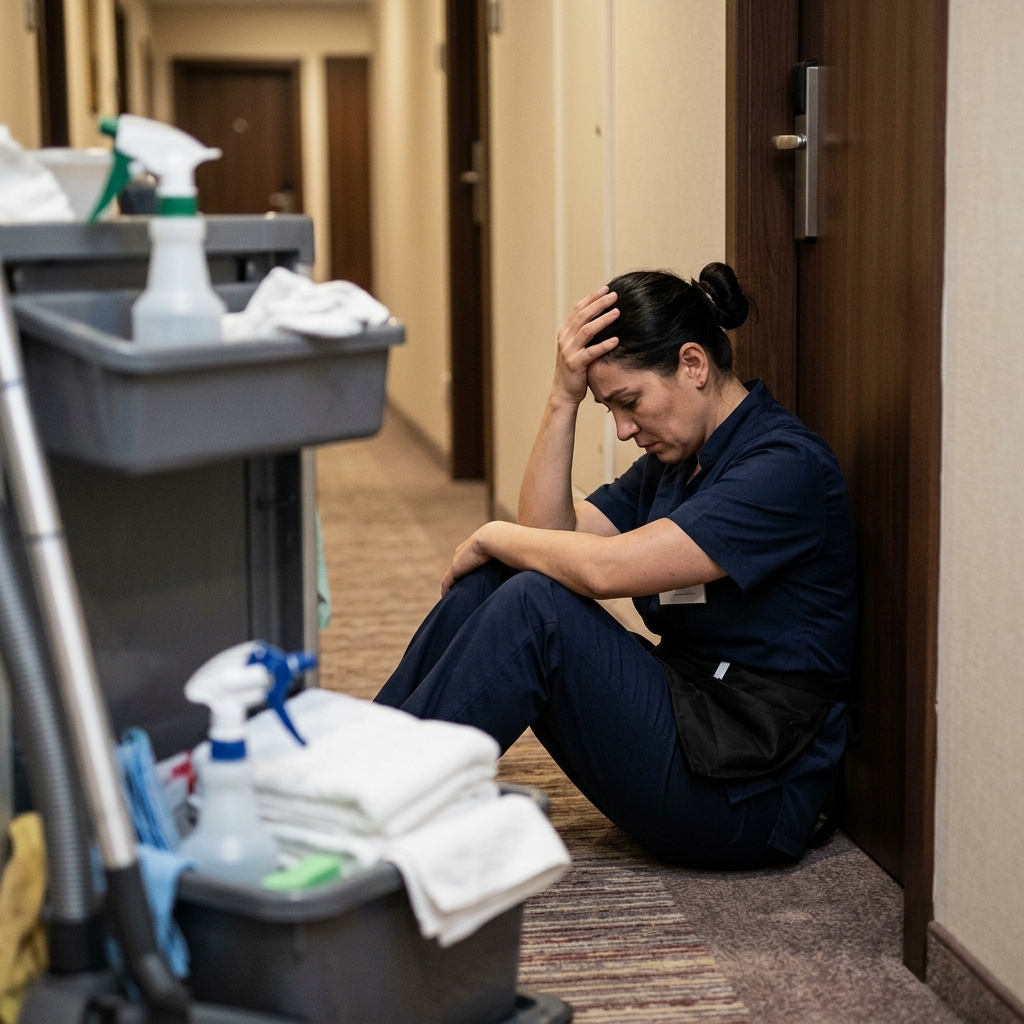
Hotel housekeepers perform essential work that keeps the hospitality industry running, yet many face a hidden danger: sexual harassment from guests. Research and testimony from hospitality workers show that this abuse is widespread, often normalized, and frequently goes unreported, leaving workers vulnerable and employers exposed to legal risk.
This article examines how and why hotel housekeepers are targeted, the legal framework that applies when harassment comes from customers, and practical steps workers and employers can take to reduce harm and strengthen accountability.
Understanding Guest-Driven Sexual Harassment in Hotels
Sexual harassment in hotels does not only come from supervisors or co-workers. Guests—who are not employees but still interact closely with staff—are a major source of abuse. Studies of hospitality workers in the United States and Europe have documented high levels of harassment reported by housekeepers and other hotel employees.
Common characteristics of guest-related harassment include:
- Housekeepers entering private rooms where guests may be undressed or intoxicated
- Working alone, out of direct view of supervisors or colleagues
- Guests feeling entitled to treat staff as part of the “service” experience
- Power imbalances based on immigration status, language barriers, or economic insecurity
These conditions create opportunities for harassment that can range from offensive comments to serious sexual assault, with many workers reporting that they have come to see such behavior as an unfortunate but routine part of the job.
How Widespread Is the Problem?
Quantifying sexual harassment in the hospitality sector is challenging because many incidents go unreported. Nonetheless, available data show it is a systemic issue:
- A survey of hotel workers found that 58% of women reported being sexually harassed by a guest, including verbal harassment, exposure, and unwanted contact.
- Another study of hospitality employees reported high rates of harassment from customers, reinforcing the idea that guest behavior is a significant risk factor for hotel staff.
- Research on hotel housekeepers in the Balearic Islands found that most participants had experienced sexual harassment at work and often viewed it as normal or not serious enough to report.
These findings show that sexual harassment of hotel housekeepers is not limited to isolated incidents. It is a pervasive occupational hazard that demands structural solutions.
Typical Scenarios Reported by Housekeepers
While every case is unique, several patterns recur in accounts collected by unions, legal organizations, and researchers:
- Guests answering the door naked or deliberately exposing themselves while a room is being cleaned
- Requests to close the door while cleaning, sometimes followed by physical advances
- Sexualized comments, propositions, or requests for information about sex services
- Unwanted touching, grabbing, or blocking the worker’s exit from the room
- Use of tips to force physical contact or create pressure to tolerate inappropriate behavior
Some of these behaviors may be brushed off as “jokes” or misunderstandings, but they can quickly escalate into coercion or assault, especially when a worker is alone and feels unable to leave.
Why Hotel Housekeepers Are Especially Vulnerable
Several structural features of housekeeping work increase vulnerability to sexual harassment and related forms of abuse.
| Risk Factor | How It Increases Vulnerability |
|---|---|
| Working alone in guest rooms | Limits witnesses and immediate support; makes it hard to escape or seek help quickly. |
| Closed doors and private spaces | Harassment often occurs behind closed doors where monitoring is minimal. |
| Customer-service culture | Expectation to “please the guest” can discourage workers from asserting boundaries. |
| Precarious employment & immigration status | Fear of job loss, deportation, or retaliation may deter reporting. |
| Low social support at work | Research links low social support to higher stress and greater impact of bullying and harassment. |
In focus groups with housekeepers, many described harassment and bullying as part of everyday life in the hotel, something they felt powerless to change. This normalization contributes to underreporting and complicates efforts to address the problem.
Psychological and Health Impact on Workers
Sexual harassment is not simply an interpersonal problem; it has measurable effects on mental and physical health. Studies of hotel housekeepers have found that those who experience harassment and bullying report:
- Higher levels of stress and anxiety at work
- Lower satisfaction with their job and pay
- Reduced social support from colleagues and supervisors
- Worse self-rated health compared with those not experiencing harassment
These outcomes can ripple outward, affecting absenteeism, turnover, and overall service quality. For employers, ignoring harassment is not only a moral failure but a business risk.
Legal Protections When Harassment Comes from Guests
Sexual harassment is a form of discrimination prohibited under workplace civil rights laws in many countries. In the United States, Title VII of the Civil Rights Act of 1964 prohibits sex-based discrimination, and the Equal Employment Opportunity Commission (EEOC) has long held that employers can be liable when they know or should know that customers are harassing employees and fail to take corrective action.
Key legal principles include:
- Employers have a duty to provide a workplace free from sexual harassment, regardless of whether the harasser is a supervisor, co-worker, or customer.
- Workers are protected when they report harassment or participate in an investigation; retaliation such as firing, demotion, or discipline because of reporting is unlawful.
- Policies and training should explicitly address harassment by guests and set out procedures for reporting and response.
Some regions and states have adopted specific laws aimed at hospitality and janitorial workers, requiring harassment prevention training, emergency response systems, or other protections tailored to the risks faced by housekeepers.
Employer Responsibilities Under Anti-Discrimination Laws
Even though guests are not employees, the employer still controls the conditions of work. When harassment is reported, reasonable steps may include:
- Promptly investigating the complaint and documenting findings
- Restricting or revoking service to abusive guests when appropriate
- Reassigning the worker to reduce exposure, without cutting hours or pay
- Updating policies and training to prevent similar incidents
Failure to act when harassment is known or obvious can expose the employer to legal liability and damages, especially if patterns of abuse are ignored.
Safety Measures and Emerging Protections
Recognizing the heightened risks for hotel housekeepers, unions, advocacy groups, and some hotel chains have promoted specific safety measures to protect workers. One of the most notable developments has been the adoption of panic buttons and similar emergency devices.
Panic Buttons and Emergency Response Devices
In recent years, tens of thousands of hotel employees in the United States have gained access to panic buttons or mobile alert systems that allow them to instantly call for help if they feel threatened or are being harassed.
These devices typically:
- Send a signal with the worker’s location to security or designated responders
- Are worn on the person, enabling quick activation even behind closed doors
- Form part of a broader safety protocol, including response timelines and documentation
Some city-level and state-level legislation now requires hotels to provide such devices to housekeepers and train staff in their use, recognizing the unique risks of working alone in guest rooms.
Training, Policies, and Hotline Services
In addition to panic buttons, other protective measures include:
- Mandatory sexual harassment training for hospitality employees and supervisors
- Clear reporting procedures that cover harassment by guests and guarantee non-retaliation
- Hotlines or third-party reporting systems for workers who fear internal retaliation
- Strong union or worker-organization support to advocate for safer conditions
Campaigns by housekeepers across the country have also helped break the silence around routine harassment, encouraging more workers to speak out and pushing hotels to adopt stronger protections.
Practical Steps for Housekeepers to Protect Themselves
While employers bear the primary responsibility for providing a safe workplace, housekeepers can take certain practical steps to reduce risk and document incidents:
- Keep doors open whenever possible while cleaning, unless policies or emergencies require closure.
- Use panic buttons or available communication devices and know the exact procedure for requesting help.
- Trust instincts—leave the room immediately if a guest’s behavior feels unsafe or escalating.
- Record details of any incident (date, time, room number, description of behavior) as soon as it is safe to do so.
- Report harassment to a supervisor or designated contact, and follow up in writing when possible.
For workers, understanding that they have a legal right to be free from harassment—even when the source is a guest—is an important starting point for asserting boundaries and seeking support.
Best Practices for Hotel Employers
Hotels that take harassment seriously can reduce harm to workers, limit legal exposure, and improve their overall workplace culture. Effective approaches often combine policy, technology, training, and leadership commitment.
- Explicit policies stating zero tolerance for harassment by guests and clear consequences for abusive behavior.
- Risk assessment focused on housekeeping tasks, including lone work and closed-door environments.
- Provision of panic buttons and fast-response protocols for all housekeepers.
- Regular training that covers recognizing harassment, reporting procedures, and non-retaliation commitments.
- Data tracking of reported incidents to identify patterns and repeat offenders.
- Collaboration with unions or worker groups to design measures that reflect on-the-ground realities.
By embedding these practices into everyday operations, hotels can shift from reactive handling of individual complaints to proactive prevention and cultural change.
Frequently Asked Questions (FAQs)
Is harassment by hotel guests treated the same as harassment by co-workers?
From a legal perspective, many workplace anti-discrimination laws hold employers responsible for taking reasonable steps to stop harassment regardless of whether the harasser is a supervisor, co-worker, or customer. If an employer knows or should know that guests are harassing staff and fails to act, it may still be liable.
Can a hotel housekeeper be fired for reporting harassment by a guest?
Retaliation against an employee for reporting sexual harassment or participating in an investigation is generally prohibited under anti-discrimination laws. Firing, demoting, or penalizing a worker because they complained about harassment can form the basis of a separate legal claim.
What should a worker do immediately after an incident?
Whenever it is safe, the worker should leave the situation, seek support, and report the incident according to workplace policy. Writing down details—such as time, location, and a description of the guest—can help with any subsequent investigation. If there is a panic button or emergency device available, it should be used as soon as the worker feels at risk.
Are panic buttons legally required for all hotels?
Requirements vary by jurisdiction. Some cities and states have passed laws mandating panic buttons or similar devices for hotel housekeepers, while others rely on voluntary adoption by hotel chains. Workers and employers should check local law and industry agreements to determine specific obligations.
How can guests support safer conditions for housekeepers?
Guests can respect boundaries, avoid entering or remaining in rooms while they are being cleaned, and report any observed harassment to hotel management. Treating housekeepers with dignity and understanding their right to a safe workplace helps reinforce a culture of respect.
References
- Why cleaning a hotel room makes you a target for sexual harassment — Reveal (Center for Investigative Reporting). 2015-08-24. https://revealnews.org/blog/why-cleaning-a-hotel-room-makes-you-a-target-for-sexual-harassment/
- Housekeeper Sexual Harassment — Red Bank Legal. Date not specified (accessed 2026). https://www.redbanklegal.com/practice-areas/sexual-harassment-in-the-workplace/housekeeper-sexual-harassment/
- Workplace bullying and sexual harassment at work among hotel housekeepers — Gascón-Catalán et al., International Journal of Environmental Research and Public Health. 2023-01-12. https://pmc.ncbi.nlm.nih.gov/articles/PMC10803624/
- Written Testimony of Kasey Nalls — U.S. Equal Employment Opportunity Commission (EEOC). 2016-06-15. https://www.eeoc.gov/written-testimony-kasey-nalls
- Housekeepers nationwide speak out, launching campaign to end silence on hotel dangers — UNITE HERE. 2011-06-16. https://unitehere.org/housekeepers-nationwide-speak-out-launching-campaign-to-end-silence-on-hotel-dangers/
- The device will call for help if housekeepers are sexually harassed by guests — National Sexual Violence Resource Center (via Facebook post). 2018-01-24. https://www.facebook.com/nsvrc/posts/the-device-will-call-for-help-if-housekeepers-are-sexually-harassed-by-guests/10156501155977254/
Similar Articles








Read full bio of Sneha Tete




