
Religious Liberty In Custody Now: Rights, Rules, And Remedies
How the criminal justice system shapes, restricts, and protects the right to practice religion for people in government custody.
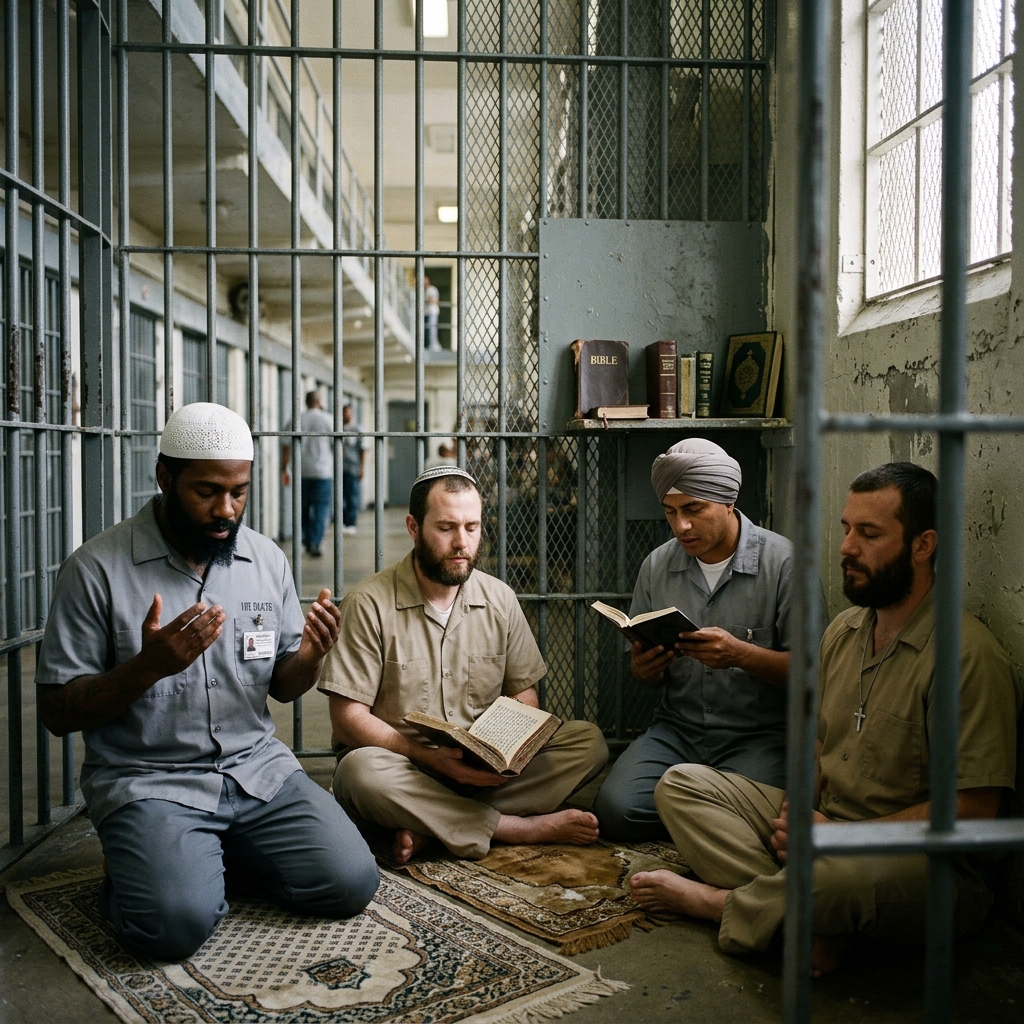
Religious liberty is a core promise of the United States Constitution, and that promise does not end at the prison gate. People held in jails, prisons, immigration detention, and other government facilities retain the right to practice their faith, subject only to legitimate limits tied to safety and order. Ensuring this right is respected in the criminal justice system is essential for both human dignity and the rule of law.
Why Religious Liberty Matters in Custody
When the government takes control of a person’s daily life, it also gains immense power over that person’s ability to worship, pray, gather with others, and follow religious rules. In these settings, officials decide:
- What religious items people can possess
- Whether they may attend group services
- What food they will be served
- How grooming, clothing, and schedules are regulated
These decisions can deeply affect people’s spiritual lives. For many individuals, religious practice provides meaning, community, and emotional stability, especially in the stressful environment of incarceration. At the same time, the government has clear responsibilities: maintaining security, preventing violence, and ensuring facilities operate safely for staff and those in custody.
Balancing these interests is the central challenge of religious liberty in the criminal justice system. Modern law and Supreme Court decisions emphasize that prisons cannot simply ignore religious rights; they must justify restrictions and, in many cases, accommodate sincere religious practice whenever consistent with safety and order.
Key Legal Foundations for Religious Rights in Prison
Several overlapping legal frameworks protect religious liberty in jails, prisons, and other institutions:
First Amendment: Free Exercise and Establishment
The First Amendment to the U.S. Constitution prohibits the government from interfering with the free exercise of religion and from establishing or favoring any faith. In the prison context, this means:
- Officials cannot punish or reward people because of their religious beliefs.
- Prisons may not promote one faith above others, such as sponsoring explicitly sectarian programs while excluding alternatives.
- People must be allowed to hold and express sincere religious beliefs, subject only to legitimate institutional needs.
The Supreme Court has long recognized that incarcerated people retain constitutional rights, including rights to worship, though those rights may be limited by the realities of incarceration. Courts examine whether restrictions are reasonably related to legitimate penological interests, such as security and resource constraints.
Statutory Protections: RLUIPA
Congress strengthened protections for religious exercise by enacting the Religious Land Use and Institutionalized Persons Act (RLUIPA) in 2000. RLUIPA requires that prisons, jails, and similar institutions:
- Do not impose a substantial burden on religious exercise unless the restriction serves a compelling governmental interest.
- Use the least restrictive means available when limiting religious practices.
In practical terms, RLUIPA gives people in custody a powerful tool to challenge unjustified policies. For example, in Holt v. Hobbs, the Supreme Court held that Arkansas prison officials violated RLUIPA when they prevented a Muslim prisoner from growing a short beard required by his faith. The Court found that the blanket ban was not the least restrictive way to address security concerns.
Equal Protection and Anti-Discrimination Principles
The Fourteenth Amendment’s Equal Protection Clause and civil rights statutes also play a role. Government officials may not:
- Treat one religion more favorably than another without a legitimate, neutral reason.
- Deny accommodations to minority faiths while granting them to mainstream religions.
- Discriminate based on religion in access to programs, services, or privileges.
Courts examine patterns of favoritism or neglect, as well as explicit policies that single out certain religious groups for harsher treatment. Civil rights litigation has frequently addressed unequal access to chaplains, worship spaces, and holiday observances.
Common Areas of Conflict in Religious Practice
Because prisons and jails regulate nearly every aspect of life, religious liberty disputes can arise in many forms. Some of the most frequent areas of conflict include dietary rules, grooming, worship, and religious items.
Religious Diets and Food Access
Many faith traditions have specific dietary requirements, such as kosher, halal, vegetarian, or fasting rules. People in custody often request:
- Special meal plans that avoid prohibited foods
- Food preparation consistent with religious rules (e.g., separate kitchens or utensils)
- Accommodation during fasting periods and religious holidays
Under RLUIPA and the First Amendment, prisons generally must provide reasonable religious diet options unless doing so would create a genuine, significant hardship. Courts have found that cost alone is rarely sufficient to deny accommodations where workable alternatives exist.
Grooming, Clothing, and Religious Appearance
Rules governing hair length, facial hair, head coverings, and uniforms frequently conflict with religious requirements. Examples include:
- Beards or long hair worn for religious reasons
- Headscarves, turbans, or yarmulkes
- Modest dress requirements
Security concerns—such as the risk of hiding contraband or issues with identification—often drive restrictive grooming policies. RLUIPA requires officials to show that restrictions are narrowly tailored. The Holt v. Hobbs decision illustrates that blanket bans may fail when less restrictive measures (like searching beards or limiting their length) can address security goals.
Worship Services and Religious Gatherings
Access to communal worship is a central part of religious life for many faiths. Conflict can arise over:
- Scheduling and frequency of services
- Availability of chaplains or spiritual leaders
- Space for religious study or prayer groups
- Equal access for minority religions
Facilities may restrict gatherings based on staffing or security risks, yet they must avoid discrimination among religions. If Christians are allowed weekly services, for example, other faiths should receive comparable opportunities unless the prison can demonstrate solid, neutral reasons for any difference.
Religious Items and Symbols
Possessing religious texts and items is often essential for personal devotion. Typical requests include:
- Scriptures such as the Bible, Qur’an, Torah, or other sacred texts
- Prayer beads, mats, or small icons
- Religious jewelry, such as crosses or pendants
Officials may limit items for safety reasons, such as concerns about sharp edges, contraband, or gang symbolism. The legal question is whether the limits are genuinely necessary and applied fairly across faith traditions. Under RLUIPA, blanket bans on benign religious items are vulnerable if safer alternatives exist.
Government Neutrality: Avoiding Coercion and Endorsement
Religious liberty in the criminal justice system means not only protecting religious exercise, but also ensuring that the government does not coerce participation in religious activities or endorse particular beliefs.
Faith-Based Programs and Rehabilitation
Many facilities partner with faith-based organizations to provide rehabilitation services, counseling, or educational programs. These programs can be valuable, but they raise constitutional concerns when:
- Participation in religious content is effectively required to access benefits, such as reduced sentences or special privileges.
- Non-religious alternatives are unavailable for people who object.
- The government appears to favor specific religious viewpoints through funding or exclusive partnerships.
Under the Establishment Clause, the government must maintain neutrality and cannot pressure people in custody to adopt particular religious views. Facilitating optional programs with clear secular alternatives is one way facilities can respect both rehabilitation goals and constitutional requirements.
Chaplaincy and Multi-Faith Access
Chaplaincy services in prisons and jails often reflect the religious demographics of the area, which may leave minority faiths underserved. To maintain neutrality and equal protection, institutions should:
- Provide chaplains or volunteers for a diverse range of faiths where possible.
- Allow outside spiritual leaders to visit, subject to standard clearance procedures.
- Avoid policies that effectively block certain faiths from receiving equivalent spiritual support.
Courts have recognized that while facilities are not required to provide chaplains for every faith, they must avoid unnecessary barriers and may need to take reasonable steps to accommodate minority religions.
Religious Liberty Beyond Traditional Prisons
Religious freedom issues also arise in other forms of government custody, including:
- Immigration detention centers, where individuals from diverse backgrounds may seek accommodations for unfamiliar faith practices.
- Juvenile facilities, where young people’s religious development and family expectations intersect with institutional rules.
- Residential treatment programs or halfway houses operated or funded by the government.
RLUIPA covers many of these settings, and constitutional rights apply wherever the government significantly restricts a person’s liberty. The principles remain the same: respect sincere religious practice, avoid discrimination, and limit religious expression only when truly necessary to protect safety, health, or orderly operations.
Legal Advocacy and Litigation Efforts
Enforcing religious liberty rights in the criminal justice system often requires persistent advocacy and, when necessary, litigation. Civil rights organizations and legal advocates bring cases to:
- Challenge blanket bans on religious items, diets, or grooming practices.
- Expose discrimination against minority faiths.
- Clarify how RLUIPA and the First Amendment apply to new or evolving prison policies.
Organizations such as the American Civil Liberties Union have pursued multiple cases asserting the rights of incarcerated people to practice their faith, including challenges to restrictions on beards, prayer services, and religious literature. These cases often set precedents that benefit individuals nationwide, not only the plaintiffs directly involved.
Balancing Security and Religious Rights: Practical Considerations
Facility administrators and staff face real challenges in implementing religious accommodations. Effective policies often incorporate the following practical elements:
| Issue | Security Concern | Possible Accommodation |
|---|---|---|
| Religious diets | Cost, kitchen logistics | Standardized vegetarian or certified meals where feasible |
| Beards and hair | Concealing contraband, identification | Length limits, enhanced searches, updated photos |
| Group worship | Gatherings, potential conflict | Supervised services, clear security protocols |
| Religious items | Weaponization, gang misuse | Approved item lists, material and size restrictions |
Policies grounded in evidence, applied consistently, and open to revision in light of experience are more likely to withstand legal scrutiny and protect both safety and rights.
Frequently Asked Questions (FAQ)
Do people lose their religious rights when they are incarcerated?
No. People in custody retain the right to practice their religion. Those rights can be limited for legitimate security and operational reasons, but the government must respect sincere religious beliefs and provide reasonable accommodations when possible.
Can a prison favor one religion over another?
Prisons and jails may not officially favor or promote one religion over others. The First Amendment’s Establishment Clause and equal protection principles require neutrality. Differences in services must be based on practical constraints, not religious preference.
What is RLUIPA and why is it important?
RLUIPA is a federal law that protects religious exercise for people in institutions by requiring the government to justify substantial burdens with compelling interests and to use the least restrictive means. It gives incarcerated people and other institutionalized persons a strong legal basis to challenge unjustified restrictions.
How do courts decide if a religious belief is sincere?
Courts focus on sincerity rather than doctrinal correctness. They generally avoid judging theological validity and instead look at evidence that the individual genuinely holds the belief, such as consistent practice or credible testimony.
What should someone in custody do if their religious rights are denied?
They can start by using internal grievance procedures to document the issue. If the problem persists, they may seek legal assistance from civil rights organizations, legal aid providers, or private counsel. Claims may be brought under the Constitution, RLUIPA, and applicable state laws.
Toward a More Just System
Protecting religious freedom in the criminal justice system is not solely a matter of legal compliance; it reflects broader commitments to human dignity and fairness. When the state controls nearly every aspect of a person’s life, it bears heightened responsibility to safeguard fundamental rights, including the right to believe, worship, and live according to conscience.
Robust protections for religious liberty do not undermine safety; they promote a healthier institutional environment, reduce resentment, and affirm that the justice system respects the humanity of every person in its custody. As courts, legislators, and advocates continue to refine the law, the guiding principle remains clear: the promise of religious freedom must be accessible to all, including those behind bars.
References
- Religious Liberty — American Civil Liberties Union. 2024-01-01. https://www.aclu.org/issues/religious-liberty
- Holt v. Hobbs (Case Summary) — American Civil Liberties Union. 2015-01-20. https://www.aclu.org/court-cases?issue=religious-liberty-criminal-justice-system
- Religious Liberty in the Criminal Justice System — American Civil Liberties Union. 2023-06-01. https://www.aclu.org/issues/religious-liberty/free-exercise-religion/religious-liberty-criminal-justice-system
- Religious Liberty — ACLU of the District of Columbia. 2022-05-01. https://www.acludc.org/issues/religious-liberty/
- Religious Liberty — ACLU of South Carolina. 2021-09-01. https://www.aclusc.org/issues/religion-and-belief/
- Religious Liberty Cases — American Civil Liberties Union. 2024-01-01. https://www.aclu.org/cases?issue=religious-liberty
Similar Articles








Read full bio of Sneha Tete




