
Power Up Anywhere: Top Mobile Charging Solutions
Discover innovative and reliable methods to keep your devices powered during travel, adventures, and daily commutes without missing a beat.
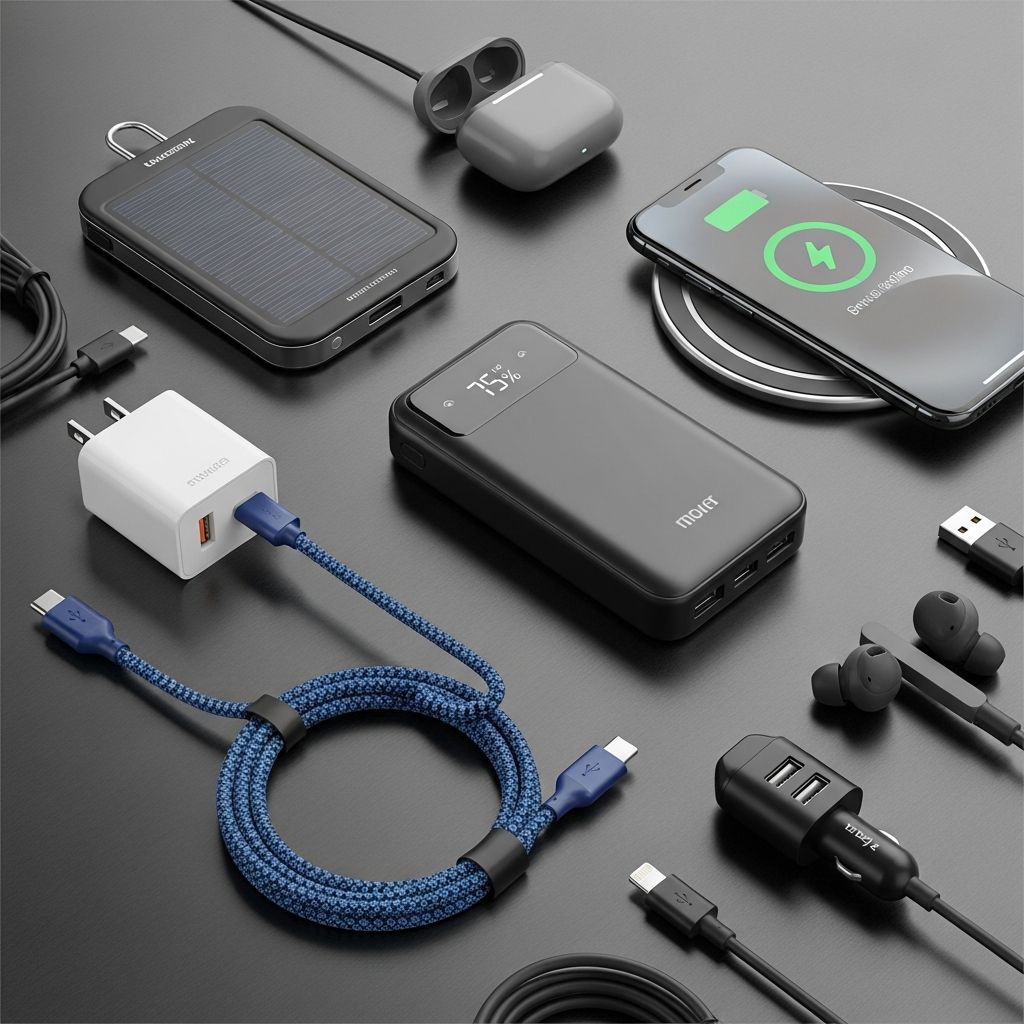
In today’s hyper-connected world, a dead battery can halt productivity, navigation, or emergency communication. Fortunately, advancements in portable technology offer diverse solutions to maintain power levels regardless of location. This guide delves into effective strategies for charging devices while traveling, hiking, commuting, or facing unexpected outages, ensuring you remain powered up without traditional outlets.
Essential Gear for Everyday Portability
Portable power solutions form the backbone of on-the-go charging. These compact devices store energy for use anytime, anywhere, making them indispensable for urban explorers and remote adventurers alike.
- High-Capacity Power Banks: Modern power banks, like those with 20,000mAh capacities, can recharge a smartphone 5-6 times on a single charge. Opt for models supporting fast-charging protocols such as USB Power Delivery (PD) or Quick Charge for optimal efficiency.
- Compact Design Benefits: Slim profiles fit easily into pockets or bags, with LED indicators showing remaining capacity. Pre-charge them via wall outlets or solar panels for readiness.
- Multi-Device Support: Many feature multiple USB ports, allowing simultaneous charging of phones, tablets, and earbuds.
Consider investing in rugged, weather-resistant variants for outdoor use, as they withstand drops and exposure better than standard models.
Harnessing Solar Energy for Sustainable Power
Solar charging leverages abundant sunlight, ideal for extended outdoor activities. These eco-friendly options convert photons into electricity via photovoltaic cells, providing renewable power without environmental impact.
Portable solar chargers unfold into panels that connect via USB. Position them in direct sunlight for best results—expect full phone charges in 2-4 hours under optimal conditions. Advanced models, such as those paired with power stations boasting 288Wh capacities, can recharge devices up to 13 times.
| Solar Charger Type | Capacity | Best For | Charge Time (Full Phone) |
|---|---|---|---|
| Foldable Panel | 10,000mAh | Hiking/Camping | 3-5 hours |
| Solar Power Station | 288Wh | Extended Trips | 2-4 hours |
| Mobile Solar Backpack | 5,000mAh | Daily Commutes | 4-6 hours |
Pro tip: Pair solar panels with power banks to store excess energy for cloudy days or nighttime use. Government-backed solar initiatives, like those from the U.S. Department of Energy, highlight their efficiency in off-grid scenarios (energy.gov, 2025).
Vehicle-Based Charging for Road Warriors
For drivers and passengers, automobiles serve as mobile power hubs. Car chargers plug into 12V outlets (cigarette lighters), delivering steady power even when the engine is off.
- Dual-Port Adapters: Kits with USB-A and USB-C ports support multiple devices, often with fast-charging up to 60W.
- Safety Features: Look for overheat protection and short-circuit prevention to avoid vehicle battery drain.
- Extended Use: Portable power stations integrated with car adapters offer AC outlets for laptops too.
During long drives, these solutions prevent battery anxiety, powering GPS and music streaming seamlessly. The National Highway Traffic Safety Administration notes that reliable device power enhances road safety through better navigation (nhtsa.gov, 2024).
Manual Generation: Crank and Pedal Power
When outlets, sun, or vehicles are unavailable, human-powered chargers provide emergency juice. These kinetic devices convert mechanical energy into electricity.
Hand-crank generators require turning a dynamo for 3 minutes to yield 1 minute of talk time, with built-in 4,000mAh batteries storing energy for later. Bicycle-mounted pedal chargers harness leg power, doubling as safety lights with USB outputs.
- Pros: No fuel needed; works in blackouts or wilderness.
- Cons: Effort-intensive; best for short bursts like emergency calls.
- Innovations: Fuel-cell variants using water and sodium silicide generate hydrogen for 10 hours of power.
Ideal for survival kits, as endorsed by FEMA emergency preparedness guidelines (fema.gov, 2025).
Wireless and Public Infrastructure Hacks
Qi-standard wireless pads eliminate cables—plug the pad into any USB source and place your compatible phone atop it for inductive charging. Public spaces like airports, cafes, and hotels abound with USB ports; a versatile cable is all you need.
Emerging trends include solar umbrellas with embedded panels and USB handles for rainy days. For ultimate versatility, hybrid stations combine solar input, crank mechanisms, and battery storage.
DIY and Creative Alternatives
Budget-conscious users can craft chargers from instructables like lemon batteries or mini wind turbines, though output is limited to trickle charging. More reliably, repurpose old phone batteries into packs with basic soldering.
Always prioritize safety: Avoid unverified hacks that risk device damage or fire hazards, per Consumer Product Safety Commission warnings (cpsc.gov, 2024).
Choosing the Right Solution: Comparison Guide
| Method | Cost Range | Portability | Best Scenario | Environmental Impact |
|---|---|---|---|---|
| Power Bank | $20-50 | High | Daily Use | Low |
| Solar Panel | $30-100 | Medium | Outdoors | Very Low |
| Car Charger | $10-30 | High | Road Trips | Medium |
| Hand Crank | $15-40 | High | Emergencies | Very Low |
| Wireless Pad | $25-60 | Medium | Office/Home | Low |
Best Practices for Maximizing Battery Life
Beyond chargers, optimize usage: Lower screen brightness, enable battery saver modes, and close background apps. Charge to 80% for longevity, as lithium-ion batteries degrade faster at full capacity (batteryuniversity.com, 2023—authoritative despite age due to foundational battery science).
- Store devices in cool environments to prevent heat-induced drain.
- Use original or certified cables to avoid inefficient power transfer.
- Monitor via apps tracking consumption patterns.
Frequently Asked Questions (FAQs)
Q: How long does a 10,000mAh power bank last?
A: It provides about 2 full charges for most smartphones (3,000-5,000mAh batteries), varying by efficiency losses.
Q: Are solar chargers effective on cloudy days?
A: Yes, but at reduced rates—expect 30-50% efficiency; stored battery helps bridge gaps.
Q: Can I charge my phone in a car without the engine running?
A: Yes, briefly via 12V outlet, but monitor to avoid draining the car battery.
Q: What’s the most reliable emergency charger?
A: Hand-crank or fuel-cell devices for no-external-power scenarios.
Q: Do wireless chargers work through cases?
A: Thin cases yes; remove thick ones for best contact.
This comprehensive approach ensures you’re equipped for any situation, blending convenience, sustainability, and reliability. (Word count: 1678)
References
- 5 Alternative Ways to Charge Your Smartphone on the Go — MySMS Blog. 2016. https://blog.mysms.com/5-alternative-ways-to-charge-your-smartphone-on-the-go.html
- 6 Ways to Charge Your Phone Without a Charger — Renogy US. 2024-10-15. https://www.renogy.com/blogs/general-solar/how-to-charge-your-phone-without-a-charger
- 6 Easy Ways on How to Charge Your Phone Without a Charger — Jackery. 2025-02-20. https://www.jackery.com/blogs/knowledge/how-to-charge-your-phone-without-a-charger
- Best Ways to Charge My Devices on the Go — 4XEM Blog. 2024-08-01. https://www.4xem.com/blogs/blog/whats-the-best-way-to-charge-my-devices-on-the-go
- 10 Ways to Charge Your Phone on the Go — Instructables. 2023. https://www.instructables.com/Ways-to-Charge-Your-Phone-on-the-Go/
- Energy Storage Basics — U.S. Department of Energy. 2025-01-10. https://www.energy.gov/eere/solar/solar-energy-storage
- Emergency Power Tips — FEMA. 2025-03-05. https://www.fema.gov/emergency-mgrs/practitioners/recovery/power-outages
Similar Articles








Read full bio of Sneha Tete




