
The Persistence of Discriminatory Policing
How modern legislation and law enforcement practices perpetuate the harmful cycle of racial profiling across the United States.
Introduction to the Ongoing Crisis of Discriminatory Policing
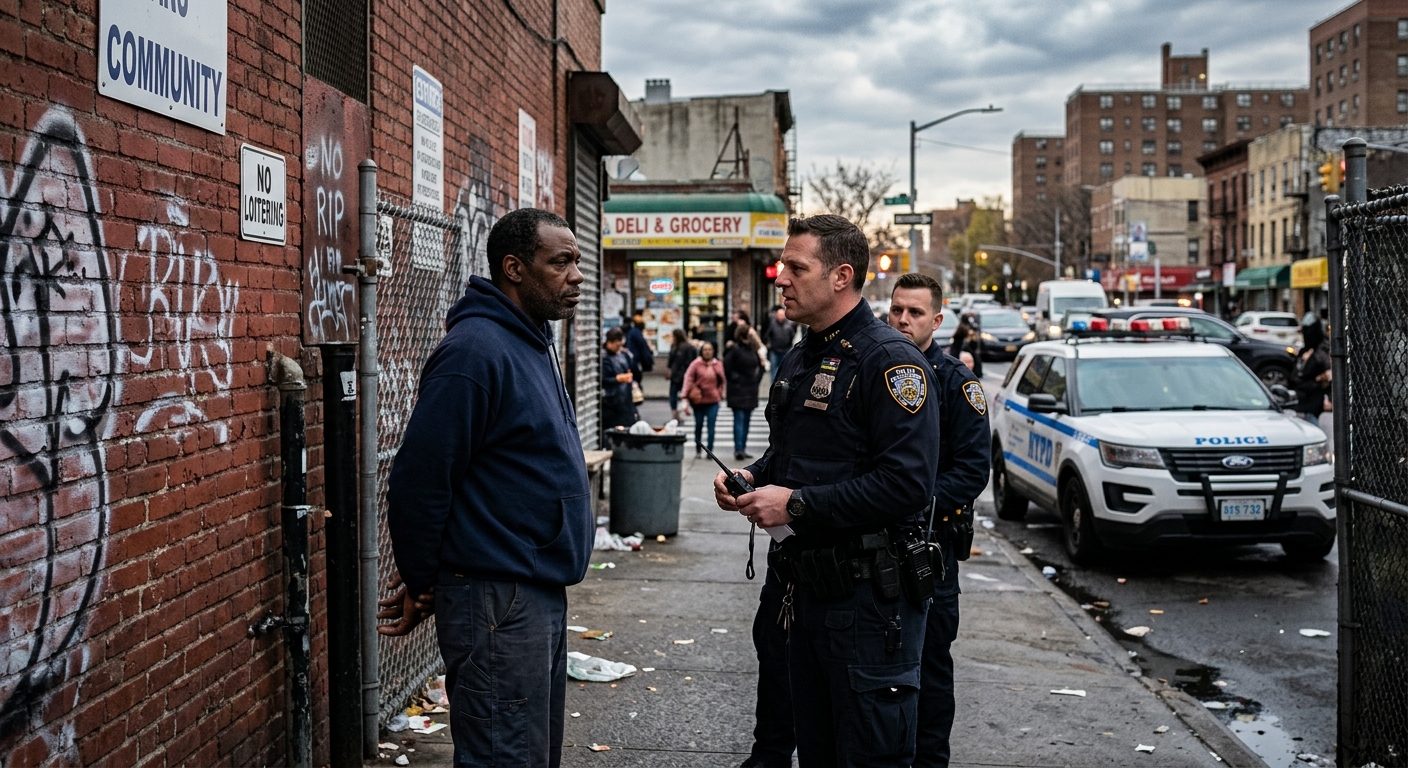
Racial profiling has long been one of the most contentious and damaging issues in American law enforcement. Historically, it has been understood primarily as a street-level phenomenona police officer pulling over a Black driver for a minor traffic infraction or stopping a Latino pedestrian based on an unfounded, implicit suspicion. However, over the past few decades, the venues where discriminatory policing takes place have shifted and significantly expanded. While the physical locations and the specific legal justifications may change from state to state, the underlying operational premise remains identical: individuals are targeted, harassed, and detained not because of verifiable criminal behavior, but solely due to the color of their skin, their perceived ethnicity, or their national origin.
From the adoption of aggressive zero-tolerance policing strategies in major metropolitan areas to the passage of restrictive state-level immigration laws, the practice of racial profiling has embedded itself deeply into the fabric of the criminal justice system. It frequently operates under the guise of public safety or border security, yet its execution reveals a systemic bias that compromises the civil liberties of millions of Americans and legal residents. This article delves into the persistent nature of discriminatory policing, examining how it has evolved, the mechanisms by which it is codified into state law, its devastating human and societal costs, and the ongoing efforts to eradicate it from American law enforcement entirely.
The Evolution of Aggressive Policing Tactics
The modern crisis of racial profiling cannot be properly understood without examining the historical policing strategies that normalized it. In the late 1990s and early 2000s, numerous American cities adopted “zero-tolerance” or “broken windows” policing frameworks. The theoretical premise was that cracking down forcefully on minor, non-violent offensesa such as loitering, jaywalking, or turnstile jumpinga would establish an atmosphere of strict order and prevent more serious, violent crimes from occurring. In practice, however, these policies resulted in the hyper-policing of minority neighborhoods.
In cities across the nation, law enforcement agencies heavily deployed resources into predominantly Black and Hispanic communities. The predictable outcome was a massive spike in pedestrian and traffic stops based on minor infractions, which served primarily as pretexts for invasive searches. Officers, pressured by administrative quotas or cultural expectations within their departments, frequently relied on racial and ethnic stereotypes to determine who looked “suspicious.”
This era of aggressive street-level enforcement demonstrated that when police are given broad discretion to initiate stops without specific, articulable evidence of a crime, implicit and explicit biases often dictate their actions. The collateral damage was immense. Hundreds of thousands of individuals with no criminal intent were subjected to humiliating public searches, leading to widespread community alienation. Furthermore, this approach funneled a disproportionate number of minorities into the criminal justice system for low-level offenses, exacerbating the crisis of mass incarceration. The zero-tolerance era proved beyond a shadow of a doubt that relying on visual cues related to race or ethnicity, rather than investigative evidence, is a fundamentally flawed policing model.
Codifying Prejudice: Immigration Laws and State Policies
While street-level stops have historically been the most visible form of racial profiling, the early 21st century witnessed an alarming and complex trend: the codification of discriminatory practices directly into state law. The most prominent example of this legislative shift was Arizonaas Support Our Law Enforcement and Safe Neighborhoods Act, widely known as S.B. 1070, which was passed in 2010.
S.B. 1070 represented a significant shift in how racial profiling was operationalized across the country. The legislation essentially required state and local law enforcement officers to determine the immigration status of an individual during a lawful stop, detention, or arrest if there was “reasonable suspicion” that the person was an undocumented immigrant. This “show me your papers” provision fundamentally transformed local police into ad-hoc immigration agents, blurring the lines between local public safety and federal border control.
The core structural flaw with such legislation is the near impossibility of enforcing it without relying on racial profiling. There is no definitive physical characteristic, style of dress, or linguistic trait that reliably indicates a person’s citizenship or immigration status. In practice, “reasonable suspicion” of undocumented status frequently translates into targeting individuals who look or sound foreigna primarily Latinos and other people of color. This dynamic places an undue burden on legal residents and United States citizens of specific ethnic backgrounds, who suddenly find themselves forced to carry documentation at all times just to prove their right to exist in public spaces.
The federal government and numerous civil rights organizations immediately recognized this inherent danger. The U.S. Department of Justice (DOJ) challenged S.B. 1070 in federal court, arguing that the law encroached on federal authority and invited widespread, systemic civil rights violations. In 2012, the Supreme Court struck down several provisions of the law, reaffirming that the federal government possesses exclusive authority over immigration enforcement. However, the Court controversially left the “show me your papers” provision intact at the time, albeit with strict warnings against its use for racial profiling. Despite these judicial cautions, the legacy of laws like S.B. 1070 is a chilling environment where state-sanctioned profiling is legitimized under the banner of immigration enforcement.
The Human Cost: Beyond the Statistics
The statistics surrounding racial profilinga the disproportionate stop rates, the disparate arrest figures, the skewed incarceration demographicsa are highly alarming, but they often obscure the profound human toll of these practices. Behind every data point is a living individual whose constitutional rights have been violated and whose fundamental human dignity has been compromised.
For individuals subjected to racial profiling, the experience is deeply traumatizing and profoundly alienating. A routine trip to the grocery store, a daily commute to work, or a simple walk in the neighborhood can instantly transform into a humiliating and frightening encounter with armed agents of the state. These interactions send a clear and devastating message: regardless of your actions, your character, or your legal citizenship, your physical appearance makes you inherently suspect in the eyes of the law.
The psychological impact on communities of color is immense. Constant surveillance and the perpetual threat of unjustified detention breed chronic stress, anxiety, and a pervasive sense of marginalization. For immigrant communities specifically, the fear of profiling is uniquely paralyzing. The threat of being stopped and subsequently entangled in deportation proceedings discourages individuals from participating in public life. Victims of domestic violence, witnesses to violent crimes, and individuals in need of emergency medical assistance often hesitate to contact the police, fearing that an interaction intended to secure help will instead result in their own harassment, detention, or removal from the country.
Eroding the Foundations of Public Safety
Beyond its constitutional and moral failings, racial profiling is objectively detrimental to overall public safety. Law enforcement agencies that rely on discriminatory tactics consistently find them to be inefficient, wasteful, and highly counterproductive.
First and foremost, racial profiling represents a massive misallocation of critical law enforcement resources. When police officers spend their time stopping, questioning, and searching individuals based on vague, race-based suspicions rather than actionable intelligence or concrete evidence, they divert time and energy away from investigating actual, serious crimes. Data has continually shown that the “hit rates”a the percentage of stops that actually result in the discovery of contraband or evidence of a crimea are historically lower for minority individuals targeted through profiling than for white individuals stopped based on specific behavioral cues. Profiling casts a wide, ineffective net that clogs the justice system with innocent people while failing to apprehend actual offenders.
Furthermore, the practice actively destroys the absolute foundation of effective policing: community trust. Law enforcement cannot function effectively without the willing cooperation of the public. Police departments heavily rely on community members to report crimes, provide witness testimony, and offer intelligence about local criminal enterprises. When a police department is viewed as an occupying force that harasses rather than protects, community cooperation instantly evaporates.
Recognizing these systemic failures, the U.S. Department of Justice under Attorney General Eric Holder issued heavily revised guidance in 2014 for federal law enforcement agencies. The guidance explicitly and firmly condemned racial profiling, noting that it is “not only wrong, it is misguided and ineffective.” The DOJ emphasized that biased practices severely undermine the public trust essential for effective policing and completely waste precious investigative resources that should be dedicated to legitimate threats.
Combating the Epidemic: Legal and Community Responses
Addressing the deeply systemic nature of discriminatory policing requires a multi-faceted approach involving aggressive legislative action, vigilant judicial oversight, and grassroots community empowerment.
- Federal Legislative Efforts: At the federal level, civil rights advocates and lawmakers have repeatedly pushed for comprehensive legislation to universally ban the practice. Bills such as the End Racial and Religious Profiling Act (ERRPA) have been introduced multiple times to explicitly prohibit profiling by law enforcement agencies at all jurisdictional levels. Such legislation typically mandates robust data collection on police stops, requires implicit bias and cultural competency training for all sworn officers, and establishes strict mechanisms for accountability when departments fail to comply.
- Judicial Oversight and Reform: In the frequent absence of sweeping federal legislation, the burden of reform often falls heavily on civil rights organizations and the federal courts. Extensive lawsuits challenging discriminatory practices have successfully forced numerous police departments into strict consent decreesa court-ordered reform plans overseen by independent monitors. These agreements have been highly instrumental in forcing necessary structural changes, from rewriting use-of-force policies to implementing mandatory body-worn camera programs.
- Community Empowerment: Equally important are locally driven, community-led initiatives. Grassroots organizations play a uniquely critical role in documenting local abuses, educating citizens about their constitutional rights during police encounters, and applying sustained political pressure to local officials. Independent civilian review boards, particularly those endowed with independent subpoena power, are increasingly recognized as absolutely essential tools for holding law enforcement accountable when internal affairs divisions inevitably fail to act.
Conclusion
The fight against racial profiling remains one of the defining civil rights struggles of our contemporary era. Whether it manifests overtly in the form of aggressive street-level patrols in dense urban centers or is covertly embedded within the complex text of state immigration policies, the core injustice remains entirely unchanged. Relying on race, ethnicity, or national origin as a proxy for criminality directly violates the fundamental American promise of equal protection under the law.
Eradicating this deeply entrenched practice requires significantly more than just verbal condemnation; it demands profound, systemic reform of exactly how law enforcement operates and how it is ultimately held accountable. By firmly rejecting discriminatory legislation, demanding absolute data transparency, and prioritizing community trust over aggressive, quota-driven enforcement metrics, society can actively move toward a functional justice system that actually protects the liberties of all individuals, regardless of their physical appearance or cultural background. The venue for these battles may continuously change, but the imperative to end the destructive game of racial profiling remains absolute.
Frequently Asked Questions (FAQs)
What exactly is racial profiling?
Racial profiling refers to the discriminatory practice by law enforcement officials of targeting individuals for suspicion of crime based on the individual’s race, ethnicity, religion, or national origin, rather than on specific, observable behavior or concrete evidence linking them to a crime.
How do state immigration laws sometimes encourage profiling?
State laws that require local police to verify the immigration status of individuals (often referred to as “show me your papers” laws) inherently rely on subjective visual assessments. Because there is no visible trait that determines citizenship, officers often fall back on racial or ethnic stereotypes to decide who to question, disproportionately targeting communities of color.
Why is profiling considered an ineffective law enforcement tool?
Data consistently shows that profiling yields low “hit rates” for contraband or criminal activity compared to stops based on actual behavioral suspicion. Furthermore, the practice severely damages trust between police and minority communities, making it much harder for officers to gather intelligence, find witnesses, and solve serious crimes.
What is the End Racial and Religious Profiling Act?
The End Racial and Religious Profiling Act (ERRPA) is a piece of proposed federal legislation designed to explicitly ban discriminatory profiling by all levels of law enforcement. It aims to require comprehensive data collection on stops and searches, mandate bias training, and provide legal avenues for holding non-compliant agencies accountable.
References
- Attorney General Holder Announces Federal Law Enforcement Agencies To Adopt Stricter Policies To Curb Profiling a U.S. Department of Justice. 2014-12-08. https://www.justice.gov/opa/pr/attorney-general-holder-announces-federal-law-enforcement-agencies-adopt-stricter-policies
- Statement of Attorney General Eric Holder on the Supreme Court’s Ruling on Arizona v. The United States a U.S. Department of Justice. 2012-06-25. https://www.justice.gov/opa/pr/statement-attorney-general-eric-holder-supreme-court-s-ruling-arizona-v-united-states
- Kaine Introduces Bill To Ban Religious, Racial And Discriminatory Profiling By Law Enforcement a U.S. Senate (Senator Tim Kaine). 2017-02-17. https://www.kaine.senate.gov/press-releases/kaine-introduces-bill-to-ban-religious-racial-and-discriminatory-profiling-by-law-enforcement
Similar Articles








Read full bio of medha deb




