
Why Passing a Breathalyzer May Not Defeat a DUI Charge
Understanding why a low breath test result is only one piece of evidence and how officers and courts still prove DUI impairment without it.
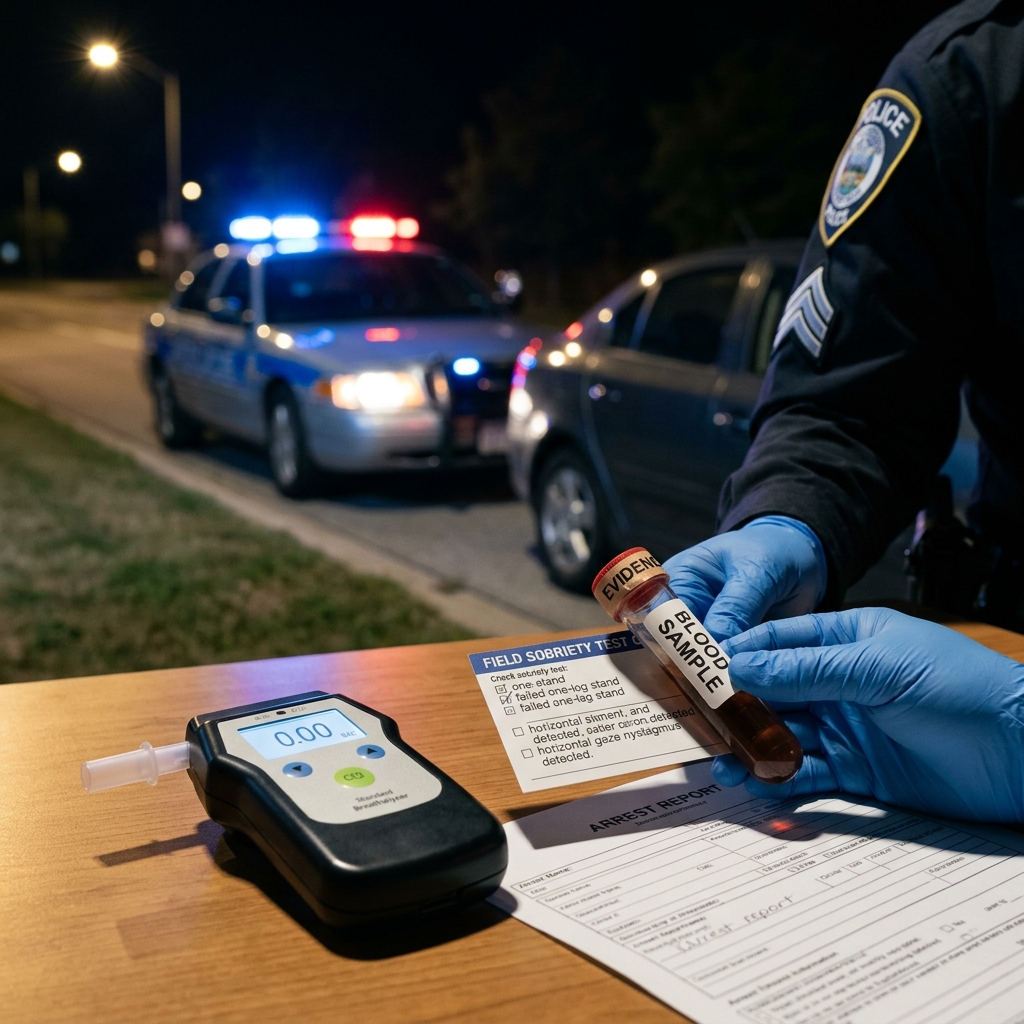
Many drivers assume that if they pass a breathalyzer test, they are automatically safe from a driving under the influence (DUI) charge. In reality, a low blood alcohol concentration (BAC) reading is only one piece of evidence, and officers and prosecutors can still prove impairment through other means. A DUI case often turns on the total circumstances, not a single test result.
This article explains why a favorable breath test does not guarantee freedom from DUI charges, how other evidence can be used against you, and what legal concepts like implied consent and administrative penalties mean for your driving privilege.
Breathalyzer Basics: What the Test Really Measures
A breathalyzer is a device that estimates your blood alcohol concentration (BAC) by measuring the amount of alcohol in your breath and applying a scientific conversion ratio. Police use two broad types of breath tests:
- Preliminary or roadside breath tests (often called PAS tests), used as a quick screening tool before or during an investigation.
- Evidential breath tests, typically administered at a police station with calibrated equipment intended for use as formal evidence in court.
In many jurisdictions, including California, it is illegal to drive with a BAC of 0.08% or higher if you are over 21. Lower thresholds apply to commercial drivers, drivers transporting passengers, and people under 21. But those per se limits are not the only way prosecutors can prove a DUI.
| Driver Category | Typical BAC Limit |
|---|---|
| Adult driver (21+) | 0.08% or higher is illegal |
| Under 21 | Often 0.01% or higher |
| Commercial driver | 0.04% or higher |
| Passenger-for-hire driver | 0.04% or higher |
How DUI Can Be Proven Without a High Breath Test
Many DUI laws have two main pathways to conviction:
- Per se DUI: Driving with a BAC at or above the statutory limit (for example, 0.08%).
- Impairment-based DUI: Driving while “under the influence” so that your ability to operate a vehicle is impaired, even if your BAC is below 0.08%.
If a breath test shows a BAC below the per se limit, prosecutors may still pursue an impairment-based DUI by using other observations and test results. According to legal commentary, a person who appears clearly impaired but shows a breath result under 0.08% may still be charged, and even convicted, if other evidence supports impairment.
Evidence Officers May Rely On Besides Breath Results
When deciding whether to arrest a driver and how to build a case, officers usually consider the totality of the circumstances, such as:
- Driving behavior: Swerving, speeding, drifting between lanes, running lights, or failing to maintain lane position.
- Physical signs: Bloodshot or watery eyes, slurred speech, odor of alcohol or drugs, unsteady stance, delayed reactions.
- Field sobriety tests: Performance on standardized tests such as the walk-and-turn, one-leg stand, and horizontal gaze nystagmus.
- Statements: Admissions about drinking, drug use, fatigue, or medications.
- Time frame: How soon after drinking the driver was stopped, which can influence absorption and BAC readings.
Legal sources emphasize that if an officer believes there is sufficient evidence from field sobriety tests and other observations, a driver can be charged even if the breathalyzer result is below the per se limit. Impairment-based DUI statutes allow prosecutors to focus on the driver’s actual ability to operate a vehicle safely rather than just a numerical BAC threshold.
Field Sobriety Tests: A Separate Source of Evidence
Field sobriety tests (FSTs) are physical and observational tests used at the roadside to estimate impairment. They typically include tasks like walking in a straight line, standing on one leg, or following a moving object with the eyes. These tests provide officers with independent evidence of impairment.
Legal guidance from California notes:
- Officers may arrest drivers who fail FSTs even if a later breath test is below 0.08%.
- Roadside breath tests, sometimes treated as an FST, can trigger arrest even if other tests seem adequate.
- For drivers over 21, preliminary breath tests are often voluntary, but failing them or performing poorly on FSTs can lead to arrest.
Courts may admit FST results as evidence to show impairment. Some drivers who technically “pass” a breathalyzer but perform poorly on FSTs may still face charges and convictions based on overall impairment.
Implied Consent: Why You May Have to Take a Test After Arrest
Most states have implied consent laws, meaning that by driving on public roads you agree in advance to submit to a chemical test (breath, blood, or sometimes urine) if lawfully arrested for DUI. In California, for example, drivers are deemed to have consented to a blood or breath test after a DUI arrest.
Key points about implied consent, based on official highway safety and DMV materials, include:
- Implied consent generally applies after arrest, not to every voluntary roadside screening.
- Refusal of a post-arrest chemical test can trigger automatic license suspension and other administrative penalties, separate from any criminal DUI case.
- All U.S. states except Wyoming impose administrative sanctions for test refusal, often involving license suspension or revocation.
These laws mean that you cannot simply avoid a chemical test to prevent evidence from being collected. Refusing a test can itself lead to significant consequences, sometimes including longer suspensions than if you had taken the test.
When Passing the Breath Test Still Leads to Problems
A breathalyzer result under the legal limit may not close the case. Several scenarios can still result in arrest or penalties:
1. Impairment from Drugs or Combined Substances
Breath tests are designed to measure alcohol, not other substances. A driver might have:
- Used illegal drugs (such as cannabis or other controlled substances).
- Taken prescription medications that impair judgment or coordination.
- Mixed alcohol with medication, leading to impairment even at relatively low BAC levels.
If officers suspect drug impairment, they may require blood or urine tests even after a low breath result. A driver can be charged with DUI based on drug impairment alone, regardless of the breathalyzer result.
2. BAC Below 0.08% but Driving Still Impaired
Some individuals are noticeably impaired at BAC levels below 0.08%. DUI statutes that focus on being “under the influence” enable charges where the prosecutor argues that the driver’s mental or physical abilities were diminished enough to make driving unsafe.
Evidence supporting this argument can include:
- Erratic driving or involvement in a collision.
- Officer observations of delayed reactions or confusion.
- Video recordings from patrol cars or body cameras.
- Witness testimony that the driver appeared intoxicated.
3. Administrative Penalties Separate From Criminal Charges
Even if criminal charges are reduced or dismissed, drivers may face administrative consequences from the licensing authority (such as a state DMV). Federal highway safety studies report that nearly all states have separate penalties for refusing BAC tests, usually in the form of license suspension or revocation.
Examples of administrative outcomes include:
- Suspension for refusing a post-arrest chemical test, even without a DUI conviction.
- Suspension for driving with any measurable alcohol while under 21, even at relatively low BAC levels.
- Mandatory DUI education programs after certain offenses.
These actions can proceed on a lower burden of proof than criminal cases and may rely on test results, officer reports, and recorded observations.
Limitations and Potential Issues with Breath Test Results
Breath tests are widely used, but they are not perfect. Research and expert analysis highlight several factors that may affect accuracy:
- Conversion ratio variability: Breathalyzer devices often assume a fixed ratio between alcohol in breath and alcohol in blood, yet this ratio can vary significantly between individuals.
- Calibration and maintenance: Proper maintenance and calibration are essential; errors can occur if devices are not maintained according to protocols.
- Testing conditions: Recent drinking, mouth alcohol, or certain medical conditions may influence readings.
Despite these potential issues, test results may still be admitted in court, and drivers generally must challenge reliability through legal motions and expert testimony rather than assuming that a test’s limitations will automatically protect them.
Practical Takeaways for Drivers
Understanding how breath tests fit into the broader DUI enforcement picture can help drivers make more informed decisions:
- Do not rely on a low breath result alone to guarantee that you are free from risk of arrest or charges.
- Recognize that officers evaluate all evidence, including driving behavior, physical signs, and FST performance.
- Know that implied consent laws often require you to submit to post-arrest chemical testing or face separate penalties.
- Appreciate that impairment can occur below 0.08%, especially with drugs or mixed substances.
- Consider seeking legal advice if you are arrested or face a DMV action, as procedures and defenses are complex.
Frequently Asked Questions (FAQs)
Can I still be charged with DUI if my breathalyzer shows under 0.08%?
Yes. Many DUI laws allow charges based on impairment, not just numerical BAC. If officers believe your ability to drive was significantly affected by alcohol or drugs, they may arrest and prosecutors may pursue an impairment-based DUI even with a BAC below 0.08%.
Is a roadside breath test the same as the official DUI test?
Not always. Roadside preliminary tests are often used for screening and may be voluntary for some drivers. After arrest, implied consent laws typically require an official blood or breath test, which is intended to serve as evidential proof in a DUI case.
What happens if I refuse a chemical test after a DUI arrest?
Refusal usually triggers administrative penalties such as automatic license suspension, separate from the criminal case. In some states, refusal can also be a criminal offense or lead to enhanced DUI penalties. Refusal may be used as evidence of consciousness of guilt in court.
Can I avoid a DUI by insisting on a different type of test?
Laws vary, but many jurisdictions allow officers or agencies to designate the type of test (breath, blood, or urine), especially in suspected drug-impaired driving cases. Refusing the chosen test or insisting on another option may still be treated as refusal under implied consent statutes.
Do breathalyzers detect drug impairment?
No. Breathalyzers are designed to measure alcohol. When drug impairment is suspected, authorities typically rely on blood or urine tests and other evidence such as officer observations and specialized evaluations. A person may pass an alcohol breath test but still face charges based on drug-related impairment.
References
- California Driver Handbook: Alcohol and Drugs — California Department of Motor Vehicles. 2023-01-01. https://www.dmv.ca.gov/portal/handbook/california-driver-handbook/alcohol-and-drugs/
- BAC Test Refusal Penalties — National Highway Traffic Safety Administration (NHTSA). 2018-06-01. https://www.nhtsa.gov/book/countermeasures-that-work/alcohol-impaired-driving/countermeasures/legislation-and-licensing-2
- What Happens When You Refuse to Breathalyzer or Blood Test? — Wallin & Klarich. 2022-05-01. https://www.wklaw.com/happens-refuse-take-breathalyzer-blood-test/
- Section 9: Alcohol and Drugs — California DMV Driver Handbook (PDF). 2023-01-01. https://www.dmv.ca.gov/portal/file/alcohol-and-drugs/
- Field Sobriety Tests in California — LegalSaint. 2021-09-01. http://www.legalsaint.com/field-tests
- Blood & Breath Tests — Contra Costa County DUI Lawyers. 2021-01-01. https://www.contracostacountydui.com/dui-defense/blood-breath-test/
- Can I Get a DUI if I Pass a Sobriety Test but Fail a Breathalyzer Test? — Gastelum Law. 2020-01-01. https://gastelumlaw.com/can-get-dui-pass-sobriety-test-fail-breathalyzer-test/
Similar Articles








Read full bio of Sneha Tete




