
Navigating Small Claims Court Without a Lawyer
Learn how small claims court works, when to use it, and how to prepare a strong case from filing to judgment and collection.
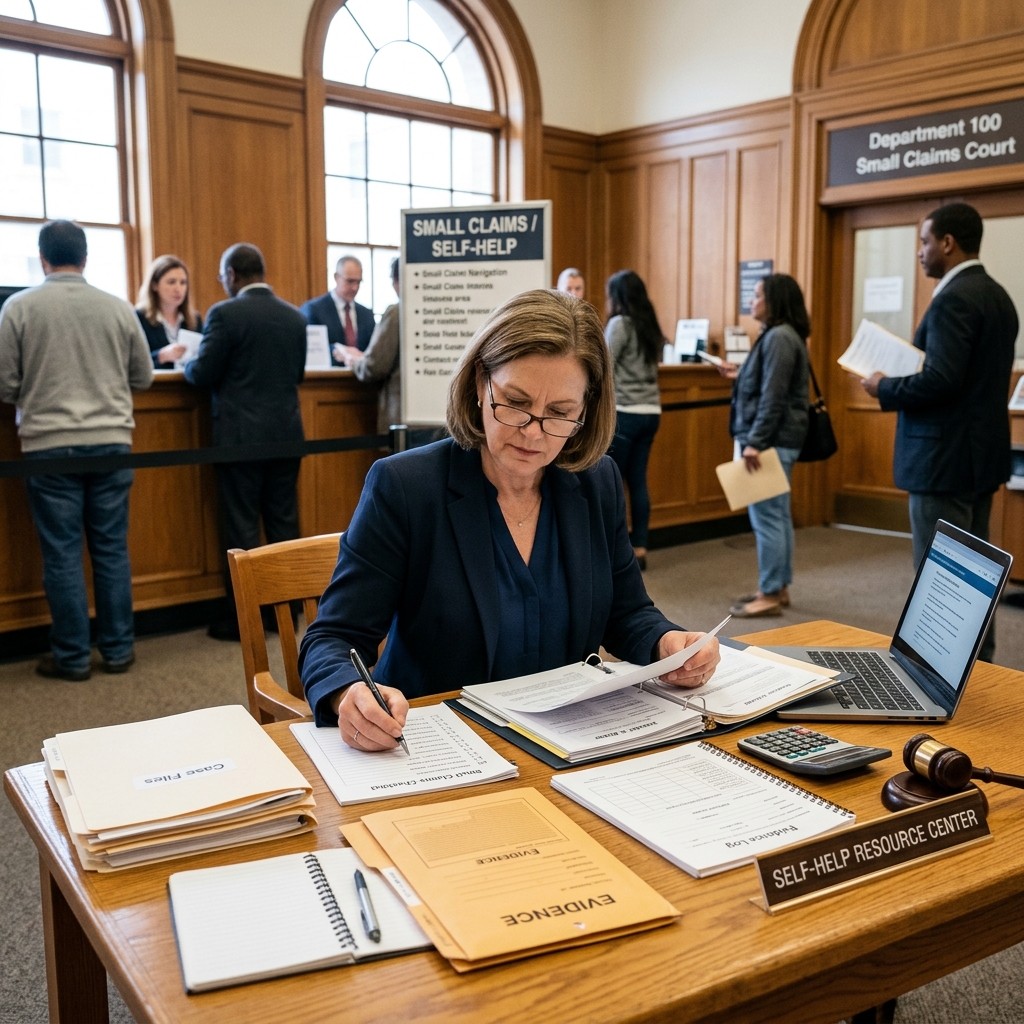
Small claims court offers an accessible way to resolve everyday money disputes without the expense and complexity of a full-scale lawsuit. It is designed for people who want a quicker, simpler process and are willing to represent themselves, whether they are suing or being sued.[10]
Understanding What Small Claims Court Is
Small claims courts are local courts that handle civil disputes involving relatively small amounts of money or the value of property. Each state sets its own maximum amount, often ranging from around $5,000 to $15,000.[10] These courts primarily focus on straightforward disagreements where the facts are not overly complex.
Key features include limited monetary claims, streamlined procedures, and an expectation that most people will appear without lawyers, although attorneys are allowed in some jurisdictions.[10]
- Lower claim limits: For example, California generally allows claims up to $12,500 for individuals.
- Faster process: Cases are often scheduled more quickly than in higher courts.[10]
- Informal hearings: Judges and magistrates typically use simplified rules of evidence and procedure.[10]
- Emphasis on self-representation: Court self-help centers and clerks provide forms and basic guidance.
Is Your Dispute Appropriate for Small Claims Court?
Before you file, you should determine whether small claims court is the right forum for your dispute.
Common Types of Small Claims Cases
Typical disputes include:
- Unpaid loans or personal debts
- Unreturned security deposits from landlords
- Property damage (such as minor car accidents or damage to personal items)
- Consumer problems, including defective goods or poor services
- Simple contract disputes involving small sums
Limitations You Should Know
Small claims court is not suitable for every type of legal problem. You cannot typically use it for matters involving family law, serious personal injury claims, complex business litigation, or requests for injunctions requiring someone to do or stop doing something.[10] It is largely focused on resolving disputes about money or property.
Basic Roles and Terminology
Understanding the core roles will help you read court forms and communicate with court staff more effectively.
| Term | Meaning |
|---|---|
| Plaintiff | The person or business starting the lawsuit and making a claim for money or property. |
| Defendant | The person or business being sued who allegedly owes money or caused a loss. |
| Claim / Complaint | The written document that explains what happened, who is involved, and what relief the plaintiff wants. |
| Summons | Official notice telling the defendant about the lawsuit and when to come to court. |
| Judgment | The court’s final decision on whether money or property must be paid and in what amount.[10] |
Preparing Before You File
Good preparation can make the difference between a weak case and a compelling one. Courts often expect that you tried to resolve the dispute before filing.
Step 1: Identify the Correct Defendant
You must sue the right person or entity or you may not be able to enforce a judgment. This means confirming legal names and addresses:
- For individuals, verify their full legal name and current address.
- For businesses, determine whether you are dealing with a corporation, LLC, or sole proprietorship and identify the correct legal name.
- Check contracts, receipts, or online business registrations to confirm details.
Step 2: Calculate the Amount of Your Claim
You must know the exact amount you are seeking, up to the court’s limit.
- Add unpaid amounts, costs to repair or replace property, and any other direct financial losses.
- Include allowable court costs such as filing and service fees, if your state permits them as part of the judgment.
- Do not exaggerate; you may need to show receipts, estimates, or bills to support your figure.
Step 3: Consider a Demand Letter
Many self-help centers recommend sending a written demand letter before filing. This letter explains your complaint, states the amount you seek, and gives a deadline to pay or resolve the dispute.
Benefits of a demand letter include:
- Potentially resolving the dispute without court.
- Creating written proof that you tried to settle the matter informally.
- Previews your position so the other side understands your claim.
How to File a Small Claims Case
Once you decide to proceed, you will need to complete specific court forms, file them, and arrange for the defendant to be formally notified.
Choosing the Right Court Location
Jurisdiction and venue rules determine which court can hear your case. You usually must file where the defendant lives, where the business operates, or where the dispute occurred.
Completing the Claim or Complaint Form
Most courts provide standardized forms for small claims cases, available online or at the clerk’s office.
Your claim generally must include:
- Names, addresses, and contact information for all parties.
- The amount of money or value of property you seek.
- A brief but clear description of what happened, including dates and key facts.
- Reference to supporting documents (contracts, receipts, photographs, messages).
Some courts require additional documents such as a civil cover sheet or an affidavit verifying your claim.
Paying Filing Fees
You must usually pay a filing fee when you submit your claim. The amount varies by court and often depends on how many defendants you are suing.
- Expect fees in the range of dozens of dollars, not hundreds.
- Ask the clerk about fee waivers or reductions if you cannot afford the fee.
- Keep receipts; some courts permit adding reasonable costs to your claim.
Serving the Defendant
After filing, you must serve the defendant with a copy of the complaint and the summons. Service ensures the other side receives official notice of the case and the hearing date.
Common service methods include:
- Service by sheriff or other authorized law enforcement officer.
- Service by a licensed private process server.
- Certified mail, if permitted by local rules.
Court rules usually require proof of service—such as a signed return of service or mailing receipt—before the judge will hear your case.
Preparing Your Case for the Hearing
Once the court sets a hearing date, preparation becomes crucial. You must be ready to explain your story clearly and support it with evidence.
Organizing Evidence
Evidence is anything that helps prove what happened and the amount of your loss.
- Documents: receipts, invoices, contracts, emails, text messages, letters.
- Photographs or videos showing damage or conditions.
- Repair estimates or professional evaluations.
- Witness statements or testimony from people with firsthand knowledge.
Court self-help centers recommend organizing your evidence in chronological order and having copies for yourself, the judge, and the other party.
Preparing Your Testimony
Judges expect a concise, logical explanation of the dispute. Many self-help guides suggest making a brief outline of the key points you want to cover.
- Start with what the agreement or understanding was.
- Explain what went wrong and how the defendant is responsible.
- Describe your losses and how you calculated the amount you seek.
- Refer to evidence at appropriate moments, rather than handing everything to the judge at once.
Attending the Hearing
On the day of the hearing, arrive early, dress neatly, and bring all papers and witnesses you plan to present.
- Check in with the clerk or court officer to confirm your presence.
- Do not interrupt other cases; wait until your case is called.
- Address the judge respectfully and follow instructions carefully.
- Listen when the other side speaks; you will have an opportunity to respond.
What Happens At the Hearing?
Although procedures vary by jurisdiction, small claims hearings typically follow a simple structure.[10]
- The judge or magistrate calls the case and confirms the parties’ identities.
- The plaintiff explains their claim and presents evidence.
- The defendant responds, may present evidence, and can raise defenses or counterclaims.
- The judge may ask questions to clarify facts or request more documents.[10]
- Each side may be allowed brief closing remarks.
Judges decide cases based on a “preponderance of the evidence” standard—whether it is more likely than not that your version of events is correct.[10] The judge may announce a decision immediately or issue a written judgment later.
After the Judgment: Collecting or Responding
Winning a case does not automatically mean you receive money. If you win, you may need to take additional steps to collect the judgment. If you lose, you must understand your obligations and any appeal rights.[10]
If You Win
A judgment states the amount the defendant must pay and may include deadlines or payment terms.[10]
- Some defendants pay voluntarily after receiving the judgment.
- If not, you may be able to request wage garnishment, bank garnishment, or liens on property, depending on state law.[10]
- Court staff or self-help centers often provide guides for enforcing judgments.
If You Lose
If the judge rules against you, the judgment may state that you owe money to the other party. You must either pay or explore available legal options.
- Ask the clerk about any right to appeal or request reconsideration; some states permit limited appeals from small claims.[10]
- Discuss payment plans with the other party if you cannot pay all at once.
- Keep track of deadlines; ignoring a judgment can lead to wage or bank garnishment.
Practical Tips for Self-Represented Litigants
Court systems and self-help centers offer consistent advice for people representing themselves in small claims cases.
- Be honest and factual: Judges rely heavily on credible, straightforward testimony.
- Stay organized: Tab your documents and create a simple timeline of events.
- Respect the court: Use polite language, avoid interrupting, and follow local rules.
- Use court resources: Many courts provide free online guides, forms, and instructions.
- Keep copies of everything: Maintain your own file of forms, receipts, notices, and orders.
Frequently Asked Questions About Small Claims Court
Can I hire a lawyer for small claims court?
In many jurisdictions you may hire a lawyer but are not required to do so. Small claims courts are designed so most people can reasonably represent themselves. Check local rules; some courts restrict attorney participation in certain small claims cases.
What if the defendant does not show up?
If the defendant was properly served and fails to appear, the court may enter a default judgment in favor of the plaintiff.[10] However, the plaintiff still must briefly explain the claim and present basic evidence to support the requested amount.
How long does the process take?
Timeframes vary by court. In general, hearings are scheduled within weeks or a few months after filing, depending on court caseload and local procedures.[10] Appeals or enforcement of judgments can extend the overall timeline.
Can I file online?
Some courts allow electronic filing of small claims cases, especially in larger counties. Check your local court’s website or ask the clerk about online filing options, electronic payment of fees, and online access to case documents.
Do I need to bring witnesses?
Witnesses can be very helpful when they have direct knowledge of the events or repairs in question. If a witness cannot attend, ask the court whether written statements or affidavits are allowed and how they must be prepared.
References
- The Small Claims Process — California Courts Self-Help Guide. 2024-01-01. https://selfhelp.courts.ca.gov/small-claims
- Understanding Small Claims Court — National Center for State Courts. 2023-06-15. https://www.ncsc.org/resources-courts/understanding-small-claims-court
- Filing Your Small Claims Case — Civil Law Self-Help Center (Las Vegas). 2022-08-10. https://www.civillawselfhelpcenter.org/self-help/small-claims/suing-someone-in-small-claims/107-filing-your-small-claims-case
- Small Claims — North Carolina Judicial Branch. 2023-02-20. https://www.nccourts.gov/help-topics/lawsuits-and-small-claims/small-claims
- Small Claims — Fulton County Magistrate Court, Georgia. 2023-05-01. https://www.magistratefulton.org/175/Small-Claims
- Taking a Small Claims Case to Court — Michigan Legal Help. 2022-11-30. https://michiganlegalhelp.org/resources/money-debt-and-consumer-issues/taking-small-claims-case-court
- Small Claims Process — Arkansas Legal Services. 2021-09-01. https://a.arlawhelp.org/self-representation/small-claims-court/process-and-forms
Similar Articles








Read full bio of Sneha Tete


