
Montana Tenant Rights: A Practical Legal Guide
Understand Montana tenant rights and landlord duties under the Residential Landlord and Tenant Act, from repairs to eviction rules.
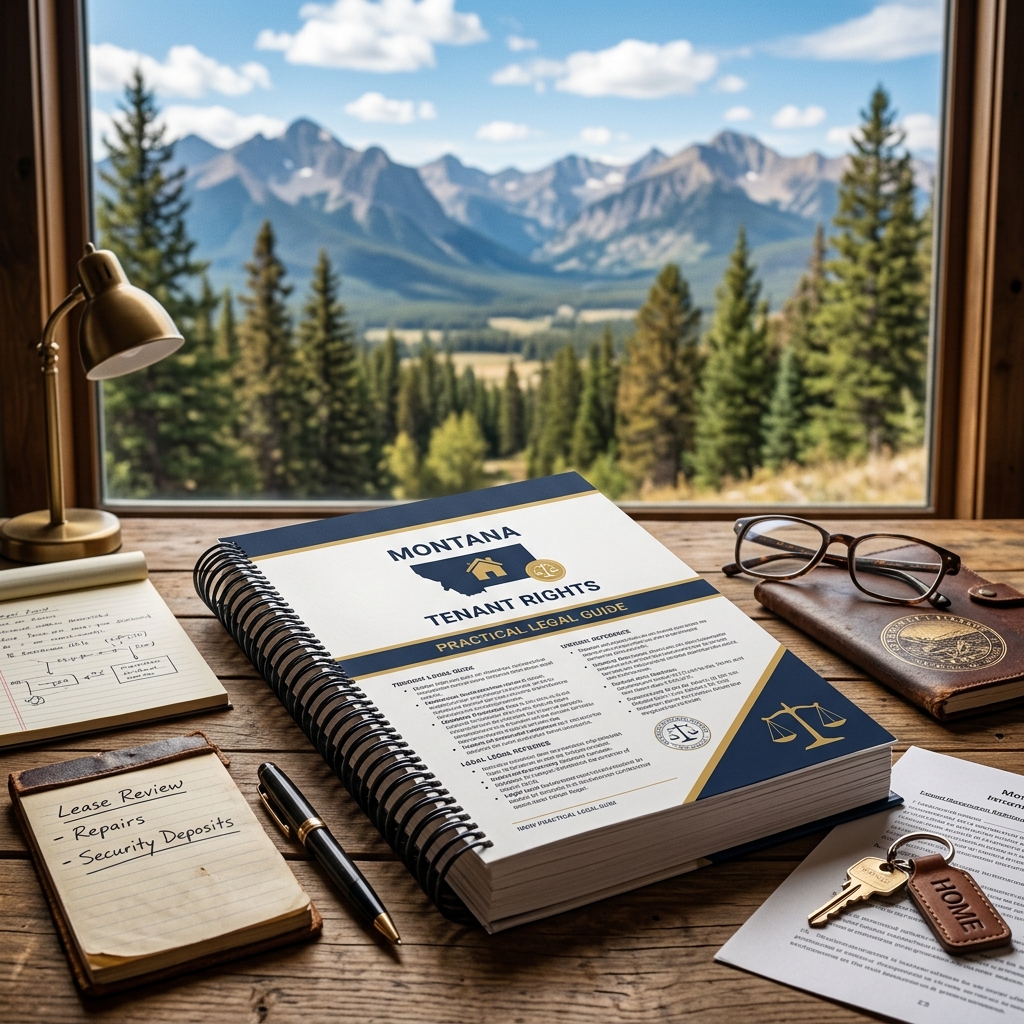
Montana renters are protected by a detailed set of rules found in the Residential Landlord and Tenant Act of 1977 and related state laws. These laws explain what landlords must do to keep rentals safe and habitable, what tenants must do to care for the property and pay rent, and how both sides must handle problems such as repairs, deposits, and evictions.
This guide explains the most important rights and responsibilities for tenants and landlords in Montana in clear, practical terms. It is an informational summary and not legal advice.
1. Legal Foundations of Montana Rental Rights
Most residential rental relationships in Montana are governed by the Montana Code Annotated, Title 70, Chapter 24, known as the Residential Landlord and Tenant Act of 1977. Security deposits are regulated separately under the Residential Tenants’ Security Deposits laws. Together, these statutes outline how leases work, what counts as a violation, and which remedies courts may impose if either party breaks the rules.
| Topic | Where It Comes From | What It Covers |
|---|---|---|
| Residential Landlord and Tenant Act of 1977 | Montana Code Annotated, Title 70, Chapter 24 | Rental agreements, rights and duties of landlords and tenants, remedies, and eviction procedures. |
| Security Deposit Laws | Residential Tenants’ Security Deposits statutes | How deposits are collected, held, itemized, and returned. |
| Fair Housing Protections | Montana Human Rights Act & federal fair housing laws | Anti-discrimination rules based on protected characteristics (e.g., race, disability, religion, familial status). |
The Montana Judicial Branch and the Attorney General’s Office provide public guides and forms to help tenants and landlords understand and use these laws in real disputes.
2. Core Tenant Rights in Montana
Montana law gives tenants a set of fundamental rights that landlords must respect. These rights cannot be waived by a lease clause if doing so would conflict with the statute.
2.1 Right to a Habitable and Safe Home
Landlords must keep rental housing fit and habitable, meaning it must be reasonably safe, sanitary, and meet basic housing and building codes. This includes duties such as:
- Maintaining structures (walls, roofs, floors, stairs) so they are not dangerous.
- Keeping electrical and plumbing systems in good working order.
- Providing running water and reasonable heat.
- Supplying and maintaining essential services such as heat, hot water, gas, and electricity when they are part of the rental agreement.
- Installing approved smoke and carbon monoxide detectors where required.
If the landlord fails to make necessary repairs within a reasonable time, tenants may have legal remedies, including potentially ending the lease or arranging repairs and deducting the cost if proper notice procedures are followed.
2.2 Right to Privacy and Controlled Entry
Tenants have the right to possession of the rental and to be free from unreasonable or unlawful entry by the landlord. Under Montana law:
- Landlords generally must give reasonable notice (commonly interpreted as at least 24 hours) before entering the rental for non-emergency reasons, such as inspections or repairs.
- Entry must occur at reasonable times of day.
- Emergency situations (like a fire or major water leak) allow immediate entry without prior notice.
Tenants, in turn, are expected not to change locks without permission and must provide the landlord with keys so lawful entry is still possible.
2.3 Right to Be Free from Discrimination
Montana law and federal fair housing law prohibit landlords from discriminating in rental decisions based on certain protected characteristics. In general, landlords may not:
- Refuse to rent or renew a lease because of a tenant’s race, color, national origin, religion, sex, familial status, disability, creed, age (over 40), marital status, or use of public assistance.
- Apply different rental terms, conditions, or services based on these protected traits.
- Publish advertisements that express a preference for or against members of protected groups.
Tenants who believe they have experienced housing discrimination may file complaints with the Montana Human Rights Bureau or the U.S. Department of Housing and Urban Development (HUD). These agencies investigate claims and may seek remedies.
2.4 Protection from Retaliation
Landlords are not allowed to take retaliatory actions against tenants for exercising their legal rights. Retaliation may include:
- Raising rent after the tenant complains in good faith about code violations or substandard conditions.
- Reducing essential services or amenities in response to tenant complaints.
- Threatening or initiating eviction because the tenant joined a tenant organization or asserted legal rights.
If a landlord’s actions appear to be punishment for lawful tenant conduct, the tenant can raise retaliation as a defense in court or as part of a complaint to state agencies.
3. Key Tenant Responsibilities
Montana tenants have legal duties as well, and failure to meet them can lead to notices, potential eviction, or financial liability.
- Pay rent on time: The tenant must pay the agreed rent as specified in the lease. Late or missed payments can trigger statutory notice periods and eventual eviction if not cured.
- Keep the unit reasonably clean and safe: Tenants must use the premises in a way that does not create health or safety problems.
- Use utilities and facilities properly: Plumbing, electrical fixtures, and appliances must be used in a reasonable manner and not damaged through misuse.
- Avoid damage and illegal activity: Tenants must not deliberately or negligently damage the property or allow others to do so, and may not use the property for unlawful purposes.
- Follow reasonable rules: House rules that are part of the rental agreement and consistent with Montana law must be honored.
- Vacate when the agreement ends: Tenants must leave on time or face potential legal action for holding over.
4. Security Deposits: What Tenants Should Know
Montana’s security deposit rules are designed to prevent unfair withholding and to clarify what counts as damage versus ordinary wear and tear.
4.1 Common Features of Security Deposit Law
While specific dollar limits and deadlines are set by statute, the general framework in Montana is:
- Deposits are allowed if agreed to in the rental contract.
- Landlords may use the deposit to cover unpaid rent, cleaning beyond normal wear, and repair of damage caused by the tenant or guests.
- Normal aging of paint, carpet, and fixtures typically cannot be charged to the tenant.
- Landlords must provide an itemized statement if they keep any part of the deposit, stating the reasons and costs.
The Residential Tenants’ Security Deposits statutes set specific timelines for returning deposits and itemizations after the tenant moves out.
4.2 Tenant Strategies for Protecting the Deposit
To reduce disputes and protect their money, tenants should:
- Carefully document the rental’s condition at move-in and move-out with photos and a written checklist.
- Promptly notify the landlord in writing about needed repairs during the tenancy.
- Clean the unit thoroughly before vacating, following any move-out procedures in the lease.
- Provide a forwarding address in writing to facilitate deposit return and correspondence.
5. Repairs, Maintenance, and Essential Services
Montana’s landlord–tenant laws provide clear mechanisms for dealing with repairs and failures of essential services.
5.1 Landlord Repair Duties
Landlords must make all necessary repairs within a reasonable time after receiving notice of a problem. The Montana Attorney General’s materials explain that if a landlord fails to comply with these responsibilities, tenants may pursue legal remedies, but they should first give the landlord written notice and an opportunity to fix the issue.
5.2 Typical Repair Timelines
- For non-emergency repairs affecting habitability, tenants are generally advised to give the landlord written notice requesting repairs and allow a reasonable period (often 14 days) for correction.
- For serious emergencies that affect health or safety, landlords should act much faster; guidance materials state that emergency repairs may need to be addressed within about three days.
If the landlord still does not act, tenants may, in some circumstances:
- Terminate the rental agreement after proper notice; or
- Arrange necessary repairs themselves and deduct reasonable costs from the rent, provided they closely follow statutory requirements and documentation practices.
Before using a repair-and-deduct strategy, tenants should carefully review the statutes or seek legal advice, because incorrect use could be treated as nonpayment of rent.
6. Rent, Lease Terms, and Rent Increases
Montana does not impose general rent control limits, but it does regulate how and when rent can be increased or a lease can be terminated.
6.1 Rent Payment Obligations
Tenants must pay the amount of rent set out in the lease, by the due date and in the manner required (for example, by mail, in person, or electronically). Failure to pay rent may result in a short statutory notice and eventual eviction if not cured.
6.2 Rent Increases
- For a fixed-term lease (such as one year), rent normally cannot be raised during the term unless the lease clearly allows for an increase.
- For a month-to-month tenancy, landlords may raise rent by giving at least 30 days’ notice before the increase takes effect.
- For shorter-period tenancies (like week-to-week arrangements), shorter notice periods may apply, but landlords must still follow statutory notice rules.
- Rent increases may not be used as retaliation or as a disguised form of discrimination.
7. Ending a Tenancy and Eviction Procedures
Evictions in Montana must follow the procedures outlined in the Residential Landlord and Tenant Act and related court rules.[10] Landlords are prohibited from using “self-help” tactics, such as changing locks or shutting off utilities to force a tenant out.[10]
7.1 Lawful Reasons for Termination
Common lawful grounds to end a tenancy include:
- Nonpayment of rent.
- Material violation of lease terms (such as unauthorized pets or tenants, significant property damage, or illegal activity on the premises).
- Expiration of a fixed-term lease without renewal.
- No-cause termination of a month-to-month tenancy with proper written notice.
7.2 Notice Requirements
The type of notice and length of time depend on the reason for termination and the tenancy type.
- Nonpayment of rent: Landlords may issue a short written notice (often a few days) to either pay or vacate, as provided by statute.
- Other lease violations: The landlord must give a written notice describing the noncompliance, stating that the rental agreement will terminate on a specified date if the violation is not corrected within the minimum statutory period (commonly 14 days, with shorter periods for certain serious violations).
- Month-to-month tenancy: Landlords generally may terminate with at least 30 days’ written notice, without needing a specific reason, provided there is no discrimination or retaliation.
The Montana court system offers standardized forms and instructions for landlords who pursue eviction actions, and for tenants who need to respond.
7.3 Court Eviction Process
If a tenant remains after proper notice, the landlord must file an eviction case in court rather than taking matters into their own hands.[10] According to legal guidance:
- Landlords cannot legally remove a tenant, change locks, or cut off utilities to force the tenant out without a court order.[10]
- Tenants have the right to be served with court papers, to appear in court, and to present defenses such as improper notice, retaliation, discrimination, or landlord noncompliance with repair obligations.[10]
- If the landlord wins, the court may issue a writ allowing law enforcement to physically remove the tenant if necessary.
8. Practical Tips for Montana Tenants
Knowing your legal rights is essential, but putting them into practice requires careful documentation and communication.
- Get everything in writing: Keep a written lease and save any changes or promises in writing, including emails and text messages.
- Document the property condition: Perform a walk-through at move-in and move-out and use photos or videos with dates.
- Use dated written notices: When requesting repairs or addressing problems, send dated letters or emails and keep copies for your records.
- Know where to seek help: The Montana Department of Justice, Montana Legal Services Association, and local tenant or legal assistance programs provide information and sometimes representation.
- Review the statute directly: The full text of the Residential Landlord and Tenant Act is publicly available through the Montana Code Annotated.
9. Frequently Asked Questions (FAQs)
Can my landlord enter my rental without notice in Montana?
In general, no. Landlords must give reasonable advance notice—commonly at least 24 hours—and enter only at reasonable times, except in emergencies such as a fire or major water leak that require immediate access.
What can I do if my landlord refuses to make major repairs?
First, give the landlord written notice describing the problem and asking for repairs within a reasonable time (often 14 days for non-emergency issues). If the landlord still does not act, you may have legal options such as ending the rental agreement or arranging repairs and deducting the cost from rent, but you must follow statutory requirements carefully and should consider getting legal advice.
Is my landlord allowed to raise my rent for complaining about conditions?
Rent increases used as punishment for lawful tenant complaints about conditions, code violations, or assertion of legal rights can amount to retaliation, which is prohibited. You may be able to raise retaliation as a defense if the landlord attempts to evict you or take adverse action after a complaint.
Can my landlord evict me by changing the locks or shutting off utilities?
No. Montana law does not allow “self-help” evictions. Landlords must serve proper written notice, file an eviction case in court if the tenant does not comply, and obtain a court order before the tenant can be physically removed.[10]
Where can I find official information and forms related to Montana landlord–tenant law?
The Montana Judicial Branch provides landlord–tenant information and court forms online, including materials about evictions and tenant remedies. The Montana Department of Justice also publishes general information for tenants and landlords and may direct you to additional resources. For more detailed study, you can consult the Residential Landlord and Tenant Act of 1977 in the Montana Code Annotated.
References
- Montana Code Annotated, Title 70, Chapter 24: Residential Landlord and Tenant Act of 1977 — Montana Legislature. Ongoing (current codification). https://mca.legmt.gov/bills/mca/title_0700/chapter_0240/parts_index.html
- Landlord Tenant Law – Evictions — Montana Judicial Branch. 2023-06-01 (last updated, approximate). https://courts.mt.gov/forms/landlord
- Housing Handbook: The Residential Landlord and Tenant Act of 1977 — Montana Judicial Branch / Access to Justice. 2022-01-15 (approximate handbook update). https://courts.mt.gov/external/library/forms/landlord/tenants_rights_responsibilities.doc
- Tenants and Landlords — Montana Department of Justice, Office of Consumer Protection. 2022-09-12 (last updated, approximate). https://dojmt.gov/office-of-consumer-protection/tenants-and-landlords/
- Landlords and Tenants — Montana State University, Off-Campus Student Life. 2023-03-10 (last updated, approximate). https://www.montana.edu/offcampusstudentlife/housing/landlords-and-tenants.html
- Montana Tenant-Landlord Law Overview — Hemlane. 2024-02-01. https://www.hemlane.com/resources/montana-tenant-landlord-law/
- Overview of Landlord-Tenant Laws in Montana — Nolo. 2023-05-20. https://www.nolo.com/landlord-tenant/landlord-tenant-laws-montana.html
Similar Articles








Read full bio of medha deb


