
Milestones in Modern First Amendment Protections
Navigating the modern landscape of free speech and protest.
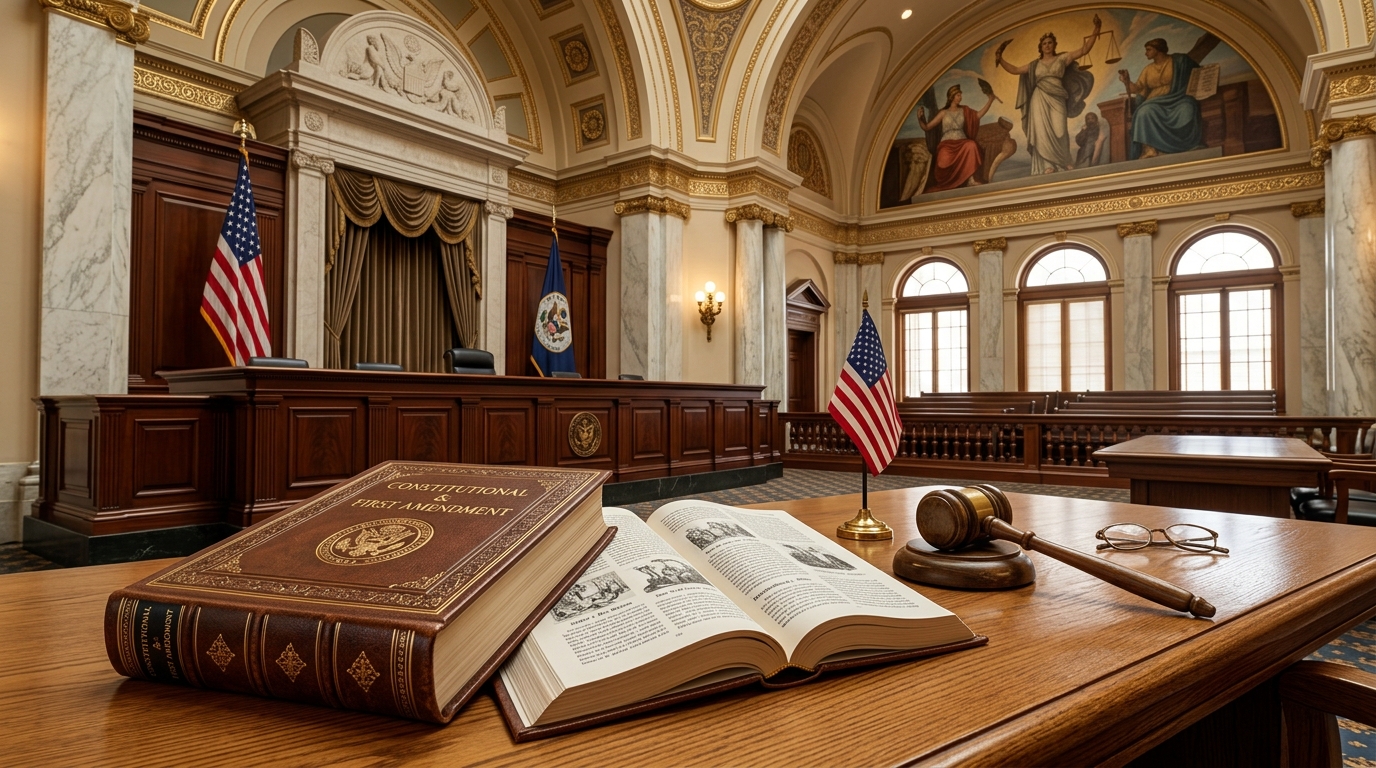
The First Amendment to the United States Constitution is widely celebrated as the primary safeguard of American democracy. With its sweeping command that the government shall make no law abridging the freedom of speech, or of the press, or the right of the people peaceably to assemble, this legal doctrine has served as the ultimate shield against state-sponsored censorship. Yet, while the text of the amendment has remained static since its ratification in 1791, the context in which it is applied is in a state of constant, turbulent evolution. Over the past few years, a multifaceted war over the boundaries of free expression has erupted in courtrooms, legislative chambers, and digital spaces.
The current legal landscape reveals unprecedented stress tests on established constitutional principles. Advocates for civil liberties are actively litigating against a wave of modern restrictions ranging from educational gag orders and public library book bans to complex anti-boycott regulations and state interference in digital content moderation. Examining the recent milestones in First Amendment law not only highlights the enduring resilience of these rights but also underscores the relentless vigilance required to maintain them. As society pivots toward new modes of communication and political activism, courts are repeatedly called upon to clarify how the foundational right to dissent applies to twenty-first-century realities.
The Battle of the Books: Fighting Censorship in Education
Perhaps the most visceral and highly publicized arena of First Amendment conflict today is located within the walls of public schools and community libraries. Across the nation, a coordinated surge in book removals has targeted literature that addresses themes of racial injustice, LGBTQ+ identities, and other marginalized perspectives. Proponents of these removals often argue they are protecting minors from inappropriate content, but constitutional scholars and civil rights defenders recognize this trend as a dangerous encroachment on the fundamental right to receive information.
Historically, the Supreme Court has set limits on educational censorship. In the landmark 1982 plurality decision of Board of Education, Island Trees Union Free School District No. 26 v. Pico, the Court famously declared that local school boards may not remove books from library shelves simply because they dislike the ideas contained in those books. Public school libraries are considered places of voluntary inquiry, and the First Amendment acts as a bulwark against the imposition of a narrow political or social orthodoxy by government officials.
However, modern legal battles have revealed vulnerabilities in this precedent. In recent years, appellate courts have wrestled with the complexities of these disputes. For instance, recent litigation in the Fifth Circuit (Little v. Llano, 2025) has debated whether library patrons actually hold a robust constitutional right to receive information that can supersede the government’s discretion over its own library collections. While some lower courts have struck down categorical bans and returned restricted books to the shelves—citing that the substantial motivation was ideological suppression—other jurisdictions continue to grapple with the line between legitimate curation and unconstitutional viewpoint discrimination. This ongoing battle of the books forces communities to confront the reality that true intellectual freedom requires tolerating access to ideas that some might find offensive or uncomfortable.
Digital Town Squares: Navigating Free Speech on the Internet
As physical public squares have increasingly been replaced by digital platforms, the internet has become the primary theater for First Amendment disputes. The intersection of constitutional law and digital expression is highly complex because the First Amendment inherently regulates state actors, not private corporations. Consequently, private social media companies retain the legal right to moderate content on their platforms as they see fit. However, recent state interventions have aggressively attempted to rewrite this dynamic.
States have passed novel legislation attempting to regulate how large social media platforms moderate their users’ speech, arguing that these platforms function as modern common carriers. These laws have triggered massive federal lawsuits, testing whether the government can compel private entities to host speech that violates their own terms of service. Courts have consistently debated this tension, aiming to reaffirm that platforms possess their own First Amendment rights to exercise editorial discretion, preventing the state from dictating what content must be published or amplified.
Simultaneously, a different digital censorship threat has emerged through the concept of “jawboning”—when government officials use their authority to coerce or heavily pressure private companies into silencing critics or removing specific viewpoints. The Supreme Court recently scrutinized this boundary in National Rifle Association of America v. Vullo (2024), examining whether state regulatory authorities crossed the line from permissible government speech into unconstitutional coercion by threatening regulated entities over their association with controversial advocacy groups. The line between a government official merely expressing a policy preference and tacitly threatening regulatory retaliation is exceedingly thin. As digital communication continues to dominate the global discourse, establishing clear jurisprudential boundaries around state coercion of private platforms is essential to preventing backdoor censorship.
The Right to Assemble: Protecting Protesters from Retaliation
The right of the people to peaceably assemble is a cornerstone of American civic participation. From the civil rights marches of the 1960s to contemporary movements advocating for racial justice, environmental protection, and human rights, physical demonstration remains a potent mechanism for societal change. However, recent legislative sessions have seen a disturbing influx of anti-protest bills designed to severely penalize demonstrators and chill the exercise of this constitutional right.
Many of these new laws seek to dramatically increase criminal penalties for minor infractions like blocking traffic or trespassing during a protest. More alarmingly, some statutes attempt to impose vicarious liability on the organizers of protests, holding them financially or criminally responsible for the unlawful acts of a few rogue attendees. This legislative tactic strikes at the heart of assembly rights by creating an overwhelming deterrent for anyone considering organizing a public demonstration.
To combat this, legal advocates have successfully leaned on the powerful precedent set by NAACP v. Claiborne Hardware Co. (1982). In that decision, the Supreme Court held that the First Amendment strictly protects nonviolent political boycotts and demonstrations, and importantly, established that individuals cannot be held liable for the violent acts of others merely by association. Recent appellate decisions have repeatedly struck down overly broad anti-protest laws, reaffirming that the government cannot use the pretext of maintaining public order to suppress peaceful dissent or bankrupt civil rights organizers through guilt by association.
Economic Expression and Anti-Boycott Legislation
Boycotts have a storied history in American political expression, dating back to the colonial era’s refusal to buy British goods. Yet, an expanding wave of state-level legislation has sought to penalize businesses and individuals who participate in politically motivated boycotts. These anti-boycott laws typically require government contractors to sign written pledges that they will not boycott certain nations, the fossil fuel industry, or firearms manufacturers as a condition of receiving state funds.
The constitutional friction here is palpable. Under the unconstitutional conditions doctrine, the government cannot condition the receipt of a public benefit—such as a government contract—on the relinquishment of a constitutional right. In landmark cases like O’Hare Truck Service, Inc. v. City of Northlake (1996), the Supreme Court clearly established that public contracts cannot be awarded or revoked based on political beliefs or affiliations.
When states attempt to exclude contractors who engage in peaceful, politically motivated boycotts, they are essentially compelling political loyalty and penalizing protected economic expression. Legal challenges to these anti-boycott laws have yielded mixed results across different federal circuits, making it one of the most volatile areas of First Amendment law today. While some courts have recognized that political boycotts are inherently expressive conduct protected by the First Amendment, others have classified them strictly as economic activities subject to commercial regulation. The ongoing litigation surrounding these pledges represents a crucial battleground for ensuring that the government cannot weaponize its immense purchasing power to enforce a preferred political ideology.
First Amendment Protections in the Modern Era: A Summary
| Area of Concern | The Legislative / State Threat | The Constitutional Defense |
|---|---|---|
| Education & Libraries | Broad removal of literature discussing race, gender, and minority experiences in public facilities. | The established right to access information and the prohibition of ideological viewpoint discrimination. |
| Digital Expression | State attempts to control platform moderation and government “jawboning” to silence specific critics. | Protection against compelled speech and the strict prohibition of state coercion of private corporate entities. |
| Public Assembly | Enhanced criminal penalties for demonstrators and vicarious financial liability for protest organizers. | Doctrines protecting peaceful association and severely limiting group liability for individual rogue acts. |
| Economic Expression | Mandated loyalty oaths and prohibitions against political boycotts for government contractors. | The unconstitutional conditions doctrine, preventing the state from penalizing protected political beliefs. |
The Road Ahead: Why Vigilance Matters
The victories secured by civil liberties advocates in recent years serve as a vital reminder that constitutional rights are not self-executing. They require constant, rigorous defense against an ever-shifting array of authoritarian impulses. As legislators develop more sophisticated methods to chill speech—whether by leveraging state contracts, threatening regulatory action, or targeting educational curricula—the judicial system remains the essential backstop for democratic accountability.
However, litigation alone cannot sustain a culture of free expression. It is imperative for the public to remain informed and engaged in the defense of civil liberties. Understanding the nuances of First Amendment law empowers communities to hold their elected officials accountable and push back against localized censorship. The ongoing struggle to define the limits of free speech in a deeply polarized, hyper-connected society is perhaps the most critical democratic project of our time. Protecting the rights of dissenters, marginalized voices, and ideological minorities ensures that the marketplace of ideas remains open, vibrant, and fiercely independent.
Frequently Asked Questions (FAQ)
What exactly does the First Amendment protect?
The First Amendment protects individuals from government interference in five core areas: religion, speech, the press, assembly, and the right to petition the government. In the context of free speech, it generally prevents federal, state, and local governments from censoring expression, punishing dissent, or compelling individuals to endorse state-mandated ideologies. However, certain narrow categories of speech, such as incitement to imminent lawless action, true threats, and strict obscenity, are not protected.
Does the First Amendment apply to private companies like social media platforms?
No. The First Amendment strictly restrains government actors, not private entities. Private companies, including large social media platforms, possess their own First Amendment rights to curate, moderate, and remove content hosted on their networks. A violation of free speech in the digital realm typically occurs when the government uses its power to unconstitutionally coerce those private platforms into censoring specific voices.
How do courts decide if a public library book ban is unconstitutional?
Courts generally examine the motivation behind the book removal. If a school board or local government removes a book solely because it disagrees with the political, religious, or social ideas contained within it, the removal likely constitutes unconstitutional viewpoint discrimination. Conversely, books can sometimes be removed if they are proven to lack educational suitability or fall under narrow legal definitions of obscenity, though this threshold is exceptionally high.
Can the government punish individuals for participating in a political boycott?
The Supreme Court has historically ruled that nonviolent political boycotts are a form of expressive conduct heavily protected by the First Amendment. However, modern anti-boycott laws, which target state contractors, are highly contested in current litigation. While civil rights advocates argue these laws impose an unconstitutional condition on public contracts, some state governments argue they are merely regulating economic transactions rather than speech.
References
- 22-842 National Rifle Association of America v. Vullo — Supreme Court of the United States. 2024-05-30. https://www.supremecourt.gov/opinions/23pdf/22-842_6kg7.pdf
- Little v. Llano — United States Court of Appeals for the Fifth Circuit. 2025-05-23. https://www.ca5.uscourts.gov/opinions/pub/23/23-50261-CV0.pdf
- Constitution Annotated: First Amendment — Library of Congress. 2024-01-01. https://constitution.congress.gov/constitution/amendment-1/
- NAACP v. Claiborne Hardware Co., 458 U.S. 886 — Supreme Court of the United States. 1982-07-02. (Authoritative foundational precedent for protest liability). https://supreme.justia.com/cases/federal/us/458/886/
- O’Hare Truck Service, Inc. v. City of Northlake, 518 U.S. 712 — Supreme Court of the United States. 1996-06-28. (Original authoritative standard for government contract conditions). https://supreme.justia.com/cases/federal/us/518/712/
Similar Articles








Read full bio of medha deb


