
Massachusetts Neighbor Property Conflicts Guide
Essential legal insights for resolving boundary lines, trees, fences, and other property conflicts with neighbors in Massachusetts.
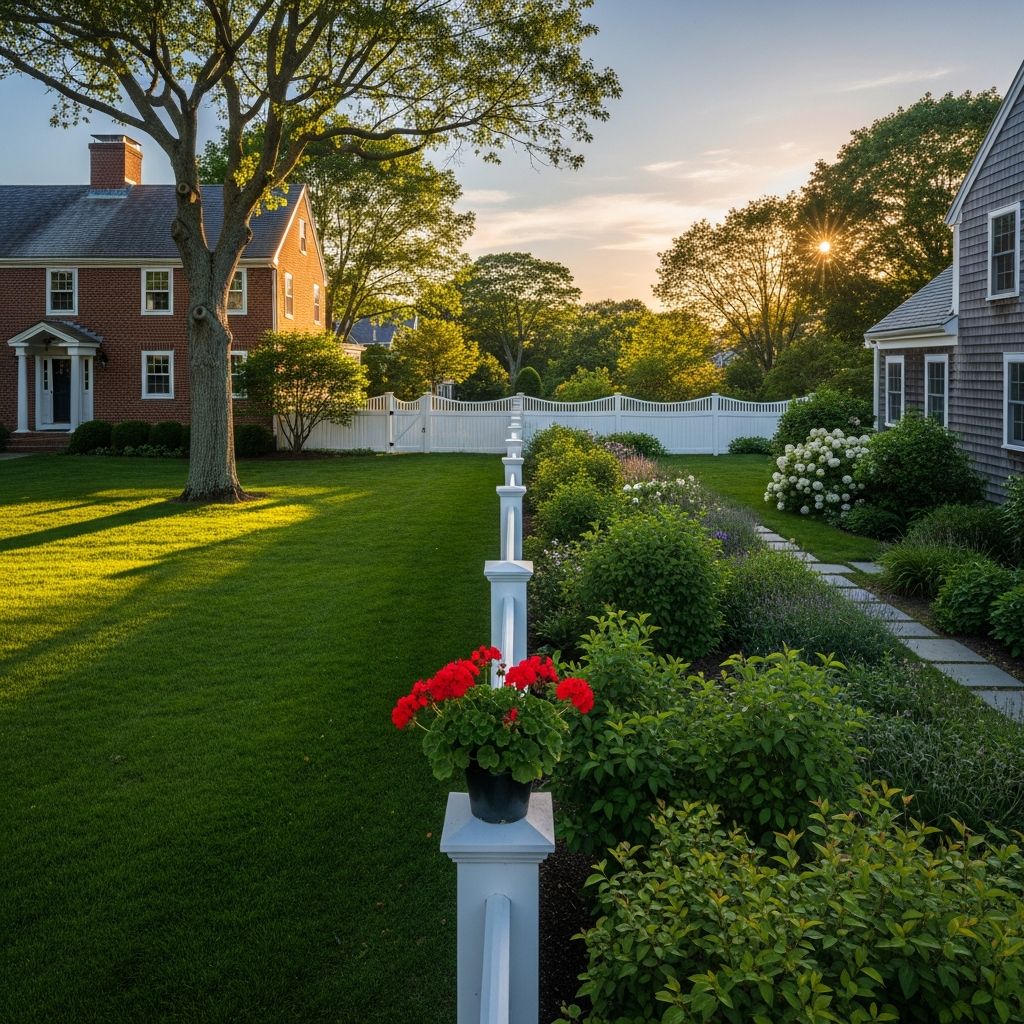
Property ownership in Massachusetts comes with clear rights, but conflicts with neighbors over shared spaces can arise unexpectedly. These issues often involve disagreements about land boundaries, overhanging trees, fence placements, or access rights. Understanding state-specific laws helps homeowners address problems effectively while minimizing escalation. This guide explores common disputes, legal frameworks, and practical steps for resolution, drawing from established Massachusetts statutes and court practices.
Defining Property Boundaries Accurately
Most neighbor conflicts stem from uncertainty over where one property ends and another begins. In Massachusetts, property lines are legally defined by deeds recorded at the local registry of deeds. However, outdated surveys or physical markers like fences may not reflect true boundaries, leading to encroachments such as sheds, driveways, or landscaping that cross lines.
To clarify boundaries, commission a professional land survey by a licensed surveyor. This document uses historical records and on-site measurements to produce a certified plat map, serving as strong evidence in disputes. Courts, particularly the Massachusetts Land Court, prioritize survey evidence when determining ownership.
- Obtain a recent survey: Essential for proving encroachments; costs typically range from $500 to $2,000 depending on property size.
- Review deed descriptions: Compare metes and bounds or lot numbers against neighboring properties.
- Check municipal records: Town assessors maintain tax maps, though these are not legally binding for disputes.
Early surveys prevent future issues, especially during property sales when title searches reveal discrepancies.
Handling Encroachments and Unauthorized Use
When a neighbor’s structure or activity intrudes on your land, it constitutes an encroachment. Common examples include a fence built inches over the line, a pool encroaching on your yard, or habitual parking on your driveway. Massachusetts law allows property owners to demand removal through formal notices.
Start with a polite conversation, supported by your survey. If ignored, send a certified demand letter outlining the issue, evidence, and a deadline for correction. Persistent refusal may justify filing for a declaratory judgment in Land Court, where a judge officially defines boundaries and orders compliance.
| Encroachment Type | Typical Response | Legal Remedy |
|---|---|---|
| Shed or Deck | Demand relocation | Injunction to remove |
| Fence Over Line | Written notice | Trespass claim |
| Vegetation Intrusion | Trim at line | Boundary clarification |
In severe cases, pursue an injunction to halt ongoing intrusions immediately, preventing further damage.
Tree-Related Disputes and Responsibilities
Trees straddling property lines often spark arguments, particularly when branches overhang or roots damage structures. Under Massachusetts General Laws Chapter 49 and Chapter 242, Section 6, the owner of the tree trunk bears primary responsibility for its maintenance. Neighbors may trim encroaching branches up to the property line at their own expense, without harming the tree’s health.
If a neighbor’s tree falls and causes damage during a storm, recovery depends on negligence. Prove willful damage for treble damages (three times actual cost) via Chapter 243, Section 6. Actual damages cover replacement value for healthy trees.
- Overhanging branches: Self-trim legally, but hire arborists for safety.
- Fallen trees: Sue for negligence if unhealthy and ignored.
- Root damage: Target roots on your side; notify owner if invasive.
The Massachusetts Trial Court Law Libraries emphasize documenting tree health via photos and expert reports before action.
Fence Laws and Division Responsibilities
Fences mark boundaries but can ignite disputes over construction, maintenance, and costs. Massachusetts General Laws Chapter 49, Sections 4-13, requires adjoining owners to share costs for division fences equally if both benefit. “Benefit” includes containing livestock or defining lines.
Spite fences—erected maliciously to annoy without utility—can be abated via court order under Chapter 49, Section 2. Notify neighbors in writing before building or repairing, allowing 30 days for response.
Local zoning bylaws may impose height limits (often 6 feet residential) and material restrictions. Always verify with town building departments.
Understanding Easements and Access Rights
Easements grant limited use of another’s land, such as driveways or utility paths. In Teare v. Stockwell (Mass. Land Court, 2016), the court ruled that easement holders enjoy reasonable use, but dominant owners cannot interfere materially.
Types include express (deed-recorded), implied (necessity for landlocked parcels), and prescriptive (adverse use over time). Challenge improper use via quiet title action in Land Court.
Adverse Possession: When Use Becomes Ownership
Massachusetts recognizes adverse possession after 20 years of open, notorious, exclusive, and hostile use without permission (MGL c. 260, § 21). “Tacking” combines prior owners’ periods if privity exists.
Examples: A neighbor farming your back strip for decades. Interrupt by posting no-trespass signs or fencing promptly. Claims require Land Court filings with evidence like affidavits and photos.
Alternative Dispute Resolution Methods
Court is costly and slow; prioritize mediation first. Neutral mediators facilitate agreements, often at community dispute centers or private services. Arbitration provides binding decisions without full trials.
Steps for amicable resolution:
- Direct dialogue: Discuss calmly with facts.
- Mediation session: Free or low-cost via courts.
- Attorney negotiation: Demand letters resolve 70% of cases pre-litigation.
Navigating Court Proceedings
For unresolved issues, file in Land Court (specializes in boundaries) or Superior Court (broader claims). Process includes complaint filing, summons, discovery, and hearings. Expect 6-18 months; costs $5,000+ without settlement.
Gather evidence: surveys, photos, witness statements, deeds. Real estate attorneys boost success rates significantly.
Preventive Strategies for Property Owners
Avoid disputes through proactive measures:
- Boundary agreements: Written, notarized pacts recorded at registry.
- Regular maintenance: Inspect lines annually.
- Insurance review: Title insurance covers some disputes.
- Neighbor relations: Foster goodwill via shared fences or trees.
Frequently Asked Questions
Can I remove my neighbor’s tree branches overhanging my property?
Yes, trim to the boundary line without killing the tree, per Mass. Gen. Laws ch. 49.
How long for adverse possession in Massachusetts?
20 years of continuous hostile use.
Who pays for a shared fence?
Adjoining owners share costs if mutually beneficial.
What court handles boundary fights?
Massachusetts Land Court specializes.
Is mediation mandatory before suing?
No, but courts encourage it.
References
- Dealing with Neighbor Boundary Disputes in Massachusetts — The Fernandez Firm. 2023. https://thefernandezfirm.com/neighbor-boundary-disputes/
- Massachusetts Land Court Defines Neighbors’ Rights to Use Private Way Property Dispute — Massachusetts Real Estate Lawyer Blog. 2016-05-20. https://www.massachusettsrealestatelawyer-blog.com/massachusetts-land-court-defines-neighbors-rights-use-private-way-property-dispute/
- Property Boundaries in Dispute in Massachusetts — Mucci Legal. 2023. https://muccilegal.com/property-boundaries-in-dispute-in-massachusetts/
- Massachusetts Laws on Property Disputes Between Neighbors — Nolo. 2023. https://www.nolo.com/legal-encyclopedia/massachusetts-laws-neighbor-property-disputes-65236.html
- Common Real Estate Disputes in Massachusetts and How to Resolve Them — LLK Law. 2023. https://llklaw.com/legal-blog/common-real-estate-disputes-in-massachusetts-and-how-to-resolve-them
- Massachusetts Law About Neighbors and Trees — Mass.gov. 2024-01-17. https://www.mass.gov/info-details/massachusetts-law-about-neighbors-and-trees
Similar Articles








Read full bio of Sneha Tete


