
Snow and Ice Removal Deadlines for Landlords
A practical guide to snow-removal timing, landlord duties, tenant leases, and liability risks.
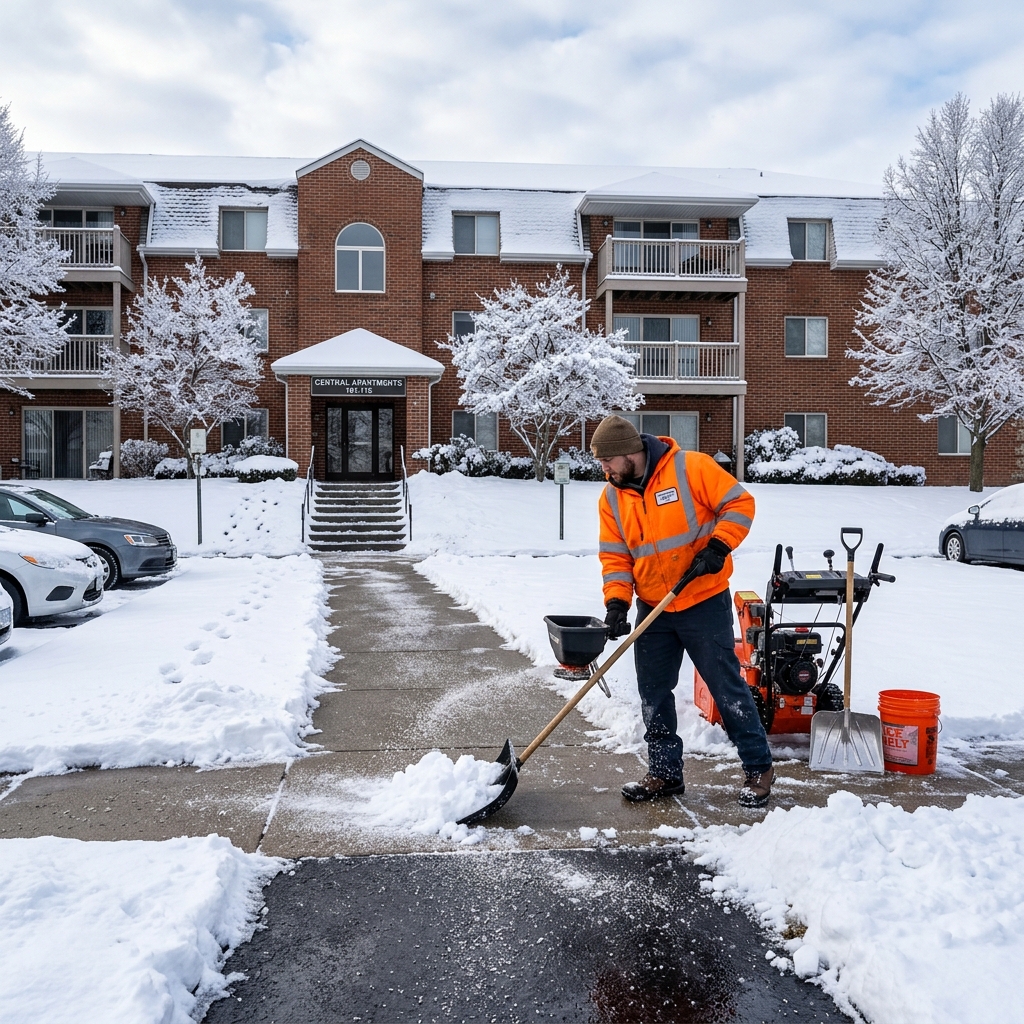
Winter weather creates one of the most common maintenance and liability problems for rental property owners. When snow piles up or ice forms on sidewalks, driveways, and entry paths, landlords must act quickly to reduce the risk of falls, code violations, and insurance claims. The exact deadline depends on local rules, the type of property, and sometimes the lease, but the basic rule is simple: dangerous winter conditions should be addressed as soon as reasonably possible.
This guide explains how snow and ice removal timing works, how responsibility is often divided between landlords and tenants, and why written lease language matters. It also covers practical steps landlords can take to prepare for storms, document compliance, and respond when the weather does not cooperate.
Why winter maintenance matters
Snow and ice are not just cleanup issues. They are safety hazards that can lead to falls, injuries, and property damage. For landlords, that means winter maintenance affects more than appearance; it can also affect legal exposure. A tenant, guest, delivery driver, or visitor who slips on untreated ice may raise a claim that the property owner failed to maintain a reasonably safe condition.
Timely removal also helps landlords avoid complaints from tenants and enforcement action from local authorities. Many cities and towns have ordinances that require snow and ice to be cleared within a defined period after a storm ends. In some places, the clock starts as soon as snowfall stops; in others, the deadline may depend on the time of day or the amount of accumulation.
Who is usually responsible
Responsibility for snow and ice removal is not uniform. It often depends on the structure of the rental property and the local law that applies to it.
- Multi-unit buildings: Landlords are commonly responsible for shared walkways, entrances, stairs, parking areas, and other common spaces.
- Single-family rentals: Tenants may sometimes be assigned snow-clearing duties in the lease, especially for the areas they use directly.
- Shared public sidewalks: In many municipalities, the property owner remains the party expected to clear the walk beside the property, even if the lease assigns day-to-day work to a tenant.
- Condominium or mixed-use properties: Responsibility may be split among owners, associations, managers, or tenants depending on governing documents and local ordinances.
Because rules vary so much, landlords should not assume that a lease clause alone will control liability. In some locations, the municipality still looks to the property owner for compliance, regardless of what the lease says.
How fast snow and ice should be removed
There is no single national deadline for clearing winter hazards. Instead, local ordinances and housing rules set the pace. Some places require action within only a few hours after snowfall ends, while others allow a longer window. In colder regions with frequent storms, cities may still expect property owners to keep at least a reasonable path open throughout the day.
As a practical matter, landlords should think in terms of immediate response rather than waiting for perfect conditions. Fresh snow is easier to remove than compacted snow that turns into ice. Likewise, applying salt or another de-icing product early can prevent a thin glaze from becoming a more serious hazard later in the day or overnight.
The most important timing questions are usually these:
- Did the storm already end, or is it still actively snowing?
- Does the city or town set a specific number of hours for removal?
- Are the affected areas common walkways, tenant-only areas, or public sidewalks?
- Does the property have known problem spots, such as shaded steps or north-facing entrances?
What landlords should clear first
Not every part of a property carries the same level of urgency. Landlords should focus first on the routes people actually use to enter and exit the building.
- Primary entrances: Keep front doors, back doors, and emergency exits open and safe.
- Walkways and sidewalks: Clear paths that connect the street, parking lot, and building entrances.
- Steps and ramps: Remove packed snow and apply traction or ice melt on slippery surfaces.
- Parking areas: Make sure drivers and pedestrians can move safely between vehicles and buildings.
- Mailbox and trash routes: If tenants or delivery workers must use a path regularly, it should not be ignored.
Landlords should also pay attention to runoff areas. Melted snow can refreeze after sunset, especially near gutters, drains, downspouts, and shaded concrete. A property that looks safe at midday may become dangerous again by evening.
Lease terms and tenant obligations
A lease can assign some winter maintenance duties to tenants, but that does not always eliminate the landlord’s own legal exposure. The effect of a snow-removal clause depends on state law, local ordinances, and how clearly the agreement is written.
To reduce confusion, a lease should state:
- which areas the tenant must clear
- what materials or tools the tenant must use
- how quickly snow and ice must be removed after a storm
- whether the landlord may hire a contractor and charge the tenant if work is not done
- whether repeated failure to comply can be treated as a lease violation
Good drafting matters. A vague statement such as “tenant is responsible for snow removal” may be too unclear to enforce in a dispute. A more effective clause identifies the exact spaces, the expected deadline, and the standard of care.
When landlords should use a contractor
Hiring a professional snow-removal service can be the most reliable option for larger properties or for buildings that need fast response at unpredictable hours. Contractors can plow parking lots, shovel walks, apply salt, and return after a storm if conditions change.
This approach is especially useful when:
- the property has multiple units or several common entrances
- the owner does not live on-site
- the local deadline is short
- heavy storms are expected overnight or on weekends
- the landlord wants better documentation of the cleanup effort
Even when a contractor is used, landlords should confirm the work was completed. A contract alone does not help if the service fails to appear during the storm or only clears part of the property.
Documentation can reduce disputes
Winter maintenance is easier to defend when it is documented. If a tenant later claims the landlord ignored an unsafe condition, records can show that cleanup was timely and reasonable.
Helpful records include:
- storm alerts and weather reports
- time-stamped photos before and after cleanup
- invoices from contractors
- emails or texts about maintenance requests
- logs showing when salt or sand was applied
- notes describing follow-up checks during freezing conditions
Landlords who manage several properties should keep a simple winter log for each site. That log can become important evidence if there is a dispute about whether action was taken within the required time.
What to do during an ongoing storm
Not every storm allows for a full cleanup while snow is still falling. If precipitation is heavy, wind is strong, or temperatures are falling fast, it may be impossible to fully clear a path until conditions improve. Even then, landlords should still take reasonable interim steps.
Reasonable steps may include:
- making one safe pass at major entrances
- keeping the most-used route as clear as possible
- applying de-icer to reduce buildup
- posting warnings if an area remains slippery
- checking the property again once snowfall slows or stops
The key is to show ongoing attention. A property owner who waits until the next day without any effort may appear careless, while one who makes repeated attempts to keep access open is in a stronger position.
Local rules can be stricter than general practice
Many landlords think snow removal is governed by a general common-sense standard, but municipal rules often set more specific obligations. A city may require sidewalks to be cleared by a certain hour, may prohibit pushing snow into the street, or may impose fines for untreated ice near public access points.
Because these rules are local, landlords should check the ordinances that apply to each property rather than relying on advice from another town or state. A deadline that works in one community may be too slow in another. In practice, the safest approach is to use the shortest applicable deadline and build a maintenance plan around it.
Practical winter maintenance checklist
Before the season begins, landlords can reduce risk by preparing in advance. A short checklist can prevent last-minute scrambling when the first storm arrives.
- Review the lease for snow and ice clauses
- Confirm local deadlines and sidewalk rules
- Arrange a contractor or emergency backup plan
- Stock salt, sand, shovels, and other supplies
- Inspect gutters, drainage, and downspouts
- Identify shaded or chronically icy areas
- Set a system for storm alerts and maintenance logs
Property owners with multiple units may also want to notify tenants about the winter plan in writing. A simple reminder can explain which areas tenants may need to keep clear and who to contact if conditions become dangerous.
Common mistakes landlords should avoid
Several winter maintenance errors appear again and again in rental disputes. Avoiding them can make the difference between a routine cleanup issue and a costly claim.
- waiting until ice has already formed before acting
- assuming the lease overrides local law in every case
- failing to inspect side entrances and rear walkways
- using a contractor without confirming the work was done
- letting snow pile up in a way that blocks drainage or visibility
- forgetting about refreeze after a daytime thaw
One of the most common problems is inconsistent enforcement. If tenants are supposed to handle certain areas, the landlord should still check whether the work was actually done. A forgotten walkway can create injury risk even when the lease assigns responsibility elsewhere.
Frequently asked questions
Can a landlord make a tenant shovel snow?
Yes, in some situations a lease can assign snow-removal duties to a tenant, especially for a single-family rental or a clearly defined private area. However, local law may still place responsibility on the property owner for public sidewalks or shared spaces.
What if the storm is still in progress?
If snow is actively falling, complete removal may not be practical. Landlords should still make reasonable efforts to keep the property as safe as possible, especially at entrances and high-traffic areas.
Is salt enough to satisfy winter maintenance duties?
Usually not by itself. Salt or another de-icer helps reduce slipperiness, but it does not replace shoveling or plowing where snow has accumulated.
What happens if someone is injured on the property?
An injured person may claim that the landlord failed to maintain safe conditions. The landlord’s defense will often depend on local law, lease terms, the weather conditions, and evidence of what maintenance was performed.
Should landlords send a notice to tenants before winter?
That is often a good idea. A written notice can explain snow-removal responsibilities, emergency contacts, and the importance of reporting hazardous conditions quickly.
References
- Winter Snow Removal Responsibilities for Landlords and Tenants in Connecticut — CT POA. 2024-01-01. https://ctpoa.com/winter-snow-removal-responsibilities-for-landlords-and-tenants-in-connecticut/
- Are NYC Landlords Responsible for Ice and Snow? — MJR Law. 2024-01-01. https://mjrlaw-ny.com/blog/are-nyc-landlords-responsible-for-ice-and-snow/
- Snow and Ice — Tenant Resource Center. 2024-01-01. https://www.tenantresourcecenter.org/snow_and_ice
- Massachusetts law about snow and ice — Mass.gov. 2024-01-01. https://www.mass.gov/info-details/massachusetts-law-about-snow-and-ice
- Massachusetts Snow Removal Laws and Liability — Murphy Insurance. 2024-01-01. https://www.dfmurphy.com/blog/massachusetts-snow-removal-laws-and-liability/
Similar Articles








Read full bio of Sneha Tete


