Identity theft can upend your finances, damage your credit, and even lead to wrongful criminal charges in your name. Maine law treats this conduct as a serious fraud crime, with specific statutes that make it illegal to misuse another person’s identifying information or payment card data. This guide explains how Maine defines identity-related offenses, what conduct is prohibited, the penalties and defenses available, and the practical steps victims can take to protect themselves.
1. How Maine Law Views Identity Theft
Although many people use the phrase identity theft in everyday conversation, Maine’s criminal code primarily addresses this behavior under the broader concept of misuse of identification and related fraud offenses. In essence, the law focuses on the unauthorized use of someone else’s personal or financial data to obtain money, services, or other benefits.
At a high level, Maine law targets situations where a person:
- Uses someone else’s identifying information without permission.
- Uses a payment card, account number, or billing number obtained unlawfully.
- Employs specialized devices to capture and re-use card data for fraudulent transactions.
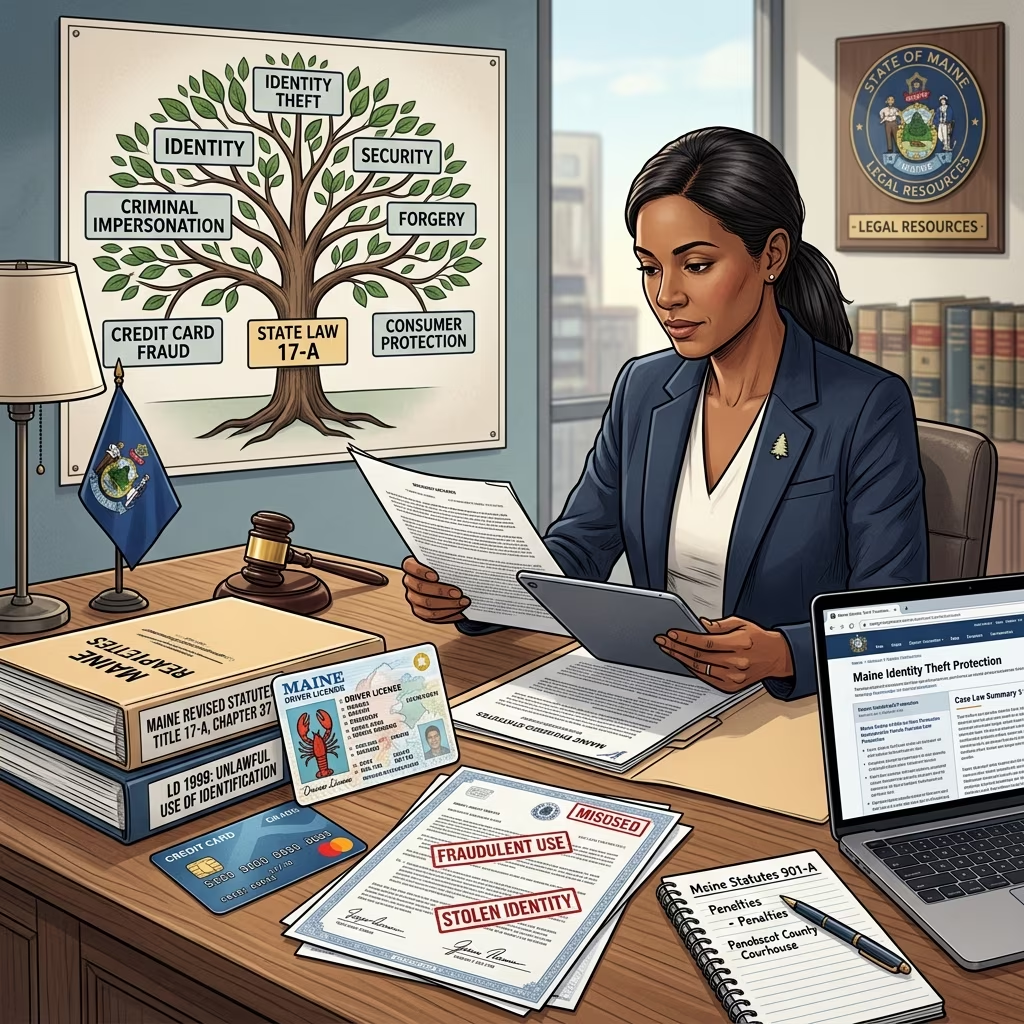
These crimes fit within Maine’s broader fraud framework under Title 17-A, Chapter 37 of the Maine Revised Statutes, which covers deceptive business practices, defrauding creditors, and other financial misconduct.
2. What Counts as Misuse of Identification in Maine?
Under Maine law, misuse of identification generally involves knowingly using another person’s identifying data without authorization for an unlawful purpose. The statute focuses on conduct rather than labels, so the same law may apply whether the offender calls it “identity theft,” “account takeover,” or “carding.”
Common forms of misuse of identification include:
- Using a stolen credit or debit card to make purchases or withdraw cash.
- Using an account or billing number that the user is not authorized to access, such as a bank account or utility account number.
- Using any form of identification (for example, driver’s license number or state ID) that belongs to another person or was obtained by fraud.
- Presenting false identification to obtain money, services, or property that the person is not entitled to receive.
The core elements typically involve:
- A means of identification (card, number, document, or digital credential).
- Knowledge that the information or card is not legitimately yours to use.
- Intent to gain something unlawfully or to facilitate another offense, such as theft or fraud.
These state-level provisions operate alongside federal law, including the Identity Theft and Assumption Deterrence Act, which makes it a federal crime to knowingly transfer or use another person’s identification with intent to commit unlawful activity.
3. Misuse of Scanning Devices and Reencoders
Maine also criminalizes the use of certain technologies designed to capture and re-use payment card information. This reflects the increasing role of card skimmers and similar devices in modern identity theft schemes.
The crime often described as misuse of a scanning device or reencoder occurs when a person:
- Uses a device to read or capture credit or debit card data without authorization.
- Transfers the captured data to another medium (for example, encoding card information onto a blank card).
- Does so with the purpose of extracting funds or otherwise committing fraud.
These offenses are distinct from simple possession of a card. They target the deliberate harvesting of card data, which may affect dozens or hundreds of victims at once when devices are installed on ATMs or fuel pumps.
4. Criminal Penalties for Identity-Related Offenses
Maine categorizes misuse of identification and misuse of scanning devices as Class D crimes for a first offense. Class D is a misdemeanor-level classification, but it still carries potential jail time and substantial financial consequences.
| Offense Type | Classification | Possible Jail Term | Maximum Fine | Additional Consequences |
|---|---|---|---|---|
| Misuse of identification (first offense) | Class D crime | Up to 1 year in county jail | Up to $2,000 | Restitution to victims for losses |
| Misuse of scanning device or reencoder (first offense) | Class D crime | Up to 1 year in jail | Up to $2,000 | Possible restitution for stolen funds |
Depending on the facts of the case, identity-related crimes may also intersect with general theft statutes. For example, if misuse of identification leads to substantial financial loss, prosecutors may charge separate theft offenses with higher classifications and penalties, such as Class C, B, or even more severe categories based on the value involved.
In addition to fines and jail, individuals convicted of identity theft-related offenses may face:
- Restitution orders requiring them to reimburse victims for direct monetary losses.
- Probation conditions that restrict access to financial accounts or devices.
- Long-term collateral consequences such as difficulty obtaining employment or professional licenses in positions of financial trust.
5. Available Defenses in Maine Identity Theft Cases
Individuals charged with misuse of identification or related offenses are entitled to defend themselves in court. Maine recognizes both traditional criminal defenses and a specific statutory defense based on good-faith belief.
5.1 Traditional Criminal Defenses
Standard defenses in identity theft prosecutions may include:
- Actual innocence: Arguing that the accused did not commit the alleged conduct or was misidentified.
- Lack of intent: Contending that the person did not knowingly or intentionally misuse identification or account data.
- Insanity or mental health defenses: In rare cases, arguing that the defendant was legally insane or lacked capacity at the time of the offense.
- Insufficient evidence: Challenging the adequacy or reliability of the state’s proof.
5.2 Affirmative Defense: Good-Faith Authorization
Maine law provides an affirmative defense
Examples where this defense might be raised include:
- Using a family member’s card or account with their prior consent and misunderstanding later disputes.
- Acting based on genuine but mistaken belief that an employer or organization had given permission to use its account numbers.
Because the rules for raising affirmative defenses can be complex, anyone facing identity theft charges in Maine should consult a criminal defense lawyer or public defender as soon as possible.
6. Rights and Remedies for Identity Theft Victims in Maine
Victims of identity theft often struggle with unauthorized charges, damaged credit, collection calls, and fear of further misuse. Maine law and federal guidance offer specific rights and steps to respond.
6.1 Mandatory Police Reports for Identity Theft
Maine statute Title 10, section 1350-B expressly protects victims’ ability to obtain a police report when their information is misused in violation of the misuse of identification law. A person who knows or reasonably believes their personal information has been misused may contact local law enforcement in the jurisdiction of their residence or business to report the crime.
Under this law:
- The local law enforcement agency must make a police report and provide a copy to the complainant.
- The agency may investigate the case or refer it to another agency at its discretion.
- If the suspected crime occurred outside Maine, the report must be referred to the relevant out-of-state law enforcement agency.
Having a police report can be essential for disputing fraudulent accounts and charges with creditors, credit bureaus, and banks.
6.2 Working with Consumer Protection and Elder Services
Victims of identity theft in Maine are encouraged to report the crime to police and contact consumer protection resources for assistance. These organizations help with resolving fraudulent accounts, understanding legal options, and connecting victims to legal aid.
Some key support options include:
- The Maine Attorney General’s Consumer Protection Division, which assists with complaints and provides guidance on identity theft-related problems.
- Legal Services for Maine Elders, which offers free legal advice to residents aged 60 or older who are victims of exploitation or identity theft.
For older adults, these services are particularly valuable, as identity theft may be tied to financial exploitation, scams, or abuse by caregivers or family members.
7. Practical Steps for Victims: Limiting Damage and Recovering
Federal agencies and Maine-based resources recommend a series of steps for victims to respond quickly and reduce further harm. Although each case is different, the following actions are often helpful:
- Complete an identity theft affidavit or complaint: The Federal Trade Commission (FTC) provides an official identity theft form that can be used to document the incident and share information with law enforcement and creditors.
- File a police report: As noted above, Maine law requires local law enforcement to take a report and provide a copy.
- Cancel affected cards and close compromised accounts: Contact banks and card issuers to stop unauthorized transactions and open new accounts with new numbers.
- Contact the major credit reporting agencies: Request a fraud alert and review your credit reports for unfamiliar accounts or inquiries.
- Monitor Social Security records: Check your Social Security earnings statement for jobs or wages that are not yours.
- Obtain a new driver’s license number if your existing number has been used fraudulently and you can show proof of damage.
The Federal Trade Commission and Maine elder legal services both emphasize that consumers can access their credit reports annually at no charge and, in cases of fraud, may be entitled to additional free reports or alerts.
8. Preventing Identity Theft in Maine: Everyday Safeguards
Prevention cannot guarantee safety, but it significantly reduces the chance that your information will be misused. National and Maine-specific guidance recommend basic security habits to protect personal data.
Key preventive measures include:
- Protecting Social Security numbers: Avoid carrying your Social Security card in your wallet and limit sharing the number unless absolutely necessary.
- Using strong passwords and device security: Enable multi-factor authentication and avoid reusing passwords across financial accounts.
- Shredding sensitive documents: Destroy documents containing account numbers, Social Security numbers, or medical information before discarding them.
- Verifying charities and offers: Check with the Maine Department of Professional and Financial Regulation when an offer seems too good to be true or when donating to unfamiliar organizations.
- Reviewing credit reports regularly: Monitor for new accounts, inquiries, or addresses you do not recognize.
9. FAQs About Maine Identity Theft and Misuse of Identification Laws
Q1: Is identity theft specifically illegal in Maine?
Yes. While the law often uses the phrase misuse of identification, the underlying conduct is what most people call identity theft: using another person’s personal or financial data without authorization for an unlawful purpose.
Q2: What is the difference between misuse of identification and misuse of a scanning device?
Misuse of identification focuses on the unauthorized use of someone’s personal or financial identifiers (cards, numbers, documents) to commit fraud. Misuse of a scanning device or reencoder addresses the use of specialized equipment to capture and re-use card data, often on a larger scale.
Q3: What are the penalties for a first-time identity theft-related offense in Maine?
For a first offense of misuse of identification or misuse of a scanning device, the crime is classified as a Class D offense, punishable by up to one year in jail and a fine of up to $2,000, plus possible restitution to victims.
Q4: Do identity theft victims have the right to a police report?
Yes. Under Title 10, section 1350-B of Maine law, a person who believes their information has been misused can contact local law enforcement and must be provided with a police report and a copy of that report.
Q5: Should I talk to a lawyer if I’m charged with misuse of identification?
In most cases, it is important to seek legal counsel promptly. A criminal defense attorney or public defender can explain potential charges, penalties, available defenses (including good-faith authorization), and the best strategy for responding to an investigation or court case.
References
- Maine Identity Theft Laws — FindLaw. 2023-01-01. https://www.findlaw.com/state/maine-law/maine-identity-theft-laws.html
- Penalties Applied for Credit Card Fraud & Financial Crimes in Maine — Not Guilty Attorneys. 2022-06-15. https://www.notguiltyattorneys.com/serious-penalties-apply-for-credit-card-fraud-other-financial-crimes-in-maine/
- Title 10, §1350-B: Reporting of identity theft — Maine Legislature. 2021-09-01. https://legislature.maine.gov/legis/statutes/10/title10sec1350-B.html
- Identity Theft FAQ — Maine Municipal Employees Health Trust EAP. 2020-03-01. https://www.anthemeap.com/mmeht/find-legal-support/resources/criminal-law/legal-assist/identity-theft-faq
- Exploitation/Identity Theft — Legal Services for Maine Elders. 2022-04-10. https://mainelse.org/handbook/managing-your-debt/exploitationidentity-theft
- Title 17-A, Chapter 37: Fraud — Maine Legislature. 2021-09-01. https://www.mainelegislature.org/legis/statutes/17-a/title17-Ach37sec0.html
- Theft Offenses in Maine — Ashe Law Offices. 2021-05-20. https://www.ashelawoffices.com/theft