
Loan Modification Scams: How Desperate Homeowners Get Targeted
Understand how mortgage relief scammers operate, learn the warning signs, and protect your home from loan modification fraud.
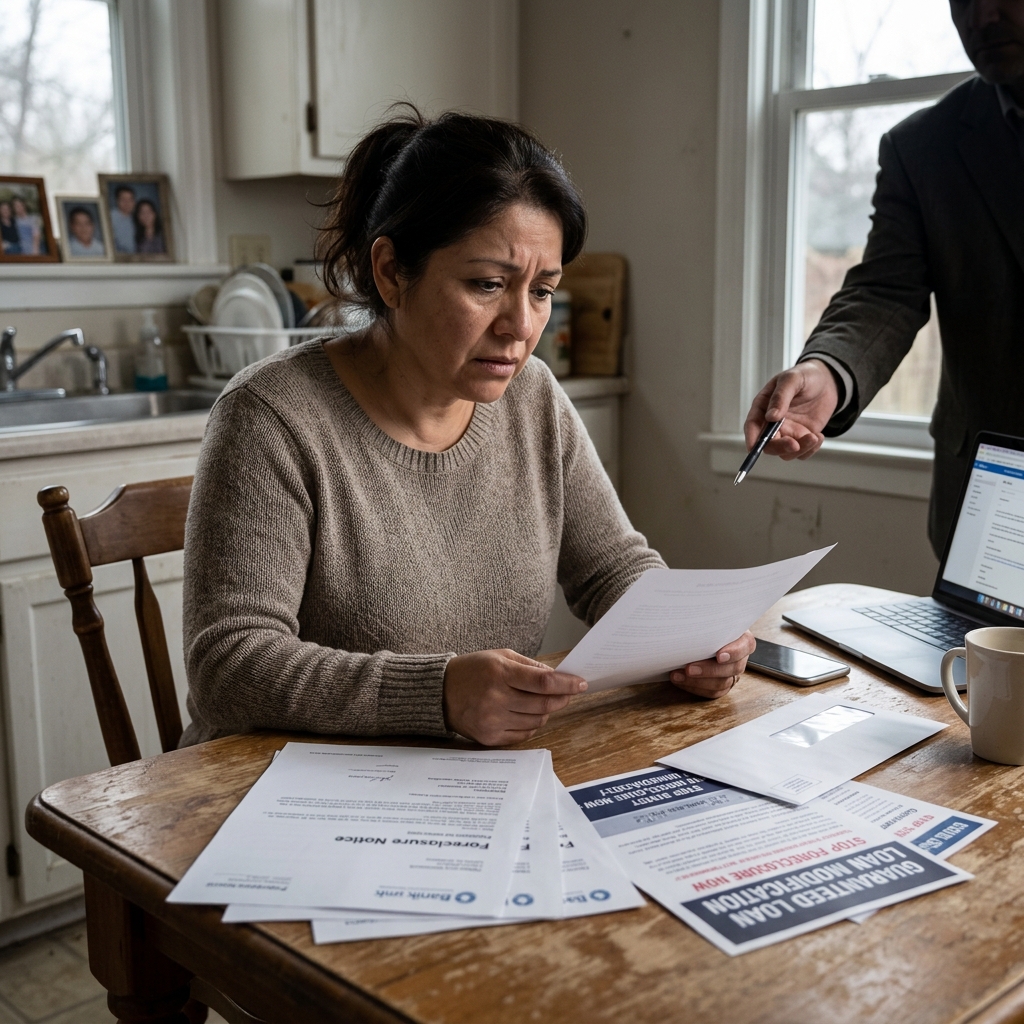
Homeowners who fall behind on mortgage payments are often anxious, overwhelmed, and urgently searching for help. That emotional vulnerability creates an opening for loan modification scammers who promise to save homes from foreclosure, but instead drain bank accounts and sometimes steal properties altogether.
This article explains how mortgage loan modification scams work, the most common warning signs, what the law says about these schemes, and safe steps you can take if you are struggling with your mortgage. While inspired by a legal commentary on scams targeting desperate homeowners, the guidance here builds on up-to-date information from consumer protection authorities and housing regulators.
What Is a Mortgage Loan Modification Scam?
A legitimate loan modification is a formal change to the terms of a mortgage — such as lowering the interest rate, extending the loan period, or adding missed payments to the balance — negotiated directly with the lender or servicer.
By contrast, a mortgage loan modification scam is a scheme where an individual or company:
- Claims to be able to stop foreclosure or obtain a guaranteed loan modification
- Charges upfront fees for these supposed services
- Provides little or no actual assistance, and may disappear entirely
Federal consumer regulators describe these scams as efforts to take money from distressed homeowners by promising to save them from foreclosure but failing to deliver any meaningful relief.
Why Distressed Homeowners Are Attractive Targets
Scammers focus on homeowners who are behind on payments or already in foreclosure because those households are under intense pressure and may feel they are running out of options. Several factors make these families particularly vulnerable:
- Fear of losing the home – The threat of foreclosure creates urgency that can override careful decision-making.
- Limited understanding of mortgage rules – Many borrowers are unfamiliar with foreclosure timelines, workout options, and legal protections.
- Information overload – Notices from lenders, debt collectors, and courts can be confusing, making “simple solutions” seem appealing.
- Embarrassment or stigma – Some homeowners avoid contacting their lender or a lawyer, making it easier for scammers to step into the communication gap.
Scammers exploit these pressures by presenting themselves as experts, using official-sounding names, and claiming special access to programs or legal strategies that supposedly ordinary borrowers cannot access.
Common Types of Loan Modification and Foreclosure Rescue Scams
Although fraudulent schemes take many forms, authorities consistently see several recurring patterns.
1. Upfront Fee “Mortgage Relief” Services
In this scheme, a company advertises mortgage relief or loan modification services and demands payment before providing any help. The firm may claim that the fee is necessary to cover application costs or to “secure” a modification.
Key features include:
- Insistence on large upfront payments by wire, cashier’s check, or payment app
- Promises of guaranteed approval or fast foreclosure stoppage
- Little or no communication with the actual lender once payment is made
Federal law generally prohibits mortgage relief service providers from collecting fees before they have delivered a result, making these demands a major warning sign.
2. Phantom Counseling or “Document Processing”
Some fraudsters present themselves as foreclosure counselors or document preparation specialists. They assure homeowners that they will handle all communication with the bank or court, often instructing borrowers not to contact their lender directly.
Typical tactics include:
- Charging for generic advice or pre-written forms presented as individualized solutions
- Claiming to have insider relationships with lenders or government programs
- Discouraging homeowners from speaking with licensed housing counselors or attorneys
In many cases, the “counselor” does little more than collect fees while the foreclosure process continues unchecked.
3. Deed Transfer and Sale–Leaseback Fraud
In more aggressive schemes, scammers attempt to obtain ownership of the home itself. They may propose that the homeowner temporarily transfer the deed so the scammer can “restructure” the loan or pay off arrears, while the owner continues living there as a tenant.
Risks include:
- Losing legal ownership of the property entirely once the deed is signed away
- Facing eviction when the new “owner” sells the property or raises the rent sharply
- Discovering that promised refinancing or buyback options never existed
Regulators warn firmly against transferring a home’s deed to anyone offering foreclosure or modification assistance except in the context of fully-documented, legitimate transactions with trusted professionals.
4. Bait-and-Switch Loan Agreements
Under bait-and-switch schemes, a homeowner believes they are signing documents to modify an existing loan, but the paperwork actually creates a new loan or changes ownership rights in harmful ways.
Red flags include:
- Pressure to sign documents you do not fully understand
- Missing pages, unexplained blanks, or incomplete disclosures
- No independent opportunity to review the agreement with a lawyer or counselor
Borrowers should not sign any legal documents related to their mortgage without clear explanations and, ideally, independent advice.
Major Warning Signs of a Loan Modification Scam
Consumer protection agencies repeatedly highlight a core set of warning signs that indicate a high risk of fraud.
| Warning Sign | Why It Matters |
|---|---|
| Demand for upfront fees | Federal rules generally prohibit collecting payment before services or results in mortgage relief cases. |
| Guarantees of approval or foreclosure stoppage | No third party can guarantee a loan modification; only the lender or servicer can approve changes. |
| Instruction to pay someone other than your lender | Diverting payments to a third party risks both losing money and worsening default status. |
| Request to stop contacting your lender | Cutting off communication makes it harder to negotiate legitimate workout options and may accelerate foreclosure. |
| Pressure to sign over the deed | Transferring ownership can result in permanent loss of the home and limited recourse. |
| Use of government-like names and logos | Scammers often imitate official programs to create trust; real agencies do not charge large upfront fees. |
What the Law Says About Mortgage Relief and Fee Practices
Several layers of law and regulation aim to protect homeowners from deceptive mortgage relief practices.
- Federal Trade Commission (FTC) rules – The FTC prohibits certain mortgage relief services from collecting fees until they have successfully negotiated a written agreement with the homeowner’s lender or servicer.
- State consumer protection laws – Many states treat deceptive mortgage assistance offers as unlawful practices and may require special licensing for debt adjusters or foreclosure consultants.
- Housing agency oversight – Agencies such as the U.S. Department of Housing and Urban Development (HUD) approve non-profit housing counseling organizations and provide guidance on safe assistance options.
Because regulations vary by jurisdiction, homeowners who suspect they are dealing with a scam should consult both federal resources and their state attorney general or financial regulator for specific rights and remedies.
Safe Steps If You Are Struggling With Mortgage Payments
Managing a mortgage crisis safely starts with contacting trusted, official sources and avoiding unverified third-party promises.
1. Contact Your Mortgage Servicer Immediately
The most important first step is to call the company that collects your mortgage payments. Servicers often have hardship options, including:
- Temporary forbearance (short-term payment reduction or suspension)
- Repayment plans for missed installments
- Permanent loan modifications when conditions are met
If you receive calls or letters from someone claiming to represent your servicer but are uncertain about their authenticity, use the phone number listed on your monthly statement or the servicer’s official website rather than any number provided by the caller.
2. Work With HUD-Approved Housing Counseling Agencies
HUD-approved housing counseling agencies offer free or low-cost assistance for borrowers facing financial difficulties. Counselors can:
- Review your income, expenses, and mortgage terms
- Explain legitimate workout options and modification programs
- Help you communicate with your lender and prepare documentation
Because these organizations are vetted by HUD, they are generally considered trustworthy sources of guidance.
3. Seek Legal Advice When Needed
If you believe you have already been targeted or harmed by a loan modification or foreclosure rescue scam, consulting a licensed attorney can help you understand possible remedies. Legal aid organizations, state bar associations, and military legal assistance offices often provide help to qualifying clients.
How to Avoid Becoming a Victim
Preventing victimization involves combining skepticism with proactive communication.
- Be skeptical of unsolicited offers – Treat phone calls, emails, texts, or door-to-door visits offering miracle solutions with caution.
- Refuse upfront payments for mortgage relief – Legitimate assistance programs do not require large advance fees, and federal rules restrict such charges.
- Verify credentials – Check licenses or approvals with state regulators and HUD when someone claims to be a counselor, consultant, or debt adjuster.
- Keep paying your lender directly – Unless you have confirmed a formal change to payment instructions with your servicer, continue paying the lender using official channels.
- Read all documents carefully – Do not sign anything you do not fully understand, especially documents affecting the deed or ownership.
If You Suspect a Scam: Reporting and Next Steps
Prompt reporting can protect both you and other homeowners. Authorities encourage anyone encountering suspicious mortgage relief offers to notify relevant agencies.
- Federal agencies – Homeowners can submit complaints to federal consumer regulators that track mortgage relief scams and may take enforcement actions.
- State attorney general – State attorneys general often maintain consumer complaint units that investigate deceptive practices and bring lawsuits against fraudulent operators.
- Housing and financial regulators – State departments overseeing real estate, banking, or financial protection can verify licenses and accept reports of unapproved or abusive practices.
When you report suspected fraud, include as many details as possible: names used by the company, phone numbers, email addresses, payment records, and copies of contracts or marketing materials. These documents can help investigators link your experience to broader patterns of misconduct.
Frequently Asked Questions (FAQs)
Is it ever safe to pay someone to help me with a loan modification?
Some legitimate professionals, such as attorneys or licensed housing counselors, may charge fees for assistance. However, many federal and state rules limit or prohibit upfront fees for mortgage relief services, especially when the provider is not a lawyer. Before paying anyone, verify credentials with official regulators and ask for written disclosures of services, costs, and refund policies.
Can a third party guarantee that my lender will approve a modification?
No. Only your lender or loan servicer can approve a modification, and there is never a guarantee that any particular application will be accepted. Any promise of guaranteed approval or overnight foreclosure stoppage is a major warning sign of a scam.
What should I do if someone asks me to sign over my deed?
Transferring your deed means changing legal ownership of your home. Regulators warn that this is extremely risky in the context of foreclosure rescue or modification offers. Do not sign over your deed to anyone offering mortgage assistance without obtaining independent legal advice and thoroughly understanding all consequences.
Is it safe to stop paying my mortgage while a third party negotiates on my behalf?
Stopping payments without clear agreement from your lender can rapidly worsen your situation, increasing arrears, fees, and the risk of foreclosure. Scammers often tell homeowners to stop paying the lender, which can lead to both financial losses and legal trouble. Always check directly with your servicer before changing your payment behavior.
Where can I find trustworthy help?
Trustworthy help includes your mortgage servicer, HUD-approved housing counseling agencies, reputable legal aid organizations, and licensed attorneys. Government agencies provide listings of approved counselors and licensed debt adjusters, and state regulators can confirm whether a firm is properly authorized to provide mortgage-related services.
References
- Mortgage Loan Modification Fraud Bulletin — HUD Office of Inspector General. 2022-09-01. https://www.hudoig.gov/sites/default/files/2022-09/Mortgage%20Loan%20Modification%20Fraud%20Bulletin.pdf
- Examples of Mortgage Foreclosure Fraud and Loan Modification Scams — Nevada Attorney General. n.d. https://ag.nv.gov/About/Criminal_Justice/Mortgage_Fraud/MF_Scams/
- What are mortgage loan modification scams? — Consumer Financial Protection Bureau. 2022-06-15. https://www.consumerfinance.gov/ask-cfpb/what-are-mortgage-loan-modification-scams-en-272/
- Mortgage Modification and Foreclosure Scams Alert — California Department of Financial Protection and Innovation. 2021-03-01. https://dfpi.ca.gov/alert/mortgage-modification-and-foreclosure-scams-alert/
- Home Mortgage Modification Scams — Seattle Litigation Group. n.d. https://www.seattlelitigation.com/blogs/home-mortgage-modification-scams
- What You Should Know About Mortgage Loan Modification Scams — New Jersey Division of Consumer Affairs. n.d. https://www.njconsumeraffairs.gov/News/Consumer%20Briefs/mortgage-loan-modification-scams.pdf
- Mortgage Relief Scams — Federal Trade Commission Consumer Advice. 2023-02-01. https://consumer.ftc.gov/articles/mortgage-relief-scams
Similar Articles








Read full bio of medha deb




