
Lemon Law and Private Used Car Sales Explained
Understand how lemon laws, fraud rules, and disclosure obligations affect private used car sales and your rights as a buyer or seller.
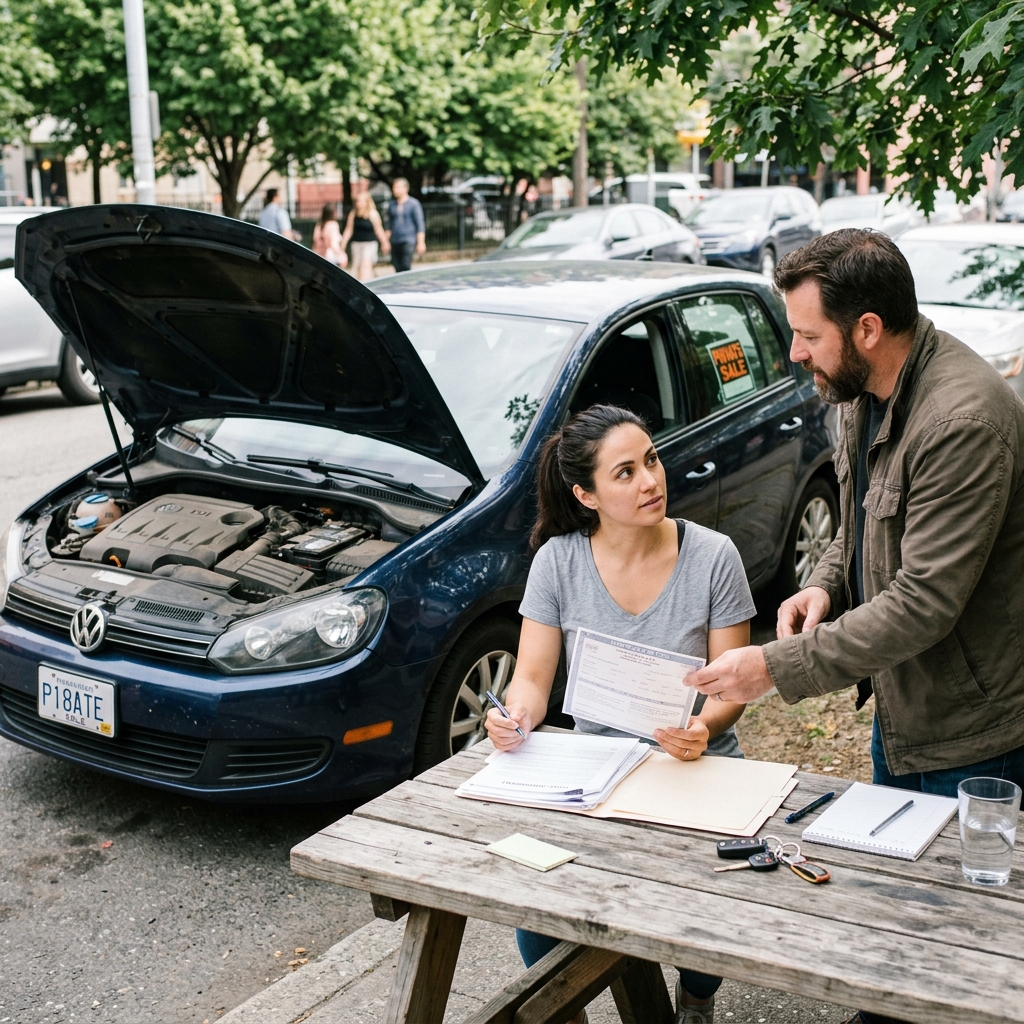
Buying or selling a used car in a private transaction can be far less formal than working with a dealership, but it is still governed by a web of state laws, contract rules, and consumer protection principles. Many people assume that lemon laws automatically apply whenever a vehicle turns out to be defective. In reality, most lemon law protections focus on dealer sales, while private party transactions are treated very differently. This guide explains how lemon laws interact with private used car sales, what rights each side has, and how both buyers and sellers can protect themselves.
Understanding Lemon Laws in the Context of Private Sales
Lemon laws are state statutes designed to protect consumers who purchase or lease vehicles that have serious, recurring defects. Most of these laws address problems with new vehicles purchased from manufacturers or dealers and, in some states, used vehicles purchased from dealers. Private party sales—transactions between two individuals—are typically governed by different rules.
Key points about lemon laws and private sales include:
- Dealer focus: Many used-car lemon laws specifically require a dealer to provide a written warranty and repair covered defects within a set time or mileage period.
- Private party exclusion: In most states, lemon laws do not apply to vehicles sold by a private individual “as is” without a warranty, although exceptions exist where fraud or misrepresentation is proven.
- State variations: A small number of states extend certain protections to private sales, sometimes requiring disclosure of known safety-related defects or allowing rescission of the sale if a seller hides major problems.
Because lemon law coverage depends heavily on the state where the transaction occurs, it is essential to check your local statutes or consult an attorney before assuming any particular right or obligation.
Private Used Car Sales vs. Dealer Sales: Legal Differences
To understand your rights in a private sale, it helps to compare it to a dealer sale. The legal obligations and protections often differ dramatically.
| Aspect | Dealer Sale | Private Sale |
|---|---|---|
| Lemon law coverage | Frequently covered by new or used-car lemon laws if statutory conditions are met. | Usually not covered, unless a state specifically extends lemon protections to private transactions. |
| Written warranty | Some states require dealers to provide written warranties on used cars above certain price or mileage thresholds. | Generally no obligation to provide a warranty; most private sales are “as is” unless otherwise agreed in writing. |
| Disclosure of defects | States often impose specific disclosure requirements, including accident history and known major defects. | Disclosure duties vary; some states require disclosure of known safety-related defects, others rely on general fraud rules. |
| Refund or buyback rights | Lemon laws may allow refund or replacement if the dealer cannot fix covered defects after a reasonable number of attempts. | Refunds typically depend on fraud, misrepresentation, or specific state protections for private sales, not general lemon law rules. |
| Regulatory oversight | Dealers are subject to extensive licensing and consumer protection regulations. | Private individuals are less regulated but still subject to general contract and fraud laws. |
What “As Is” Means in Private Auto Transactions
Most private used car sales are conducted on an “as is” basis. In contract law, “as is” means the buyer accepts the item with all defects, whether known or unknown, and assumes the risk of future repairs once the sale is completed. When a vehicle is sold “as is” and no warranty is promised, the seller generally has no obligation to fix problems that arise after the buyer takes ownership.
However, “as is” language is not a shield against fraud. Even in an “as is” sale:
- A seller cannot intentionally hide known, material defects with the purpose of deceiving the buyer.
- Odometer tampering, title washing, and false accident histories can expose a seller to civil and sometimes criminal liability.
- Promises made in a written contract or bill of sale—such as “new transmission installed” or “no accident damage”—may be enforceable despite “as is” language.
Understanding that “as is” means risk for ordinary wear and tear, but not permission to commit fraud, helps both sides evaluate their legal position after a sale goes wrong.
State-Specific Protections for Private Party Buyers
Although many states exclude private sales from traditional lemon law coverage, several jurisdictions provide targeted protections through consumer statutes or specialized rules. One example is Massachusetts, where private sellers must disclose known defects that impair safety or substantially impair the use of the vehicle.
In Massachusetts:
- Private sellers are required to inform buyers about all known defects that affect safety or substantially impair the vehicle’s use.
- The law applies regardless of sale price or mileage and focuses on the seller’s knowledge of major issues.
- If a buyer proves that the seller knew of such a defect and failed to disclose it, the buyer may cancel the sale within a limited period and obtain a refund, reduced by a small per-mile usage fee.
Other states adopt different approaches. Some treat repeated high-volume sellers as dealers when they sell more than a certain number of vehicles per year, meaning dealer-level lemon law obligations may apply even when the seller presents as a private individual. Because state law is highly variable, buyers should research specific rules where the vehicle is sold and registered.
Federal Warranty Law and Its Limited Role in Private Sales
The federal Magnuson–Moss Warranty Act governs written consumer product warranties issued by manufacturers and some sellers. It can give consumers remedies when warrantors fail to honor their obligations, including attorney’s fees in certain successful cases. However, its impact on private used car sales is limited.
Key aspects of Magnuson–Moss in this context:
- The Act applies when a consumer product, such as a vehicle, is sold with a written warranty or service contract.
- If a used car is still covered by a manufacturer’s warranty and the manufacturer or authorized repairer fails to fix defects after reasonable attempts, a consumer may have remedies under the Act.
- In many private sales, no new written warranty is issued by the individual seller; the buyer relies instead on any remaining manufacturer coverage and state law remedies.
As a result, federal law does not function as a comprehensive lemon statute for private party transactions but can supplement rights when a manufacturer warranty is still in force.
Buyer Responsibilities in Private Used Car Purchases
Because legal protections are narrower in private sales, buyers must take a proactive role in evaluating the vehicle and safeguarding their interests. Practical steps include:
- Pre-purchase inspections: Arrange for a trusted mechanic to inspect the car before you commit to buying it. Courts and agencies often emphasize that due diligence is an important factor in resolving disputes.
- Review service and repair records: Request maintenance logs and prior repair invoices, which may reveal recurring problems or show that the seller was aware of significant defects.
- Check title and mileage: Ensure the title is properly assigned and check for prior branding such as “salvage,” “rebuilt,” or “flood”. Confirm odometer readings and look for inconsistencies.
- Use vehicle history reports: A history report from a reputable provider can show accidents, registrations, and sometimes odometer issues.
- Get promises in writing: If the seller states that no accidents have occurred or specific repairs have been completed, include these statements in a simple written agreement.
These steps do not guarantee a trouble-free purchase, but they significantly increase the chance of identifying serious defects before you become legally responsible for repairs.
Seller Duties and Best Practices in Private Car Sales
Sellers who transfer a vehicle in a private transaction also benefit from understanding their legal obligations. While they typically are not required to provide lemon law warranties, they must comply with title rules, odometer statutes, and any state-specific disclosure requirements.
Recommended best practices for private sellers include:
- Full and honest disclosure: Provide the buyer with a clear description of known mechanical issues, safety-related defects, and past accidents. In some states, this is not just good practice but a legal requirement.
- Accurate odometer information: Federal and state laws prohibit odometer tampering and require accurate mileage disclosures at the time of sale.
- Proper documentation: Use a bill of sale that identifies the vehicle, purchase price, date, and any agreed terms such as “as is” status or remaining warranty coverage.
- Title transfer: Complete the title assignment as required by the state’s motor vehicle agency, including signatures, addresses, purchase price, and current mileage.
- Retention of records: Keep copies of the bill of sale, communications about the vehicle’s condition, and any inspection or repair documents.
Following these practices can reduce the likelihood of disputes and provide protection if a buyer later alleges that the car was misrepresented.
When Can a Buyer Seek a Refund After a Private Sale?
Unlike dealer transactions covered by lemon laws, a buyer in a private sale generally has limited grounds to demand a refund. However, a refund may be possible in certain circumstances:
- Proven fraud or misrepresentation: If the buyer can show that the seller knowingly concealed or misrepresented a major defect that materially affects the vehicle’s safety or usability, the buyer may seek to rescind the sale or recover damages under state fraud or consumer protection laws.
- Violation of specific disclosure statutes: In jurisdictions like Massachusetts, if a private seller fails to disclose known safety or use-impairing defects, the buyer may be able to cancel the sale within a prescribed timeframe and obtain most of the purchase price back.
- Breach of written promises: If the seller signed a written agreement that includes specific assurances—such as promising that certain repairs were completed—and those assurances prove false, the buyer may claim breach of contract.
Absent fraud, statutory violations, or breach of written commitments, a buyer who simply discovers unexpected repair needs after purchase typically must bear those costs in an “as is” private sale.
Resolving Disputes: Options for Buyers and Sellers
When a private used car sale leads to conflict, both parties have several potential avenues to resolve the dispute. The best path depends on the amount in controversy, available evidence, and state procedures.
- Negotiation: Many disputes are resolved informally. A seller who values reputation or wants to avoid legal hassle may offer a partial refund or pay for certain repairs, even if not legally required.
- Mediation: Some courts and community programs offer mediation services where a neutral mediator helps the parties explore settlement options without a formal trial.
- Small claims court: For relatively modest amounts, buyers and sellers may use small claims procedures that are simpler and less expensive than full civil litigation.
- Civil litigation: Larger or more complex disputes may require filing a claim in a general civil court, potentially alleging fraud, misrepresentation, or breach of contract.
Documentation—emails, text messages, inspection reports, repair bills, and written agreements—is often crucial in determining whether a buyer can prove the seller’s knowledge of defects or specific promises about the vehicle.
Practical Checklist for Private Buyers and Sellers
To reduce the risk of a “lemon” outcome in a private sale, both sides can follow a practical checklist.
Buyer Checklist
- Arrange a pre-purchase inspection by a qualified mechanic.
- Review maintenance records and prior repair invoices.
- Confirm title status (clean, salvage, rebuilt) and verify proper assignment.
- Check odometer readings for consistency and look for signs of tampering.
- Obtain a vehicle history report for accident and registration data.
- Ask direct questions about major systems: engine, transmission, brakes, and safety features.
- Get key representations in writing, even in a simple signed note.
Seller Checklist
- Disclose known defects that affect safety or significantly limit use.
- Provide accurate odometer information and comply with legal requirements.
- Prepare a bill of sale that includes the purchase price, date, and “as is” language if appropriate.
- Complete state-required title forms, including the buyer’s and seller’s details.
- Supply copies of maintenance and repair records to the buyer.
- Retain copies of all paperwork and communications in case of future disputes.
Frequently Asked Questions (FAQs)
Do lemon laws ever apply to private sales?
In most states, lemon laws primarily cover new vehicles and, sometimes, used vehicles purchased from dealers. Private sales are often excluded, but some jurisdictions impose specific disclosure rules or permit rescission if a private seller hides known safety-related defects. Always check the law in the state where the sale occurs.
What if a private seller lies about the condition of the car?
If a seller knowingly misrepresents a material fact—such as claiming there was no accident damage when there was, or denying a serious mechanical defect they knew about—the buyer may have claims for fraud, misrepresentation, or violation of consumer protection laws. In these cases, courts can order rescission of the sale or award damages, depending on the proof and the jurisdiction.
Can a buyer simply change their mind and demand a refund?
Generally, no. Unless a contract specifically provides a return policy or state law grants a right to rescind based on undisclosed defects, a buyer who changes their mind after a private sale typically cannot compel the seller to take the car back. Refunds usually depend on wrongdoing, not buyer’s remorse.
How is a high-volume private seller treated under the law?
Some states treat individuals who regularly sell multiple vehicles per year as dealers for legal purposes. Once a seller crosses a statutory threshold (for example, selling more than three cars annually), they may need a dealer license and could be subject to dealer-level lemon law and consumer protection obligations, even if they advertise as a private seller.
Should buyers or sellers consult an attorney?
Because lemon law coverage and private sale rules vary significantly by state, consulting an attorney or a state consumer protection agency is wise whenever a serious dispute arises. Legal advice is especially important if the buyer believes fraud occurred, the seller is being accused of wrongdoing, or substantial repair costs are involved.
References
- Does Lemon Law Apply to Private Sales? — Lemon My Vehicle (blog summarizing Magnuson–Moss and state lemon law limits on private sales). 2023-08-10. https://lemonmyvehicle.com/blog/does-lemon-law-apply-to-private-sales/
- Private Party Car Sales — Commonwealth of Massachusetts, Mass.gov guide. 2022-06-15. https://www.mass.gov/guides/private-party-car-sales
- Used-Car Lemon Law: Fact Sheet — Office of the New York Attorney General. 2021-05-01. https://ag.ny.gov/resources/individuals/car-auto/used-car-lemon-law-fact-sheet
- Can a Buyer Ask for a Refund After a Private Auto Sale? — FindLaw Consumer Legal Information. 2020-09-30. https://www.findlaw.com/consumer/lemon-law/can-a-buyer-ask-for-a-refund-after-a-private-auto-sale.html
- Massachusetts Used Car Lemon Law — Massachusetts Legal Help (nonprofit legal information site). 2019-11-20. https://www.masslegalhelp.org/money-debt/automobiles/massachusetts-used-car-lemon-law
- Car Lemon Laws: What to Know by State — Kelley Blue Book. 2023-02-14. https://www.kbb.com/car-advice/vehicle-lemon-laws-by-state/
Similar Articles








Read full bio of Sneha Tete


