
Can You Legally Buy a Firearm for Another Person?
Understand the legal boundaries of purchasing guns for others to avoid felony charges like straw purchasing.
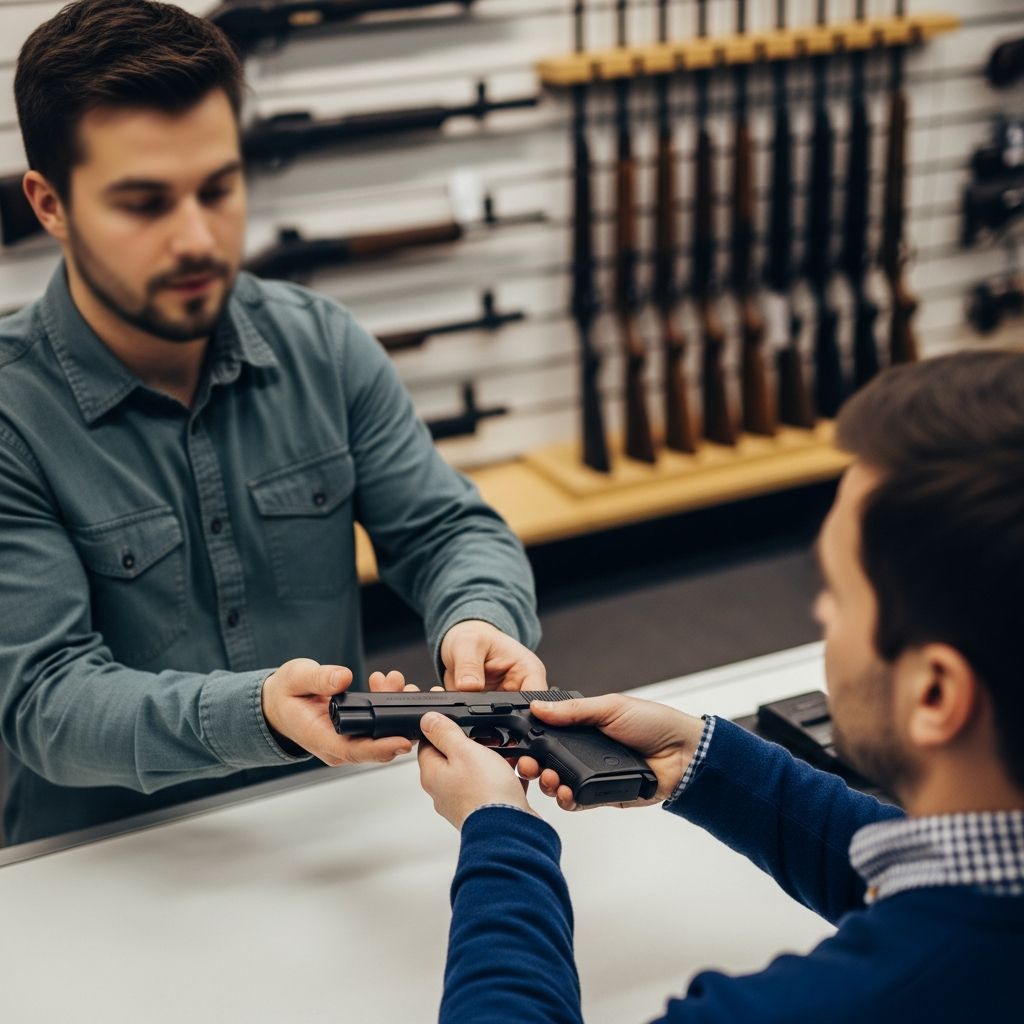
Navigating firearm purchases for others requires careful adherence to federal and state regulations to prevent unintentional violations. While genuine gifts are often permissible, transactions disguised as gifts but funded by the recipient constitute illegal straw purchases, punishable by severe penalties including lengthy prison terms.
Understanding the Federal Framework for Firearm Transactions
Federal law, primarily governed by the Gun Control Act of 1968 and enforced by the Bureau of Alcohol, Tobacco, Firearms and Explosives (ATF), distinguishes between purchases from licensed dealers and private transfers. Licensed dealers must conduct background checks via the National Instant Criminal Background Check System (NICS) and ensure buyers complete ATF Form 4473, certifying they are the ‘actual transferee/buyer.’
For private sales between unlicensed individuals, no federal background check is required if the transaction occurs within the same state and the seller lacks knowledge of the buyer’s prohibited status. However, sellers engaging in frequent profit-driven sales must obtain a Federal Firearms License (FFL).
- Intrastate private transfers: Legal without checks, barring buyer prohibitions.
- Interstate transfers: Must route through an FFL in the recipient’s state for background verification.
- Prohibited persons: Include felons, fugitives, unlawful drug users, those adjudicated mentally defective, undocumented immigrants, dishonorably discharged military personnel, domestic violence convicts, and others listed under 18 U.S.C. § 922(g).
Gifts vs. Straw Purchases: Drawing the Line
A bona fide gift occurs when the purchaser intends no reimbursement and the recipient is legally eligible to possess the firearm. On ATF Form 4473, gift buyers qualify as ‘actual buyers’ if no value is exchanged. However, if the recipient provides funds, services, or reimburses indirectly, it becomes a straw purchase—a federal felony.
Penalties for straw purchasing include up to 15 years imprisonment and $250,000 fines; if the firearm is used in a crime of violence or drug trafficking, sentences can extend to 25 years.
| Scenario | Legal? | Reason |
|---|---|---|
| Buying a gun as a surprise birthday gift for an eligible adult relative | Yes | Bona fide gift; no reimbursement expected |
| Purchasing for a friend who reimburses you later | No | Straw purchase; value exchanged |
| Gifting to a known felon | No | Transfer to prohibited person |
| Private sale to out-of-state buyer without FFL | No | Violates interstate rules |
Age Restrictions and Special Considerations for Minors
Federal law prohibits handgun transfers to those under 18, with narrow exceptions for employment, ranching, farming, hunting, or target practice under parental consent. Long guns (rifles, shotguns) face no such federal age barrier for possession, though state laws may impose stricter limits.
Before gifting, verify the recipient’s eligibility. The ATF advises gift cards from retailers as a safe alternative, allowing the recipient to select and complete the purchase themselves, ensuring Form 4473 compliance.
State-Specific Variations in Firearm Transfer Rules
While federal law sets the baseline, states impose additional requirements. At least 10 states plus D.C. mandate universal background checks for all transfers, including private ones, often through an FFL.
- Universal background check states: California, Colorado, Connecticut, Delaware, Illinois, Nevada, New Jersey, New York, Oregon, Rhode Island, Washington, D.C.
- Handgun-specific checks: Maryland, Minnesota, Pennsylvania.
- Permit states: Some require licenses before possession.
Always consult state attorney general resources or local FFLs for current rules, as legislation evolves rapidly.
Consequences of Illegal Firearm Transfers
Violations under 18 U.S.C. §§ 922 and 924 carry felony convictions, loss of firearm rights, and civil liabilities. Prosecutors prioritize cases involving prohibited persons or trafficking patterns. Even unwitting violations can lead to charges if ‘should have known’ standards apply.
In high-profile ATF initiatives like ‘Don’t Lie for the Other Guy,’ emphasis is placed on Form 4473 honesty to curb illegal trafficking.
Best Practices for Lawful Firearm Gifting
- Confirm recipient’s legal eligibility via open discussion or NICS check if possible.
- For dealer purchases, buy only if it’s a true gift; consider gift cards.
- For private transfers, ensure same-state residency and no profit motive.
- Route interstate gifts through FFLs.
- Retain records of transfers for potential audits.
- Consult legal counsel or ATF resources for complex cases.
Frequently Asked Questions (FAQs)
Is it ever okay to buy a gun from a dealer for someone else?
Yes, for bona fide gifts to eligible recipients. You must certify as the actual buyer on Form 4473 without expectation of reimbursement.
What makes a purchase a ‘straw purchase’?
It’s a straw purchase if you buy for a prohibited person or receive any form of payment, making you a proxy buyer.
Do private gun sales require background checks?
Federally, no for intrastate sales between unlicensed parties, but many states require them.
Can I gift a gun to a minor?
Handguns: No under 18 generally. Long guns: Yes federally, but check state laws.
What if the recipient lives in another state?
Ship to an FFL in their state for background check and pickup.
Navigating Inheritance and Family Transfers
Inheritances follow similar rules: Executors must ensure beneficiaries are eligible. Private intrastate transfers are fine federally, but states may require reporting or checks. Firearm trusts offer a compliant method for multi-party ownership.
For family gifts within the home state, no federal hurdles exist if eligibility is confirmed. NSSF recommends direct retailer gifts or certificates to sidestep issues.
The Role of Licensed Dealers in Compliant Transfers
FFLs serve as gatekeepers, performing NICS checks and maintaining records. Using an FFL for private transfers adds compliance assurance, especially in regulated states. Fees apply, but they mitigate legal risks.
Dealers cannot transfer to known prohibited persons and must report suspicious activities via ATF Form 3310.4.
Evolving Landscape and Recent Enforcement Trends
As of 2025, ATF focuses on curbing ghost guns and straw purchases fueling crime. Bipartisan Safer Communities Act enhancements tightened checks, though private sales remain largely unregulated federally.
Track updates via ATF.gov or state wildlife agencies for compliance.
References
- Is It Illegal to Buy a Gun for Someone Else? — Criminal Defense Lawyer. 2023. https://www.criminaldefenselawyer.com/resources/is-it-illegal-buy-a-gun-someone-else.htm
- Can You Give a Gun as a Gift? Here’s What the Law Says — Vedder Holsters. 2025. https://www.vedderholsters.com/blog/can-you-give-a-gun-as-a-gift/
- Giving a Firearm as a Gift? Some Reminders from NSSF — National Shooting Sports Foundation. 2023. https://www.nssf.org/articles/giving-a-firearm-as-a-gift-some-reminders-from-nssf/
- Don’t Lie for the Other Guy — Bureau of Alcohol, Tobacco, Firearms and Explosives (ATF). 2024. https://www.atf.gov/firearms/tools-services-law-enforcement/atf-firearms-programs/dont-lie-other-guy
Similar Articles








Read full bio of Sneha Tete




