
Social Media Evidence Guide: 8 Key Legal Rules & Risks In 2025
Unpacking when social media activity like tweets and retweets holds legal significance in courts and professional conduct.
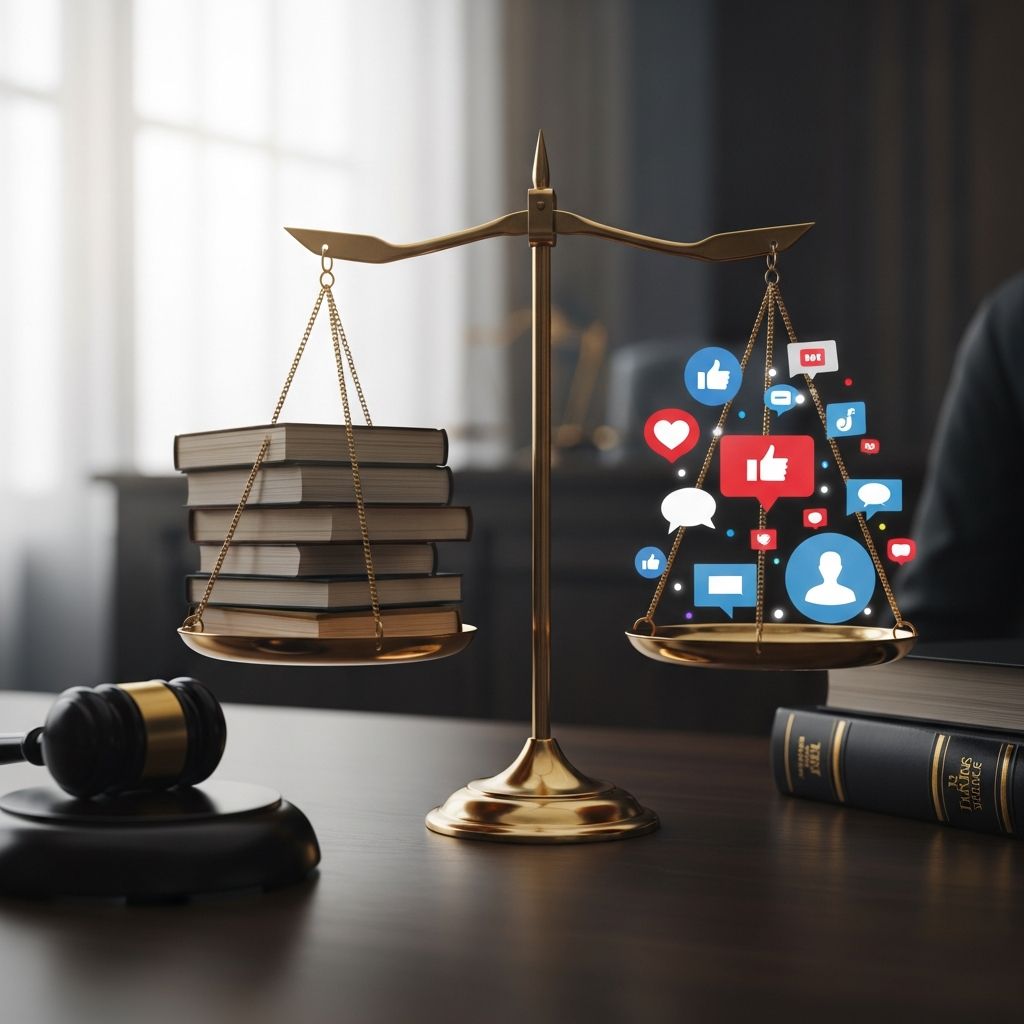
Social media platforms have transformed communication, but they also create lasting digital records that courts increasingly scrutinize. Posts on sites like Twitter (now X) can serve as evidence in trials, trigger ethical violations, or even constitute official actions under specific laws. Understanding these implications helps individuals, professionals, and organizations avoid unintended legal pitfalls.
Admissibility of Social Media in Court
Courts treat social media content like any other form of communication when determining relevance. Under standard evidence rules, such as Federal Rule of Evidence 401, material is admissible if it makes a fact more or less probable than without it. Tweets often qualify because they reveal intent, motive, knowledge, or identity.
For instance, in civil cases, discovery processes allow broad access to potentially relevant information. Litigants must disclose social media activity if it pertains to claims. Opposing parties routinely request Twitter histories, assuming they contain incriminating details. Even if character evidence is barred, posts can prove non-character elements, risking juror bias despite judicial instructions.
Authenticity poses another hurdle. Proponents must verify that content accurately reflects the original post and was authored by the claimed individual. Methods include testimony from the account owner, device forensics, or platform data linking profiles to users. In some jurisdictions like Maryland, the burden falls heavily on the admitting party to rule out fabrication.
Retweets: Endorsement or Mere Sharing?
Retweeting amplifies content but raises questions of accountability. Courts hesitate to automatically attribute retweeted statements to the retweeter as their own speech. A notable case from the Southern District of New York examined retweets by Donald Trump Jr., ruling they did not endorse underlying tweets from the source, as users rarely scrutinize full histories before sharing articles.
However, risks persist. Retweets can imply agreement, especially if context suggests intent. In a Washington state matter, an attorney’s retweets of articles were deemed extrajudicial statements harming credibility, leading to sanctions under professional rules. Defamation claims also arise; reposting libelous content can invite lawsuits, even in private groups.
| Aspect | Retweet Risks | Court Approach |
|---|---|---|
| Defamation | Potential liability for reposting false claims | Evaluates context and intent |
| Evidence Attribution | Not automatic endorsement | Requires proof of adoption |
| Professional Conduct | Sanctions for prejudicial posts | Strict scrutiny in litigation |
Implications for Public Officials and Open Meetings
Government actors must consider how online exchanges fit statutory frameworks. A 2016 Ohio Supreme Court decision classified serial tweets among officials as a “meeting” under the Open Meetings Act, mandating public notice and access. This views tweeting as communication indistinguishable from emails or calls in triggering transparency rules.
Such rulings underscore that platforms do not exempt users from public accountability laws. Officials risk violations by conducting substantive discussions privately via threads or direct messages without proper disclosure.
Ethical Guidelines for Lawyers on Social Media
Attorneys face stringent rules when using Twitter for professional purposes. State bars, like Michigan’s, mandate compliance with advertising ethics (MRPC 7.1-7.5) for firm accounts, treating them as marketing tools. All content must avoid false or misleading claims about services.
Trial commentary invites caution under MRPC 3.6, prohibiting statements with substantial likelihood of prejudicing proceedings. This applies to participants in investigations or litigation, covering posts, replies, or tags that reach public audiences. Following adversaries’ public accounts is permissible if avoiding improper contact per MRPC 4.2 and 4.3.
Conflicts emerge from public stances. Retweeting or responding to posts could limit representation if contradicting a client’s position, implicating MRPC 1.7(b). Firms should review all account activity to ensure alignment with professional standards.
- Presume business accounts are advertisements requiring truthfulness.
- Avoid trial details that could bias jurors.
- Monitor interactions for communication with represented parties.
- Assess personal posts for conflict potential.
Judicial Use of Social Media: Balancing Impartiality
Judges navigate unique constraints to preserve neutrality. Judicial codes warn against affiliations signaling bias, such as friending litigators or following frequent court participants. Some ethics committees impose bright-line bans: no Facebook friendships or LinkedIn connections with likely-appearing attorneys.
Public Twitter accounts suit informational purposes, like court updates or legal education, but demand vigilance. Every tweet, retweet, like, or follow must avoid questioning impartiality in a reasonable observer’s eyes. Personal revelations are allowed if steering clear of pending cases, politics, or controversies.
Bright-line rules favor caution over discretion in connections, while post content relies on judges’ judgment. This hybrid preserves engagement without compromising judicial integrity.
Criminal Cases and Social Media Evidence
In criminal defense, posts can bolster prosecutions or defenses. Courts accept online photos or statements as evidence, such as images contradicting alibis or glorifying banned activities. Defense attorneys have countered with officers’ posts revealing bias, like one admitting devious intent pre-trial.
Defendants should “silence” accounts during proceedings, as information is discoverable regardless of privacy settings. Police and prosecutors mine profiles legally in most views, turning casual updates into liabilities.
Copyright Considerations in Social Sharing
Tweets themselves may not be copyrightable, but original content within them can be. Protection requires originality and fixation, applicable to published posts. Copy-pasting without permission risks infringement claims, hinging on proving the material’s protectability.
Users should attribute or seek permission for substantial reproductions, especially commercial uses. Platforms’ terms often allow sharing via native tools, but direct copying bypasses those safeguards.
Best Practices for Safe Social Media Use
To minimize risks:
- Review privacy settings: Limit visibility, but note public posts remain discoverable.
- Preserve accounts in litigation: Avoid deletions, which suggest spoliation.
- Consult professionals: Lawyers should ethics-check posts; officials verify compliance.
- Think before posting: Assume permanence and broad readership.
Organizations can train staff on policies, emphasizing documentation for defenses against misinterpretation.
Frequently Asked Questions
Can a retweet be used against me in court?
Yes, if context shows endorsement or relevance, though courts do not presume adoption without evidence.
Do lawyers need special rules for Twitter?
Yes, posts must follow advertising, trial publicity, and conflict rules under state ethics codes.
Are judges allowed to tweet?
Generally yes, for neutral, educational content, avoiding bias indicators like following litigators.
Is social media evidence always admissible?
No, it must be relevant, authentic, and not unduly prejudicial.
Can tweets violate open meetings laws?
Yes, if constituting collective deliberations without public access.
References
- Discover Twitter… and learn what you say may be discoverable in litigation — Chandra Law Firm. 2016-05-24. https://www.chandralaw.com/blog/discover-twitter-and-learn-what-you-say-may-be-discoverable-in-litigation
- Retweets As Evidence: The Developing Case Law — Becker Lawyers, Law360. 2023-08-15. https://beckerlawyers.com/retweets-as-evidence-the-developing-case-law-law360/
- Twitter FAQs — State Bar of Michigan. 2022-11-10. https://www.michbar.org/opinions/ethics/twitterFAQs
- When You Copy And Paste A Tweet, Is It Illegal? — Stanford Cyberlaw. 2019-07-18. https://cyberlaw.stanford.edu/press/when-you-copy-and-paste-tweet-it-illegal/
- To Tweet or Not to Tweet? — Judicature, Duke University. 2021-03-05. https://judicature.duke.edu/articles/point-counterpoint-to-tweet-or-not-to-tweet/
- Your Twitter Account Has the Right to Remain Silent — DeMent Askew. 2020-06-12. https://dementaskew.com/your-twitter-account-has-the-right-to-remain-silent/
- Social media and the law, and when to watch your tweets — A3 Communications PR. 2022-04-20. https://www.a3communicationspr.com/social-media-and-the-law-and-when-to-watch-your-tweets/
Similar Articles








Read full bio of Sneha Tete




