
Civil Rights During A Traffic Stop: 10 Essential Rights To Know
Understand your legal protections, what you must do, and what you can refuse when police stop your vehicle on the road.
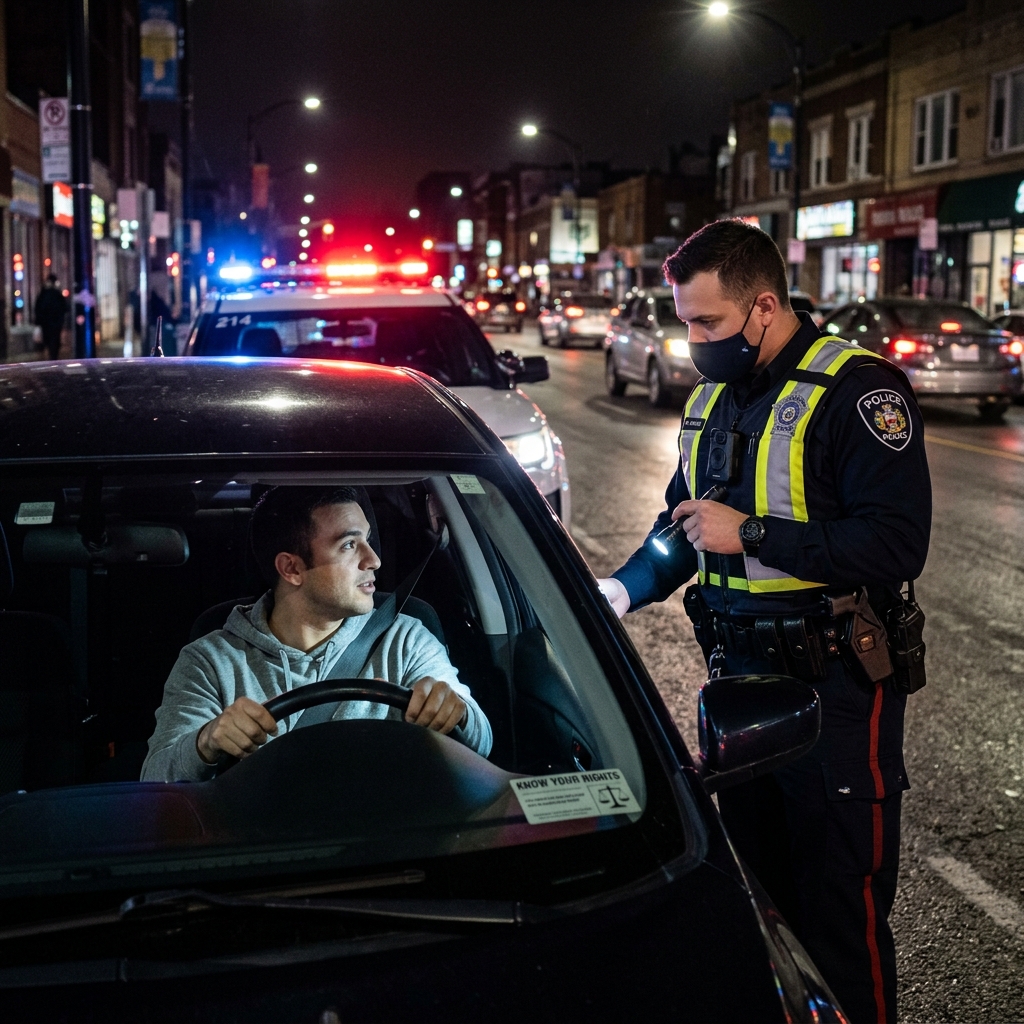
Being pulled over by the police can be stressful and confusing, especially if you are unsure what the law allows officers to do and what you have the right to refuse. Understanding your civil rights during a traffic stop can help you stay safer, avoid unnecessary conflicts, and protect yourself if your rights are violated.
This guide explains, in clear language, what you must do when an officer stops your vehicle, what you can say “no” to, and how to document the encounter for your own protection. It is based on general principles of U.S. constitutional law and widely accepted “know your rights” guidance, but specific rules can vary by state.
1. The Legal Basis of Traffic Stops
Most traffic stops are governed by the Fourth Amendment, which protects against unreasonable searches and seizures. The Supreme Court has held that police may stop a vehicle if they have reasonable suspicion or probable cause of a traffic violation, such as speeding or a broken taillight.
However, once the vehicle is stopped, the officer’s authority is not unlimited. The duration and scope of the stop must be reasonably related to the purpose of enforcing traffic laws, such as checking your license, registration, and insurance, and issuing a citation when appropriate.
| Term | Meaning in Practice |
|---|---|
| Reasonable suspicion | Specific facts that suggest a law was or is being broken (e.g., visibly speeding, failing to signal). |
| Probable cause | A stronger level of evidence that justifies searches, arrests, or warrants (e.g., smell of marijuana combined with visible contraband). |
| Seizure | When a reasonable person would not feel free to leave, including being told to pull over or stay in place. |
| Search | Any inspection of your person, vehicle, or belongings beyond what is visible from outside. |
2. What You Must Do When You Are Pulled Over
Even though you have significant rights during a traffic stop, there are certain things the law generally requires you to do as a driver. Failing to comply with these basic obligations can lead to additional charges or escalation.
2.1 Immediate Steps When You See Police Lights
- Safely pull over to the right side of the road or another safe location as soon as reasonably possible.
- Turn off your engine, lower your window partway, and keep your hands clearly visible, preferably on the steering wheel.
- If it is dark, turn on your interior light so the officer can see inside the vehicle.
These steps help reduce the officer’s safety concerns and can make the encounter calmer for both sides.
2.2 Documents You Are Required to Provide
In almost all states, you are required to show certain documents when requested by an officer during a lawful stop, provided you are driving:
- Driver’s license
- Vehicle registration
- Proof of insurance
Refusing to provide these documents, or providing false information, can result in citations, arrest, or other serious consequences.
3. Your Right to Refuse a Vehicle Search
One of the most important rights during a traffic stop is the right to refuse consent to a search Officers often ask, “Do you mind if I look inside your car?” or “Can I search the vehicle?” This is usually a request for voluntary consent.
3.1 When Police Can Search Without Your Consent
Police may search your vehicle without your permission only under certain conditions:
- Probable cause: If the officer has objective reasons to believe your car contains evidence of a crime (for example, visible contraband), they may search without consent.
- Incident to arrest: If you are lawfully arrested, officers may perform a limited search related to the arrest.
- Inventory search: If your car is legally impounded, police may conduct an inventory of its contents to protect property and safety.
If none of these situations apply, you can clearly state, “I do not consent to a search.” Even if the officer searches anyway, your refusal can be important later if a court must decide whether the search was legal.
3.2 How to Assert Your Right to Refuse
To exercise your right lawfully and safely:
- Stay calm and avoid raising your voice.
- Use respectful, clear language such as “Officer, I do not consent to any searches.”
- Do not physically resist or attempt to block the search; physical resistance can lead to additional charges or danger.
4. Your Right to Record the Traffic Stop
Many civil rights organizations and courts recognize that individuals have a First Amendment right to record police officers performing their duties in public, as long as you do not interfere with their work. This often includes recording a traffic stop with your phone or another device.
4.1 Practical Guidelines for Recording
- Inform the officer, calmly, that you are recording: “I am recording this interaction.”
- Keep the device in a stable position that does not appear threatening and does not obstruct your hands.
- Do not reach suddenly for your phone; explain what you are doing: “I’m going to take out my phone to record.”
- Consider using apps or phone settings that automatically back up recordings to the cloud, so the video is preserved even if the device is lost or damaged.
Recording can provide an objective record if a dispute arises later about what was said or done during the stop.
5. Limits on How Long You Can Be Detained
Officers may detain you long enough to complete tasks reasonably related to the traffic violation, such as verifying your identity, checking for outstanding warrants, and writing the ticket. However, they cannot hold you indefinitely or prolong the stop solely to search for unrelated crimes without a valid legal basis.
5.1 Asking If You Are Free to Leave
A simple and powerful question during a stop is:
- “Am I free to go?”
If the officer says yes, you may calmly leave once you have your documents and any citation. If the officer says no, you are being detained, and you have the right to know the reason. This can help clarify whether the stop is still related to traffic enforcement or has turned into an investigation of other suspected offenses.
6. Your Right to Remain Silent
Whether you are stopped in a car or on foot, you generally have the right to remain silent. Aside from basic identifying information and required documents, you do not have to answer additional questions about where you are going, where you came from, or what you have in the car.
6.1 What You Can Decline to Answer
You may politely refuse to answer questions such as:
- “Do you know why I pulled you over?”
- “Where are you headed tonight?”
- “Have you been drinking?” (though refusing certain chemical tests can carry separate legal consequences under DUI laws)
- “Is there anything illegal in the car?”
To assert this right, many organizations recommend clear phrases such as:
- “I choose to remain silent.”
- “I do not wish to answer any questions without a lawyer present.”
6.2 When the Right to an Attorney Applies
If you are arrested during or after a traffic stop, you gain additional rights, including the right to an attorney. You should clearly state that you want a lawyer and that you are asserting your right to remain silent before answering any questions about the incident.
7. Requesting and Recording Officer Information
If you believe the officer has acted improperly, you will need accurate details to pursue a complaint or legal action later. You have the right to ask for certain identifying information during a traffic stop.
7.1 Information You Can Request
- Officer’s full name
- Badge number
- Patrol car number
- Name of the law enforcement agency (city police, county sheriff, state police, etc.)
Most departments require officers to provide this information upon request and often to wear visible name tags or badge numbers.
7.2 Documenting the Encounter
As soon as you are safely able to do so after the stop:
- Write down the date, time, and location of the stop.
- Record what led up to the stop and what was said by you and the officer.
- Note any witnesses and collect their contact information.
- If you were injured, seek medical attention and document your injuries with photographs.
These notes may be valuable if you later challenge a ticket, file a complaint, or consult a lawyer about possible civil rights violations.
8. How to Stay Safe While Asserting Your Rights
Knowing your rights is important, but so is your physical safety. Many legal and civil rights organizations emphasize a balance: assert your rights clearly and calmly, while avoiding actions that could be perceived as threatening or obstructive.
8.1 Recommended Behaviors
- Stay polite and avoid arguing, even if you believe the stop is unfair.
- Keep your hands visible and move slowly if you need to reach for documents.
- Follow lawful orders, such as stepping out of the vehicle when directed.
- Sign the ticket if required; refusing to sign can itself be a basis for arrest in some jurisdictions.
8.2 Behaviors to Avoid
- Do not run away, resist, or physically obstruct officers, even if you feel your rights are being violated.
- Do not lie or provide false documents; this can lead to separate criminal charges.
- Do not threaten the officer or attempt to retaliate during the stop; handle disputes later through legal channels.
9. After the Traffic Stop: Complaints and Legal Options
If you believe your rights were violated—for example, if you were searched without legal justification or treated in a discriminatory manner—there are steps you can take after the incident.
9.1 Filing a Complaint
- Contact the internal affairs division or professional standards unit of the police department involved and ask how to file a formal complaint.
- Submit your written account, including all details you documented after the stop.
- Attach any recordings, photographs, or witness statements that support your version of events.
9.2 Consulting a Lawyer
If you were arrested, seriously harmed, or believe the officer’s conduct was unlawful, speaking with an attorney experienced in criminal defense or civil rights can help you understand your options. A lawyer can advise whether to challenge evidence, seek dismissal of charges, or pursue a civil lawsuit for damages.
10. Frequently Asked Questions (FAQs)
10.1 Do I have to let the officer search my car?
No. In most situations, you do not have to consent to a search of your vehicle. Without probable cause, a warrant, or another legal justification, you may clearly state that you do not consent. The officer may still search if they claim a legal basis, but your refusal can matter later in court.
10.2 Can I record the traffic stop with my phone?
Generally, yes. You have a First Amendment right to record officers in public, as long as you do not interfere with their duties and follow lawful instructions about safety and positioning. Informing the officer that you are recording and keeping the device in a non-threatening position are wise precautions.
10.3 Do I have to answer questions like “Where are you going?”
No. After providing required documents and basic identifying information, you are not legally required to answer additional questions. You can politely say that you choose to remain silent or want to speak with a lawyer before answering further questions.
10.4 How long can the officer keep me at the roadside?
Officers may detain you long enough to complete tasks directly related to the traffic stop, such as checking your license and writing a citation. Prolonging the stop solely to search for unrelated crimes usually requires additional reasonable suspicion or probable cause.
10.5 What should I do if I feel the officer discriminated against me?
Once you are safe, write down everything that happened, including what was said, who was involved, and any witnesses. Preserve any video or audio recordings. Then consider filing a complaint with the department or consulting a civil rights or criminal defense attorney to review possible legal claims.
References
- Civil Rights During a Traffic Stop: 5 Reminders — FindLaw. 2022-03-15. https://www.findlaw.com/legalblogs/criminal-defense/civil-rights-during-a-traffic-stop-5-reminders/
- What Are My Rights When Stopped by the Police? — Super Lawyers. 2022-05-10. https://www.superlawyers.com/resources/civil-rights/what-are-my-rights-when-stopped-by-the-police/
- Stopped by the Police — American Civil Liberties Union of North Carolina. 2023-01-01. https://www.acluofnorthcarolina.org/know-your-rights/stopped-police/
- When Stopped by an Officer — American Civil Liberties Union of Southern California. 2023-01-01. https://www.aclusocal.org/know-your-rights/when-stopped-officer/
- Know Your Rights: Police Interactions — American Civil Liberties Union of Northern California. 2023-01-01. https://www.aclunorcal.org/know-your-rights/police-interactions/
- Traffic Stops: Police Powers Under the Fourth Amendment — U.S. Office of Justice Programs (NCJRS). 1994-01-01. https://www.ojp.gov/ncjrs/virtual-library/abstracts/traffic-stops-police-powers-under-fourth-amendment
Similar Articles








Read full bio of medha deb




