
Iowa Wills: Core Legal Rules and Practical Guidance
Understand the legal requirements for wills in Iowa, how property is distributed if you die without one, and key issues in probate and will contests.
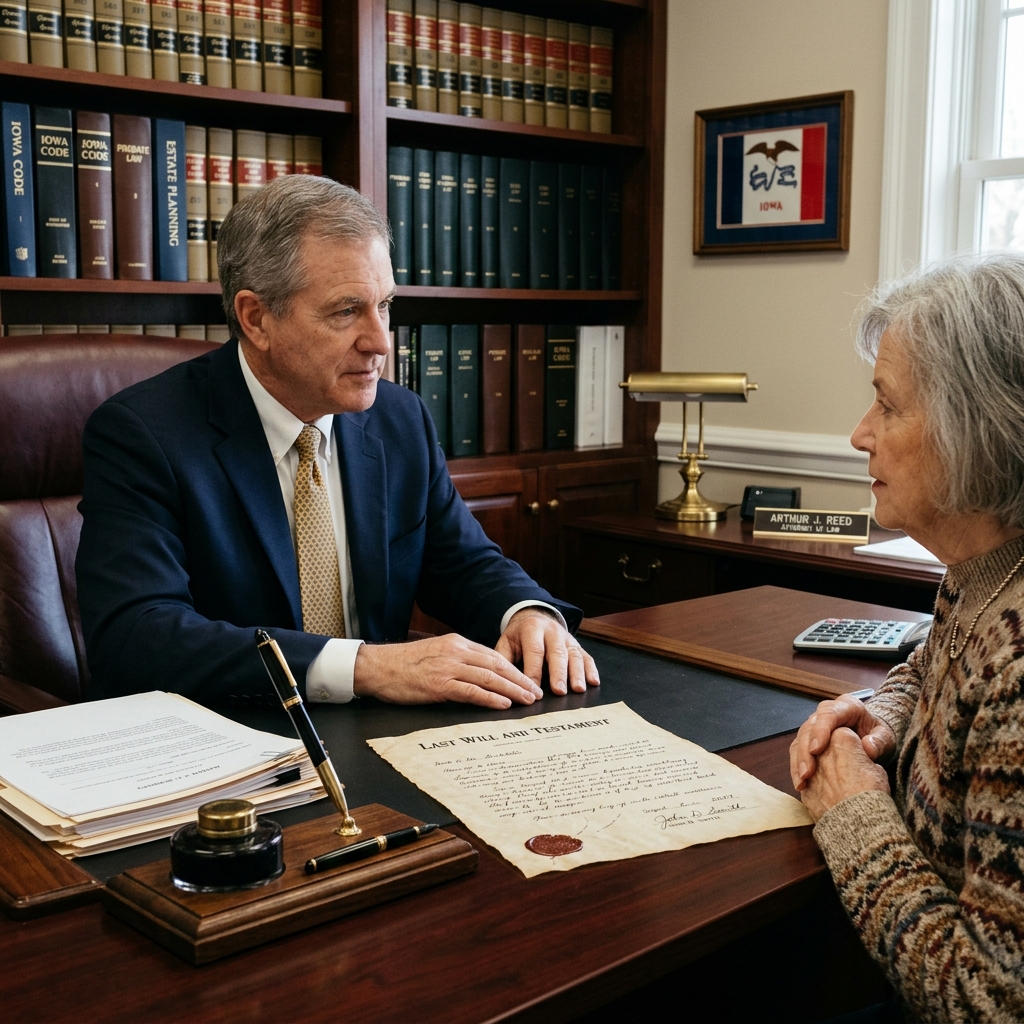
Creating a last will and testament in Iowa is one of the most important steps in organizing your affairs and protecting your family. Iowa law sets specific rules for who can make a will, how it must be signed and witnessed, and what happens if someone dies without one. This article explains those rules in clear, practical language so you can better understand how wills operate within Iowa’s legal system.
Fundamentals: What a Will Does Under Iowa Law
A will is a legally recognized document that lets an Iowa resident decide how certain property will be distributed at death, instead of leaving those decisions entirely to the default rules of state law. Not all assets are controlled by a will; some pass automatically through mechanisms such as joint ownership, beneficiary designations, or living trusts.
In general, an Iowa will is used to:
- Direct who receives probate assets (property that does not pass by other legal arrangements).
- Choose an executor, sometimes called a personal representative, to manage the estate and carry out the will’s instructions.
- Address guardianship wishes for minor children, which courts will consider in custody decisions.
- Coordinate with other estate planning tools, such as trusts and beneficiary designations, to create a comprehensive plan.
Without a valid will, Iowa’s intestacy statutes determine who inherits, often following a rigid sequence of relatives. That default pattern may not match your preferences or reflect modern family situations such as blended households.
Eligibility: Who Can Make a Will in Iowa?
Iowa law limits who may execute a valid will, focusing on age and mental capacity. The requirements aim to ensure that the document reflects deliberate, competent decisions by the person making it.
| Requirement | General Rule in Iowa |
|---|---|
| Minimum age | Generally 18 years or older; 16 if the person is married. |
| Mental capacity | Person must be of sound mind and legally competent to understand the nature of their property and the effects of the will. |
| Voluntary action | The will must be made freely, without coercion or undue influence from others. |
Being of sound mind generally means the testator (the person making the will) can identify their assets, recognize close family members who might expect to inherit, and grasp that the document will control how their property is distributed after death.
Formal Validity: Writing, Signature, and Witness Rules
Even if someone is eligible to make a will, Iowa imposes formal steps that must be followed for the will to be legally effective. These steps focus on writing, signing, and witnessing.
Written form only
Iowa requires wills to be in writing. Oral declarations about property distribution, or purely video or audio statements, are not treated as legally valid wills. The document can be handwritten or typed, but it must be legible and capable of being understood by the court.
Signature of the testator
The testator must sign the will, or direct another person to sign on their behalf in the testator’s presence. This signature confirms that the document is indeed intended as the person’s will.
- If the testator physically signs, the signature should appear near the end of the document.
- If someone else signs for the testator, it must be done at the testator’s direction and in their presence, and the person signing should be clearly identified.
Witness requirements
Two witnesses are required in Iowa to validate a will. They serve as independent observers who can later testify that the testator signed willingly and with understanding.
Key witness rules in Iowa include:
- Number of witnesses: At least two witnesses must observe the testator signing the will, or hear the testator acknowledge the document as their will.
- Presence: The testator and the witnesses should sign in each other’s presence, so they all see the execution process.
- Competence and age: Witnesses must be competent; official guidance from Iowa courts indicates they must be at least 18 years old, while other Iowa resources note 16 for certain contexts.
- Interested witnesses: A witness who stands to receive property under the will is called an interested witness. Using such a witness does not automatically invalidate the will, but it can raise questions and is generally discouraged when alternatives are available.
Notarization and self-proving affidavits
Notarization is not required to create a valid basic will in Iowa. However, state law does allow for a self-proving affidavit, a sworn statement signed by the testator and witnesses before a notary. This affidavit can simplify probate by reducing the need to locate witnesses later and have them testify about the execution of the will.
What Happens If You Die Without a Will in Iowa?
When an Iowa resident dies without a valid will, intestacy statutes determine who inherits probate assets. The law creates a priority list based on marital status and family relationships.
General intestacy pattern
Under Iowa’s probate rules, property is first used to pay debts, taxes, and administration expenses. The remaining estate is then distributed to relatives according to a statutory order.
Typical distribution rules include:
- Spouse and children: If there is a surviving spouse and either no children or all children are also children of that spouse, the spouse generally receives the entire estate.
- Blended families: If the deceased had children who are not children of the surviving spouse, the spouse may receive a specified portion (such as a fixed amount plus half of the remainder), and the children share the rest.
- No spouse, but children: Children typically divide the estate in equal shares.
- No spouse or children: Property passes to parents. If parents are deceased, it goes to siblings, then nieces and nephews, and further out to other relatives, such as grandparents and their descendants.
- No close relatives: If no qualifying relatives exist, the estate can ultimately pass to the State of Iowa.
These default rules can produce outcomes that differ significantly from what an individual might want, especially in cases of unmarried partners, stepchildren, or estranged family members. That is one major reason Iowa courts and legal organizations recommend that residents consider making a will rather than relying on intestacy.
Overview of Probate for Iowa Wills
Probate is the court-supervised process of validating a will, identifying and valuing assets, paying debts and taxes, and transferring property to the rightful beneficiaries. Not every asset or situation requires formal probate, but for many estates it is necessary.
Main objectives of estate settlement
Iowa’s estate settlement framework is designed to accomplish three primary tasks:
- Determine what assets belong to the deceased and assess their value.
- Transfer assets to those entitled to receive them under a valid will or Iowa’s intestacy rules.
- Pay any outstanding taxes and approved creditor claims from estate funds.
Timeline for closing an estate
Iowa law generally requires an estate to be closed within three years of publishing the second notice to creditors, unless the court grants an extension. This encourages timely administration and final resolution of property and claims.
During probate, the court will examine the will to confirm that it meets legal requirements. If disputes arise about the will’s validity or interpretation, they are resolved through litigation within the probate case.
Challenging a Will: Iowa Contest Rules
Although many wills proceed through probate without objection, Iowa law allows certain parties to challenge a will if they believe it is invalid or unfair in specific legally recognized ways. This process is called a will contest.
Who can contest a will?
Only an interested party may contest a will in Iowa. An interested party is someone who would gain or lose a financial interest because of the will—typically heirs or beneficiaries who are impacted by the distribution of assets.
To contest, the person must also have the legal capacity to sue and must wait until after the testator has died and the will has been submitted to probate.
Common grounds for contesting a will
Not liking the content of a will is not, by itself, enough to contest it. Iowa courts look for specific, legally recognized grounds, such as:
- Improper execution: The will was not signed or witnessed in accordance with Iowa law.
- Lack of capacity: The testator was not of sound mind at the time of signing and could not understand the nature of the document or consequences.
- Undue influence: Someone exerted pressure or manipulation so strong that the will reflects that person’s wishes rather than the testator’s free choices.
- Fraud or forgery: The document or signatures were created through deception.
- Incompletion or ambiguity: Key provisions are missing, unclear, or contradicted by multiple versions of the will, leading to disputes about the true intent.
Deadlines for bringing a contest
Iowa sets strict time limits for will contests to prevent estates from remaining open indefinitely. A person generally must file a contest within 30 days after receiving official notice of probate by mail, or within 120 days after the executor publishes a second notice in a local newspaper. Acting promptly is essential to preserve the right to challenge.
Spousal and Family Considerations
Iowa’s estate laws also protect certain interests of surviving spouses, even when the deceased attempted to limit or exclude the spouse’s share in a will. These protections interact with will planning and should be considered when drafting terms.
Elective share for surviving spouses
If an Iowa resident tries to disinherit a spouse completely or leaves them a small portion, the spouse may claim an elective share of the estate instead of accepting the will’s terms. Iowa law provides a right for a surviving spouse to receive roughly one-third of the estate in such cases.
This elective share can significantly alter distributions planned in a will. It underscores the importance of coordinating estate planning with marital property rights and, when appropriate, considering prenuptial or postnuptial agreements.
Children and disinheritance
Iowa law does not prohibit a parent from disinheriting an adult child through a will. However, any attempt to disinherit should be handled carefully, with clear language and attention to possible claims or challenges, particularly if the child expected to inherit or questions the parent’s mental capacity.
Tax Considerations: Iowa Inheritance Tax
In addition to federal estate tax rules, Iowa historically imposed an inheritance tax on certain transfers at death. Recent changes, however, have significantly narrowed its application. According to the Iowa Department of Revenue, the Iowa inheritance tax is no longer applicable for deaths occurring on or after January 1, 2025.
Although this change reduces state-level tax burdens on many estates, planning may still need to account for federal estate or gift tax considerations and for different rules affecting large estates or specific types of property. Consulting tax and legal professionals is advisable for complex situations.
Practical Tips for Planning a Will in Iowa
While Iowa does not require you to use a particular form for your will, and you may draft one yourself, legal and court resources emphasize that making a valid will can be complicated. Here are practical steps to consider:
- Inventory your assets: List both probate and non-probate property, such as real estate, bank accounts, retirement funds, and jointly held assets.
- Clarify beneficiaries: Decide who should receive each category of property, including backup beneficiaries if your first choices predecease you.
- Choose a reliable executor: Select someone trustworthy and capable of handling administrative tasks, and confirm they are willing to serve.
- Address guardianship preferences for minor children and discuss these preferences with the individuals you name.
- Consider professional advice: Given the interplay of tax rules, marital rights, intestacy, and contest risks, many Iowa residents benefit from consulting an attorney or knowledgeable estate planning professional.
- Store the will safely: Keep the original in a secure but accessible place, such as a safe deposit box, home safe, or with a trusted attorney, and inform your executor or close family where it can be found.
Frequently Asked Questions About Iowa Wills
Do I need an attorney to make a will in Iowa?
No, Iowa law does not require you to hire an attorney to create a will. However, legal professionals can help avoid mistakes and tailor the document to complex family or financial situations.
Can I update or revoke my Iowa will?
Yes. A testator can revoke a will by making a new will that clearly supersedes the prior one, or by physically destroying the earlier document with the intent to revoke. Changes should be made with attention to formalities to prevent confusion and contests.
Are handwritten wills valid in Iowa?
Handwritten wills can be valid if they meet Iowa’s requirements for writing, signature, and witnessing. A purely handwritten document without witnesses would likely not satisfy the state’s formal rules.
Where can I find a copy of a relative’s will?
Some clerk of court offices in Iowa store wills. If you believe a will exists, you can contact the clerk in the county where probate may occur, speak with any attorney who helped draft the will, or check secure locations such as safe deposit boxes.
What if my loved one dies and there is no will?
If no will exists, the estate is settled according to Iowa’s intestacy and probate laws. Property not otherwise transferred by joint ownership, trust, or beneficiary designation is distributed to relatives in a statutory order.
References
- Probate—Estates and Wills FAQ — Iowa Judicial Branch. 2024-01-10. https://www.iowacourts.gov/faq/probateestates-and-wills
- Wills and Probate Questions & Answers — Iowa Legal Aid. 2023-06-01. https://iowalegalaid.org/resource/wills-and-probate-questions-answers
- How to Make a Will in Iowa FAQ — FindLaw. 2022-09-15. https://www.findlaw.com/forms/resources/estate-planning/last-will-and-testament/how-to-make-a-will-in-iowa.html
- The Estate Settlement Process — Iowa State University Extension and Outreach. 2021-03-01. https://www.extension.iastate.edu/agdm/wholefarm/html/c4-53.html
- Wills — People’s Law Library of Iowa. 2023-02-20. https://www.peopleslawiowa.org/index.php/research-topics/life-end-life-and-health-planning/overview-wills
- Contesting a Will in Iowa — Whitfield & Eddy Law. 2022-05-10. https://www.whitfieldlaw.com/newsroom-publications-contesting-will-iowa
- Introduction to Iowa Inheritance Tax — Iowa Department of Revenue. 2024-01-01. https://revenue.iowa.gov/taxes/tax-guidance/inheritance-tax/introduction-iowa-inheritance-tax
Similar Articles








Read full bio of medha deb


