
Iowa Traffic Camera Class Actions Explained
How Iowa’s traffic camera lawsuits evolved, what drivers need to know, and how automated enforcement is changing local law.
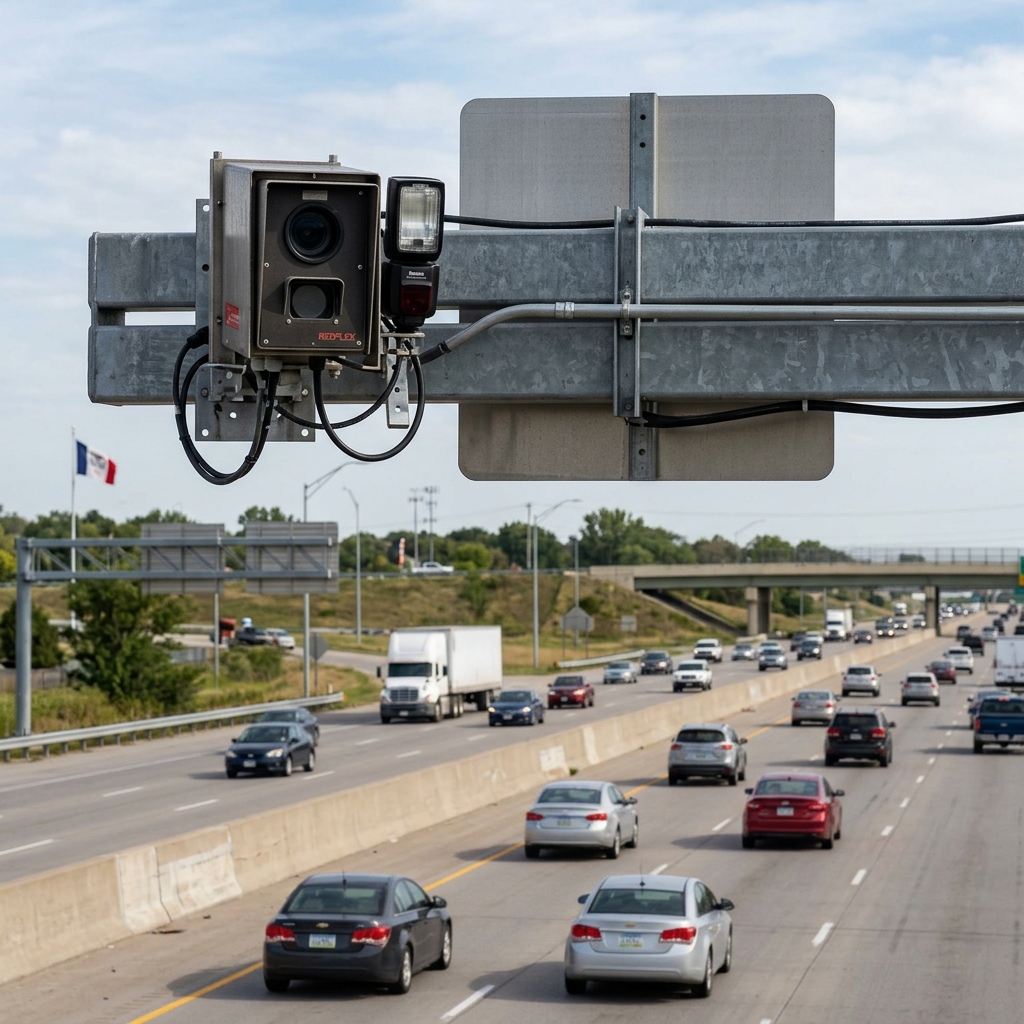
Automated traffic enforcement cameras have become a major legal flashpoint in Iowa, sparking class action lawsuits, state supreme court rulings, and legislative reforms. These disputes center on how cities use cameras to issue citations, how they collect unpaid fines, and whether their practices comply with state law and constitutional due process protections.
From Local Safety Tool to Statewide Legal Battle
Many Iowa cities installed red-light and speed cameras with the stated goal of improving road safety and reducing dangerous driving. Over time, however, the systems raised questions about fairness, transparency, and the legality of municipal enforcement and collection strategies.
The controversy intensified as motorists challenged tickets and collection practices in court, culminating in high-profile class actions and a significant settlement in Cedar Rapids.
- Cedar Rapids faced a major class action over its collection program and ultimately agreed to a settlement worth up to $1.2 million.
- Des Moines has confronted lawsuits alleging that its camera system violates due process and should refund millions in fines.
- State-level oversight increased, with the Iowa Department of Transportation (Iowa DOT) gaining explicit authority to approve or deny automated enforcement systems under House File 2681.
Cedar Rapids: How a Collection Program Triggered a Class Action
Cedar Rapids became a focal point in the debate when motorists alleged that the city’s methods for collecting unpaid camera-generated fines violated their due process rights. The lawsuit did not simply attack the existence of cameras; it primarily challenged how the city pursued unpaid citations, including registration holds and other collection tactics.
Key Allegations Against Cedar Rapids
Plaintiffs in the Cedar Rapids case argued that the city treated motorists differently depending on whether they responded to camera citations, and that some collection tools exceeded what state law allowed.
- Motorists claimed their due process rights were violated because the collection system allegedly penalized non-responders more harshly.
- The lawsuit focused on collection procedures rather than the basic legality of automated citations.
- The litigation coincided with broader scrutiny of how municipal camera ordinances align with state traffic enforcement laws.
The Settlement: Money, Refunds, and Forgiven Fines
After years of litigation, Cedar Rapids agreed to a class action settlement valued at up to approximately $1.2 million, covering both refunds and attorney fees.
| Settlement Component | Approximate Amount | Description |
|---|---|---|
| Named plaintiffs’ payments | $250 each | Ten lead plaintiffs received $250 apiece for their role in the case. |
| Refunds to class members | Up to about $639,252 | Approved claims among approximately 20,000 class members were eligible for refunds. |
| Attorney fees | Up to about $573,194 | Legal fees were capped as part of the settlement. |
| Uncollected unpaid fines | ~$14 million not pursued | The city agreed not to collect roughly $14 million in unpaid camera fines issued before August 31, 2018. |
The settlement affected thousands of motorists and effectively closed the chapter on past Cedar Rapids collection practices, while leaving broader questions about automated enforcement still open.
State Supreme Court and Legal Standards for Traffic Cameras
Class actions in Iowa unfolded alongside critical decisions by the Iowa Supreme Court. In one notable development, the Court found that Cedar Rapids’ traffic camera ordinance did not conform to state law, which in turn allowed a class action over the city’s practices to move forward.
However, the Court has also rejected certain challenges to camera-generated fines, signaling that not all attacks on automated enforcement will succeed.
What the Courts Have Emphasized
- Consistency with state statutes: Municipal camera ordinances must align with state traffic enforcement procedures. When they diverge, they risk being invalidated or limited.
- Due process considerations: Courts have evaluated whether motorists receive adequate notice, an opportunity to contest citations, and fair treatment in collection efforts.
- Limits of litigation: While some aspects of camera enforcement have been successfully challenged, the Iowa Supreme Court has upheld the general ability of cities to use automated tools when they comply with governing law.
Des Moines and Ongoing Challenges to Camera Systems
Beyond Cedar Rapids, other Iowa municipalities continue to face litigation over traffic cameras. In Des Moines, a lawsuit argues that red-light and speed cameras violate drivers’ rights and seeks repayment of collected fines, which could reach millions of dollars.
Major Points Raised in Des Moines Litigation
- Two Polk County residents contend that the city and its private vendor should return all fines collected under the camera program.
- The case highlights concerns about public-private partnerships where vendors manage camera systems and share in citation revenue.
- The litigation reflects growing public engagement and skepticism about whether revenue generation has overtaken safety as the core goal of automated enforcement.
New State Oversight: Iowa DOT’s Role Under HF 2681
Responding to years of controversy, the Iowa legislature enacted reforms giving the Iowa DOT clearer authority over automated traffic enforcement. House File 2681, passed in 2024, explicitly empowers the DOT to approve or deny camera systems across the state.
Core Features of Iowa’s Automated Enforcement Framework
- DOT permitting power: Cities must seek approval from the Iowa DOT before operating automated traffic enforcement cameras.
- Safety-focused criteria: The law ties authorization to “critical traffic safety issues,” such as crash history, speed problems, or violations at particular intersections.
- Statewide standards: Rather than each city setting its own rules in isolation, enforcement programs now operate under a unified state-level review structure.
This shift aims to address criticism that some camera programs were designed as revenue tools rather than targeted safety measures, and to ensure that technology deployment is data-driven and legally sound.
How Motorists Can Respond to Camera Citations in Iowa
Class action outcomes and legislative changes do not eliminate automated enforcement, so motorists still receive camera-based citations in many jurisdictions. Drivers who believe a citation is improper can take several practical steps to protect their rights.
Practical Steps for Contesting a Camera Ticket
- Review the citation carefully: Check the date, time, location, and specific violation mentioned on the notice.
- Confirm DOT authorization: Contact the Iowa DOT or search its public records to verify that the camera site has the necessary approval under current regulations.
- Gather evidence:
- Photographs or maps showing the camera location and signage.
- Documentation indicating any non-compliance with state permitting requirements.
- Official records or statements about the status of the camera installation.
- Follow contest instructions on the notice: Many tickets provide options to file online, request a hearing in writing, or appear in person.
- Prepare your argument: Focus on factual and legal points, such as incorrect vehicle identification, unclear signage, or lack of DOT authorization.
Motorists who succeed in challenging a ticket should obtain written confirmation of dismissal. If the challenge fails, drivers may consider filing an appeal or consulting an attorney, particularly for larger financial impacts or repeated citations.
Injury Claims and the Role of Traffic Camera Footage
While much of the discussion around cameras concerns fines, the same technology can influence civil injury claims arising from crashes. Traffic camera recordings may provide objective evidence about vehicle speeds, signal phases, and driver behavior at the time of an incident.
How Camera Evidence Can Help or Hurt a Case
- Supporting a claim: Footage can corroborate a victim’s account, showing that another driver ran a red light or was speeding.
- Challenging a claim: Defendants may use recordings to argue that the injured party contributed to the crash or violated traffic rules.
- Clarifying disputed facts: In complex collisions, camera data can reduce uncertainty about who entered an intersection first or whether a signal had changed.
Attorneys handling injury cases often seek camera footage early in the investigation, given that retention policies may be limited and recordings can be overwritten or deleted after a set period.
Balancing Safety, Revenue, and Rights
Iowa’s experience with traffic camera class actions illustrates the tension between improving roadway safety, generating municipal revenue, and respecting constitutional and statutory rights. Cities argue that cameras deter dangerous conduct and efficiently enforce laws. Motorists and civil liberties advocates counter that automated enforcement can feel opaque, overly punitive, or geared toward revenue.
Key Themes Emerging from Iowa’s Camera Litigation
- Transparency matters: Clear notification, accessible appeal processes, and public explanation of enforcement goals help build trust.
- Legal alignment is essential: Local ordinances must be consistent with statewide traffic enforcement rules and recent legislative changes.
- Data-driven deployment: Under the new Iowa DOT framework, cameras are expected to address demonstrable safety problems rather than serve primarily as financial tools.
- Collective remedies: Class actions can provide relief when large groups of drivers are affected by questionable practices, as seen in the Cedar Rapids settlement.
Frequently Asked Questions (FAQ)
Do Iowa cities still use traffic enforcement cameras?
Yes. Many Iowa municipalities continue to rely on red-light and speed cameras. However, new statewide oversight requires DOT approval, and some cities have adjusted or scaled back programs following litigation and legislative changes.
What did the Cedar Rapids class action settlement actually do?
The settlement provided payments to named plaintiffs, allowed refunds for approved class member claims, capped attorney fees, and, importantly, committed the city not to collect about $14 million in unpaid fines issued before late August 2018.
Can I challenge a traffic camera ticket in Iowa?
In most cases, yes. Citations typically include instructions for contesting, which may involve online forms, written requests, or in-person hearings. Motorists can present evidence and legal arguments, including questions about DOT approval or compliance with state law.
Does the Iowa Supreme Court consider camera fines unconstitutional?
Not categorically. The Court has rejected some broad challenges to camera-generated fines, but it has also held that particular local ordinances or collection methods must conform to state law and can be questioned when they do not.
How can camera footage affect my personal injury case?
Camera recordings can serve as powerful evidence in injury claims by showing speeds, signal phases, and driver conduct. Depending on what the footage reveals, it may either strengthen or weaken a party’s case, so attorneys often seek it promptly.
References
- Cedar Rapids City Council approves traffic camera lawsuit settlement worth up to $1.2 million — CBS2 Iowa. 2020-06-16. https://cbs2iowa.com/news/local/city-council-approves-traffic-camera-lawsuit-settlement-worth-up-to-12-million
- Cedar Rapids will pay up to $1.2 million to settle lawsuit over traffic cameras — Little Village Magazine. 2020-06-25. https://littlevillagemag.com/cedar-rapids-will-pay-up-to-1-2-million-to-settle-lawsuit-over-traffic-cameras/
- Woman suing Des Moines says traffic cameras violate rights — KCCI 8 News (YouTube). 2019-03-22. https://www.youtube.com/watch?v=YlrqFKhwz4E
- UPDATE: Iowa Supreme Court ruled Cedar Rapids’ traffic camera law doesn’t conform to state law — Iowa’s News Now (Facebook). 2018-04-27. https://www.facebook.com/IowasNewsNow/posts/update-the-iowa-supreme-court-ruled-cedar-rapids-traffic-camera-law-doesnt-confo/10156108531948096/
- Automated Traffic Enforcement — Iowa Department of Transportation. 2024-05-01 (last updated). https://iowadot.gov/modes-travel/roads-highways/highway-safety-features/automated-traffic-enforcement
- Iowa Supreme Court rejects challenges to collection of fines generated by traffic cameras — Iowa Appeals. 2019-06-28. https://iowaappeals.com/uncategorized/iowa-supreme-court-rejects-challenges-to-collection-of-fines-generated-by-traffic-cameras/
- Can Iowa Traffic Cameras Make or Break Your Injury Claim? — WK&C Law Firm. 2023-08-10. https://www.wkclawfirm.com/can-iowa-traffic-cameras-be-used-injury-claims/
Similar Articles








Read full bio of medha deb


