
Intent and Emotional Harm in Modern Stalking Laws
How U.S. courts and federal statutes define stalking, emotional distress, and the crucial role of criminal intent.
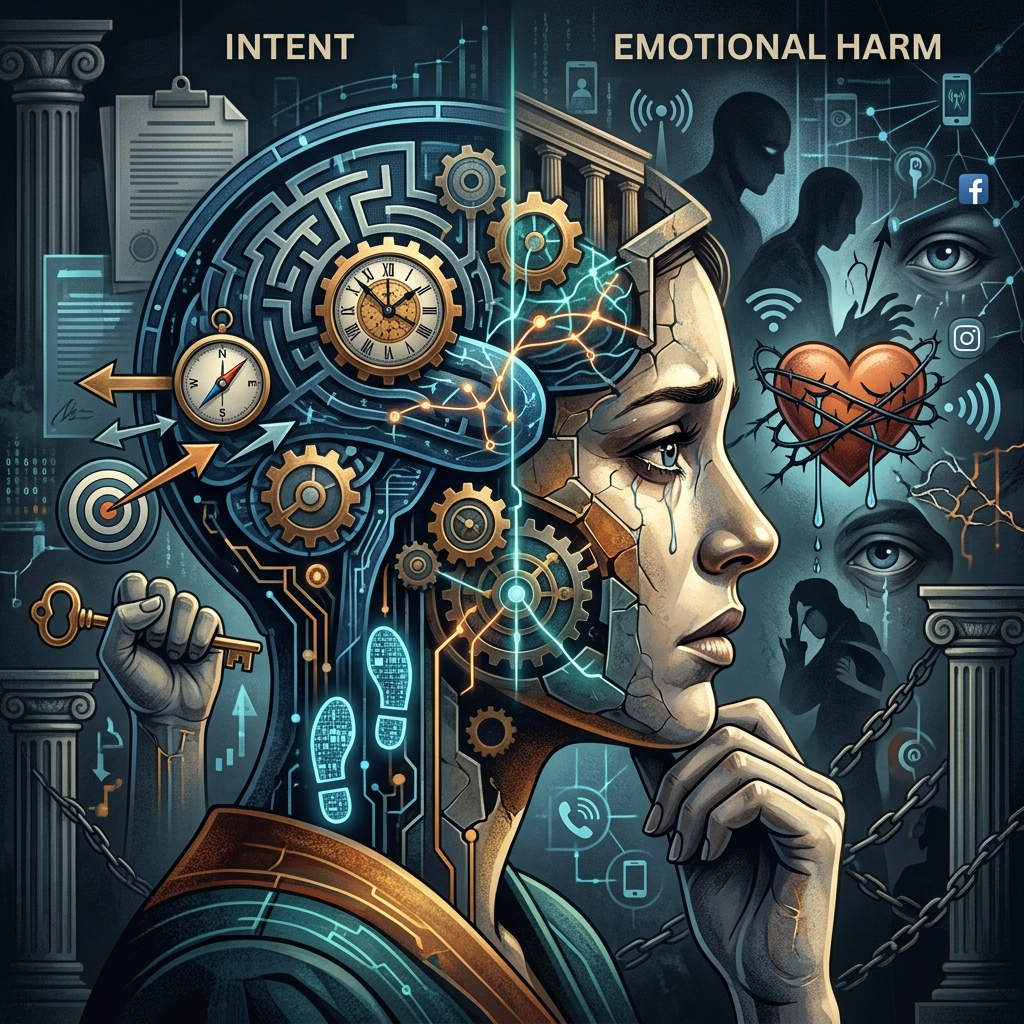
In recent years, stalking laws in the United States have faced intense judicial scrutiny, particularly around whether they adequately require a defendant to act with a culpable mental state, or mens rea, before imposing criminal liability. At the same time, federal statutes have increasingly emphasized emotional distress as a key harm in both physical and electronic stalking, including cyberstalking via the internet and digital devices. This article explains how courts and lawmakers approach intent, emotional suffering, and due process in modern stalking legislation, with special focus on federal law and constitutional concerns.
Understanding Stalking as a Criminal Offense
Stalking is generally understood as a pattern of unwanted conduct directed at a specific person that causes fear, intimidation, or emotional suffering. While individual states define stalking differently, common themes include:
- Repeated or persistent unwanted contact or surveillance
- Targeting a particular person, sometimes including family or intimate partners
- Causing fear of bodily harm or death, or substantial emotional distress
- Use of physical presence, mail, phone, or electronic communication systems
At the federal level, stalking is addressed primarily in 18 U.S.C. § 2261A, which covers interstate stalking and stalking conducted via mail or electronic communication systems. This statute is designed to supplement state laws by focusing on cases that involve interstate commerce or specialized federal jurisdictions.
The Central Role of Criminal Intent (Mens Rea)
Criminal law typically requires both a prohibited act (actus reus) and a culpable mental state (mens rea) for a conviction. Without intent, statutes risk punishing individuals for conduct that may be careless or insensitive but not truly criminal.
In the stalking context, intent is crucial because many behaviors—such as repeated messages or visits—can occur in everyday life without malicious purpose. Courts often insist that statutes distinguish between:
- Conduct meant to harass or intimidate the victim
- Conduct that incidentally causes distress without any criminal objective
Federal stalking law reflects this concern by requiring intent to kill, injure, harass, or intimidate, or intent to place another person under surveillance with one of those objectives. In other words, the government must prove not only what the defendant did, but also why they did it.
Federal Stalking Law: 18 U.S.C. § 2261A
Section 2261A of Title 18 of the United States Code defines two broad categories of federal stalking: interstate travel-based stalking and stalking carried out via mail or electronic communications.
| Type of Conduct | Required Intent | Resulting Harm |
|---|---|---|
| Travel in interstate or foreign commerce, or presence in federal/Indian country jurisdiction | Intent to kill, injure, harass, intimidate, or place under surveillance with such intent | Reasonable fear of death or serious bodily injury, or substantial emotional distress |
| Use of mail, interactive computer service, electronic communications, or other interstate facilities | Intent to kill, injure, harass, intimidate, or place under surveillance with such intent | Reasonable fear of death or serious bodily injury, or substantial emotional distress |
The statute demands that the defendant engage in a course of conduct, meaning two or more acts of stalking behavior, rather than a single isolated incident. This requirement helps distinguish genuine stalking patterns from one-time conflicts or misunderstandings.
Emotional Distress as a Recognized Harm
Historically, many criminal statutes focused primarily on physical injuries. Modern stalking law, however, acknowledges that severe psychological harm can be as damaging as bodily harm. Section 2261A explicitly criminalizes conduct that:
- Places a victim or specified related persons in reasonable fear of death or serious bodily injury
- Causes, attempts to cause, or would be reasonably expected to cause substantial emotional distress to the victim or specified family/intimate partners
This recognition is particularly significant for cyberstalking, where the primary harm may be emotional rather than physical. As legal commentators note, federal law covers use of internet, social media, and electronic devices to engage in repeated harassment that triggers severe anxiety, shame, or mental suffering.
Cyberstalking and Electronic Harassment
Cyberstalking refers to stalking behavior conducted via digital platforms—such as email, social networks, messaging apps, or other internet-based channels. Because electronic communications often cross state lines, cyberstalking commonly falls within federal jurisdiction under § 2261A.
Federal law treats cyberstalking as criminal when a person uses mail, an electronic communication service, or any facility of interstate commerce to engage in a course of conduct that:
- Places the victim or specified related persons in reasonable fear of serious bodily harm or death
- Causes or is reasonably expected to cause substantial emotional distress
Notably, the statute extends protection beyond the named victim to include immediate family members, spouses, intimate partners, and even certain animals such as pets, service animals, emotional support animals, and horses. This reflects a broader understanding of how threats or harassment can inflict emotional harm through danger to loved ones and companion animals.
Examples of Cyberstalking Conduct
Common cyberstalking patterns may include:
- Repeated threatening or harassing messages sent via email or social media
- Posting harmful or defamatory statements about the victim online
- Using technology to track, monitor, or surveil the victim’s activities without consent
- Targeting the victim’s family or pets with threats or intimidation
While any individual message might appear minor taken alone, the law focuses on the cumulative impact of repeated behavior and the defendant’s intent to instill fear or emotional suffering.
Penalties and Aggravating Circumstances
Federal penalties for stalking vary depending on the severity of harm and specific circumstances. Under § 2261A and related provisions, sanctions can include substantial prison terms, especially when severe results occur.
- Up to life imprisonment if the victim dies as a result of the stalking conduct
- Up to 20 years if the victim suffers permanent disfigurement or life-threatening bodily injury
- Up to 10 years if serious bodily injury occurs or a dangerous weapon is used during the offense
- Up to 5 years in other cases, often involving substantial emotional distress without severe physical injury
- Additional penalties when stalking violates restraining orders or protective orders
The Department of Justice emphasizes that specific intent to kill, injure, harass, or intimidate must be present at the time of interstate travel or when using interstate facilities. This requirement again underscores the importance of mens rea in distinguishing criminal stalking from other types of contact.
Due Process and Constitutional Review of Stalking Statutes
State and federal stalking statutes must comply with constitutional protections, including the Due Process Clause of the Fourteenth Amendment and, where applicable, First Amendment free speech rights. Courts review these laws to ensure they are neither overly vague nor excessively broad.
Mens Rea and Due Process
One major due process issue is whether a statute provides a clear intent requirement. Laws that impose criminal liability without requiring a culpable mental state can be vulnerable to constitutional challenge.
For instance, if a statute only requires that a defendant “knew or should have known” that their conduct would cause emotional suffering, but does not demand an actual intent to cause such harm, courts may question whether the law punishes inadvertent or negligently caused distress rather than purposeful harassment. In these situations, appellate courts can find that the statute lacks a true mens rea element and may declare it unconstitutional on its face under due process principles.
By contrast, federal stalking law explicitly requires intent to kill, injure, harass, or intimidate, or intent to place another under surveillance with such objectives. This explicit mental state helps protect the statute from due process challenges, because it ties criminal punishment to purposeful or knowing wrongdoing.
Vagueness and Overbreadth Concerns
Courts also scrutinize stalking laws for vagueness and overbreadth. A statute is vague if people of ordinary intelligence cannot understand what conduct is prohibited, and overbroad if it sweeps in protected activities such as legitimate speech or everyday social interactions.
Key questions include:
- Does the law clearly define “course of conduct,” “harassment,” and “emotional distress”?
- Does it distinguish between criminal stalking and protected expression, such as political protest or ordinary communication?
- Are objective standards, like “reasonable fear” or “substantial emotional distress,” used to limit the law’s reach?
Federal law attempts to answer these concerns by anchoring liability to objective measures—such as reasonable fear of serious bodily harm and reasonably expected substantial emotional distress—rather than purely subjective feelings. This approach helps provide clearer boundaries for enforcement.
How Emotional Distress Is Evaluated in Stalking Cases
Because emotional harm is inherently personal, courts and statutes often rely on a combination of subjective and objective factors when analyzing whether distress is “substantial.” Some laws define emotional distress as significant mental suffering, while others leave the term to judicial interpretation, guided by precedent.
Relevant indicators may include:
- Documented anxiety, depression, or other psychological conditions
- Changes in daily routines, such as moving residence, altering work schedules, or avoiding public places
- Use of counseling, therapy, or medical care due to stalking-related stress
- Evidence of fear for personal safety or the safety of family, intimate partners, or pets
Importantly, federal law uses a standard of whether conduct “would be reasonably expected” to cause substantial emotional distress, which allows courts to consider both the victim’s experience and societal expectations about the impact of the behavior.
Practical Implications for Defendants and Victims
The interplay between intent requirements and emotional distress has major practical consequences:
For Defendants
- The prosecution must prove a specific intent to kill, injure, harass, or intimidate, or intent to surveil with such purposes.
- Evidence of benign motives, misunderstandings, or attempts at reconciliation may be relevant to contest mens rea.
- Defendants can challenge statutes that lack clear intent elements as unconstitutional under due process principles.
For Victims
- Victims should document both the pattern of conduct and the resulting emotional impact, including fear and psychological effects.
- Electronic records—such as messages, emails, and posts—are crucial in cyberstalking cases.
- Reporting incidents early and seeking protective orders can trigger additional statutory protections and enhanced penalties for violations.
Frequently Asked Questions (FAQs)
1. Do federal stalking laws require proof of emotional distress?
Federal stalking statutes do not always require proof that the victim actually suffered emotional distress, but they do cover conduct that causes, attempts to cause, or would be reasonably expected to cause substantial emotional distress. This allows prosecution even where distress is attempted or clearly foreseeable.
2. Is a single threatening message enough to qualify as stalking?
Under federal law, stalking generally requires a course of conduct, meaning at least two acts of harassment or surveillance. A single message may support other charges, but recurring behavior is typically needed for stalking.
3. How is cyberstalking different from traditional stalking?
Cyberstalking occurs through electronic communications or online platforms rather than physical proximity. However, the legal elements are similar: intent to harass or intimidate, repeated conduct, and resulting fear or substantial emotional distress.
4. Can threats to pets or emotional support animals be part of a stalking case?
Yes. Federal law expressly includes threats or harm directed at pets, service animals, emotional support animals, and horses when assessing fear or emotional distress in stalking cases.
5. Why have some state stalking laws been found unconstitutional?
Certain state laws have been struck down when they lacked a clear mens rea requirement or were deemed overly broad or vague, potentially punishing conduct without intentional wrongdoing and infringing on due process protections.
Key Takeaways for Legal Practitioners and Advocates
- Mens rea matters: Stalking statutes that omit a clear intent requirement face heightened constitutional risk.
- Emotional distress is a recognized harm: Federal law treats substantial emotional distress as a central element of stalking, especially in cyber cases.
- Interstate dimension triggers federal jurisdiction: Travel across state lines or use of interstate communication services can transform local harassment into a federal offense.
- Objective standards limit overreach: Concepts such as “reasonable fear” and “reasonably expected” distress help define boundaries of criminal liability.
- Documentation is vital: Both victims and defendants benefit from clear records of communications, incidents, and emotional impacts.
References
- Stalking Requires Intent to Cause Emotional Suffering, Federal Court Rules — FindLaw Legal Blog. 2016-08-02. https://www.findlaw.com/legalblogs/criminal-defense/stalking-requires-intent-to-cause-emotional-suffering-federal-court-rules/
- 18 U.S.C. § 2261A. Stalking — WomensLaw.org (summarizing federal statute). 2023-01-01. https://www.womenslaw.org/laws/federal/statutes/18-usc-ss-2261a-stalking
- Federal Stalking Laws — Foundation for Individual Rights and Expression (FRIS). 2022-05-01. https://fris.org/laws/federal-stalking-laws/
- Is Cyberstalking a Federal Crime? — Keegan, Tindal & Jaeger, P.L.C. 2020-06-10. https://www.keeganlegal.com/blog/2020/june/is-cyberstalking-a-federal-crime-/
- Federal Domestic Violence and Stalking Statutes — U.S. Department of Justice, Office on Violence Against Women. 2023-10-01. https://www.justice.gov/d9/2023-12/dv_stalking_oct_2023_0.pdf
- New Jersey and Federal Stalking Law — Law Offices of David W. Marain. 2019-03-01. https://www.marainlaw.com/page.php?here=stalking
Similar Articles








Read full bio of Sneha Tete




