
Incentives to Boost Your Rental’s Energy Efficiency
Learn how landlords can use tax credits, rebates, and financing to fund smart energy upgrades that cut costs and attract better tenants.
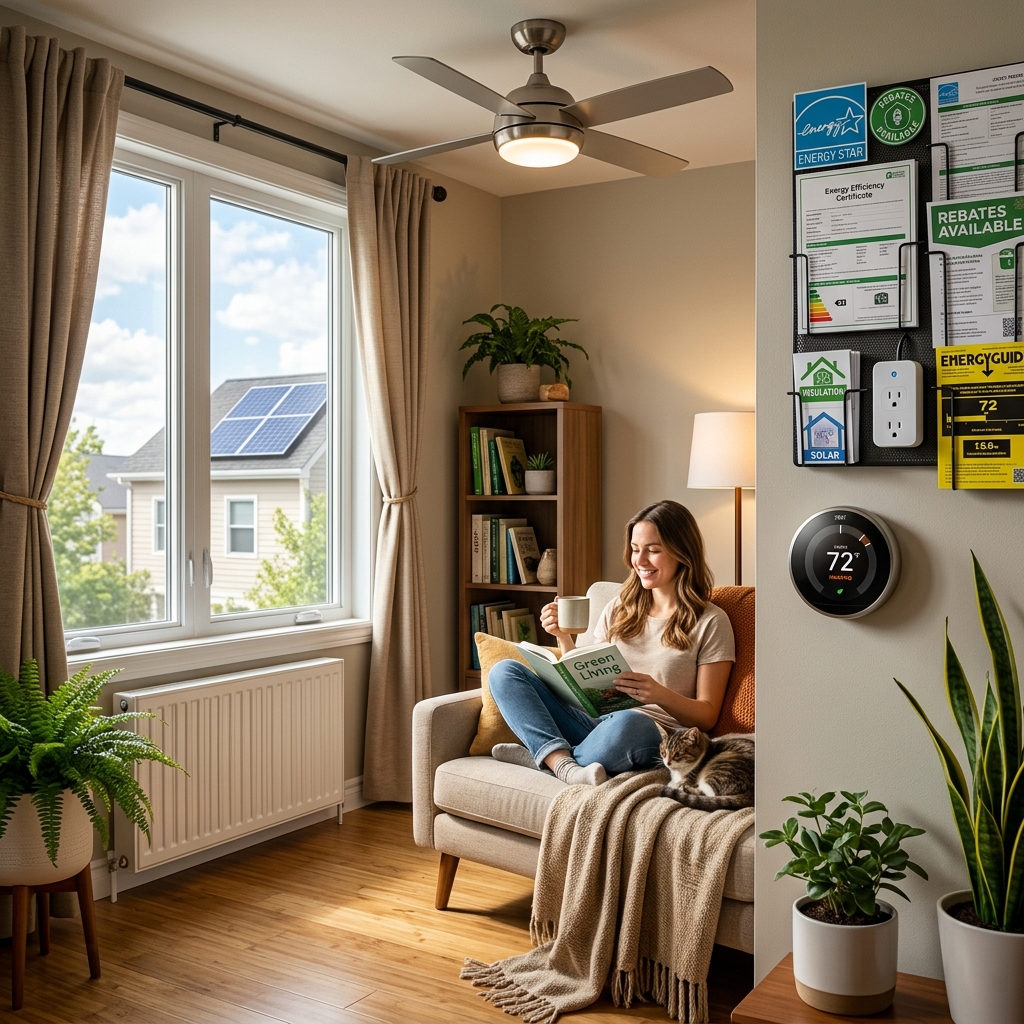
Improving the energy performance of rental housing used to be a hard sell for landlords. Owners typically pay for the upgrades, while tenants enjoy lower utility bills. Today, that dynamic is changing. A growing mix of tax credits, deductions, rebates, and special financing programs make it far easier and cheaper for landlords to invest in energy efficiency and clean energy technologies.
This guide explains the main types of incentives available, how they work for rental properties, and practical strategies for using them to upgrade your units without breaking your budget.
Why Energy Efficiency Matters for Rental Properties
Before diving into specific incentives, it helps to understand why energy efficiency is increasingly central to successful property management.
- Lower operating costs: Efficient buildings generally use less energy for heating, cooling, and lighting, which can reduce utility expenses when the landlord pays some or all of the bills.
- Stronger tenant demand: Renters are increasingly sensitive to monthly utility costs and comfort; efficient units can stand out in competitive markets.
- Regulatory pressure: Many jurisdictions are introducing building performance standards and emissions rules that make inefficient properties riskier to own.
- Asset value and resilience: Upgraded HVAC, better insulation, efficient windows, and on-site renewables can improve property value and reduce exposure to energy price volatility.
Government policy recognizes these benefits. Recent legislation, including the federal Inflation Reduction Act, expanded incentives for energy improvements in both commercial and residential properties, including rentals.
Understanding the Incentive Landscape for Landlords
Energy incentives for rental properties fall into several broad categories. Some apply at the federal level, others operate at the state or local level, and many are administered by utilities or quasi-public agencies.
| Incentive Type | Primary Benefit | Typical Uses |
|---|---|---|
| Federal tax credits | Reduce tax liability by a percentage of project cost | Solar, geothermal systems, certain clean energy equipment |
| Federal deductions | Allow additional write-offs linked to energy savings per square foot | Lighting, HVAC, insulation and building envelope upgrades |
| Accelerated depreciation | Deduct qualifying equipment costs more quickly | Efficient boilers, heat pumps, controls, and related systems |
| State & local programs | Grants, rebates, or tax incentives | Insulation, appliances, electrification, weatherization |
| Utility rebates | Upfront discounts or cash back | HVAC equipment, smart thermostats, efficient appliances |
| Special financing | Spread project costs over long terms with favorable repayment | Pace-style financing or on-bill repayment schemes |
Combining these tools can significantly lower the net cost of an upgrade project while also improving long-term cash flow.
Federal Tax Credits for Clean Energy in Rental Properties
For landlords looking at renewable energy systems, federal tax credits are often the most valuable single incentive. Multiple sources describe how the Investment Tax Credit (ITC) and related provisions can apply to rental properties.
Clean Energy Systems Eligible for Credits
Under current law, landlords may qualify for substantial credits when they install certain clean energy technologies on their properties.
- Solar energy systems: Roof-mounted or ground-mounted photovoltaic arrays that generate electricity for common areas or tenant units.
- Geothermal heat pumps: Systems that use ground temperatures for highly efficient heating and cooling.
- Small wind turbines: Appropriate mostly for rural or high-wind locations.
- Fuel cells and battery storage: Certain advanced technologies designed to store or generate clean electricity.
These technologies typically qualify for credits around 30% of eligible project costs, subject to specific IRS rules and timeframes.
Key Considerations for Landlords
- Ownership requirement: To claim federal clean energy credits, the taxpayer generally must own the equipment and the property, and the system must be placed in service during the eligible period.
- Holding period: Some credits require that the property and installation be held for several years; selling too soon can trigger recapture of the incentive.
- Interaction with depreciation: Clean energy systems on rental properties are usually depreciable assets, and tax planning should account for both credits and depreciation.
Because the rules are technical and change over time, landlords should coordinate with a qualified tax professional when planning major clean energy investments.
Enhanced Deductions for Energy-Efficient Building Components
Beyond credits, federal law includes deductions that reward energy-efficient design and retrofits in larger rental buildings. One key example is the Section 179D deduction
How Performance-Based Deductions Work
These deductions typically link the tax benefit to the amount of energy saved per square foot relative to baseline standards. For example, qualifying improvements may include:
- High-efficiency lighting and controls
- Upgraded insulation, windows, and other building envelope measures
- High-performance HVAC and hot water systems
To claim such deductions, property owners generally need a certified analysis showing that the project reduces energy use compared to nationally recognized technical standards, such as those developed by ASHRAE (the American Society of Heating, Refrigerating and Air-Conditioning Engineers).
Benefits for Multi-Unit Rental Buildings
For landlords with sizable properties, performance-based deductions can be considerable. Some guidance suggests potential deductions of several dollars per square foot where upgrades achieve significant energy savings. When multiplied across a large apartment building, this can translate into a meaningful tax offset that improves project economics.
Accelerated Depreciation and Business Energy Incentives
Energy-efficient equipment installed in rental properties is often treated as business property for tax purposes. This opens the door to accelerated depreciation
- Immediate expensing: In some cases, landlords may be able to deduct the full cost of certain equipment in the year it is placed in service instead of spreading the deduction over many years.
- Shorter recovery periods: Even when full expensing does not apply, tax rules may allow shorter depreciation schedules for specific systems, increasing near-term deductions.
Strategic use of these provisions can make upgrades such as high-efficiency boilers, smart controls, or heat pumps more attractive by improving cash flow in the early years after installation.
Limits of Homeowner Credits for Pure Rental Properties
Some energy incentives are designed specifically for homeowners rather than landlords. The U.S. Department of Energy and the Internal Revenue Service highlight distinctions that are important for rental owners to understand.
Principal Residence Requirements
Certain federal energy efficiency credits—particularly those for items like exterior windows, doors, and insulation—can be claimed only for a taxpayer’s primary home that they own and occupy. Pure rental properties where the landlord does not reside in the unit generally do not qualify for these homeowner-focused credits.
Credits That May Involve Residences Used by the Taxpayer
Other credits, including some for specific heating and cooling equipment or home energy audits, may apply to homes that the taxpayer uses as a residence but not necessarily as a principal residence. The IRS explicitly notes that credits are unavailable for homes not used as a residence by the taxpayer, which means that landlords normally cannot claim them for properties they rent out but do not live in themselves.
Because the boundaries between homeowner and rental incentives can be nuanced, checking IRS guidance for the current year is essential.
State, Local, and Utility Programs for Rental Efficiency
Federal incentives are only part of the picture. Many states, cities, and utilities run programs that directly support energy improvements in rental housing, often with special attention to low- and moderate-income tenants.
Utility Rebates and On-Bill Programs
Utility companies frequently offer cash rebates, discounted products, or on-bill financing for efficiency measures. Typical offerings include:
- Smart thermostats and advanced controls, often discounted or rebated by $50–$100 per device.
- High-efficiency HVAC equipment, such as heat pumps or efficient air conditioners, with rebates that reduce upfront cost.
- Efficient appliances and weatherization services.
In some jurisdictions, utilities or energy agencies administer programs providing free or subsidized energy assessments and direct installation of basic efficiency measures in rental housing.
Targeted Incentives for Affordable and Multifamily Housing
Several states support energy upgrades in multifamily and affordable rental properties through grants, tiered incentives per unit, and technical assistance. For example, certain programs share a high percentage of project costs (sometimes covering most of the installed measures) when owners pursue comprehensive efficiency and electrification retrofits.
These programs often require landlords to maintain affordability or meet income eligibility criteria, but in return, they can dramatically reduce capital outlays for improvements such as insulation, efficient appliances, or electrification of space heating.
Special Financing Options for Energy Upgrades
Even with rebates and tax benefits, landlords may need financing to cover remaining costs. Energy-focused financing mechanisms are designed to align repayment with long-term savings.
Property-Assessed Clean Energy (PACE) Style Financing
Many jurisdictions have adopted property tax-based financing that allows owners to fund energy improvements and repay the investment through a long-term assessment on the property tax bill. Advantages can include:
- Long repayment periods (often 10–20 years), matching the useful life of major equipment or building upgrades.
- Repayment obligations that stay with the property, potentially easing transactions when buildings are sold.
While program details vary, this kind of financing can be especially useful for landlords pursuing comprehensive retrofits.
Practical Steps for Landlords Planning Energy Upgrades
Because the incentive landscape is complex, landlords benefit from approaching projects methodically. The following steps can help maximize benefits and avoid surprises.
1. Evaluate Your Building’s Energy Performance
- Review recent utility bills and identify high-consumption areas.
- Conduct or request an energy assessment; some programs offer these at little or no cost.
- Document existing equipment age, efficiency ratings, and maintenance issues.
2. Set Upgrade Priorities
- Target measures with the strongest combination of energy savings, tenant comfort improvements, and incentive support (e.g., HVAC upgrades paired with smart controls).
- Consider phasing projects so that work aligns with tenant turnover or major renovation cycles.
3. Map Incentives to Your Project
- Identify whether your building is treated as commercial, residential, or mixed-use under tax rules; this affects eligibility for certain deductions.
- Check federal clean energy and efficiency incentives for the current tax year.
- Research state and utility programs in your service territory; many websites list rebates and multifamily-specific programs.
4. Coordinate with Professionals
- Consult a tax advisor familiar with real estate and energy incentives, especially for large projects that may involve Section 179D or clean energy credits.
- Work with contractors or energy service providers who have experience documenting performance for incentive programs.
5. Communicate with Tenants
- Explain how upgrades will affect comfort, reliability, and utility costs.
- Schedule work to minimize disruption and respect lease obligations.
- Consider how efficiency improvements may factor into future rent structures or utility billing arrangements.
Frequently Asked Questions (FAQs)
Do landlords qualify for the same energy tax credits as homeowners?
Not always. Some federal credits are limited to properties owned and used as a principal residence by the taxpayer, which excludes most purely rental properties. However, landlords may qualify for business-oriented incentives, clean energy investment credits, and performance-based deductions for larger buildings.
Can I claim a federal credit for adding insulation or new windows to a rental I do not live in?
Current IRS guidance indicates that credits tied to certain building envelope measures are restricted to homes the taxpayer owns and uses as a principal residence. For rental housing where the owner does not live in the unit, those specific homeowner credits are generally unavailable, though other business incentives may still apply.
Are low-income rental properties treated differently in incentive programs?
Yes. Many state and utility programs provide enhanced support for low- and moderate-income households, including owners of 1–4 unit rentals and multifamily buildings. These programs may offer higher rebates, grants, or cost-sharing for efficiency and electrification measures.
How do utility rebates interact with federal tax incentives?
Utility rebates typically reduce the net cost of a project. For tax purposes, the amount of eligible costs for credits or deductions may need to be calculated after accounting for rebates. Coordinating with a tax professional can help ensure you treat these interactions correctly.
Is it still worth upgrading a rental property if tenants pay their own utility bills?
Often yes. Efficient buildings can be easier to lease, reduce complaints related to comfort or equipment failures, and may comply with emerging building performance standards. Incentives and tenant willingness to pay for higher-quality housing can make these upgrades financially attractive even when tenants pay most utility charges.
References
- Federal Tax Credits for Energy Efficiency — ENERGY STAR / U.S. Environmental Protection Agency. 2023-08-01. https://www.energystar.gov/about/federal-tax-credits
- Renters: Energy-Saving Programs and Incentives — U.S. Department of Energy. 2023-06-15. https://www.energy.gov/save/renters
- Energy Efficient Home Improvement Credit – Qualifying Residence — Internal Revenue Service. 2023-12-22. https://www.irs.gov/credits-deductions/frequently-asked-questions-about-energy-efficient-home-improvements-and-residential-clean-energy-property-credits-energy-efficient-home-improvement-credit-qualifying-residence
- Tax Benefits of Energy Efficiency Upgrades for Landlords — Advise RE Tax. 2024-02-10. https://adviseretax.com/rc/energy-efficiency-tax-benefits/
- Energy-Efficient Upgrades: Tax Incentives for Landlords — Polaris Property Management. 2024-01-05. https://polarismanagementindianapolis.com/energy/
- New Law Improves Energy Tax Benefits for Biz Owners and Landlords — Bradford Tax Institute. 2023-10-20. https://bradfordtaxinstitute.com/Content/New-Law-Improves-Energy-Tax-Benefits-for-Biz-Owners-and-Landlords.aspx
- Rental Properties – Advantages of Going Electric — AMPED / NYSERDA. 2023-11-30. https://www.ampedproject.org/rental-properties
Similar Articles








Read full bio of medha deb


