
Implied Consent and DUI Test Refusal in California
Understand how California’s implied consent rules and DUI test refusal penalties can impact your license, record, and court case.
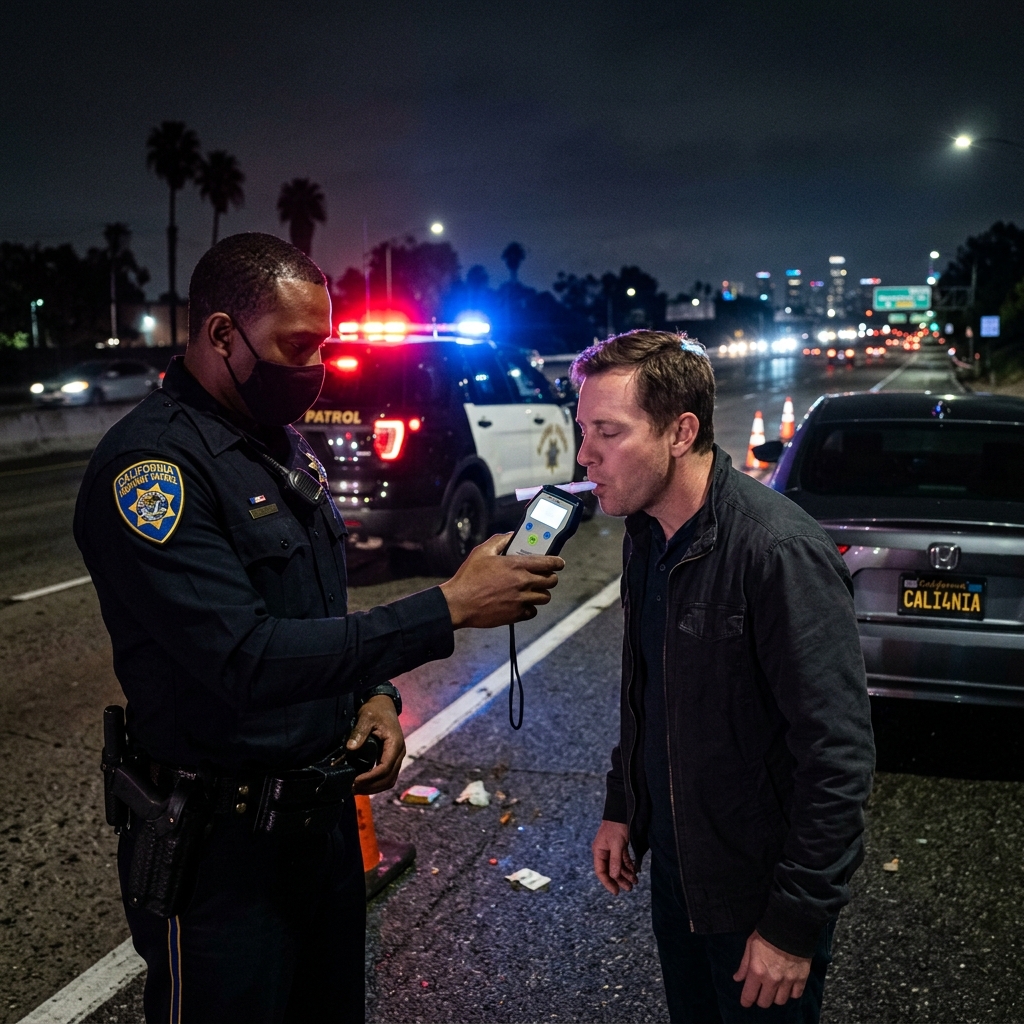
California treats driving as a privilege that comes with legal responsibilities. One of the most important is implied consent, a rule that affects every driver stopped and arrested for suspected driving under the influence (DUI). Understanding how implied consent works, when you must submit to testing, and what happens if you refuse is critical to protecting your license and managing the risk of criminal penalties.
Core Idea: What Implied Consent Means in California
Implied consent in California is the legal principle that by driving on the state’s roads, you automatically agree to take a chemical test (breath or blood, and sometimes urine) after a lawful DUI arrest to measure alcohol or drug levels in your system. This obligation does not depend on signing a special form at a traffic stop—your agreement is considered implicit in holding and using a California driver’s license.
- Applies after arrest: The main implied consent statute, California Vehicle Code §23612, applies only once you have been lawfully arrested for DUI.
- Covers chemical tests, not field sobriety tests: The law focuses on breath, blood, or other chemical analysis, not the balance or coordination exercises done at the roadside.
- Mandatory choice: After arrest, you generally must choose between a breath or blood test if either is available, subject to medical or practical limitations.
Because of implied consent, refusing a chemical test does not simply end the investigation. Instead, refusal itself triggers separate penalties through the Department of Motor Vehicles (DMV) and the criminal court system.
Types of DUI Tests: Before and After Arrest
California law distinguishes between tests used to decide whether to arrest you and tests required once you are under arrest. This distinction is crucial because your rights and obligations change depending on the stage of the stop.
Field Sobriety Tests (FSTs)
Field sobriety tests involve physical and mental tasks, such as walking in a straight line or following a pen with your eyes. In most cases, these tests are voluntary for drivers over 21 who are not on DUI probation.
- They are used to help an officer decide if there is enough evidence to arrest you for DUI.
- For most drivers, there is no automatic license penalty for declining to perform FSTs.
- Officers may still arrest you based on other observations, such as driving behavior, smell of alcohol, speech, or appearance.
While refusing FSTs can sometimes limit the evidence against you, officers may interpret refusal as uncooperative and look more closely for other signs of impairment.
Preliminary Alcohol Screening (PAS) Breath Test
The PAS test is a small handheld breath device used at the roadside, usually before arrest. For many adult drivers, this test is also optional, although there are important exceptions.
- For drivers under 21 or on DUI probation, PAS testing can be mandatory under separate statutes.
- For most other drivers, declining a pre-arrest PAS does not, by itself, trigger implied consent penalties.
- If you are later arrested, you are still subject to implied consent chemical testing requirements, even if you declined the PAS.
Post-Arrest Chemical Tests (Breath, Blood, Urine)
After a lawful DUI arrest, implied consent is fully triggered. At that point, you are generally required to submit to a chemical test. You usually can choose between:
- A breath test using a more precise, station-based device.
- A blood test, where a sample is taken and analyzed in a lab.
Urine tests are less common and typically used when breath and blood tests are unavailable or not appropriate. If you refuse all available options after a lawful arrest, the DMV and criminal courts treat that refusal as its own problem, separate from the underlying DUI allegation.
Legal Consequences of Refusing a Chemical Test
Under California implied consent rules, refusing a chemical test after arrest leads to automatic administrative penalties through the DMV and potential sentencing enhancements in criminal court. These consequences can apply even if you are never convicted of DUI.
Administrative License Suspension
The California DMV imposes a separate administrative action when a driver refuses a post-arrest chemical test. This is sometimes called a “refusal suspension.” The length of suspension depends on your prior record within the last ten years.
| Refusal / DUI History (past 10 years) | Approximate DMV License Penalty |
|---|---|
| First refusal, no prior DUI refusals | Minimum 1-year license suspension with no restricted license for work. |
| Second refusal or prior DUI within 10 years | Approximate 2-year revocation of driving privilege. |
| Third or subsequent refusal/DUIs | Approximate 3-year revocation of driving privilege. |
These DMV actions are independent of what happens in criminal court. You can lose your license for refusal even if the DUI charge is dismissed or you are found not guilty.
Criminal Sentencing Enhancements
If you are eventually convicted of DUI, a proven refusal can lead to additional penalties beyond the standard DUI punishment. California law allows courts to impose extra jail time, higher fines, and longer educational programs when the prosecution proves you refused a required chemical test.
- Courts may add extra days in jail on top of the base DUI sentence, with the number of days increasing for repeat offenders.
- Refusal can support longer mandatory DUI education courses and extended probation periods.
- Prosecutors may argue the refusal shows a “consciousness of guilt,” which can influence plea negotiations and sentencing recommendations.
These enhancements are tied to statutes such as Vehicle Code sections addressing refusal and related sentencing provisions. The refusal allegation is often specifically charged and must be proven with evidence such as officer testimony and documentation that you were properly advised of the consequences.
How Officers Must Handle Chemical Test Requests
California law does not allow officers to simply demand testing without explanation. Under Vehicle Code §23612, officers are required to clearly warn drivers about the consequences of refusal when requesting a chemical test.
- Officers must tell you that refusal will result in license suspension or revocation handled by the DMV.
- They must explain that refusal can lead to additional criminal penalties if you are later convicted of DUI.
- The advisement is typically documented in reports and sometimes read from standard forms to reduce disputes over what was said.
If the advisement is incomplete or unclear, your attorney may argue that the refusal allegation should not apply, because you were not properly informed of the legal consequences.
Strategic Considerations: Testing vs. Refusal
Deciding whether to submit to testing is often a difficult choice, and the right approach can vary. California law, however, makes one point very clear: refusing a required chemical test carries serious risks that can be worse than providing a sample in many cases.
Potential Drawbacks of Refusal
- Guaranteed license consequences: Refusal can trigger a longer and stricter suspension than a typical first-time DUI conviction.
- No guarantee of avoiding DUI charges: Officers may seek a warrant for a blood draw or rely on other evidence—such as driving pattern, FST performance, and observations—to support a DUI charge.
- Refusal as evidence: In court, prosecutors may argue that refusal shows you expected the test to reveal impairment.
Why Some Drivers Still Consider Refusal
Despite the risks, some drivers consider refusing a test because they hope to limit direct evidence of blood alcohol concentration (BAC). Without a chemical test, the prosecution must rely more heavily on officer observations and other circumstantial evidence. However, California’s strict refusal penalties mean that avoiding a BAC number can come at a high cost, especially to driving privileges.
Because every situation is different, drivers facing DUI investigations often benefit from consulting a qualified criminal defense or DUI attorney as soon as possible to evaluate the relative risks of refusal and compliance in light of their specific facts.
Defenses and Challenges to a Refusal Allegation
A refusal allegation is not automatically valid just because an officer wrote it in the report. There are several common lines of defense that may help reduce or avoid refusal-related penalties.
Questioning the Lawfulness of the Arrest
Implied consent generally applies only after a lawful arrest. If your attorney can show that the arrest lacked probable cause or otherwise violated legal standards, it may be possible to argue that the implied consent obligation never attached.
- Weak or inconsistent observations of impairment.
- Improper use or interpretation of field sobriety tests.
- Unreliable PAS results or issues with test administration.
If the arrest itself is invalid, both the DUI charge and the refusal allegation may be open to challenge.
Disputes Over Advisement and Understanding
Another defense focuses on whether officers correctly advised you about the consequences of refusal. Since officers must make this explanation clear and complete, failures can undermine the refusal allegation.
- Officer did not give any advisement before treating conduct as refusal.
- Officer provided incomplete or confusing information about penalties.
- Language or comprehension barriers prevented you from understanding the advisement.
Medical conditions, injuries, or other factors affecting comprehension and ability to consent may also be relevant. In some cases, courts and the DMV may consider whether an apparent refusal was really a misunderstanding or the result of inability rather than a deliberate choice.
What Counts as a “Refusal”?
Refusal does not always have to be a clear verbal “no.” Actions such as failing to blow properly into a breath device after instruction, repeatedly delaying the test, or insisting on conditions that conflict with law can be treated as refusal. However, there may be room to argue that you were attempting to comply and that the failure was due to equipment issues, confusion, or legitimate concerns.
Detailed review of the officer’s report, any available body camera footage, and medical records can be important in contesting whether your behavior truly amounted to a refusal under the law.
Practical Tips for California Drivers
While this guide cannot substitute for legal advice, a few general principles can help drivers navigate DUI stops more safely within the framework of California’s implied consent rules.
- Remain calm and respectful: Cooperative behavior, even while asserting your rights, often leads to clearer communication and better documentation.
- Know that pre-arrest FSTs are typically optional for drivers over 21 not on DUI probation, though officers may still arrest based on other observations.
- Recognize the stakes of refusing a post-arrest chemical test: Expect automatic DMV penalties and possible extra criminal sanctions.
- Request legal counsel promptly: Contact an attorney as soon as practical after any DUI arrest or test refusal allegation.
- Pay close attention to what officers tell you about testing and consequences; these statements can be important if the refusal allegation is later challenged.
Frequently Asked Questions
1. Do I have to take a field sobriety test in California?
For most drivers 21 and over who are not on DUI probation, standard field sobriety tests are voluntary. You can legally decline them, although officers may still arrest you based on other evidence.
2. Is refusing a preliminary alcohol screening (PAS) the same as refusing a chemical test?
No. The PAS is usually a pre-arrest optional breath test for many adult drivers, while implied consent applies mainly to post-arrest chemical tests. Refusing a PAS generally does not trigger implied consent penalties, but refusing a required post-arrest breath or blood test does.
3. Can I avoid a DUI conviction by refusing the chemical test?
Not necessarily. Prosecutors can rely on officer observations, driving pattern, field sobriety performance, and other evidence to pursue a DUI charge. Refusal may remove a direct BAC number, but it also creates its own penalties and can be used as evidence suggesting guilt.
4. How long will my license be suspended if I refuse a chemical test?
For a first refusal, expect at least a one-year suspension of your driving privilege, often with no option for a restricted license. Additional refusals or prior DUIs within ten years can lead to longer revocations of two or three years.
5. What should I do if I’m facing a refusal allegation?
Obtain legal advice quickly. A DUI or criminal defense attorney can review whether your arrest was lawful, whether you were properly advised, and whether your conduct truly amounted to refusal under California law, then help you contest both DMV and court penalties.
References
- California Vehicle Code §23612 (Implied Consent for Chemical Testing) — California Legislative Information. 2023-01-01. https://leginfo.legislature.ca.gov/faces/codes_displaySection.xhtml?sectionNum=23612.&lawCode=VEH
- Administrative Per Se (APS) — DUI — California Department of Motor Vehicles. 2023-05-01. https://www.dmv.ca.gov/portal/driver-licenses-identification-cards/driver-safety/administrative-per-se-aps-drivers-license-suspension/
- Driving Under the Influence (DUI) Laws and Penalties — California Department of Motor Vehicles. 2023-03-01. https://www.dmv.ca.gov/portal/driver-education-and-safety/educational-materials/drunk-driving/
- Breathalyzer Refusal and Implied Consent in California — My Rights Law Group. 2022-09-01. https://www.myrightslawgroup.com/blog/can-you-refuse-a-breathalyzer-test/
- DUI Chemical Tests Refusal Enhancement | Vehicle Code 23612 — EG Attorneys. 2022-06-15. https://www.egattorneys.com/dui-test-refusal-vehicle-code-23612
- DUI Test Refusal and Sentencing Enhancements — Michael Cindrich Law. 2021-11-10. https://www.michaelcindrich.com/dui/test-refusal/
- The Consequences of Refusing a Breathalyzer Test — Zachary McCready Law. 2022-08-01. https://zacharymccreadylaw.com/blog/the-consequences-of-refusing-a-breathalyzer-test/
Similar Articles








Read full bio of medha deb




