
How to Spot and Respond to Identity Theft
Learn the early warning signs of identity theft, how to confirm misuse of your information, and the essential steps to limit damage and rebuild your financial security.
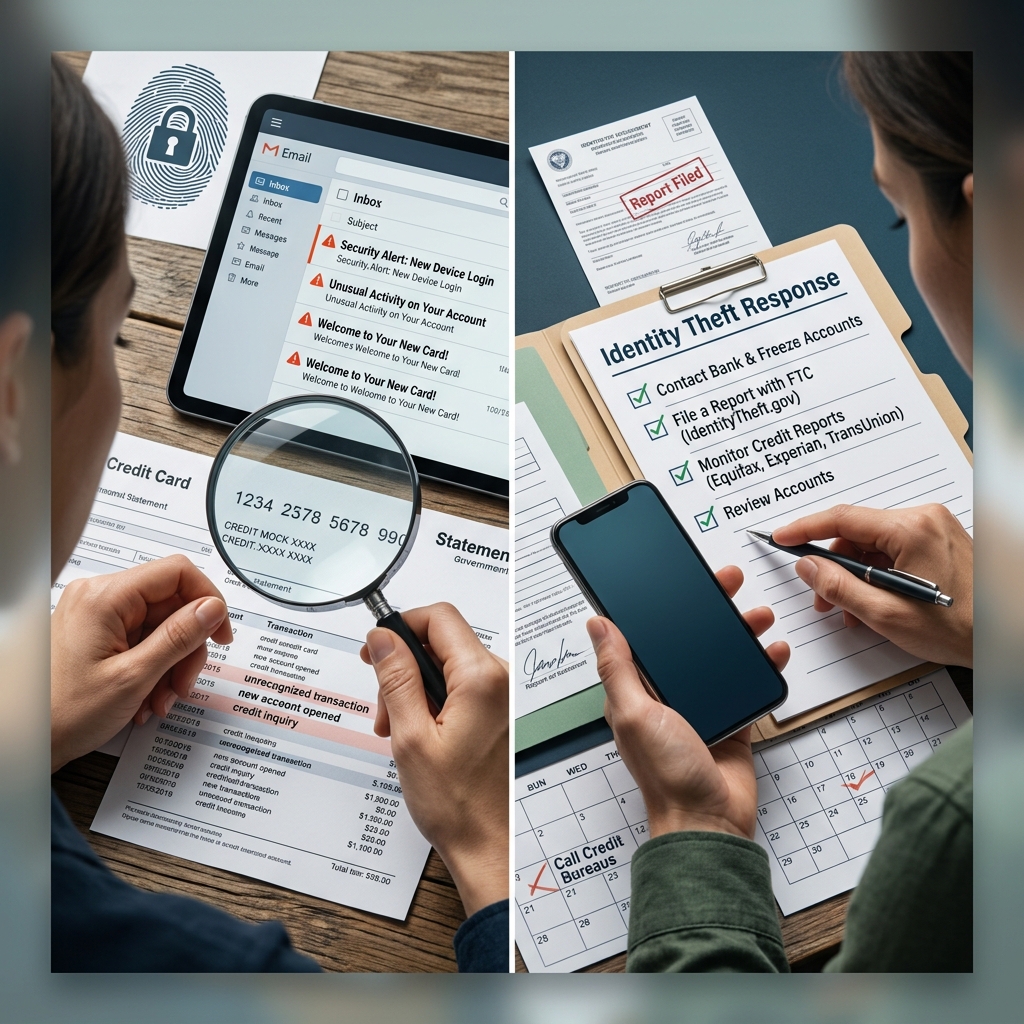
Identity theft is the unauthorized use of your personal information to commit fraud, open accounts, or access services in your name. According to the U.S. government, this may involve misuse of data such as your name, address, Social Security number, bank account details, or credit card numbers. While some victims discover the problem quickly, many only learn about it after serious damage has been done. Recognizing early warning signs and knowing how to respond can dramatically reduce the impact on your finances, credit, and peace of mind.
Understanding Identity Theft and How It Happens
Before looking at specific warning signs, it helps to understand what identity theft is and how criminals typically gain access to your information. Identity theft can occur through both digital and physical methods, and often involves more than one tactic.
Common Ways Identity Thieves Obtain Information
- Data breaches at companies: Hackers may break into a company’s systems and steal customer information such as names, addresses, and account numbers.
- Phishing messages: Fraudulent emails, texts, or calls that pretend to be from banks, government agencies, or familiar companies and trick you into revealing personal details.
- Lost or stolen wallets and documents: Physical theft of your wallet, mail, or documents that contain sensitive information like your driver’s license or health insurance card.
- Public Wi‑Fi and insecure websites: Using unprotected networks or sites without proper encryption can expose login credentials and account numbers to eavesdroppers.
- Dumpster diving and mail theft: Criminals may search trash for discarded bank statements, credit offers, or medical bills, or steal mail directly from your mailbox.
Any piece of information can be valuable to an identity thief. When several pieces are combined—such as your full name, date of birth, and Social Security number—they may be enough to open accounts or file tax returns in your name.
Early Warning Signs in Your Day‑to‑Day Life
Most people notice identity theft when something looks unusual in their daily finances or communications. Government and financial institutions highlight certain clues that should never be ignored.
Red Flags in Your Mail and Bills
- Missing regular bills or statements: If credit card or bank statements suddenly stop arriving, someone may have changed your mailing address or email to hide fraudulent activity.
- Bills from unfamiliar companies: Receiving invoices or notices from businesses you have never used can signal accounts opened in your name.
- Unexpected tax forms or IRS notices: Getting tax documents for employers you do not work for or learning that multiple tax returns were filed in your name may indicate tax‑related identity theft.
Unusual Activity on Bank and Credit Accounts
- Unrecognized charges or withdrawals: Small or large transactions you do not remember making can be early signs that your card or account details are being used by someone else.
- New credit cards or account statements you didn’t request: Receiving statements for accounts you never opened suggests your identity may have been used to obtain new credit.
- Merchants refusing checks or payments: If stores suddenly reject your checks or cards despite a good record, your accounts may have been flagged due to suspected fraud or unpaid debts you did not incur.
Warnings from Collectors, Lenders, or Insurers
- Debt collection calls for unfamiliar accounts: Contact from collectors about debts that are not yours is a strong indicator that someone has opened accounts or taken loans using your identity.
- Unexpected credit denials: Being turned down for loans or credit cards when you previously had strong credit can signal that fraudulent accounts or missed payments have damaged your credit history.
- Insurance or health plan issues: Denials of coverage due to treatments you never received, or records showing medical conditions you do not have, may reveal medical identity theft.
What Your Credit Report Can Reveal
Your credit report—maintained by the major credit reporting agencies—provides a snapshot of your borrowing history. It is also one of the most powerful tools for catching identity theft early. Unfamiliar accounts or inquiries can signal that someone has applied for credit or opened accounts in your name.
| Credit Report Warning Sign | What It Might Mean | Suggested Next Step |
|---|---|---|
| New accounts you don’t recognize | Someone may have opened credit cards, loans, or retail accounts using your identity. | Contact the listed creditors immediately and dispute the accounts as fraudulent. |
| Unfamiliar credit inquiries | An unknown lender may have checked your credit because an application was submitted in your name. | Reach out to the lender to confirm the nature of the application and report suspected fraud. |
| Incorrect addresses or employers | Someone might have changed your contact information or used your identity in another location. | Update your correct information and ask the credit bureau to investigate inaccuracies. |
| Sudden drop in credit score | New debts, late payments, or collections on accounts you did not open can quickly lower your score. | Review your full report, identify unfamiliar entries, and begin the dispute process. |
U.S. consumers can request free credit reports from each of the major credit reporting companies through the official AnnualCreditReport platform, which also provides guidance on spotting identity theft and protecting your information. Regular monitoring—such as pulling one report every few months from different bureaus—can help you notice irregularities early.
How to Confirm Your Identity Has Been Stolen
Suspicious activity does not always mean your identity has been stolen, but it should never be ignored. When you see a warning sign, taking a few systematic steps can help you confirm whether fraud is occurring.
Step 1: Review All Account Statements
- Log into online banking, credit cards, and store accounts.
- Check recent transactions for unfamiliar charges or withdrawals.
- Look for changes to contact information, such as updated mailing addresses or added authorized users.
Step 2: Obtain and Examine Your Credit Reports
- Request credit reports from all major credit reporting agencies to check for new or changed accounts.
- Highlight any account, lender, or inquiry you do not recognize.
- Compare credit report information with your own records to confirm what is legitimate.
Step 3: Contact Companies Where You Suspect Fraud
- Call the fraud department of any bank, card issuer, or creditor linked to suspicious activity.
- Explain that you suspect identity theft and ask that the accounts be frozen or closed.
- Follow up in writing, as many institutions require written statements and documentation to complete an investigation.
Step 4: Use Official Identity Theft Resources
- Submit a detailed identity theft report to the Federal Trade Commission through its IdentityTheft.gov website.
- Use the recovery plan tools provided there to guide next steps based on the type of identity theft experienced.
- If tax‑related identity theft is suspected, refer to IRS procedures for filing the relevant form to document the problem.
If these steps reveal accounts, records, or transactions that you clearly did not authorize, you can reasonably conclude your identity has been compromised and move into full response mode.
Immediate Actions to Limit Damage
Once you know (or strongly suspect) that your identity has been stolen, acting quickly is critical. Financial regulators and credit reporting agencies recommend a combination of fraud alerts, credit freezes, and official reporting to stop further misuse.
Place a Fraud Alert on Your Credit Files
- What it is: A fraud alert is a notice on your credit file asking lenders to take extra steps to verify your identity before opening new accounts.
- Why it matters: This makes it harder for criminals to open additional lines of credit using your information.
- How to do it: Contact one of the major credit reporting agencies and request an initial fraud alert; that agency will generally share the alert with the others.
Consider a Credit Freeze
- What it is: A credit freeze restricts access to your credit report so new creditors cannot see it, preventing most new accounts from being opened in your name.
- Benefits: It offers stronger protection than a fraud alert but may require temporarily lifting the freeze if you apply for new credit yourself.
- Process: Contact each credit reporting agency separately to place or remove a freeze.
Close or Correct Affected Accounts
- Work with the fraud departments of banks, card issuers, and other institutions to close or freeze accounts that have been misused.
- Dispute unauthorized charges and document every step, including reference numbers and copies of statements.
- Ask creditors to send confirmation that fraudulent accounts have been closed or removed from your records.
File Reports with Authorities
- Complete an identity theft report through the FTC’s IdentityTheft.gov platform, which can serve as evidence for creditors and law enforcement.
- Consider filing a police report with your local law enforcement agency, especially if someone used your identity to commit other crimes or if institutions require a police record.
- Keep copies of all reports and communications in a dedicated file for future reference.
Long‑Term Recovery and Monitoring
Recovering from identity theft is not a single event; it is a process. Once immediate damage is contained, you will need to monitor your accounts and credit for some time to ensure no new problems emerge.
Track Your Progress and Documentation
- Maintain a written log of each phone call, letter, and email related to the incident, including dates, names, and outcomes.
- Store copies of updated statements, dispute forms, and closure confirmations.
- Use this record to resolve any future questions or discrepancies with creditors.
Monitor Credit Reports and Financial Statements
- Review bank and card statements regularly to catch small unauthorized transactions that may signal renewed fraud.
- Request credit reports at intervals (for example, every few months) from different bureaus to ensure no new suspicious accounts appear.
- Continue using alerts, freezes, or identity monitoring services if recommended by your situation or by authorities.
Practical Strategies to Reduce Future Risk
Although no method can guarantee complete protection, adopting certain habits can significantly lower the chances of becoming a victim of identity theft. Official guidance emphasizes a combination of securing devices, minimizing data exposure, and verifying communications before sharing information.
Smarter Handling of Personal Information
- Limit what you carry: Avoid keeping your Social Security card, large numbers of cards, or sensitive documents in your wallet unless absolutely necessary.
- Secure physical records: Store important papers, financial statements, and health records in a locked location at home.
- Shred documents: Destroy items that contain personal information before discarding them to prevent dumpster‑diving theft.
Online Safety and Device Protection
- Use strong, unique passwords for each major account, and enable multi‑factor authentication where available.
- Install security software and keep operating systems and apps up to date to close vulnerabilities.
- Be cautious on public Wi‑Fi: Avoid accessing banking or sensitive accounts on unsecured networks and learn about common ATM skimming and online theft methods.
Recognizing and Avoiding Scams
- Do not respond to unsolicited calls, messages, or emails asking for personal or financial information, even if they appear to come from familiar organizations.
- Independently verify requests using official contact information found on statements or institution websites.
- Be skeptical of urgent messages claiming you must act immediately to avoid penalties or loss; urgency is a common tactic in scams.
Frequently Asked Questions (FAQs)
1. Is one strange charge always a sign of identity theft?
Not necessarily. Sometimes merchants process transactions in ways that look unfamiliar or delayed. However, any charge you truly cannot identify should be investigated. Check your receipts, and if you still cannot explain the transaction, contact your bank or card issuer’s fraud department and monitor your accounts closely.
2. How often should I check my credit report?
Consumer protection guidance recommends requesting reports regularly—at least once a year from each major credit reporting company, and more often if you have reason to suspect fraud. Some people stagger requests throughout the year to maintain ongoing oversight of their credit history.
3. What is the difference between a fraud alert and a credit freeze?
A fraud alert asks lenders to take extra steps to verify your identity before opening new credit, but it does not stop access to your credit report altogether. A credit freeze, by contrast, generally blocks new creditors from viewing your report, making it much more difficult to open new accounts without your knowledge. Both are useful, and you can choose one or both depending on your situation.
4. Should I report identity theft to the government?
Yes. In the United States, you can file an identity theft report through the Federal Trade Commission’s official IdentityTheft.gov website. This report not only helps law enforcement understand broader patterns of crime but also provides you with documentation that creditors and other organizations may require when correcting fraudulent accounts or charges.
5. What if my information was exposed in a data breach but I see no fraud yet?
Exposure in a data breach does not always lead to identity theft, but it increases risk. Follow the guidance provided by the organization that experienced the breach, consider monitoring your credit more frequently, and review account statements carefully for several months. Taking preventive steps, such as updating passwords and enabling multi‑factor authentication, can help limit potential misuse.
References
- Protect Your Identity — AnnualCreditReport.com. 2024-01-15. https://www.annualcreditreport.com/protectYourIdentity.action
- Identity Theft — USA.gov. 2023-11-02. https://www.usa.gov/identity-theft
- Signs of Identity Theft — Washington Trust. 2023-06-10. https://www.washtrust.com/blog/signs-of-identity-theft
- Identity Theft: What It Is, What to Do — Equifax. 2024-02-20. https://www.equifax.com/personal/education/identity-theft/articles/-/learn/what-it-is-what-to-do/
- 10 Warning Signs of Identity Theft — Experian. 2023-09-14. https://www.experian.com/blogs/ask-experian/warning-signs-of-identity-theft/
- Warning Signs of Identity Theft — City of Boca Raton, FL. 2022-08-01. https://www.myboca.us/303/Warning-Signs-of-Identity-Theft
- IdentityTheft.gov — Federal Trade Commission. 2024-03-05. https://www.identitytheft.gov
Similar Articles








Read full bio of medha deb


