Smart Ways to Lower Your Chances of Getting a Traffic Ticket
Traffic tickets are often preventable. In many cases, the best defense is not a trick or a loophole, but a consistent set of safe driving habits, careful attention to road conditions, and a calm response if law enforcement pulls you over. A citation can affect more than the immediate fine; it can also lead to insurance increases, points on a license, and added stress if it is ignored or mishandled.
This article explains practical ways to reduce your risk of being ticketed while staying within the law. It also covers what to do during a traffic stop and what choices may be available after a citation is issued.
Start with the simplest rule: obey the posted laws
The most reliable way to avoid a traffic ticket is to follow the rules that already apply to every driver. That includes speed limits, stop signs, lane-control markings, signal rules, turn restrictions, and school-zone requirements. Many tickets are issued because a driver made a quick judgment call, not because of a dramatic violation.
- Keep your speed at or below the posted limit.
- Signal before turning or changing lanes.
- Come to a full stop at stop signs and red lights.
- Watch for temporary signs in construction or school zones.
- Stay alert for special restrictions such as no-turn areas or bus-lane rules.
Drivers sometimes assume that moving with the flow of traffic makes them safe from enforcement. That is not a dependable strategy. In many jurisdictions, officers may stop a vehicle even when surrounding traffic is moving quickly if the vehicle is objectively violating the law.
Drive in a way that does not invite attention
Law enforcement officers often notice behavior that suggests risk before they focus on a specific violation. Erratic lane changes, following too closely, rolling through intersections, or crossing lane markings can all make a vehicle stand out. Even legal behavior can become suspicious if it appears careless or aggressive.
Reducing unwanted attention is not about hiding anything. It is about driving predictably.
| Behavior | Why it attracts attention | Safer alternative |
|---|---|---|
| Speeding in traffic | Creates an obvious violation and increases crash risk | Match the posted limit and adjust for conditions |
| Weaving between lanes | Suggests impatience or unsafe movement | Plan lane changes early and signal clearly |
| Following too closely | Looks aggressive and reduces braking distance | Keep a safe following gap |
| Using a phone while driving | Signals distraction and can itself be illegal | Use hands-free systems only when permitted and safe |
Pay attention to conditions that make tickets more likely
Certain locations and situations are more likely to lead to enforcement. School zones, construction zones, highway ramps, toll areas, and roads that transition quickly from higher to lower speed limits deserve special caution. Officers may also focus on times when traffic patterns change, such as mornings, evenings, weekends, and holiday travel periods.
Weather matters too. Rain, fog, snow, and ice do not excuse unsafe driving. In fact, they can make a citation more likely if a driver fails to slow down or follows another vehicle too closely. The law generally expects drivers to adjust speed and behavior for the conditions, not merely for the posted limit.
Keep your vehicle and documents in order
A traffic stop is often smoother when the driver can quickly provide the requested documents. States commonly require drivers to carry a valid license, registration, and proof of insurance. A broken headlight, expired registration, or unreadable plate can create independent reasons for a stop or citation.
- Check that your registration is current.
- Make sure insurance documents are accessible.
- Replace burned-out lights promptly.
- Keep license plates clean and properly attached.
- Verify that tinted windows, aftermarket lights, or other modifications comply with local rules.
Regular maintenance is not only about safety. It can also reduce the odds of an avoidable citation tied to equipment violations.
Know what to do during a traffic stop
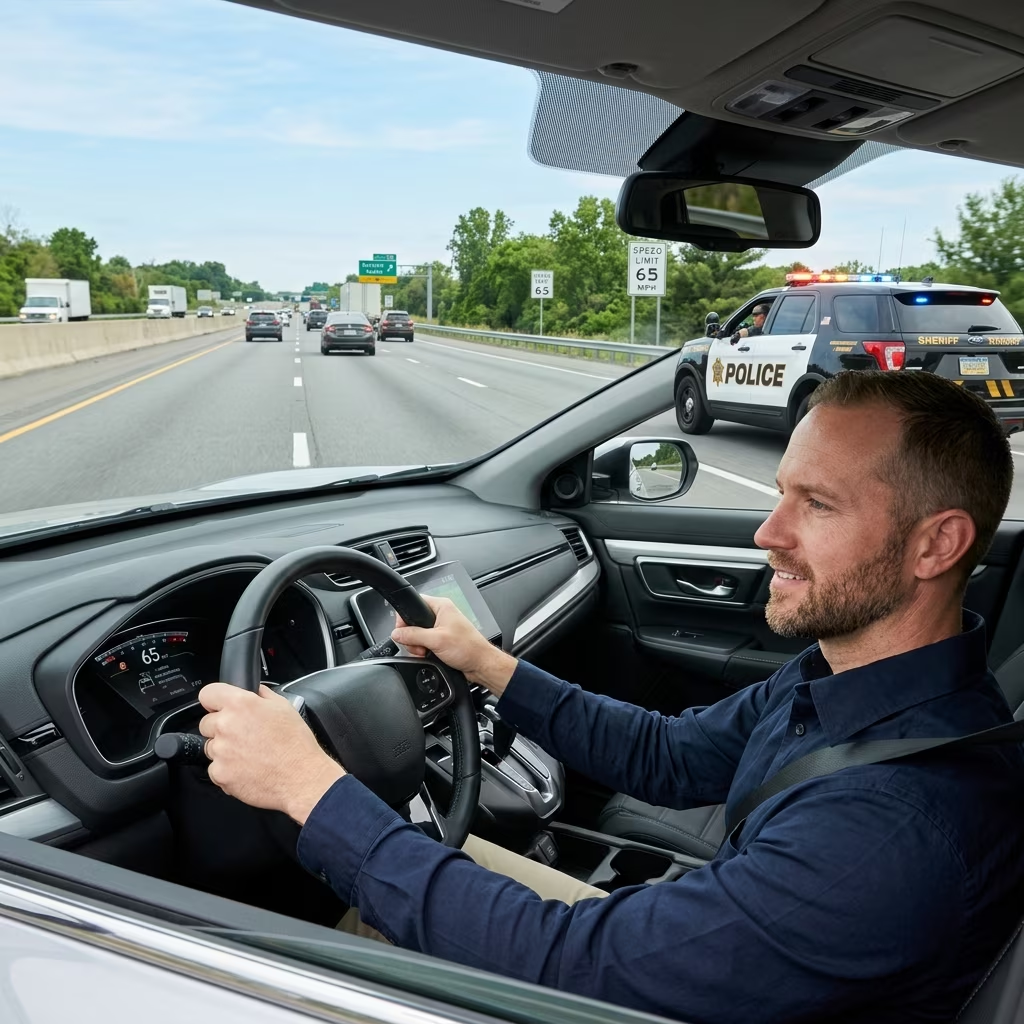
If a police officer signals for you to pull over, the goal is to respond safely and calmly. Sudden stops, abrupt lane movements, or attempts to avoid the stop can escalate the situation unnecessarily. Instead, slow down, use your turn signal if needed, and move to a safe place where the officer can approach.
Once stopped, remain calm and keep your hands visible. Be polite and avoid arguing at the roadside. You usually must provide identification and vehicle documents when requested, but you do not have to volunteer extra information that could complicate your situation.
- Pull over safely as soon as it is reasonable.
- Turn off the engine if asked or if doing so helps keep the encounter calm.
- Keep your hands visible, usually on the steering wheel.
- Wait for instructions before reaching for your wallet or documents.
- Answer basic questions briefly and respectfully.
There is a difference between cooperating and admitting fault. Polite cooperation can reduce tension, while unnecessary explanations can sometimes make a citation harder to contest later.
Do not guess when asked about speed or fault
One common mistake during a stop is estimating speed or trying to justify the driving choice in a way that sounds like an admission. If an officer asks how fast you believe you were going, a short and respectful answer is usually better than a guess. People often underestimate or overestimate speed, and speculation may be used against them.
That does not mean you should be hostile or evasive. It means that simple, factual, and limited answers are often the safest approach. If you believe a citation is coming, the roadside is usually not the best place to argue the case.
Understand whether a citation can be challenged
Receiving a ticket does not always mean the matter is settled. Depending on the offense and the court process in your jurisdiction, you may be able to contest the citation, request a hearing, or resolve it through another approved method. In some places, online systems now allow drivers to respond to minor traffic matters without a courthouse visit.
The right response depends on the type of ticket, the evidence available, and the local rules. Common issues raised in traffic cases include whether the officer observed the violation clearly, whether a speed-measurement device was properly used, whether road signs were visible and lawful, and whether the citation accurately reflects what happened.
Possible responses after a ticket is issued
Before paying a citation immediately, review all available options. The best choice depends on whether the ticket is civil or criminal, whether it involves a moving violation or equipment issue, and whether your record already has prior offenses.
| Option | What it may do | When it may help |
|---|---|---|
| Pay the ticket | Ends the matter quickly but may carry points or insurance effects | When the violation is clear and the consequences are manageable |
| Contest the ticket | Allows you to challenge the facts or the officer’s account | When you believe the stop or citation was mistaken |
| Request a reduction or alternative resolution | May lower fines or penalties in some jurisdictions | When local rules permit negotiation or diversion |
| Seek legal advice | Helps you assess defenses and deadlines | When penalties, points, or license risk are significant |
Deadlines matter. Missing a response date can lead to added penalties, a default judgment, or a license problem in some states. If you plan to fight the citation, mark the deadline immediately and keep all paperwork together.
When the issue is not just a fine
Some tickets have effects beyond the amount printed on the notice. Repeated violations can affect driving privileges, insurance rates, and employment for people who drive for work. Commercial drivers may face stricter standards, and certain offenses can trigger mandatory court appearances.
If you already have prior violations, a new ticket may be more serious than it appears. A small speeding citation can become important if it pushes you toward suspension thresholds or triggers a review of your driving history.
Habits that help you stay ticket-free over time
Long-term safety is usually more effective than short-term caution. Drivers who consistently avoid citations tend to build habits that make their behavior more predictable and less stressful.
- Leave earlier so you are not rushing.
- Set cruise control only when road and traffic conditions make it appropriate.
- Watch your speed after passing a sign that changes the limit.
- Use navigation tools carefully, but never let them distract you from the road.
- Review local rules before driving in a new city or state.
Good driving habits are often invisible because they prevent problems before they start. That is one reason they are more effective than trying to manage a ticket after it has already been written.
Frequently asked questions
Can I avoid a ticket just by saying I did not know the rule?
Usually no. Drivers are generally expected to know and follow traffic laws in the places where they drive. Lack of awareness is rarely a complete defense, especially for common violations like speeding, stop-sign violations, or illegal turns.
Should I argue with an officer at the roadside if I believe the ticket is wrong?
It is usually better to stay calm and save your arguments for the court or the formal review process. A roadside confrontation can make the stop more stressful without improving your legal position.
Can a ticket be dismissed if a sign was hard to see?
Possibly, depending on the facts and local law. If a sign was missing, obscured, confusing, or not placed properly, that information may matter. Evidence such as photos, maps, or witness accounts may help support your position.
Is it ever worth hiring a lawyer for a traffic ticket?
It can be, especially if the ticket carries points, threatens your license, involves a commercial driver’s license, or could raise insurance costs significantly. An attorney may also help when the facts are disputed or when the court process is unfamiliar.
Will paying a ticket end the problem completely?
Not always. Paying may resolve the court matter, but the violation can still affect your driving record, insurance premiums, or future enforcement decisions. The exact impact depends on the offense and state rules.
Make the next stop easier before it happens
Most traffic tickets are tied to decisions that happen long before a police car appears behind a driver. Careful speed control, clear signaling, vehicle maintenance, and calm behavior during a stop all reduce the risk of a citation. If a ticket is issued anyway, knowing your options and acting before deadlines expire can make a major difference in the outcome.
References
- Obeying Speed Limits — National Highway Traffic Safety Administration. 2024-12-01. https://www.nhtsa.gov/risky-driving/speeding
- Speeding — Centers for Disease Control and Prevention. 2024-05-15. https://www.cdc.gov/transportationsafety/speeding/index.html
- Traffic Stop Safety for Drivers — U.S. Department of Justice, Community Oriented Policing Services. 2023-09-20. https://cops.usdoj.gov/
- Driver Behavior and Traffic Safety — National Highway Traffic Safety Administration. 2024-07-10. https://www.nhtsa.gov/
- Traffic Citations — Maryland People’s Law Library. 2025-02-14. https://www.peoples-law.org/traffic-citations