
Housing Discrimination Against Domestic Violence Survivors
Rigid housing policies force survivors to choose between a home and safety.
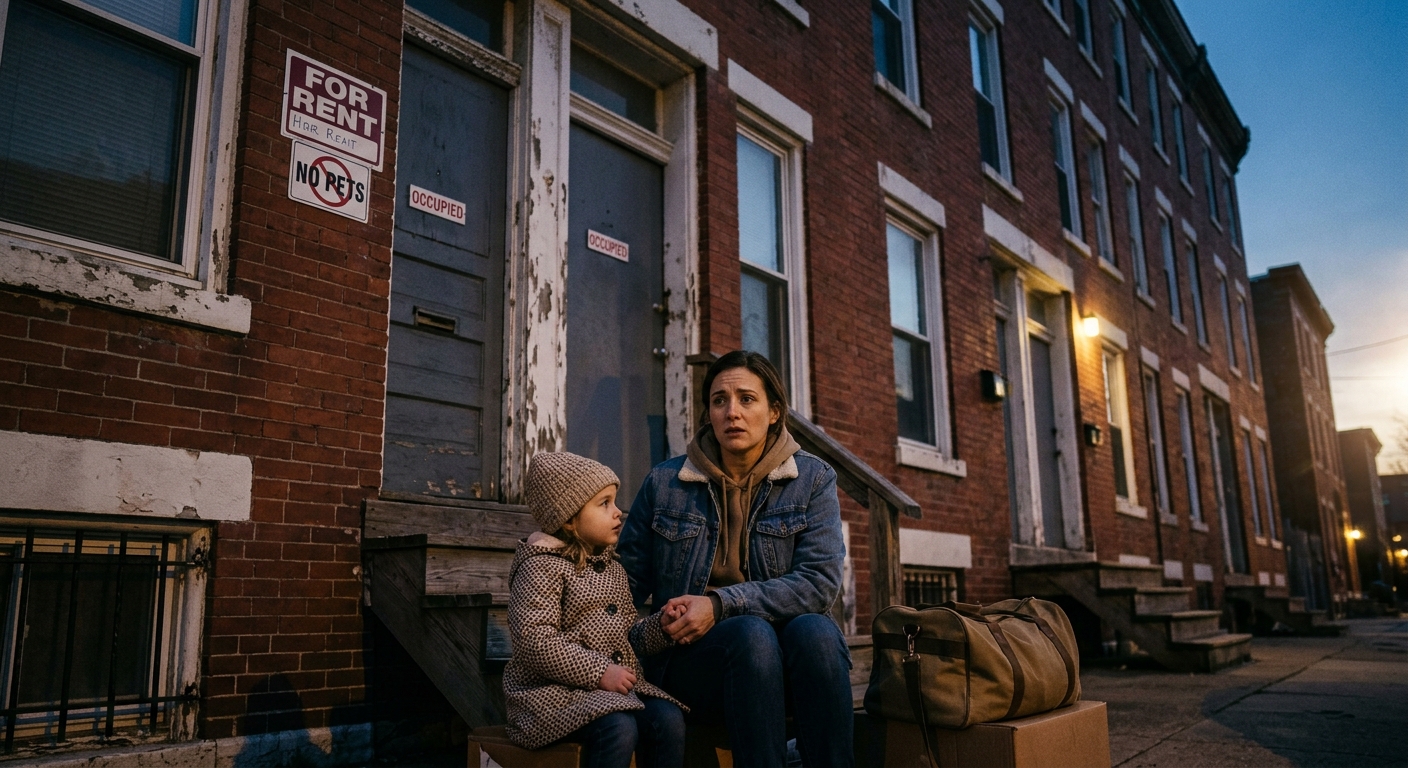
Housing Discrimination and the Plight of Domestic Violence Survivors
Escaping a severely abusive relationship is universally recognized as one of the most dangerous and destabilizing events a person can experience. While the physical act of leaving the abusive environment is a massive hurdle, the subsequent transition to establishing a safe, independent life is fraught with unseen bureaucratic nightmares. Among the most critical steps in this transitional journey is securing safe and affordable housing. Unfortunately, many survivors quickly discover that the modern rental market is riddled with rigid corporate policies that inadvertently, yet severely, penalize them.
Property management companies heavily rely on algorithmic tenant screening, unyielding identification protocols, and zero-exception background checks to process leasing applications. For a survivor who is desperately trying to conceal their geographic location from a violent, determined abuser, these standard operating procedures present an impossible dilemma. The applicant is forced to choose whether to hand over sensitive personal information that could expose their hiding place, or face imminent homelessness. This intersection of privacy, physical safety, and administrative housing policy highlights a critical flaw in how the real estate industry processes society’s most vulnerable applicants.
The Paradox of Identity Protection and Child Custody
To fully grasp the gravity of this housing barrier, one must examine the extreme, life-altering measures survivors must take to protect themselves. In cases involving severe, life-threatening domestic violence, the Social Security Administration (SSA) allows victims to apply for an entirely new Social Security Number (SSN). This extraordinary federal measure is specifically designed to sever the digital ties that an abuser could use to stalk, harass, or locate their victim. However, a significant and often insurmountable complication arises when the survivor is a parent to minor children.
Family courts and state legal statutes generally dictate that both biological parents must be officially notified if a child’s legal name or Social Security Number is to be changed. For a parent fleeing an abuser who still retains some level of shared legal custody—or even one whose parental rights have been restricted but not entirely terminated—providing this legal notification is not just counterproductive; it is a direct threat to the family’s continued safety. Serving legal notice to an abuser regarding a child’s identity change effectively provides the perpetrator with a roadmap to the survivor’s new identity and location. Consequently, while the adult survivor may successfully obtain a new, untraceable SSN for themselves, the minor children almost always retain their original, compromised identification numbers.
How Tenant Screening Algorithms Expose Hidden Families
The retention of the children’s original Social Security Numbers becomes a massive, potentially lethal liability when the family applies for private housing. Modern property management firms typically utilize automated third-party tenant screening services to evaluate prospective applicants. These digital screening applications routinely demand the full Social Security Numbers of all prospective occupants, including toddlers and young minors. Property managers often justify this mandate by citing vague “auditing purposes,” the need to verify legal custody, or the necessity of running credit checks on all household members.
When a leasing agent enters a minor’s compromised SSN into commercial data systems—such as those managed by Experian, TransUnion, Equifax, or LexisNexis—it generates a distinct digital inquiry. This electronic inquiry leaves a permanent footprint in the data broker ecosystem. Abusers who are determined to track down their victims frequently exploit this vulnerability. They may utilize professional skip-tracing tools, hire private investigators, or simply set up basic consumer credit monitoring alerts on their children’s identifying information. The moment a rental application is processed, the system pings the family’s new residential address, immediately alerting the abuser to their exact physical location. Therefore, a survivor’s steadfast refusal to provide a child’s full SSN to a leasing office is not an act of non-compliance or attempted fraud; rather, it is a calculated, desperate, and entirely necessary measure to prevent severe physical harm.
Federal Protections: Understanding the Fair Housing Act
When corporate property managers rigidly enforce a “no exceptions” policy regarding the collection of Social Security Numbers, they routinely deny housing to survivors who attempt to offer alternative forms of identification. This strict adherence to a seemingly neutral corporate policy crosses the legal line from standardized administration into unlawful discrimination. The federal Fair Housing Act (FHA), originally enacted as Title VIII of the Civil Rights Act of 1968, explicitly prohibits discrimination in the sale, rental, and financing of dwellings based on race, color, religion, sex, familial status, national origin, and disability.
Although the text of the Fair Housing Act does not explicitly list “domestic violence survivors” as a federally protected class, the U.S. Department of Housing and Urban Development (HUD) and various federal courts have firmly established that discrimination against survivors can constitute illegal sex discrimination. Because statistical data overwhelmingly demonstrates that domestic violence disproportionately affects women, administrative policies that inherently penalize survivors often have a “disparate impact” on female rental applicants. Disparate impact is a foundational legal theory holding that a business policy may be considered unlawfully discriminatory if it has a disproportionately adverse effect on a protected class, even if the rule appears neutral and unbiased on its face.
In 2011, HUD issued a critical, formalized memorandum addressing exactly how the Fair Housing Act applies to victims of domestic violence. This federal directive clarified that landlords who evict or refuse to rent to individuals because of violence committed against them are likely violating federal civil rights laws. By strictly demanding full family SSN histories and refusing to provide reasonable accommodations for those actively fleeing abuse, housing providers open themselves up to severe legal liabilities under the FHA’s sex and familial status discrimination provisions.
Holding Property Management Firms Accountable
Over the past decade, legal advocacy has increasingly focused on dismantling these inflexible, systemic housing barriers. Landmark civil rights complaints filed with HUD have successfully challenged the practices of massive property management conglomerates that refused to rent to domestic violence survivors attempting to withhold their children’s SSNs for safety reasons. Advocates successfully argued that landlords must engage in an interactive process and offer “reasonable accommodations” to victims actively fleeing abuse.
The resulting legal settlements and federal conciliation agreements established vital industry-wide precedents. Major property management firms were forced to rewrite their internal application policies across tens of thousands of rental units nationwide. As a result of these enforcement actions, offending companies agreed to formally accept alternative documentation—such as court-ordered sole custody decrees, original birth certificates, or heavily redacted legal identification—in lieu of full Social Security Numbers for minor children. Furthermore, these sweeping agreements mandated that private landlords adopt internal protections mirroring those found in federal laws, signaling a massive, necessary shift in how the private housing market must evaluate applicants recovering from extreme trauma.
The Expanding Role of the Violence Against Women Act (VAWA)
The continuous evolution of housing rights for survivors is deeply intertwined with the framework of the Violence Against Women Act (VAWA). Originally passed by Congress in 1994, VAWA provides robust, life-saving housing protections. Historically, however, its specific housing provisions applied strictly to federally subsidized properties, such as Section 8 housing voucher programs and public housing developments. Under VAWA regulations, an individual cannot be denied housing or face eviction solely because they are, or have been, a victim of domestic violence, dating violence, sexual assault, or stalking.
While VAWA’s explicit legal jurisdiction is traditionally tied to federal funding, its core principles have heavily influenced the regulatory expectations placed upon the private sector. Fair housing advocates and legal scholars frequently use VAWA’s comprehensive guidelines as the undisputed gold standard for what constitutes fair and equitable treatment of survivors. Recognizing the gap in federal law, many states and local municipalities have since enacted local housing ordinances that aggressively apply VAWA-like protections directly to private, market-rate rentals. This legislative expansion ensures that private landlords cannot use a survivor’s past trauma—or their necessary, ongoing safety protocols—as a bureaucratic justification for denying a lease.
Evaluating Standard vs. Trauma-Informed Policies
To effectively dismantle the systemic barriers facing victims of domestic abuse, housing providers must actively transition from inflexible legacy systems to trauma-informed operational protocols. The comparative table below illustrates the stark contrast between traditional property management requirements and legally compliant, trauma-informed fair housing policies.
| Policy Area | Traditional Corporate Practice | Trauma-Informed & Fair Housing Compliant Practice |
|---|---|---|
| Occupant Identification | Mandatory disclosure of full Social Security Numbers for all household members, including minor children, with zero exceptions. | Accepting alternative identification such as redacted birth certificates, court custody decrees, or only the last four digits of an SSN. |
| Background Screening | Automated third-party database checks that leave digital footprints visible to commercial credit monitoring agencies and skip-tracers. | Individualized manual application reviews when an applicant safely discloses their domestic violence status and safety concerns. |
| Application Approvals | Automatic, algorithmic denial if the electronic auditing system cannot verify the complete data profile of all household members. | Implementing a reasonable accommodation process that allows regional managers to override automated algorithmic denials for valid safety reasons. |
| Staff Protocols | Leasing agents rigidly enforcing corporate checklists without the authority, knowledge, or training to escalate sensitive applicant files. | Comprehensive, ongoing staff training on domestic violence awareness, VAWA guidelines, and the Fair Housing Act’s disparate impact standards. |
Best Practices for Ethical Property Management
To avoid costly fair housing violations and ensure the physical safety of vulnerable housing applicants, property management companies must modernize their leasing protocols. Implementing trauma-informed practices is not merely a moral obligation; it is a strict legal necessity.
- Implement Flexible Identification Policies: Explicitly allow applicants to provide alternative legal documents to verify household composition and identity. Redacted family court documents, birth certificates, and the last four digits of an SSN should be universally acceptable for internal auditing purposes.
- Prioritize Data Minimization: Only collect the specific personal data absolutely necessary to process the financial aspects of the lease. Avoid running unnecessary, risky background checks on minor children who have no financial responsibility for the rent.
- Ensure Comprehensive Staff Training: Mandate that all front-line leasing agents and regional property managers are thoroughly trained in domestic violence awareness. Staff must understand the complex legal implications of both the Fair Housing Act and VAWA.
- Establish Clear Accommodation Procedures: Create a transparent, highly confidential internal channel for applicants to request administrative policy waivers or reasonable accommodations based on their protected status as violence survivors.
Actionable Advice for Housing Applicants Facing Denials
If you are a domestic violence survivor facing administrative pushback or outright denial from a landlord or property management company, there are actionable steps you can take to advocate for your family’s fundamental right to secure housing.
- Proactively Offer Alternative Proof: Anticipate the barrier and proactively offer alternative documentation. Bring certified copies of court orders, sole custody agreements, or birth certificates to prove your children’s identities without revealing their full SSNs.
- Reference Federal Fair Housing Law: Politely but firmly inform the leasing office that, under HUD’s official interpretation of the Fair Housing Act, rigid corporate policies that penalize domestic violence survivors may constitute unlawful sex discrimination through disparate impact.
- Submit a Written Request for Reasonable Accommodation: Formally submit a documented, written request asking the management company to explicitly waive their standard SSN requirement due to severe, documented safety concerns regarding an abuser.
- File an Official Discrimination Complaint: If you are completely denied housing despite offering reasonable alternative documentation, immediately contact your local fair housing authority, seek out a nonprofit legal aid organization, or file a formal housing discrimination complaint directly with the U.S. Department of Housing and Urban Development (HUD).
Frequently Asked Questions (FAQs)
- Can a property manager legally mandate a child’s Social Security Number?
While property managers frequently request Social Security Numbers for all prospective occupants to run background checks and verify household composition, enforcing an absolute “no exceptions” mandate can violate federal fair housing laws. If an applicant is a domestic violence survivor and withholding the child’s SSN is absolutely necessary to prevent a violent abuser from tracking their location, the landlord is generally required by law to accept alternative documentation—such as a birth certificate or a legal custody decree—as a reasonable accommodation. - How does the Fair Housing Act protect victims of domestic abuse?
Although the Fair Housing Act (FHA) does not explicitly list domestic violence survivors as a specific protected class in its original text, federal courts and the Department of Housing and Urban Development (HUD) actively interpret discrimination against survivors as illegal sex discrimination. Because domestic violence disproportionately impacts women statistically, administrative policies that penalize victims for their traumatic circumstances create a disparate impact based strictly on sex. - What exactly is the “disparate impact” legal theory?
Disparate impact refers to standardized practices in employment or housing that adversely affect one specific group of people of a protected characteristic more than another, even though the rules applied by employers or landlords are formally neutral. In housing, a blanket, algorithmic policy of rejecting applicants who cannot safely provide a full family SSN history disproportionately harms women fleeing domestic violence, thereby triggering a highly actionable disparate impact claim under the FHA. - What protections does VAWA offer in the private rental market?
The federal Violence Against Women Act (VAWA) primarily applies its strict housing mandates to federally subsidized housing programs. However, its core equitable principles have deeply influenced the private rental market. Many state and local governments have aggressively passed legislation mirroring VAWA protections for purely private rentals. Additionally, the FHA can be invoked in the private market to enforce similar anti-discrimination standards, ensuring survivors cannot be arbitrarily denied private housing based on their trauma. - How can a domestic violence victim safely obtain a new Social Security Number?
The Social Security Administration (SSA) legally allows individuals to apply for an entirely new Social Security Number if they can provide clear evidence of severe domestic abuse, ongoing harassment, or life-endangering situations. The applicant must submit corroborating documentation from local police, medical professionals, or courts. However, obtaining new numbers for minor children is significantly more complicated, as family courts typically require legal notification to both biological parents—a bureaucratic step that can instantly and dangerously alert the abuser.
Conclusion
The intersection of domestic violence survival and housing policy remains a critical frontier in civil rights enforcement. Rigid, uncompromising corporate tenant screening practices that demand the full Social Security Numbers of minor children force survivors into an agonizing decision between maintaining their physical safety and securing a roof over their heads. By thoroughly understanding the protections offered by the Fair Housing Act and VAWA, housing providers can adopt trauma-informed policies that ensure compliance with federal law while prioritizing the ultimate safety of the most vulnerable families. A safe, secure home is the foundational step in healing from abuse, and arbitrary administrative hurdles must never stand in the way of a survivor’s legal right to safe refuge.
References
- The Fair Housing Act (Title VIII of the Civil Rights Act of 1968) — U.S. Department of Justice. 2023-09-12. https://www.justice.gov/crt/fair-housing-act-2
- New Numbers for Domestic Violence Victims — Social Security Administration. 2023-05-01. https://www.ssa.gov/pubs/EN-05-10093.pdf
- Assessing Claims of Housing Discrimination against Victims of Domestic Violence under the Fair Housing Act — U.S. Department of Housing and Urban Development (HUD). 2011-02-09. https://www.hud.gov/sites/documents/FHEODOMESTICVIOLENCEGUIDANCE.PDF
- Fair Housing and Domestic Violence — National Housing Law Project. 2023-10-01. https://www.nhlp.org/initiatives/fair-housing-domestic-violence/
Similar Articles








Read full bio of Sneha Tete




