
Holiday Cyber Scams: A Modern Guide to Staying Safe
Learn how cybercriminals target shoppers, travelers and donors during the holidays—and practical steps to protect yourself.
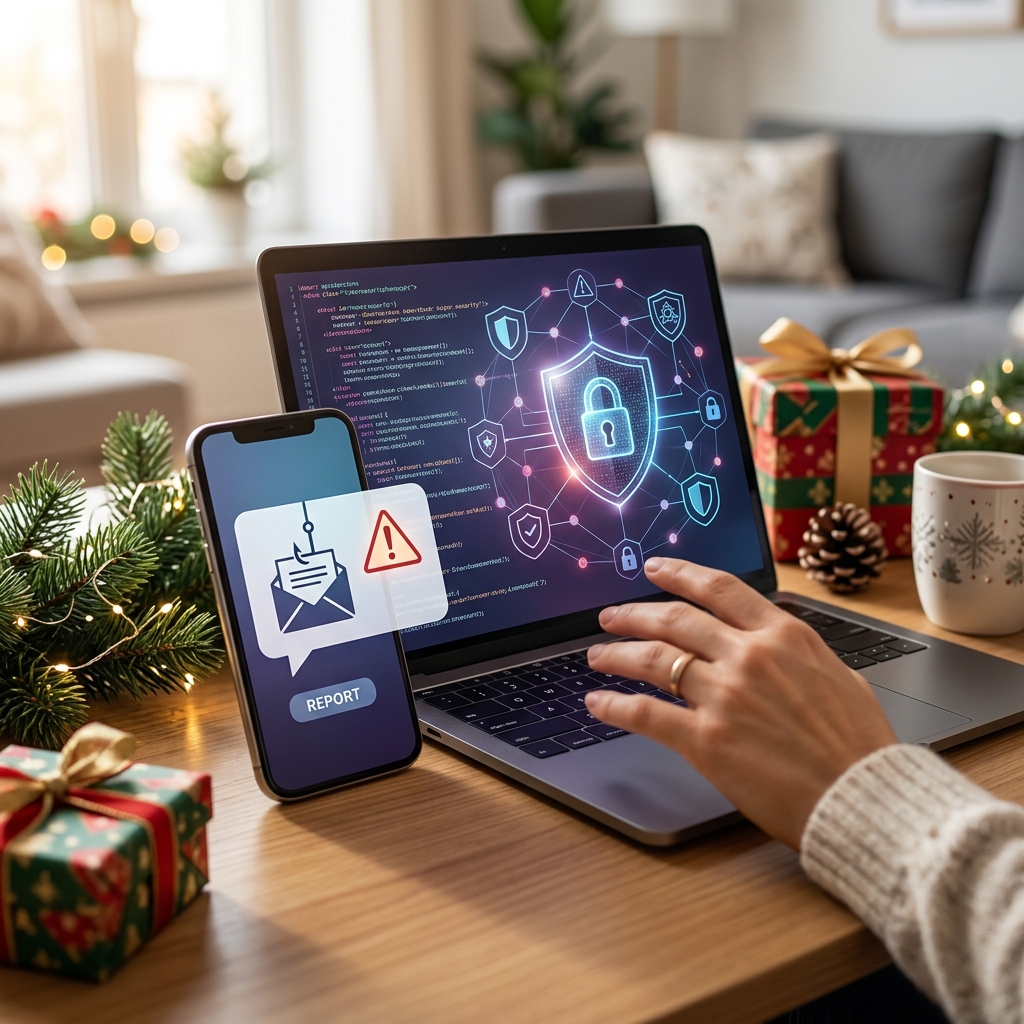
The holiday season brings sales, travel deals and charitable giving—but it also triggers a sharp spike in cybercrime. Criminals know people are distracted, rushed and eager to get a bargain, so they launch targeted scams designed to steal money, personal data, or account access.
This guide explains the most common holiday cyber scams, how they work, warning signs to watch for, and practical steps you can take to protect yourself and your family online.
Why Cybercriminals Love the Holiday Season
From late November through early January, online activity surges. Retailers promote flash sales, shipping companies process billions of packages, and people spend more time searching for travel and seasonal jobs. Attackers use this busy environment to hide malicious activity in plain sight.
Security researchers have documented significant increases in phishing attacks impersonating retailers and holiday-themed lures during peak shopping periods such as Black Friday and Cyber Monday. With artificial intelligence making it easier to generate convincing emails and websites, criminals can quickly scale personalized scams that look legitimate.
| Holiday Activity | Typical Online Behavior | Common Scam Type |
|---|---|---|
| Gift shopping | Searching for deals, using new retailers | Fake stores, counterfeit goods, payment fraud |
| Package tracking | Clicking shipping notifications | Phishing texts and emails, delivery cons |
| Charitable giving | Donating online and by phone | Phony charities, donation theft |
| Travel booking | Searching for cheap flights or rentals | Vacation scams, fake booking sites |
| Seasonal work | Applying for temporary jobs | Job scams, identity theft |
1. Online Shopping Scams and Fake Retailers
Online shopping scams range from bogus storefronts to counterfeit goods and manipulated marketplaces. Criminals set up professional-looking websites or social media pages that advertise popular holiday products at extremely low prices. Once you pay, the item never arrives, arrives in poor condition, or your payment data is stolen for further fraud.
How Online Shopping Scams Work
- Fake storefronts: Websites with stolen product photos, copied logos and fabricated reviews designed to look like real brands.
- Phishing promotions: Emails or texts offering limited-time deals that direct you to malicious sites capturing card details or login credentials.
- Social media sales: Ad campaigns or posts promising deep discounts but using untraceable payment methods like gift cards or person-to-person transfers.
Red Flags for Holiday Shopping Fraud
- Prices dramatically below reputable retailers for the same product.
- Payment options limited to gift cards, wire transfers, or cash-like apps with no buyer protection.
- No physical address, phone number, or customer service information.
- Strange or misspelled website domain names that look similar to well-known brands.
- Missing return and refund policy, or policies written in broken language.
How to Shop More Safely
- Use well-known retailers or verify unfamiliar businesses through independent reviews.
- Check that the site uses HTTPS and that the URL is correctly spelled.
- Pay with credit cards or other methods that include fraud protection and dispute rights.
- Enable multi-factor authentication (MFA) on shopping accounts to prevent account takeover if your password is compromised.
2. Package Delivery and Missed-Delivery Scams
With billions of parcels shipped each holiday season, attackers frequently impersonate major delivery companies. They send texts and emails claiming your package is delayed, requires a small fee, or needs address verification, urging you to click a link.
Delivery Scam Techniques
- Fake tracking links: Messages with tracking numbers that lead to phishing websites asking for login details or payment.
- Missed delivery notices: Claims that a courier tried to deliver a package and needs updated information or a rescheduling fee.
- Malicious attachments: Attachments supposedly containing invoices or shipping labels that install malware.
Safe Package Tracking Practices
- Track packages only through official retailer accounts or carrier portals, not via unsolicited links.
- Verify notifications using order history within your shopping account.
- Check sender addresses carefully; genuine carrier emails usually follow consistent formats.
- Never enter payment information to receive a package that you did not order.
3. Gift Card Fraud and Misuse
Gift cards are a convenient holiday present, but scammers exploit them because they are almost as liquid as cash. Some attackers steal funds from cards before they are redeemed, while others pressure victims to pay fake debts or urgent fees using gift cards.
Common Gift Card Scam Scenarios
- Card draining: Criminals copy card numbers in stores and monitor balances, redeeming funds after the card is purchased but before the recipient uses it.
- Payment demands: Fraudsters pose as executives, government agents, or tech support and insist that issues can only be resolved by paying with gift cards.
- Online resellers: Illicit platforms sell partially used or stolen cards advertised as discounted.
Protecting Gift Cards
- Buy cards directly from trusted retailers and avoid cards with damaged packaging.
- Keep receipts and register cards when a provider offers this option.
- Never pay legitimate bills, fines or taxes with gift cards; reputable organizations do not request them.
4. Fake Charities and Donation Scams
Many people increase their charitable giving during the holidays, which inspires criminal groups to create fake charities or spoof real ones. These scams divert donations away from genuine causes and can capture sensitive financial data.
How Holiday Charity Scams Appear
- Cold calls or messages claiming urgent needs for holiday toy drives or seasonal relief efforts.
- Websites using names similar to well-known charities but with different domain endings.
- Fundraising appeals shared through social media with limited transparency about how funds are used.
Verifying Charitable Organizations
- Check official charity registries or reputable charity evaluators before donating.
- Navigate to an organization’s website by typing its address manually instead of clicking links.
- Request official receipts and documentation; reputable charities provide clear information on their programs.
- Use secure payment methods and avoid sharing unnecessary personal data.
5. Holiday Travel and Vacation Booking Scams
Seasonal trips, family visits and winter vacations create a prime opportunity for travel-related fraud. Attackers promote nonexistent flights, rentals or package deals with irresistible prices, targeting people who are eager to save money on travel.
Typical Travel Scam Patterns
- Fake booking sites: Copycat websites that mimic airlines, hotels or rental services while capturing payment details.
- Bogus listings: Attractive rental properties posted with stolen photos; once payment is sent, the property does not exist or is already occupied.
- Hidden fees and bait-and-switch: Initial low prices that increase dramatically through undisclosed charges after you commit.
Safer Ways to Book Holiday Travel
- Book directly with airlines, hotels, or well-established travel platforms.
- Confirm rental listings by cross-checking reviews and verifying host information.
- Avoid clicking on travel deals shared in unsolicited emails or texts.
- Use secure networks—avoid booking and payment on public Wi‑Fi, relying instead on trusted connections or personal hotspots.
6. Seasonal Job Scams and Employment Fraud
Many retailers and service providers hire additional staff during the holiday season, and scammers mimic these opportunities. Fraudulent job postings appear on websites, social platforms, and messaging apps, promising easy income while secretly collecting fees or personal data.
Features of Holiday Job Scams
- Upfront payments for training materials, background checks or equipment, with no real job at the end.
- Requests for extensive personal information early in the process, such as Social Security numbers or bank details.
- Offers that guarantee high earnings with minimal effort, often requiring you to recruit others.
Staying Safe When Seeking Seasonal Work
- Apply through official company websites or trusted job platforms.
- Research employers and check for reviews or alerts about scam activity.
- Decline any role that requires paying fees before you start.
- Share sensitive documents only after you have verified the employer and received a legitimate offer.
7. Social Media Giveaways and Impersonation Scams
Social media usage increases over the holidays, and scammers exploit this by creating fake giveaways, impersonating friends or brands, and promoting fraudulent investment schemes.
Common Social Media Scam Tactics
- Impersonation: Accounts pretending to be friends, family, or reputable companies, sharing links to malicious sites.
- Contest scams: Giveaways that require upfront fees or sensitive information to claim a prize.
- Holiday-themed investment pitches: Promises of fast returns if you invest immediately, sometimes framed as helping fund seasonal projects.
Safe Social Media Habits
- Be skeptical of unexpected messages, especially those asking for money or personal details.
- Verify account identities by checking usernames, history, and mutual connections.
- Avoid clicking on shortened or obscure links without context.
- Use privacy settings to limit how much personal information is publicly visible.
8. Core Cybersecurity Practices for the Holidays
While individual scam tactics change, a few core security practices consistently reduce risk. Organizations and individuals can use the busy season as a reminder to strengthen their defenses.
Essential Protection Measures
- Enable multi-factor authentication: MFA adds an extra verification step, such as a code or app approval, and significantly reduces account takeover risk.
- Reinforce safe browsing: Always check URLs, look for HTTPS, and avoid entering credentials on unfamiliar or suspicious sites.
- Use secure payment methods: Prefer cards and services that offer fraud protection and monitoring.
- Avoid public Wi‑Fi for transactions: Limit banking and shopping to private, secure networks to reduce interception risk.
- Monitor accounts regularly: Review statements for unusual transactions so you can respond quickly if fraud occurs.
9. What to Do If You Fall Victim to a Holiday Scam
Even careful users can be targeted successfully. Prompt action can contain damage and help authorities track criminal activity.
Immediate Steps After Suspected Fraud
- Contact your bank or card issuer to freeze affected accounts, dispute charges and obtain new cards.
- Change passwords on compromised accounts and enable MFA going forward.
- Place alerts on your credit reports with major credit reporting agencies.
Reporting and Recovery
- File a complaint with the appropriate consumer protection authority.
- Report cybercrime incidents to law enforcement or dedicated cybercrime reporting centers when available.
- Document what happened, including messages, websites and transaction records, to support investigations.
Holiday Cyber Scam FAQs
How can I quickly tell if a holiday deal is a scam?
Be wary if the price is far below market value, the seller pushes you to act immediately, or payment is limited to gift cards, wire transfers, or cash-like apps. Verify the retailer’s reputation and domain name, and look for clear contact information and policies.
Are public Wi‑Fi networks safe for online shopping?
Public Wi‑Fi is generally not safe for financial transactions. Attackers may intercept traffic or create fake hotspots. Use secure home networks or personal hotspots when signing in to accounts or entering payment information.
What is the single most effective step to protect my accounts?
Enabling multi-factor authentication on email, banking and major shopping accounts is widely regarded as one of the most effective defenses against credential theft and account takeover, especially during high-activity periods like the holidays.
Should I trust links in delivery notification texts?
Do not assume that a delivery text is legitimate. Instead of clicking the link, log in directly to your retailer or carrier account through their official website or app and check your order or tracking status there.
What if I sent money to a fake charity?
Contact your payment provider immediately to see if the transaction can be reversed. Then report the incident to relevant authorities or consumer protection agencies and notify any legitimate charity that is being impersonated if you can identify it.
References
- How to Outsmart Holiday Scammers This Shopping Season — SecurityScorecard. 2023-11-16. https://securityscorecard.com/blog/how-to-outsmart-holiday-scammers-this-shopping-season/
- Holiday Scams Are Surging. Is Your Company Ready? — Cyber Defense Magazine. 2024-11-29. https://www.cyberdefensemagazine.com/holiday-scams-are-surging-is-your-company-ready/
- Six Common Scams to Watch for During 2026 — WSFS Bank. 2026-01-19. https://www.wsfsbank.com/resources/six-common-scams-to-watch-for-during-2026/
- 5 Holiday Scams to Avoid — Morgan Stanley. 2023-12-05. https://www.morganstanley.com/articles/holiday-scams
- Five of the Biggest Scams to Watch for in 2026 — AARP. 2026-01-05. https://www.aarp.org/money/scams-fraud/biggest-scams-to-watch-for-2026/
Similar Articles








Read full bio of medha deb


