
Federal Moratorium on Facial Recognition Technology
Halting biometric surveillance is crucial to protect our civil liberties.
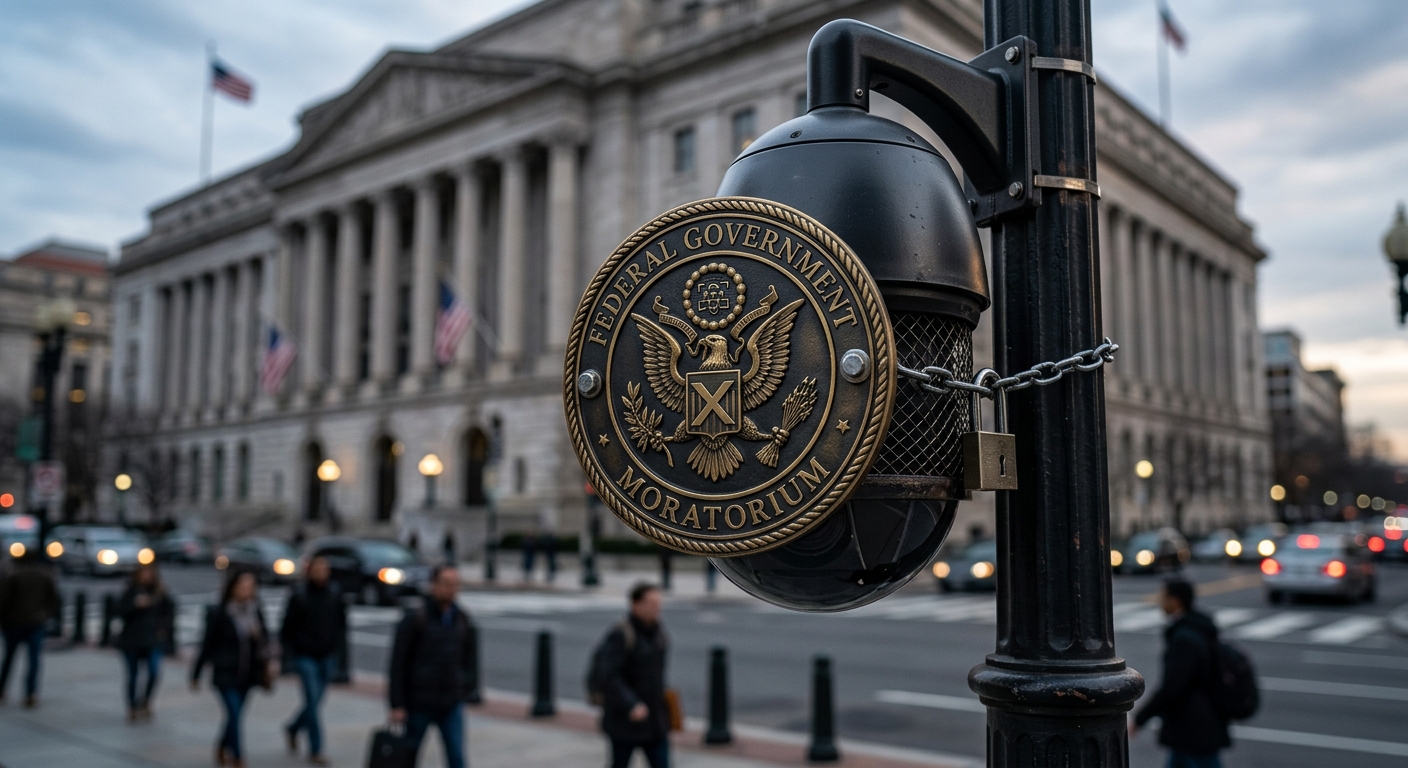
The pursuit of racial equity within the United States requires an unflinching examination of the digital tools and surveillance systems utilized by the federal government. Among the most pressing civil rights issues of the modern era is the rapid, largely unchecked proliferation of facial recognition technology across law enforcement agencies. While proponents frequently market this biometric technology as a revolutionary advancement for public safety, a growing body of evidence reveals a far more troubling reality. Facial recognition systems are fundamentally flawed, exhibiting profound racial and gender biases that disproportionately endanger Black and Brown communities. If the government is genuinely committed to advancing racial justice and dismantling systemic discrimination, it must immediately implement a moratorium on the federal use of this surveillance technology.
The deployment of automated surveillance systems is not merely a technical issue; it is a profound matter of civil liberties. When law enforcement agencies utilize algorithms to identify suspects, the margin for error is not a harmless glitch—it is the difference between freedom and wrongful incarceration. Allowing federal agencies to normalize the use of these tools, while concurrently funneling resources to local police departments for their procurement, creates a nationwide surveillance apparatus that inherently discriminates against marginalized populations. To align federal practices with the stated goals of racial equity, the executive branch must halt the utilization of these systems.
The Pervasive Threat of Algorithmic Bias
To understand the danger of facial recognition technology, one must recognize that algorithms are not inherently objective. They are created by humans, trained on datasets compiled by humans, and deployed within a criminal justice system fraught with historical disparities. If a training dataset predominantly features lighter-skinned individuals, the artificial intelligence will excel at recognizing white faces while failing to accurately map the nuances of darker skin tones. When artificial intelligence learns from skewed data, it inevitably replicates and amplifies pre-existing societal biases.
The National Institute of Standards and Technology (NIST), a premier federal agency dedicated to advancing measurement science, has extensively documented these demographic disparities. According to a comprehensive technical evaluation by NIST published in March 2022, facial recognition algorithms exhibit significant demographic differentials. The research highlighted that these systems frequently misclassify prepubescent faces, older female faces, and critically, individuals from ethnic minority groups. The accuracy of facial recognition systems varies widely depending on the subject’s demographic profile.
The consequences of this algorithmic bias are severe. When law enforcement relies on a system that is mathematically less accurate for Black faces, the likelihood of a false match skyrockets. This represents a systemic failure that funnels innocent individuals into the criminal justice system simply because their physiological characteristics were not adequately represented in a software developer’s dataset, making a mockery of the presumption of innocence.
Real-World Consequences: The Tragedy of False Arrests
The theoretical risks identified by researchers have already materialized into devastating real-world consequences. Across the nation, we are witnessing a disturbing pattern of wrongful arrests stemming directly from algorithmic misidentifications. These incidents almost exclusively impact Black Americans, transforming abstract algorithmic bias into tangible trauma, financial ruin, and the deprivation of liberty. A false arrest is not just a temporary inconvenience; it is a violent disruption of a person’s life that can lead to job loss, public humiliation, and deep psychological distress.
In recent years, multiple lawsuits have been filed by Black plaintiffs who were misidentified by facial recognition technology and subsequently jailed for crimes they did not commit. A September 2023 report by the Associated Press detailed several harrowing accounts, including the case of a Black man who was arrested in Georgia for thefts in Louisiana—a state he had never even visited. The arrest warrant was based entirely on a flawed facial recognition match. Similarly devastating is the case of a Black woman in Detroit who was falsely accused of robbery and carjacking while eight months pregnant, again due to an algorithmic error by local police.
These false arrests cause irreparable harm and highlight a dangerous over-reliance on technology by law enforcement officers. Officers often treat algorithmic outputs as infallible truth rather than unverified, potentially flawed leads. When a machine dictates probable cause without secondary human verification, the fundamental judgment required in ethical policing is dangerously sidelined, leading to catastrophic outcomes for innocent citizens.
The Federal Government’s Regulatory Blind Spot
One might assume that a technology with such well-documented flaws and severe consequences would be tightly regulated, especially at the federal level. Unfortunately, the opposite is true. Federal law enforcement agencies have aggressively adopted facial recognition services with startlingly little oversight, training, or regard for civil liberties. The rapid acquisition of these tools has vastly outpaced the development of legal frameworks required to govern them.
A March 2024 report from the U.S. Government Accountability Office (GAO) exposed significant deficiencies in how federal agencies manage this technology. The GAO investigated several law enforcement agencies within the Departments of Justice and Homeland Security that reported using facial recognition services to support criminal investigations. The findings were deeply concerning: multiple agencies initially utilized these powerful surveillance tools without requiring their personnel to complete any specific training on facial recognition technology or its inherent limitations.
Even more alarming, the GAO found that several agencies operated for years without any policies or guidance specifically designed to protect civil rights and civil liberties in the context of facial recognition. While some departments have recently begun to draft interim policies after facing congressional pressure, the overarching reality remains that federal law enforcement has been deploying racially biased surveillance technology in a regulatory vacuum. This lack of standardized guardrails ensures that abuses will continue to occur, further marginalizing communities that are already over-policed.
Why a Meaningful Solution Demands a Full Pause
In the face of mounting evidence regarding the harms of facial recognition, some industry advocates and policymakers suggest that the solution lies in simply fixing the technology. They propose waiting for more diverse datasets and better algorithms to lower the rates of false matches. However, this perspective fundamentally misunderstands the nature of the problem. Technical refinements cannot cure the inherent dangers of mass surveillance.
Even if a facial recognition algorithm were miraculously developed to be perfectly accurate across all demographics, its unrestricted deployment by the federal government would still pose an existential threat to civil liberties. Perfect surveillance in the hands of a justice system with a history of disproportionate policing will only perfectly automate discrimination. It would allow for the frictionless tracking of individuals attending protests, seeking reproductive healthcare, or simply existing in public spaces, chilling free speech and obliterating the expectation of privacy.
Therefore, the only viable path forward to protect racial equity is a comprehensive federal moratorium. The executive branch has the authority to halt the procurement and use of facial recognition systems by federal agencies. This pause is desperately needed to allow legislators, civil rights advocates, and independent technologists to assess whether this technology can ever be safely integrated into a democratic society—and if so, under what strict parameters.
A Strategic Framework for Protecting Civil Liberties
To genuinely advance racial equity and protect constitutional rights, the government must take decisive, multi-faceted action. A localized pause is insufficient; a strategic, federal framework is required to dismantle the automated systems of oppression currently taking root. The following directives outline a necessary blueprint for reform:
- Implement an Executive Moratorium: Issue an immediate ban on all federal law enforcement agencies from acquiring, testing, or utilizing facial recognition technology until explicit, protective congressional authorization is established.
- Condition Federal Funding: Cease utilizing federal grant programs to subsidize the purchase of surveillance technologies by state and local police departments. Federal dollars must not fund local civil rights violations.
- Mandate Comprehensive Audits: Require all federal agencies to publicly disclose their past and present use of facial recognition systems, including any partnerships with third-party vendors.
- Establish Independent Oversight: Create a permanent oversight board composed of civil rights advocates, legal scholars, and technologists to evaluate the societal impact of biometric tools prior to their deployment.
- Support Legislative Bans: Actively back federal legislation aimed at permanently restricting the use of biometric surveillance in public spaces.
Frequently Asked Questions (FAQ)
What exactly is facial recognition technology?
Facial recognition technology is a type of biometric software that maps an individual’s facial features mathematically and stores the data as a faceprint. The software uses deep learning algorithms to compare a live capture or digital image of a person’s face against a database of stored images in order to verify or identify that individual.
Why is this technology considered racially biased?
Studies by researchers and federal bodies, such as NIST, have shown that facial recognition algorithms are significantly less accurate when analyzing the faces of people of color, particularly Black women. This occurs primarily because the datasets used to train the algorithms are disproportionately composed of lighter-skinned, male faces. Consequently, the technology struggles to accurately differentiate between darker-skinned individuals, leading to a higher rate of false matches.
Can the technology be fixed by adding more diverse data?
While diversifying training data can improve the mathematical accuracy of the algorithms, civil rights experts argue this does not fix the core issue. Even a perfectly accurate surveillance tool can be weaponized against marginalized communities. The primary concern is that mass surveillance inherently infringes on privacy and civil liberties, regardless of the technology’s accuracy rate.
Have people actually been wrongfully arrested because of this software?
Yes. There are numerous documented cases across the United States where individuals, almost entirely Black men and women, have been wrongfully arrested and jailed based on incorrect facial recognition matches. These false arrests have led to severe emotional trauma, financial loss, and multiple civil rights lawsuits against the offending police departments.
How is the federal government currently using facial recognition?
Federal agencies use this technology for a variety of purposes, including digital access, physical security, and criminal investigations. However, watchdog reports have highlighted that many of these agencies use the technology without proper staff training or explicit policies designed to protect the civil rights and liberties of the public.
References
- Towards a Standard for Identifying and Managing Bias in Artificial Intelligence — National Institute of Standards and Technology (NIST). 2022-03-15. https://www.nist.gov/publications/towards-standard-identifying-and-managing-bias-artificial-intelligence
- Facial recognition technology jailed a man for days. His lawsuit joins others from Black plaintiffs — The Associated Press. 2023-09-24. https://apnews.com/article/facial-recognition-lawsuits-wrongful-arrests-black-b8c767fca83a71ccbf3d944c6d66e746
- Facial Recognition Technology: Federal Law Enforcement Agency Efforts Related to Civil Rights and Training — U.S. Government Accountability Office (GAO). 2024-03-08. https://www.gao.gov/products/gao-24-107372
Similar Articles








Read full bio of medha deb


