
Federal Lawsuits: Catalysts for Child Welfare Reform
How federal class action lawsuits drive foster care reform.
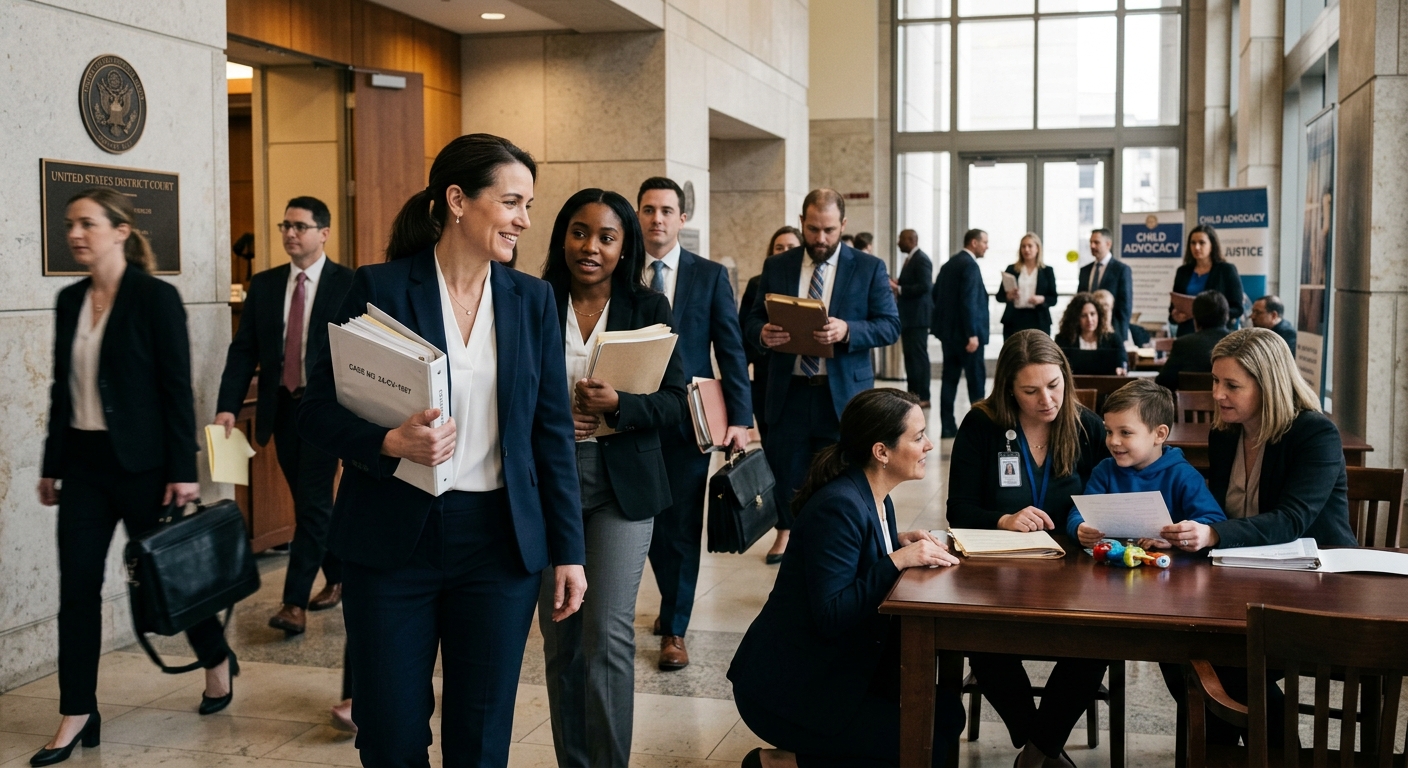
The child welfare system is fundamentally designed to serve as a safety net for the most vulnerable members of society: children who have experienced abuse, neglect, or abandonment. However, when state agencies tasked with protecting these children become overwhelmed, underfunded, or severely mismanaged, the safety net itself can transform into a source of secondary trauma. Across the United States, systemic failures in foster care systems have repeatedly placed youth at risk, prompting advocates to seek intervention from the only entity with the power to force state compliance: the federal judiciary.
For decades, federal class action litigation has functioned as a critical lever for accountability and systemic overhaul. When internal state mechanisms fail to correct severe deficiencies—such as unmanageable caseworker caseloads, overreliance on emergency shelters, and high rates of abuse within foster homes—child advocates turn to federal courts. By filing class-action lawsuits on behalf of thousands of foster children, advocates aim to secure enforceable mandates that compel states to uphold the constitutional and statutory rights of youth in their custody.
The Breaking Point: When State Failures Prompt Federal Intervention
State child welfare departments are bound by a complex web of state policies and federal laws, including the Adoption Assistance and Child Welfare Act of 1980, as well as fundamental constitutional protections under the First, Fifth, Ninth, and Fourteenth Amendments. A core tenet of these protections is that once a state assumes legal custody of a child, it assumes an affirmative constitutional duty to ensure that child’s basic safety and well-being. When a state acts with “deliberate indifference” to the known risks facing children in its care, it violates their civil rights.
Litigation is rarely the first step. Typically, a federal lawsuit is the culmination of years of documented failures, ignored watchdog reports, and tragic outcomes for children. Advocates build their cases on widespread patterns of negligence, rather than isolated incidents. Common allegations that trigger these massive lawsuits include:
- Severe Caseload Crises: When caseworkers are assigned far more children than they can reasonably visit or monitor, critical warning signs of abuse in foster homes are missed.
- Inappropriate Placements: The prolonged use of crowded, institutional emergency shelters, particularly for infants and toddlers, violates best practices and federal expectations for family-like settings.
- Placement Instability: Children being bounced between dozens of homes or shelters in short periods, disrupting their education, mental health treatment, and emotional development.
- Failure to Secure Permanency: Youth languishing in the foster care system for years without a clear path to reunification, adoption, or legal guardianship.
When state legislative bodies refuse to adequately fund child welfare operations, or when executive branch leadership fails to implement effective management strategies, litigation becomes the necessary mechanism to disrupt the status quo. The goal is not merely to win a judgment, but to secure a legally binding, court-monitored injunction that dictates specific operational improvements.
The Critical Importance of “Class Action” Status
In the realm of civil rights litigation, certifying a lawsuit as a “class action” is often the most contentious and pivotal phase of the legal process. Class certification allows a small group of named plaintiffs—often a handful of foster youth—to represent the entirety of the foster care population in a state, which can encompass thousands or even tens of thousands of children.
State agencies routinely mount aggressive legal defenses against class certification. A frequent defense strategy involves arguing that child welfare cases are inherently individualized. States often contend that because each child has a unique background, specific trauma history, and distinct placement needs, they cannot legally be grouped into a single monolithic class. Furthermore, states may argue that only a small percentage of children actually experience documented abuse while in state custody, and therefore, the broader population does not share a common injury.
However, federal appellate courts have consistently dismantled this defense by focusing on the concept of systemic risk. In landmark rulings, such as the Tenth Circuit Court of Appeals decision in D.G. v. Henry (2010), the judiciary has articulated that plaintiffs do not need to prove that every single child has already been abused to justify a class action. Instead, the focus is on whether systemic agency failures expose the entire class of children to an impermissible risk of serious harm .
If a state agency routinely fails to screen foster parents, or if it assigns caseworkers 50 cases instead of the recommended 15, every child in the system is forced to endure the risk of falling through the cracks. The threat of harm is the common denominator that binds the class together, making class-action status the most appropriate and powerful vehicle for demanding comprehensive relief.
Decoding the Legal Strategy: From Discovery to Settlement
Once class certification is upheld by federal appellate courts, the trajectory of the lawsuit shifts dramatically. The discovery phase in these cases is monumental. Plaintiffs’ attorneys demand access to thousands of internal agency emails, fatality reports, caseworker logs, and budgetary documents. They also deploy child welfare experts to analyze the state’s data and produce reports detailing exactly how the system is malfunctioning.
Faced with mounting legal fees, overwhelming evidentiary records, and the prospect of a federal judge taking direct control of a state agency (a process known as receivership), states frequently choose to negotiate a settlement. A negotiated settlement allows the state to retain administrative control while legally committing to a structured, measurable reform plan.
These settlements, often referred to as Consent Decrees or Compromise and Settlement Agreements (CSAs), effectively rewrite the operational blueprints of the targeted child welfare departments. Rather than spending millions of taxpayer dollars fighting advocates in court, states redirect those funds toward hiring more social workers, increasing compensation for foster parents, and building better data-tracking software.
Executing the Reform: The Role of Co-Neutrals and Public Accountability
A court mandate is meaningless without rigorous oversight. Consequently, most child welfare class-action settlements involve the appointment of “Co-Neutrals” or independent court monitors. These are typically nationally recognized child welfare experts agreed upon by both the plaintiffs and the state. Their role is to act as the eyes and ears of the federal judge, regularly evaluating the state’s progress and publishing their findings for public consumption.
These reform plans—such as Oklahoma’s “Pinnacle Plan,” which emerged from the D.G. v. Henry litigation—establish specific, quantifiable benchmarks that the state must hit over a multi-year period . Target areas usually include:
- Caseload Caps: Mandating that child protective investigators and permanency workers cannot exceed a strict number of cases, ensuring each child receives adequate attention.
- Foster Home Recruitment: Requiring the state to net a specific number of newly licensed foster homes annually to alleviate overcrowding and reduce shelter reliance.
- Visitation Frequencies: Enforcing strict rules that caseworkers must visit every child in their placement at least once a month, with a high percentage of those visits occurring privately.
- Timely Investigations: Ensuring that all reports of abuse or neglect involving children already in state custody are investigated within 24 hours.
Public accountability is a cornerstone of these agreements. State agencies are legally bound to publish monthly or quarterly data reports tracking their progress against the settlement metrics. If a state consistently fails to meet its targets, the plaintiffs can file motions to enforce the agreement, potentially leading to federal contempt charges against state officials.
The Ripple Effect: National Implications of State-Level Rulings
The impact of federal class-action litigation extends far beyond the borders of the state being sued. When federal appellate courts uphold plaintiffs’ theories of liability, they establish binding legal precedents that empower advocates in other jurisdictions.
For example, when an appellate court confirms that children have a privately enforceable right to foster care maintenance payments or a constitutional right to be free from deliberate indifference to their safety, it creates a roadmap for future lawsuits . State legislatures across the country pay close attention to these massive legal battles. Often, the mere threat of a federal lawsuit by national advocacy groups can catalyze preemptive legislative reforms, increased child welfare budgets, and the voluntary adoption of better policies.
While litigation is an inherently adversarial process, the ultimate goal is collaborative transformation. Over the span of a decade or more, states that were once sued for operating dangerous, unconstitutional systems can evolve into national models for child welfare practice, driven by the sustained pressure of federal oversight and independent monitoring .
Frequently Asked Questions (FAQs)
What is a class-action lawsuit in the context of child welfare?
A class-action lawsuit in child welfare involves a small group of plaintiffs (usually foster children) suing a state agency on behalf of all children currently or in the future in state custody. It alleges widespread systemic failures rather than isolated incidents, aiming to secure comprehensive reform for the entire foster care population.
Why do federal courts have jurisdiction over state foster care systems?
Federal courts have jurisdiction because these lawsuits allege violations of federal law and the U.S. Constitution. Specifically, they often cite violations of the 14th Amendment (due process and equal protection rights) and the Adoption Assistance and Child Welfare Act of 1980, which states must comply with to receive federal funding.
What are “Co-Neutrals” in a settlement agreement?
Co-Neutrals, or court monitors, are independent child welfare experts appointed by a federal judge. Their job is to track the state’s compliance with the settlement agreement, review internal agency data, and issue periodic public reports detailing whether the state is meeting its reform benchmarks.
How long do child welfare reform plans typically take to implement?
Meaningful systemic reform is a slow process. Depending on the depth of the agency’s dysfunction, federal oversight and implementation of reform plans can last anywhere from five to fifteen years, or until the state demonstrates sustained compliance with all court-mandated metrics.
Does a state have to admit guilt to settle a child welfare lawsuit?
No. In most Compromise and Settlement Agreements, the state does not formally admit to constitutional violations. Instead, the state agrees to implement comprehensive operational changes and submit to federal monitoring in exchange for the plaintiffs dropping the active litigation and avoiding a costly trial.
Conclusion
Federal class-action litigation is a complex, exhausting, and expensive mechanism for change, but it remains one of the most effective tools for dismantling deeply entrenched dysfunction in state child welfare agencies. By elevating the plight of foster children to the level of constitutional rights, advocates force governments to prioritize the safety, dignity, and futures of the youth entrusted to their care. While the legal battles are fierce, the resulting reforms—enforced by federal courts and monitored by independent experts—ultimately pave the way for safer, more accountable, and more compassionate child welfare systems across the nation.
References
- D.G. v. Henry, 594 F.3d 1186 (10th Cir. 2010) — United States Court of Appeals, Tenth Circuit. 2010-02-09. https://casetext.com/case/dg-ex-rel-stricklin-v-devaughn/
- Pinnacle Plan Measures — Oklahoma Department of Human Services. 2024-05-01. https://oklahoma.gov/okdhs.html
- Adoption Assistance and Child Welfare Act of 1980 (42 U.S.C. § 621 et seq.) — U.S. Government Publishing Office. 1980-06-17. https://www.govinfo.gov/
- Reforming a System That Cannot Reform Itself: Child Welfare Reform by Class Action Lawsuits — PubMed (National Institutes of Health). 2019-10-31. https://pubmed.ncbi.nlm.nih.gov/31671946/
Similar Articles








Read full bio of medha deb


