
Empowering the Electorate: How Executive Order 14019 Expands Voter Access
Discover how a whole-of-government approach is transforming federal agencies into vital gateways for voter registration and civic participation.
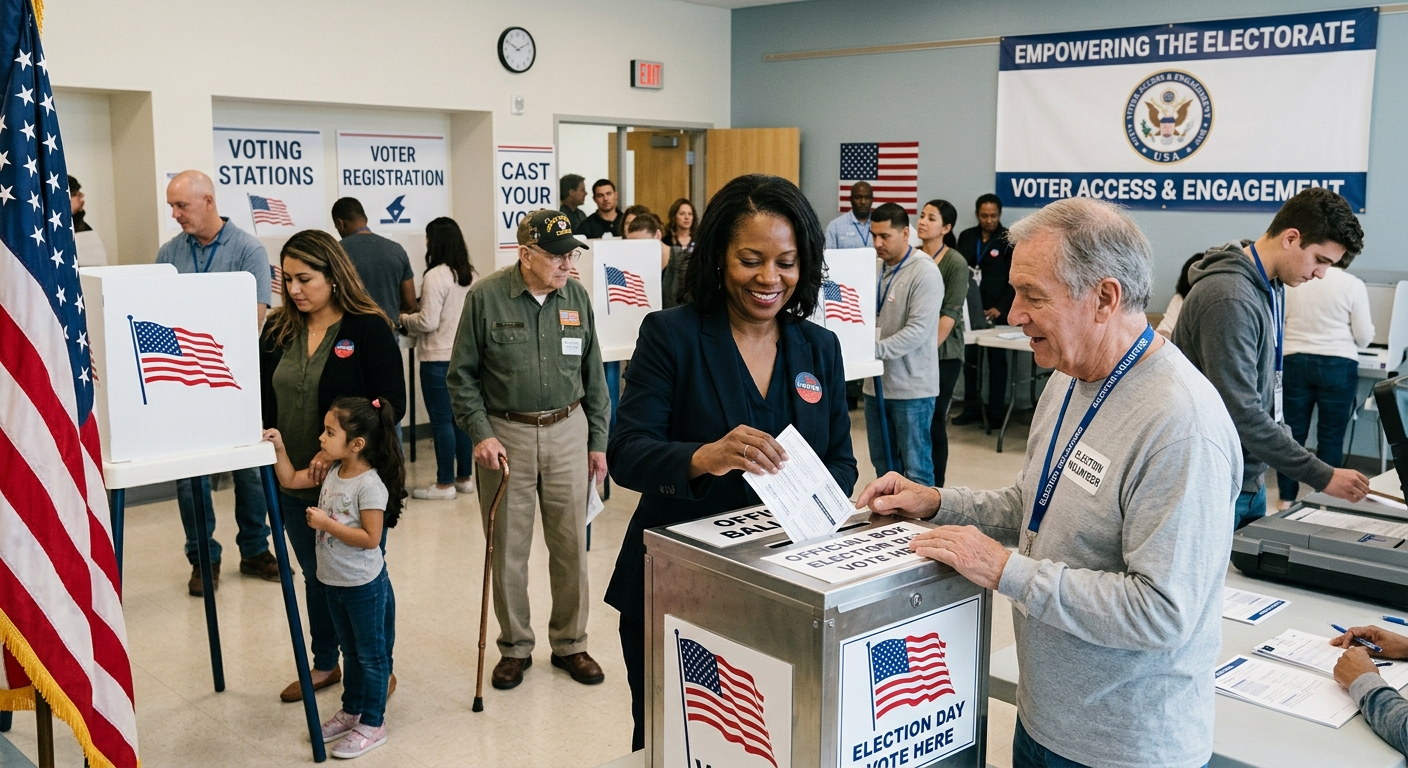
The cornerstone of any thriving democratic republic is the ability of its citizens to participate freely and securely in the electoral process. Despite the foundational nature of this right, millions of eligible Americans remain unregistered or face systemic barriers when attempting to cast their ballots. In an effort to bridge this gap, President Joe Biden signed Executive Order 14019, titled “Promoting Access to Voting,” on March 7, 2021 . Issued on the 56th anniversary of the historic “Bloody Sunday” civil rights march in Selma, Alabama, this sweeping directive fundamentally shifts how the federal government interacts with the electorate. Instead of relying solely on state and local municipalities to drive voter registration, the executive order establishes a “whole-of-government” approach. By leveraging the vast network of federal agencies, the initiative aims to transform routine government touchpoints into critical gateways for civic engagement, ensuring that every eligible citizen has a fair and equitable opportunity to participate in the democratic process.
The Historical Context: The NVRA of 1993 and Section 7
To fully grasp the magnitude of Executive Order 14019, it is essential to understand the legal bedrock upon which it stands: the National Voter Registration Act (NVRA) of 1993 . Widely colloquially known as the “Motor Voter Act,” the NVRA was enacted to make it easier for all Americans to register to vote and to maintain their registration. While Section 5 of the NVRA is famous for requiring states to offer voter registration opportunities at motor vehicle agencies, Section 7 of the act contains a powerful, albeit historically underutilized, provision.
Section 7 mandates that states designate agencies providing public assistance and state-funded programs serving persons with disabilities as voter registration agencies. Crucially, the law also permits states to designate federal agencies as voter registration sites, provided the federal agency consents to the designation . For decades, this specific mechanism remained largely dormant. Few states actively sought to designate federal facilities, and federal agencies lacked a unified mandate to proactively offer their services for this purpose. Consequently, a significant avenue for reaching unregistered voters—particularly those who interact frequently with federal programs but infrequently with state motor vehicle departments—was left untapped. Executive Order 14019 reinvigorates this dormant provision, explicitly directing federal agencies to evaluate their programs and affirmatively offer themselves as designated voter registration agencies under the NVRA when requested by a state.
A Whole-of-Government Approach to Voter Engagement
The core philosophy of Executive Order 14019 is that the federal government possesses a unique duty to promote the exercise of the fundamental right to vote . To execute this duty, the order mandates that the head of every federal agency evaluate how their respective departments can seamlessly integrate nonpartisan voter registration and election information into their daily operations. Agencies were required to submit strategic plans outlining specific, actionable steps to enhance civic participation among the populations they serve.
This directive extends beyond merely placing paper forms in waiting rooms. It encompasses a modernization of digital infrastructure. For instance, the order tasked the General Services Administration (GSA) with overhauling and modernizing Vote.gov, ensuring the portal is user-friendly, fully accessible to individuals with disabilities, and translated into multiple languages to accommodate voters with limited English proficiency. By upgrading these digital tools, the federal government aims to provide a centralized, authoritative, and highly accessible resource for election information, mitigating the confusion that often deters potential voters.
Transforming Federal Touchpoints into Civic Gateways
The true potential of Executive Order 14019 lies in the sheer scale and diversity of the federal government’s reach. By embedding voter registration opportunities into services that millions of Americans rely on daily, agencies can effectively capture populations that traditional registration drives might miss. Several key federal departments stand out for their capacity to drive meaningful civic integration:
- The Department of Veterans Affairs (VA): Veterans often face unique logistical challenges, particularly those experiencing homelessness, housing instability, or service-related disabilities. By allowing VA medical centers and clinics to serve as designated voter registration agencies, the federal government can ensure that those who served the nation in uniform are not disenfranchised upon their return to civilian life.
- The Indian Health Service (IHS): Native American communities frequently endure geographic isolation, lack of traditional residential mailing addresses, and poor broadband connectivity. The IHS represents a crucial, trusted federal touchpoint on tribal lands. Integrating voter registration into IHS facilities helps bypass the extreme physical distances many Indigenous voters must travel to reach standard county election offices .
- The Bureau of Prisons (BOP): Justice-impacted individuals face complex and highly variable state laws regarding the loss and restoration of voting rights. The BOP plays a critical role under the executive order by providing educational materials about voting rights to individuals in federal custody, facilitating absentee voting for eligible pre-trial detainees, and assisting formerly incarcerated individuals in obtaining the necessary identification documents required by state voter ID laws.
- The Department of Health and Human Services (HHS): Through the administration of the federal health insurance marketplace (HealthCare.gov), HHS interacts with millions of Americans annually. By integrating voter registration prompts seamlessly into the application and enrollment process, HHS can digitally reach a vast, demographically diverse segment of the unregistered population.
Federal Agency Reach and Civic Integration Potential
| Federal Agency | Primary Target Demographic | Civic Integration Strategy |
|---|---|---|
| Department of Veterans Affairs (VA) | Military veterans and their families | On-site registration at VA medical centers; assistance for disabled veterans. |
| Indian Health Service (IHS) | Native American and Indigenous communities | Designating tribal clinics as NVRA Section 7 registration sites. |
| Bureau of Prisons (BOP) | Justice-impacted individuals, pre-trial detainees | Providing rights-restoration education and facilitating mail-in voting. |
| General Services Administration (GSA) | General public, non-English speakers | Modernizing Vote.gov; expanding multi-language digital accessibility. |
Addressing Disparities in Marginalized Communities
A primary catalyst for Executive Order 14019 was the persistent disparity in voter registration and turnout rates among marginalized communities. Historical inequities, compounded by modern administrative barriers, have disproportionately affected voters of color, individuals with disabilities, and lower-income citizens. The executive order explicitly addresses these specific vulnerabilities through targeted interagency initiatives.
For individuals with disabilities, the National Institute of Standards and Technology (NIST) was tasked with comprehensively analyzing the barriers that prevent private and independent voting. NIST’s subsequent findings highlighted critical issues, ranging from inaccessible polling locations to poorly designed voting technology and registration forms . By documenting these hurdles, the federal government can systematically guide state and local election officials toward implementing more inclusive, universally designed voting systems.
Furthermore, the executive order established the Interagency Steering Group on Native American Voting Rights. This dedicated task force was directed to consult robustly with Tribal Nations to identify the unique, systemic barriers Indigenous populations face. Their findings underscored issues such as language barriers, cultural hostility, and the compounding impact of poverty on electoral access. The steering group’s resulting report provides a strategic blueprint for mitigating these obstacles, emphasizing the necessity of federal intervention where local administrative processes have failed tribal citizens .
Legal and Logistical Hurdles in Implementation
While the administrative intent of Executive Order 14019 is clear, its execution is not without significant logistical and legal complexities. Because election administration in the United States is inherently decentralized—managed primarily at the state and county levels—federal agencies cannot unilaterally act as voter registration agencies without coordination . Under the NVRA, a state must formally request or agree to designate a federal facility as a registration site. Consequently, the success of the executive order relies heavily on the willingness of state election officials to collaborate with federal departments.
Additionally, the initiative requires meticulous adherence to existing federal statutes, notably the Hatch Act, which strictly prohibits federal employees from engaging in partisan political activities while on duty. Federal agencies must ensure that all voter registration assistance provided is strictly nonpartisan, neutral, and uniformly offered to all eligible individuals, regardless of their political affiliation. Training federal personnel to navigate these interactions safely and effectively requires substantial administrative investment and clear, standardized protocols.
Despite these hurdles, the structural framework provided by Executive Order 14019 represents a paradigm shift in election administration. By institutionalizing voter registration within the vast apparatus of the federal government, the initiative seeks to normalize civic participation, making it a routine and accessible aspect of everyday American life. If fully realized, this whole-of-government strategy possesses the potential to register millions of previously disenfranchised citizens, fundamentally strengthening the representative nature of the United States democracy.
Frequently Asked Questions (FAQs)
What is the primary goal of Executive Order 14019?
Executive Order 14019, signed by President Biden in 2021, aims to utilize the resources and reach of the federal government to expand access to voter registration and election information. It directs federal agencies to proactively offer nonpartisan voter registration services to the public.
How does the National Voter Registration Act (NVRA) relate to this order?
Section 7 of the NVRA allows states to designate federal agencies as official voter registration sites, provided the agency agrees. Executive Order 14019 instructs federal agencies to accept these designations and actively facilitate the registration process, revitalizing a historically underused aspect of the 1993 law.
Does this executive order mean automatic voter registration is now federal law?
No. The executive order does not mandate automatic voter registration nationwide. Instead, it directs federal agencies to provide the opportunity and assistance for citizens to register to vote during their routine interactions with government services, such as applying for healthcare or utilizing veterans’ services.
Are federal employees allowed to help people register to vote?
Yes, provided the assistance is strictly nonpartisan. Federal employees must adhere to the Hatch Act, meaning they cannot promote specific candidates or political parties while performing their official duties, including when offering voter registration assistance.
References
- Executive Order 14019: Promoting Access to Voting — Executive Office of the President. 2021-03-07. https://www.federalregister.gov/documents/2021/03/10/2021-05087/promoting-access-to-voting
- About The National Voter Registration Act — U.S. Department of Justice. 2023-04-05. https://www.justice.gov/crt/about-national-voter-registration-act
- NIST Special Publication 1273: Promoting Access to Voting — National Institute of Standards and Technology. 2022-03-24. https://nvlpubs.nist.gov/nistpubs/SpecialPublications/NIST.SP.1273.pdf
- Report of the Interagency Steering Group on Native American Voting Rights — The White House. 2022-03-24. https://www.whitehouse.gov/wp-content/uploads/2022/03/Tribal-Voting-Report-FINAL.pdf
- Election Administration and Voting Survey (EAVS) 2022 Comprehensive Report — U.S. Election Assistance Commission. 2023-06-15. https://www.eac.gov/sites/default/files/2023-06/2022_EAVS_Report_508c.pdf
Similar Articles








Read full bio of Sneha Tete


