
Driving Without Insurance in BC: Law, Penalties and Your Options
A practical guide to what happens if you drive uninsured in British Columbia, the penalties you face, and how to respond to a violation ticket.
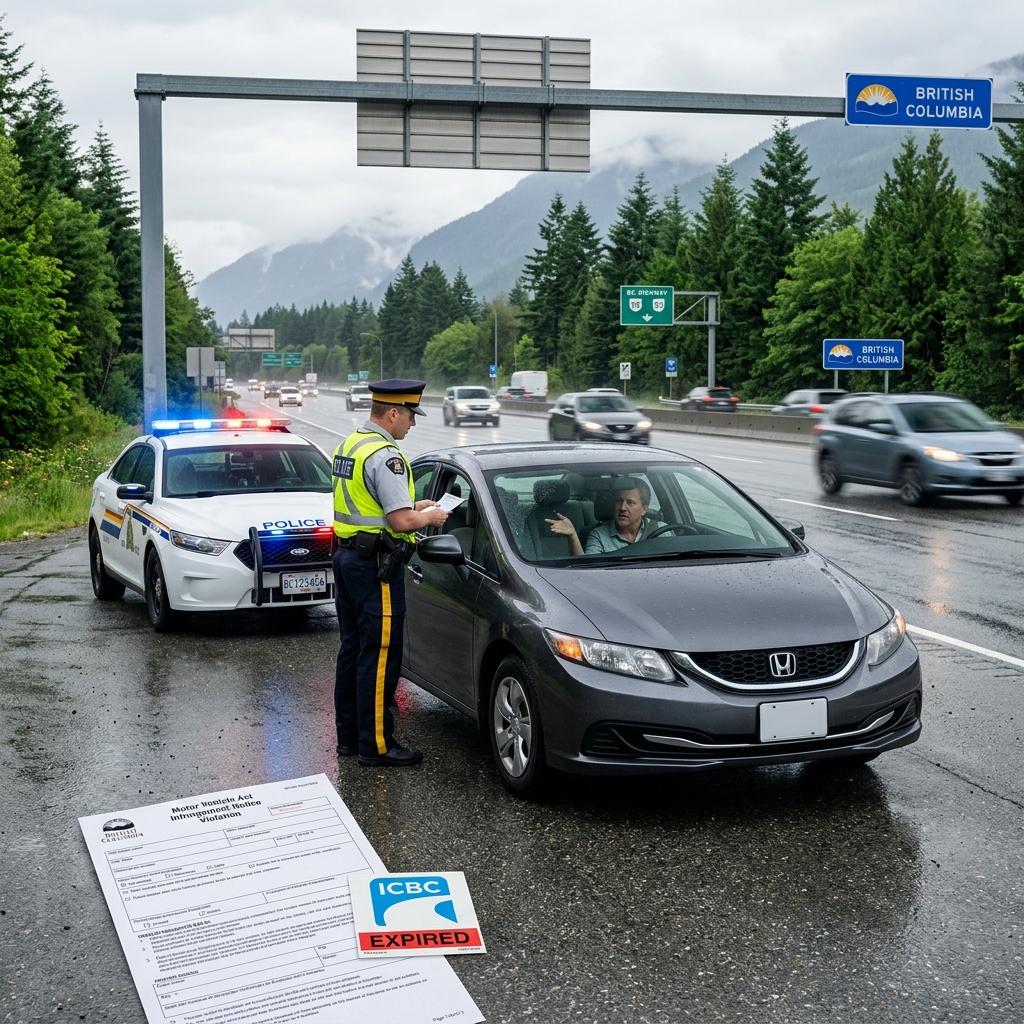
In British Columbia, every driver must carry valid automobile insurance on any vehicle they operate on public roads. Driving without insurance is not just risky from a financial perspective; it is an offence under provincial law and can lead to significant penalties, including fines, possible driving prohibitions, and long-term consequences for your driving record.
This guide explains how BC law treats driving without insurance, what kinds of tickets you may receive, the range of penalties a court can impose, and your options if you are charged. It is designed to help you understand the process so you can make informed decisions about how to respond.
Why Insurance Is Mandatory in BC
British Columbia requires all motor vehicles operated on public roads to be insured, primarily so that accident victims have access to compensation and medical benefits when collisions occur. Mandatory coverage also protects drivers from catastrophic personal financial loss if they are found responsible for a serious crash.
- Protection for others: Liability coverage pays for injuries and property damage you cause to other people.
- Protection for you: Basic policies include accident benefits that can help with medical costs and income replacement after a crash.
- Legal compliance: Having valid insurance is a condition for driving a vehicle on BC roads under the Motor Vehicle Act and related regulations.
Because of these safety and financial reasons, driving a vehicle without valid insurance is treated as a serious provincial offence, even though it is not a criminal offence under the Criminal Code of Canada.
Legal Foundations: How the Law Treats Uninsured Driving
In BC, the requirement to have insurance is built into provincial legislation that governs motor vehicles and traffic offences. The key features of this framework are:
- Statutory offence: Driving without valid insurance is an offence under the Motor Vehicle Act, enforced through provincial violation tickets and court proceedings.
- Not a criminal record: Like other provinces, such as Ontario and Alberta, driving without insurance is not recorded as a criminal conviction, but it remains a serious provincial offence.
- Administrative enforcement: Police and peace officers can issue tickets, verify insurance documentation, and, in some circumstances, impound a vehicle for serious non-compliance or related offences.
Although the consequences are not criminal, a conviction can still affect your ability to drive and obtain insurance in the future, and it can have substantial financial impacts.
Common Situations Leading to Charges
Many drivers who are charged with driving without insurance did not set out to intentionally break the law. Typical scenarios include:
- Forgetting to renew insurance before the expiry date.
- Assuming someone else (such as a family member or employer) renewed the policy.
- Using a vehicle that is insured, but not carrying proof of insurance in the vehicle.
- Misunderstanding which vehicle is covered or which driver is authorized under a policy.
While these situations may be accidental, they do not remove the legal requirement to have valid insurance or the ability of police to issue tickets when you are stopped and cannot produce acceptable proof.
Three Types of Tickets You Might Receive
If a police officer stops you in BC and you cannot show proof of valid insurance, you may receive one or more types of provincial tickets. The law distinguishes between different offences related to insurance documents and coverage.
1. Driving Without Insurance
This is the most serious insurance-related offence in BC. It is issued when the vehicle you are driving does not have valid insurance coverage at all, or coverage has expired.
- Usual ticket fine of approximately $598 for a standard violation ticket.
- Potential for higher fines and additional penalties if the matter proceeds to court and a judge decides a harsher sentence is appropriate.
- Risk of driver penalty points or other administrative consequences associated with your driving record.
A conviction for driving without insurance may be considered by insurers when you later apply for coverage, and can increase your premiums or limit the products available to you.
2. Failing to Produce Insurance Documents
In some cases, your vehicle may be insured, but you do not have the paperwork in the vehicle when an officer asks to see it. BC law allows for a separate offence when you fail to produce evidence of insurance.
- The penalty is usually lower than the charge for driving without insurance.
- If you later provide proof that the vehicle was insured at the time of the stop, the court or registry may adjust how the ticket is dealt with.
- This offence focuses on the obligation to carry and present documentation, not on the underlying coverage.
This distinction is important because a driver who was genuinely insured may be able to avoid the more serious consequences that apply when a vehicle has no coverage.
3. Improper Display of Insurance Decal
BC requires an insurance decal on the licence plate or in another prescribed location to show that the vehicle is insured. Incorrect or missing decals can lead to separate tickets.
- Examples include failing to attach the decal, using an expired decal, or placing it in a location that does not comply with regulations.
- Penalties are typically lower than those for driving without insurance, but the offence still forms part of your driving record.
- If your vehicle was insured but the decal was not properly displayed, bringing proof of coverage and the correct decal to court may help when the charge is considered.
Typical Penalties for Driving Without Insurance in BC
BC uses a combination of fixed fines (for standard violation tickets) and judicial discretion (when a ticket proceeds to court) to determine penalties. The range can be summarized as follows:
| Type of Outcome | Fine Range | Possible Additional Consequences |
|---|---|---|
| Standard ticket for driving without insurance | About $598 usual fine | Recorded conviction; potential impact on driving record and future insurance premiums. |
| Court-imposed sentence after hearing or trial | $300 to $2,000 at judge's discretion | Possible driving prohibition for a set period; in rare cases, up to six months in jail for repeated offences. |
| Other provinces (for comparison) | Ontario: $5,000–$25,000 first offence; Alberta minimum $2,875. | Potential licence suspension and vehicle impoundment depending on jurisdiction. |
In British Columbia specifically, jail sentences for driving without insurance are legally possible but extremely unusual, and generally reserved for drivers with many prior convictions for the same offence.
How a Violation Ticket Works
Most uninsured driving cases in BC begin with a violation ticket. Understanding what a ticket is and what it means can help you decide how to respond.
- Details of the offence: The ticket will show the alleged offence (for example, driving without insurance) and the amount of the fine.
- Instructions on the back: The reverse side typically explains your options for paying the fine or disputing the ticket, and sets deadlines for taking action.
- Time limits: In BC, you generally have 30 days from the date of the offence to pay the fine or file a dispute.
Failing to act within these timelines can lead to automatic conviction and additional consequences, including late fees and enforcement actions.
Option 1: Paying the Fine (Pleading Guilty)
If you decide not to dispute the ticket, paying the fine amounts to a guilty plea. You are accepting that you committed the offence as charged.
- No court appearance: When you pay the fine by the deadline indicated, you normally do not need to attend court.
- Early payment discount: For some tickets, paying within 30 days can reduce the fine by a set amount (often around $25).
- Conviction recorded: The offence will be entered on your driving record, which may affect future insurance premiums and eligibility.
Choosing this option may make sense if you agree with the charge, want to avoid the time and uncertainty of a hearing, and are able to pay the fine. However, you should be aware that paying the ticket is equivalent to admitting the violation.
Option 2: Disputing the Ticket
If you believe you were wrongly charged, or you want the court to consider your circumstances, you can dispute the ticket. In BC, you have 30 days from the date of the offence to start this process.
How to File a Dispute
- In person: You can attend the Provincial Court registry in your community and submit the dispute notice there.
- By mail: You can complete the dispute form and mail it to the address listed on the ticket, ensuring it is received within the 30-day limit.
- Keep copies: Always retain a copy of any documents you file, including proof of mailing if you send your dispute by post.
What Happens After You Dispute
When you dispute a ticket, the matter is set for a hearing or trial in Provincial Court. At that hearing, a judicial justice or judge will consider the evidence and decide whether you are guilty of the offence.
- Evidence from both sides: The officer or Crown may present evidence, and you can testify, present documents (such as insurance records), and, in some cases, call witnesses.
- Possible outcomes: The court may dismiss the ticket, uphold it with the usual fine, or impose a different penalty within the legal range (for uninsured driving, between $300 and $2,000).
- Driving prohibition risk: The court has the power to prohibit you from driving for a specified period if it finds that a prohibition is justified.
Disputing a ticket can be worthwhile if you had valid insurance at the time but could not prove it, or if you believe the officer made an error. It may also allow the court to consider your financial circumstances when deciding the fine.
If You Miss the Deadline or Ignore the Ticket
Ignoring a violation ticket has serious consequences. If you do not pay the fine or file a dispute within 30 days, BC's system generally treats this as an automatic conviction.
- Automatic conviction: The offence is recorded as if you had been found guilty in court.
- Enforcement of fines: Unpaid fines can lead to internal collections processes, and can interfere with your ability to renew your driver's licence or vehicle insurance.
- Limited recourse: You may still be able to ask the court to allow your case to proceed in special circumstances, for example if you were unable to file a dispute for reasons beyond your control, but this requires attending the registry and explaining your situation.
Practical Steps If You Are Charged With Driving Without Insurance
If you have received a ticket, there are several practical steps you can take to put yourself in the best position, whether you choose to pay or dispute.
- Confirm your coverage status: Contact your insurer (often ICBC in BC) and verify whether the vehicle was insured on the date of the offence.
- Obtain documentation: If coverage existed, get written proof (policy documents or letters) showing the vehicle was insured and bring them to the court registry.
- Renew or purchase insurance: If your coverage had lapsed, arrange insurance immediately. Courts may look more favourably on drivers who have taken steps to correct the problem.
- Review the ticket: Read both sides carefully to understand the charge, the fine, and your deadlines.
- Consider legal advice: For more complex situations, consulting a lawyer or legal clinic can help you assess the evidence and your options.
Long-Term Consequences of Uninsured Driving
Beyond immediate fines, driving without insurance can have lasting effects on your driving and financial life.
- Driving record: A conviction can appear on your driving abstract for years, depending on the specific offences and provincial record-keeping rules.
- Insurance premiums: Insurers often view uninsured driving as a sign of higher risk, and may charge more or restrict the coverage they offer.
- Potential civil liability: If you cause a collision while uninsured, you may be personally responsible for the full cost of injuries and property damage, which can be financially devastating.
These long-term consequences are a strong reason to keep your insurance current and to respond promptly to any tickets you receive.
Frequently Asked Questions
Is driving without insurance in BC a criminal offence?
No. Driving without insurance in BC is a provincial offence under the Motor Vehicle Act, not a criminal offence under the Criminal Code. However, it is treated as a serious offence and can lead to substantial fines and other penalties.
What is the usual fine for driving without insurance in BC?
For a standard violation ticket, the usual fine is around $598. If the case goes to court, a judge has the authority to impose any fine between $300 and $2,000 for this offence.
Can I go to jail for driving without insurance in BC?
In theory, yes. The law allows for a maximum of six months in jail for driving without insurance. In practice, jail sentences are extremely rare and generally reserved for drivers with repeated convictions for the same offence.
What if my car was insured but I didn't have the papers with me?
If your vehicle was insured but you did not carry proof at the time of the stop, you may have been ticketed for failing to produce insurance documents. Bringing your insurance papers and decal to the Provincial Court registry could help in resolving the ticket, and may distinguish your case from true uninsured driving.
How long do I have to dispute a ticket for driving without insurance?
In BC, you generally have 30 days from the date of the offence to dispute the ticket. You can do this in person at the Provincial Court registry or by mailing in the dispute form following the instructions on the ticket.
What happens if I ignore the ticket and do nothing?
If you neither pay the fine nor dispute the ticket within the 30-day period, you are usually convicted automatically. The conviction is entered on your driving record, and the outstanding fine may affect your ability to renew your licence or insurance until it is paid.
References
- Is Driving Without Insurance Illegal in Canada? — BrokerLink. 2023-05-10. https://www.brokerlink.ca/blog/is-driving-without-insurance-illegal
- Understand the Law Relating to Driving Without Insurance — People's Law School (Dial-A-Law). 2023-11-14. https://dialalaw.peopleslawschool.ca/driving-without-insurance/
- Driving without insurance — Legal Line. 2022-09-01. https://www.legalline.ca/legal-answers/driving-without-insurance/
- It's the law – what you need to know — Financial Services Regulatory Authority of Ontario (FSRA). 2023-06-20. https://www.fsrao.ca/consumers/auto-insurance/purchasing-your-policy/its-law-what-you-need-know
- The Consequences of Driving Without Car Insurance in Canada — DDI Injury Law. 2023-08-15. https://www.ddinjurylaw.com/blog/post/the-consequences-of-driving-without-car-insurance-in-canada
Similar Articles








Read full bio of medha deb


