
Beyond the Reversal: Thousands Trapped in Diversity Visa Limbo
Revoked travel bans left Diversity Visa winners trapped in a rigid system.
The Mirage of the American Dream
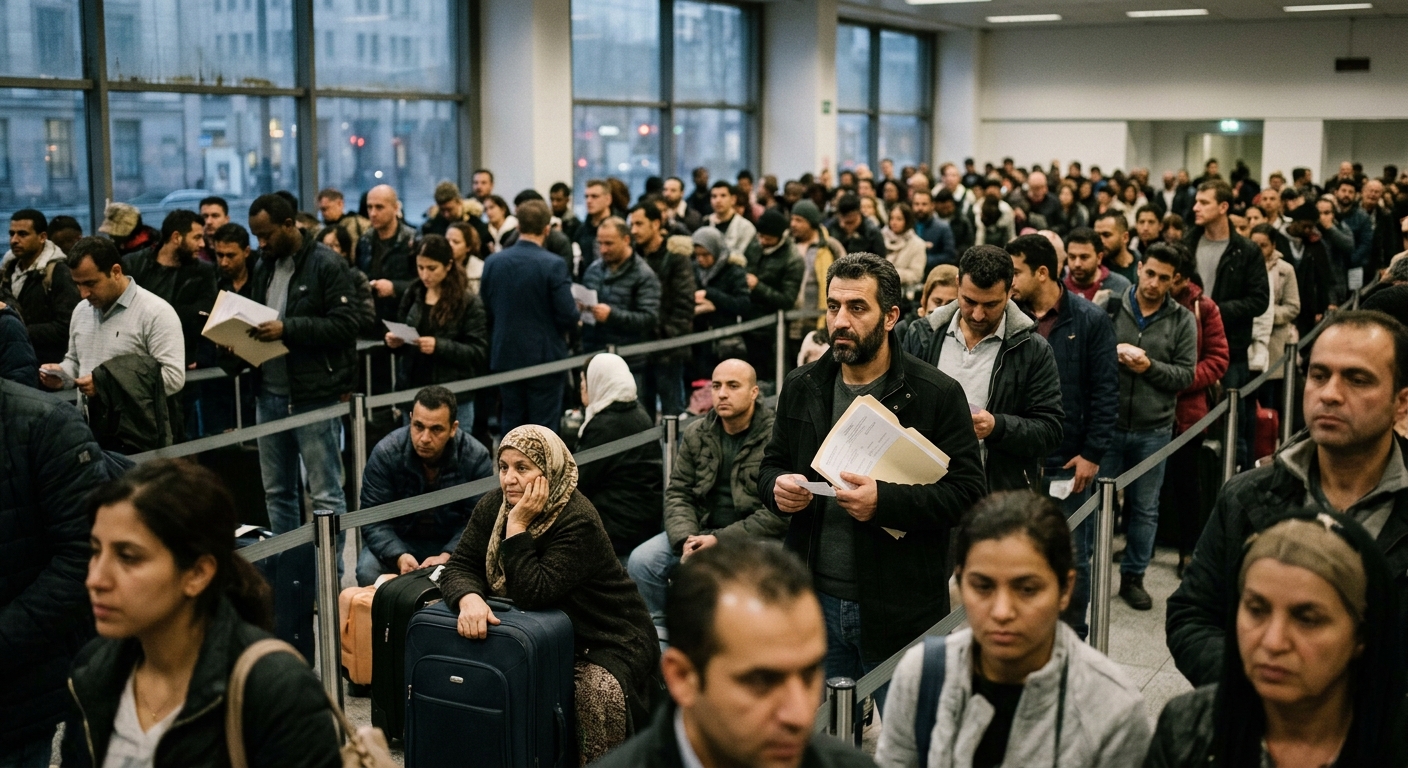
For millions of individuals across the globe, the United States Diversity Immigrant Visa (DV) Program represents a profound beacon of hope. It is a statistical lottery that offers a rare, golden opportunity to immigrate to the U.S. and forge a new life. However, for tens of thousands of applicants who secured this coveted status during the 2020 and 2021 fiscal years, the dream has devolved into an unrelenting and complex nightmare. Caught in the crossfire of abrupt executive orders, a global health pandemic, and a profoundly rigid bureaucratic framework, these selected individuals find themselves perpetually trapped in a state of suspended animation.
Although the current presidential administration has explicitly rolled back the exclusionary policies of its predecessor, the underlying administrative scaffolding that governs visa issuance remains largely unchanged. Consequently, a vast cohort of heavily vetted, hopeful immigrants has been left stranded. They are the unintended victims of legal loopholes and statutory deadlines that have effectively nullified their life-altering lottery wins, proving that a change in executive posture does not always equate to immediate justice on the ground.
Understanding the Diversity Immigrant Visa Program
To fully comprehend the gravity of this immigration crisis, one must first understand the fundamental mechanics of the Diversity Visa Program. Established by the Immigration Act of 1990, the program was carefully designed to introduce demographic variety into the U.S. immigration ecosystem. It specifically targets individuals from nations with historically low rates of immigration to the United States, offering an alternative pathway for those who lack employer or family sponsorships.
- The Lottery Mechanism: Annually, the State Department receives between 11 to 15 million applications. From this immense global pool, only a maximum of 55,000 visas are allocated, giving applicants less than a 1 percent chance of selection.
- Rigorous Vetting Protocols: Winning the lottery does not grant automatic entry. Selectees must undergo an exhaustive vetting process. This includes extensive background checks, costly medical examinations, document verification, and in-person consular interviews.
- The Ticking Clock: The most critical and unforgiving feature of the DV program is its strict statutory deadline. Under the Immigration and Nationality Act (INA), selectees must be issued their visas by September 30 of the fiscal year for which they were selected. If the visa is not issued by this exact date, the applicant’s eligibility permanently expires.
This rigid temporal limitation—designed to keep the annual program compartmentalized—would eventually serve as the legal mechanism that disenfranchised thousands during times of global disruption.
The Architecture of Exclusion: Executive Proclamations
The pathway to the current bureaucratic backlog began with a series of sweeping executive actions implemented during the Trump administration. The administration heavily utilized its executive authority to restrict the flow of legal immigration under the banners of national security and economic protectionism. Below is a summary of the key proclamations that disrupted the Diversity Visa program:
| Proclamation | Year | Primary Objective | Impact on Diversity Visas |
|---|---|---|---|
| 9645 & 9983 | 2017 / 2020 | Restrict entry from specific, predominantly Muslim and African nations to bolster domestic security protocols. | Halted consular processing and denied entry for DV selectees hailing from these targeted nations. |
| 10014 & 10052 | 2020 | Suspend entry of immigrants who allegedly posed a risk to the U.S. labor market during the COVID-19 economic downturn. | Suspended the global issuance of Diversity Visas, abruptly shutting down embassy processing worldwide. |
| 10141 | 2021 | Revoke the discriminatory travel bans (9645 & 9983) and review foreign vetting practices. | Ended the bans conceptually but failed to provide a mechanism to reinstate visas that had expired during the delay . |
For Diversity Visa winners, these orders were catastrophic. Consular processing ground to a sudden halt. Even those who had successfully completed their expensive interviews and medical exams were placed in an indefinite state of “administrative processing.” As the months bled away, the immovable September 30 deadline approached. With embassies shuttered and executive orders explicitly barring their entry, these individuals were physically and legally prevented from completing the required steps to secure their visas.
Proclamation 10141: A Reversal Without Restitution
On January 20, 2021, the incoming Biden administration moved swiftly to dismantle the restrictive immigration framework of the previous four years. Through the issuance of Proclamation 10141, President Biden formally revoked the discriminatory entry bans, specifically targeting Proclamations 9645 and 9983. The new executive order characterized the prior bans as “a stain on our national conscience” that fundamentally undermined the United States’ historic commitment to religious freedom and international tolerance . Furthermore, it mandated a comprehensive review of foreign government information-sharing practices to ensure future vetting was rooted in accuracy rather than blanket exclusion .
However, the stroke of a presidential pen could not turn back the clock. While Proclamation 10141 reopened the theoretical doors for future applicants, it offered no practical relief for the FY2020 and FY2021 Diversity Visa winners whose fiscal year deadlines had already passed . The State Department, grappling with massive systemic backlogs and operating under severely reduced pandemic capacity, implemented a tiered prioritization system for processing visas. In this triage system, Diversity Visas were relegated to the lowest priority tier. By the time embassies resumed a semblance of normal operations, the statutory deadline had elapsed for thousands, rendering their once-in-a-lifetime selection null and void. The administration’s reversal was heralded as a moral victory for immigrant rights, but for the lottery winners caught in the operational transition, it was a hollow promise lacking actionable restitution.
The Legal Quagmire: Fighting the Clock in Federal Court
Desperate to salvage their hijacked futures, thousands of affected selectees turned to the federal judiciary. The resulting litigation created a complex, multi-year legal quagmire that starkly underscored the inflexibility of the U.S. immigration code. Initial lawsuits yielded preliminary victories. Federal district court judges initially ordered the State Department to preserve thousands of Diversity Visas for the 2020 and 2021 selectees, reasoning that the government’s refusal to process the visas in a timely manner was unlawful and arbitrary.
The Precedent of Statutory Deadlines
Unfortunately for the plaintiffs, the jubilation was short-lived. The U.S. government continuously appealed these preliminary injunctions, dragging the litigation out over several years. The core of the government’s defense rested on the strict, literal text of the Immigration and Nationality Act. The argument was uncompromising: once the fiscal year ends on September 30, the State Department completely loses the statutory authority to issue a Diversity Visa, regardless of why the visa was delayed.
The United States Court of Appeals for the District of Columbia Circuit eventually dealt a series of crushing blows to the plaintiffs. In the landmark case Goodluck v. Biden (2024), the appellate court held definitively that “district courts have no authority to order the State Department to keep processing applications for diversity visas and issuing the visas beyond the end of the relevant fiscal years” . This harsh legal reality was reaffirmed in subsequent rulings, including Gjoci v. DOS (2026). In that decision, the court concluded that the plaintiffs’ claims were effectively moot. The judiciary emphasized that it cannot compel the executive branch to violate a congressionally mandated deadline, and further noted that claims for nominal damages were barred by sovereign immunity . The courts essentially ruled that while the applicants had suffered an undeniable and profound injustice, the judicial branch possessed no legal mechanism to grant them the equitable relief they sought.
The Devastating Human Cost of Bureaucratic Paralysis
Behind the complex legal jargon, appellate court opinions, and administrative codes lies a profound human tragedy. Winning the Diversity Visa is universally viewed as winning a lottery that alters generational trajectories. Upon receiving their official selection notices, many applicants made irreversible life decisions based on the assumption that the U.S. government would process their applications in good faith.
To afford the mandatory processing fees, specialized medical examinations, and required travel to specific consular outposts, families frequently liquidated their life savings. It is not uncommon for applicants to sell their homes, ancestral land, and vehicles to fund the process. Others resigned from stable employment, shuttered businesses, or withdrew their children from local schools in anticipation of an imminent departure. When the embassies closed and the statutory deadlines lapsed without warning, these individuals were left entirely stranded. They had systematically dismantled their lives in their home countries, only to have the door to the United States slammed shut on a procedural technicality. Today, they remain trapped in a psychological and financial purgatory. The emotional toll of this prolonged state of limbo—swinging between the fleeting hope of ongoing litigation and the crushing despair of final appellate defeats—is an immeasurable burden borne by thousands.
Advocacy and the Path Forward
As the judicial avenues continue to narrow and effectively close, civil liberties organizations, immigration attorneys, and advocacy groups are pivoting their strategies. Groups dedicated to immigrants’ rights have unequivocally condemned the government’s reliance on technical deadlines to deny visas to individuals who meticulously played by the rules. The consensus among legal scholars is that while the executive branch cannot unilaterally ignore a statutory deadline, the systemic failure to process these visas represents a massive administrative failure.
The ultimate resolution to this crisis now rests squarely with the legislative branch. Advocates are aggressively lobbying the U.S. Congress to pass targeted, remedial legislation. A specific congressional mandate could explicitly recapture the unused Diversity Visas from the 2020 and 2021 fiscal years, waiving the September 30 deadline retroactively, and legally compelling the State Department to allocate them to the disenfranchised selectees. Until such legislative intervention occurs, the thousands of individuals whose dreams were derailed by an unprecedented collision of executive overreach and a global health crisis will continue to wait in the shadows of a broken promise.
Frequently Asked Questions (FAQs)
What exactly is the Diversity Immigrant Visa Program?
The Diversity Visa (DV) Program is a congressionally mandated lottery system that allocates up to 55,000 immigrant visas annually. It aims to diversify the immigrant population in the United States by randomly selecting applicants from countries with historically low rates of immigration to America.
Why did 2020 and 2021 DV winners lose their visas?
These selectees lost their visas due to a “perfect storm” of obstacles. Trump-era executive proclamations banned entry from certain nations, routine consular services were suspended globally during the COVID-19 pandemic, and the program’s strict statutory deadline mandates that all visas must be issued by September 30 of the designated fiscal year. When the clock ran out, their eligibility expired.
Did the Biden administration fix the issue by revoking the travel bans?
No. While President Biden issued Proclamation 10141 to end the discriminatory travel bans on his first day in office, this action did not retroactively extend the September 30 deadline for the 2020 and 2021 selectees . By the time processing resumed, the deadlines for thousands had already expired, rendering the reversal useless for past winners.
Can federal courts force the State Department to issue the expired visas?
Recent appellate court rulings have definitively determined that the courts cannot grant this relief. The D.C. Circuit Court of Appeals ruled in high-profile cases like Goodluck v. Biden and Gjoci v. DOS that the judiciary lacks the statutory authority to order the State Department to issue visas after the fiscal year has concluded .
What options do affected Diversity Visa applicants have left?
Currently, the remaining legal avenues for direct relief are severely limited. Affected individuals are encouraged to stay informed through reputable legal advocacy organizations and to support grassroots legislative efforts. The most viable path forward is pressuring Congress to pass a “visa recapture” bill that would specifically reinstate the lost visas.
References
- Proclamation 10141: Ending Discriminatory Bans on Entry to the United States — Executive Office of the President / Federal Register. 2021-01-25. https://www.federalregister.gov/documents/2021/01/25/2021-01749/ending-discriminatory-bans-on-entry-to-the-united-states
- Goodluck v. Biden, 104 F.4th 920 (D.C. Cir. 2024) — United States Court of Appeals for the District of Columbia Circuit / Justia. 2024-06-25. https://law.justia.com/cases/federal/appellate-courts/cadc/21-5263/21-5263-2024-06-25.html
- Gjoci v. DOS, No. 24-5261 (D.C. Cir. 2026) — United States Court of Appeals for the District of Columbia Circuit / Justia. 2026-04-03. https://cases.justia.com/federal/appellate-courts/cadc/24-5261/24-5261-2026-04-03.pdf
- Final Rule: Visas: Immigrant, 22 CFR Parts 22 and 42 — U.S. Department of State / Federal Register. 2022-01-19. https://www.federalregister.gov/documents/2022/01/19/2022-00829/visas-immigrant
Similar Articles








Read full bio of Sneha Tete


