
The Disruption of Grief: How Police Surveillance Impacts Mourners
Unpacking the intersection of civil liberties, mental health, and law enforcement during times of profound community loss.
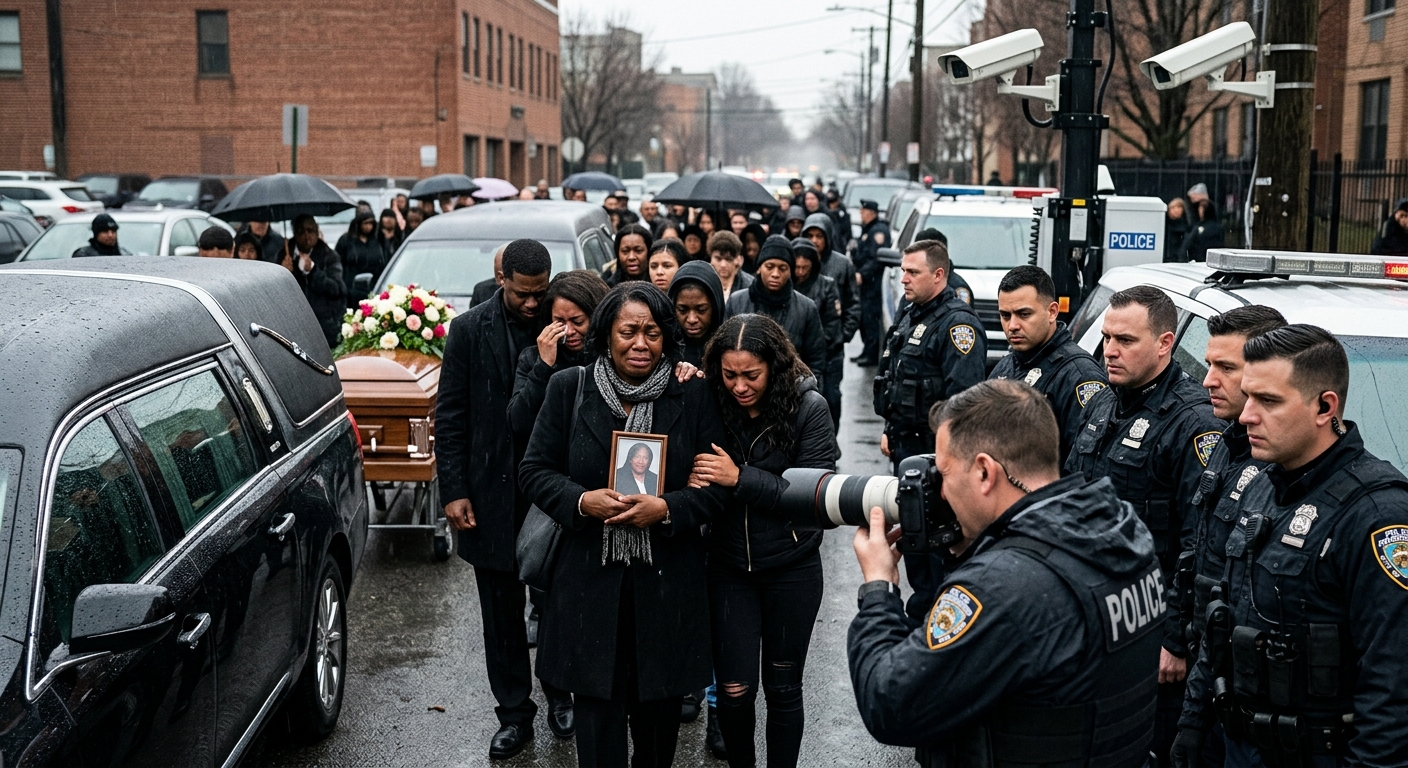
The Right to Mourn in Peace
Funerals and memorial services represent one of the most sacred, intimate, and vulnerable rituals in human existence. Across cultures, these gatherings are vital spaces designed for emotional release, profound community solidarity, and the delicate initiation of the healing process after a devastating loss. However, for many marginalized groups in the United States—particularly within Black and Brown communities—the sanctity of these essential gatherings is frequently disrupted by the heavy-handed and intimidating presence of law enforcement. The phenomenon of police surveillance and aggressive crowd control tactics at funerals highlights a critical intersection of systemic racial inequities, civil rights violations, and public health crises.
When mourners are met with the threat of official violence or invasive monitoring instead of empathy, the fundamental human right to grieve in peace is stripped away. This environment forces communities to replace their natural mourning processes with hyper-vigilance, anxiety, and fear. This comprehensive analysis explores the deep historical roots of over-policing, the severe psychological toll it extracts from communities of color, the critical civil liberties currently at stake, and the urgent necessity for community-led approaches to public safety that prioritize healing over criminalization.
The Historical Through-Line of Surveillance
To truly understand the modern friction between law enforcement agencies and marginalized mourners, one must examine the deep historical roots of surveillance in the United States. Historically, the monitoring of Black bodies and social gatherings was engineered for absolute control, not public safety. During the era of enslavement, organized slave patrols were specifically tasked with invading and disrupting social gatherings, including deeply personal events like funerals and religious assemblies. The primary motivation was a persistent fear that such assemblies could serve as grounds for organizing resistance or rebellion. This institutional legacy of suspicion and control did not vanish with the abolition of slavery. Instead, it evolved and adapted to new legal frameworks. During the oppressive Jim Crow era and the subsequent Civil Rights Movement, the state routinely monitored Black churches, community centers, and even private gatherings.
Today, this historical through-line manifests in the disproportionate policing of Black neighborhoods and, devastatingly, the heavy policing of Black grief. When law enforcement agencies deploy mobile surveillance towers, heavily armed tactical units, or low-flying helicopters to monitor a memorial service, they signal unequivocally that the community is viewed inherently as a threat rather than as a group of grieving citizens. Legal scholars and civil rights experts note that this continuous, systemic surveillance fundamentally alters the social reality of marginalized groups. According to comprehensive analysis published in the Harvard Law Review , aggressive surveillance and tracking strategies discourage participation in vital community institutions. This environment of fear leads some individuals to avoid attending life events, including funerals, entirely out of terror of unwarranted arrest, harassment, or police escalation. The chilling effect of this surveillance cannot be overstated, as it severs the crucial ties that bind communities together during times of tragedy.
The Psychological Toll: The Criminalization of Grief
The disruption of mourning rituals carries severe, long-lasting psychological consequences that ripple outward through entire communities. Grief is already an incredibly complex and agonizing psychological process. When the explicit threat of state-sanctioned violence is introduced into a space of mourning, it exponentially compounds the trauma experienced by attendees. Public health researchers recognize police violence and aggressive surveillance as significant public health threats that exacerbate mental health inequities nationwide.
Vicarious trauma—which is experienced not only by those directly targeted by police actions but also by those who witness, record, or merely anticipate police harassment—permeates marginalized communities on a daily basis. According to extensive research conducted by Boston University scholars focusing on African American health inequities , the persistent, looming threat of police violence severely impacts the emotional and physical well-being of these populations. During a time of loss, loved ones must divert their emotional bandwidth away from grieving to navigate the acute stress of police presence. This diversion leads to heightened, chronic states of anxiety, depression, and post-traumatic stress.
Furthermore, this phenomenon often results in what experts call the ‘criminalization of grief.’ During a funeral, expressions of profound sorrow, anger, despair, or even celebratory remembrance are entirely natural. Yet, in heavily policed environments, these normal human emotions are frequently misinterpreted by law enforcement as defiance, unruliness, or direct aggression. This dangerous misinterpretation can rapidly escalate into the unwarranted use of force. Knowing this, marginalized individuals are forced into a state of hyper-vigilance, requiring them to constantly self-monitor and suppress their emotional expressions precisely when they most need a safe, supportive outlet. The psychological toll of this chronic, relentless stress—often referred to in medical literature as ‘weathering’—has been shown to significantly accelerate physical and mental health deterioration among Black Americans.
Civil Liberties and the First Amendment
Beyond the profound moral and psychological implications, the active surveillance and policing of funerals raises urgent constitutional concerns that strike at the heart of American democracy. The First Amendment of the United States Constitution explicitly protects the fundamental rights to free speech, peaceful public assembly, and the free exercise of religion. All of these protected rights are inherently and robustly exercised during a funeral, memorial service, or community vigil.
A report by the Leadership Conference on Civil and Human Rights underscores a critical balance: while police manage crowds in various contexts, they are strictly bound by the Constitution to protect First Amendment rights. While legitimate public safety concerns might justify certain non-intrusive crowd control measures at massive public events, the unwarranted surveillance, intimidation, and collection of private information on individuals who are merely exercising their right to assemble and mourn is fundamentally unconstitutional.
When law enforcement agencies utilize advanced surveillance equipment to monitor attendees at a funeral—such as recording license plates, deploying facial recognition software on grieving families, or indiscriminately photographing crowds—they inflict a massive ‘chilling effect’ on the community’s constitutional right to assemble. This invasive, inherently suspicious behavior destroys the fragile trust between communities and police forces, pushing the community further away from the civic cooperation that law enforcement ostensibly seeks to cultivate. Legal advocates consistently argue that such overreaching practices not only violate the First Amendment but also implicate the Fourth Amendment’s vital protections against unreasonable searches and seizures, creating an environment where individuals are penalized simply for participating in a deeply rooted cultural and religious tradition.
Comparing Frameworks: Traditional Policing vs. Community-Led Approaches
To understand the contrast between current law enforcement tactics and proposed equitable solutions, it is helpful to examine how different frameworks approach community gatherings and emotional events.
| Aspect | Traditional Policing Model | Community-Led Healing Framework |
|---|---|---|
| Primary Goal | Crowd control, surveillance, and preemptive deterrence. | Emotional support, de-escalation, and community safety. |
| Personnel Used | Armed officers, tactical units, and surveillance operators. | Trained violence interrupters, grief counselors, and local leaders. |
| Community Impact | Increases anxiety, suppresses natural emotional expression. | Fosters trust, allows for genuine emotional processing and healing. |
| Resource Allocation | Investment in surveillance tech, overtime pay, and militarized gear. | Investment in social workers, mental health resources, and community programs. |
Why Funerals Become Flashpoints
Law enforcement agencies frequently justify their heavy presence at funerals in marginalized communities by citing broad public safety concerns, specifically pointing to suspected gang affiliations, the potential for retaliatory violence, or general crowd unruliness. While the goal of preventing further tragedy or violence is undeniably a valid administrative objective, the methodologies employed to achieve this goal are frequently blunt, overly militarized, and vastly disproportionate to the actual threat level.
Instead of collaborating closely with trusted community leaders, local clergy, or trained violence interrupters who specialize in non-violent de-escalation, police departments often rely on overwhelming and intimidating shows of physical force. It is not uncommon for a memorial service to be surrounded by patrol cars with flashing lights, officers in tactical gear, or overhead surveillance drones. This approach operates on the flawed premise that armed officers deter violence in emotional settings. In reality, their imposing presence almost always serves as an instigating factor, actively turning a somber, emotional occasion into a highly volatile flashpoint. The underlying assumption of inherent criminality—the idea that a gathering of grieving Black youth or adults is automatically dangerous—is a textbook manifestation of systemic racial bias.
Systemic Reforms and Healing Justice
Reimagining public safety in the United States requires a fundamental, structural shift away from punitive, surveillance-heavy models and toward holistic, community-centered approaches. Divesting from the over-policing of marginalized communities must include explicitly establishing boundaries around sacred, emotional spaces like funerals, hospitals, and schools.
The concept of ‘healing justice,’ heavily discussed in modern psychological and public health circles, offers a robust framework for this necessary transition. As noted in research published by the National Institutes of Health (NIH) , a healing justice approach to grief in communities of color demands an immediate end to hyper-individualized, de-politicized, and criminalized treatment. Instead, it advocates strongly for community autonomy and collective care. In practice, this means empowering community-led crisis response teams and local violence interrupters—individuals who are deeply rooted in the neighborhood and fully equipped to handle emotional distress without the looming threat of arrest or lethal force.
Furthermore, municipalities must implement strict, enforceable policies that severely limit police surveillance at funerals and religious gatherings. Community Control Over Police Surveillance (CCOPS) laws, which are steadily being adopted in various progressive cities, offer a vital legislative avenue. These laws ensure that law enforcement agencies cannot unilaterally deploy invasive technologies in sensitive environments without transparent public oversight and explicit community consent.
Frequently Asked Questions
What is the First Amendment’s role in protecting funerals?
The First Amendment protects the rights to free speech, peaceful assembly, and the free exercise of religion. Funerals and memorial services are fundamentally protected assemblies. When police conduct unwarranted surveillance or actively intimidate mourners, it creates a ‘chilling effect’ that violates these foundational constitutional rights, effectively discouraging people from participating in their cultural and religious traditions.
How does police surveillance impact mental health?
Constant surveillance and the pervasive threat of police violence contribute directly to chronic stress, anxiety, and depression within marginalized communities. This constant state of hyper-vigilance accelerates physical and mental health deterioration, a biological phenomenon researchers frequently refer to as ‘weathering.’ It actively prevents individuals from processing grief naturally, compounding their existing trauma.
What does the ‘criminalization of grief’ mean?
The criminalization of grief refers to the phenomenon where natural human expressions of sorrow, anger, or despair during a period of mourning are misinterpreted by law enforcement as defiance or aggression. This systemic bias forces marginalized individuals to suppress their natural emotions to avoid unwarranted police escalation and potential physical violence.
What are community-led crisis responses?
Community-led crisis responses rely on trained local professionals, such as violence interrupters, grief counselors, and social workers, rather than armed police officers, to manage community events and emotional crises. This localized approach, heavily rooted in the principles of healing justice, focuses exclusively on non-violent de-escalation, emotional support, and fostering trust rather than imposing punitive control.
Conclusion
The surveillance of funerals in marginalized communities is a stark reminder of inequalities embedded within the American justice system. Funerals should universally be recognized as inviolable sanctuaries for mourning, reflection, and community healing, rather than extensions of the carceral state. The persistent criminalization of Black grief not only violates fundamental constitutional liberties but also inflicts profound, lasting psychological trauma on communities already burdened by systemic racism. To move forward, society must fully embrace and invest in healing justice frameworks, prioritizing community-led support mechanisms over militarized surveillance. Reclaiming the right to mourn in peace is a fundamental assertion of human dignity, demanding that everyone is granted the space to grieve without fear.
References
- Keeping Track: Surveillance, Control, and the Expansion of the Carceral State — Harvard Law Review. 2015-12-02. https://harvardlawreview.org/print/vol-129/keeping-track-surveillance-control-and-the-expansion-of-the-carceral-state/
- Cycles of Threat: Graham v. Connor, Police Violence, and African American Health Inequities — Boston University Law Review. 2020-04-11. https://www.bu.edu/bulawreview/files/2020/04/BOWLEG-ET-AL..pdf
- New Era of Public Safety: A Guide to Fair, Safe, and Effective Community Policing — The Leadership Conference on Civil and Human Rights. 2018-07-03. https://civilrights.org/wp-content/uploads/Policing_Full_Report.pdf
- A Healing Justice Approach to Grief in Communities of Color — Frontiers in Psychiatry (PMC – NIH). 2022-03-24. https://www.ncbi.nlm.nih.gov/pmc/articles/PMC8986968/
Similar Articles








Read full bio of medha deb




