
COPA and the Fight for Internet Free Speech
The surreal history of early web censorship and digital civil liberties.
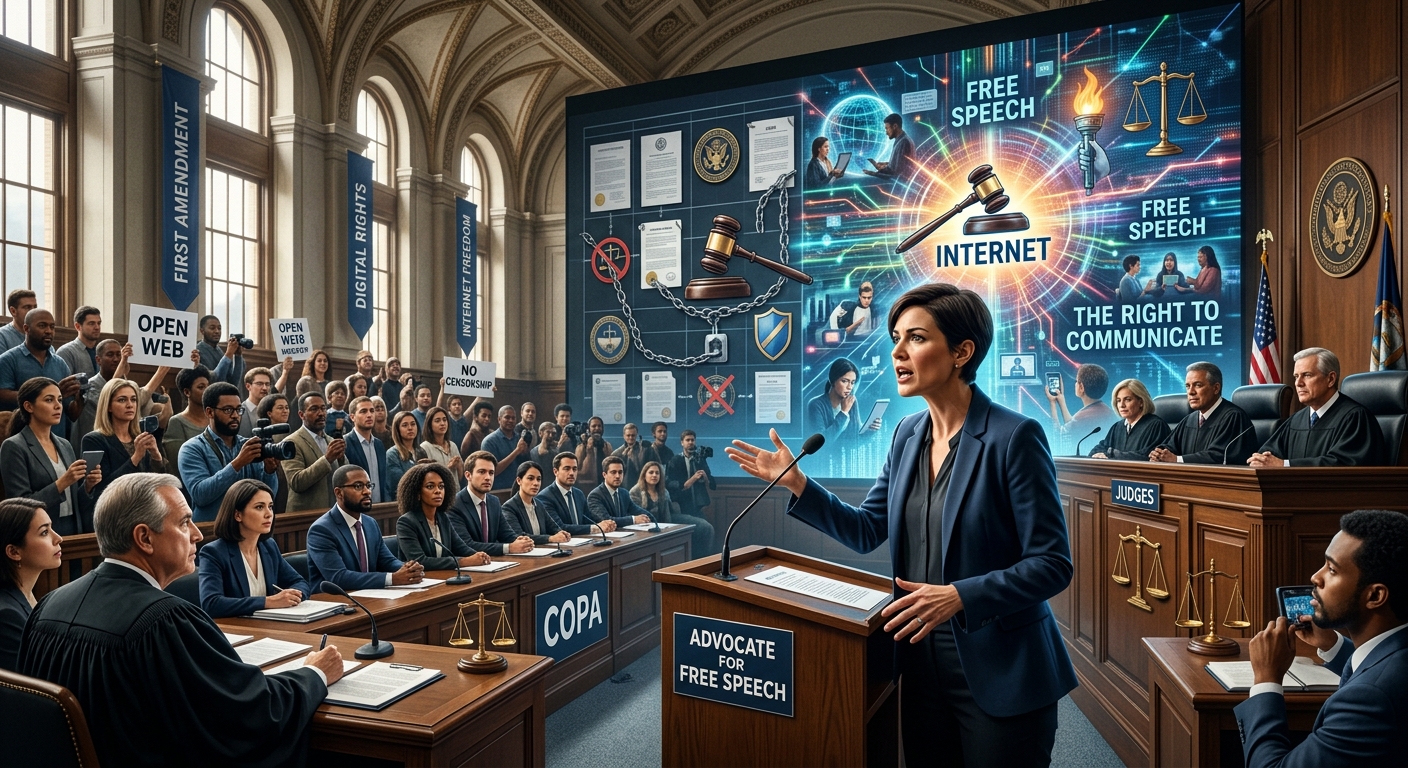
Introduction: The Digital Frontier and the Censorship Backlash
In the late 1990s and early 2000s, the World Wide Web was a rapidly expanding, largely unregulated digital frontier. It was a space characterized by unprecedented access to information, borderless global connectivity, and a profound lack of centralized governance. Unsurprisingly, this wild-west environment triggered an intense moral panic among parents, educators, and lawmakers. As families brought personal computers into their living rooms, the realization that graphic, sexually explicit content was just a few clicks away sparked a fierce legislative backlash. The government’s attempt to sanitize the internet birthed one of the most consequential First Amendment battles in modern history: the fight over the Child Online Protection Act (COPA).
At the heart of this legal warfare was a fundamental question that continues to plague digital policy today. Resolving this tension required navigating several core conflicts:
- Child Safety vs. Adult Constitutional Rights: Balancing the protection of minors with the First Amendment rights of adults to freely publish and consume information.
- Government Mandates vs. Technological Solutions: Deciding whether the burden of censorship should fall on federal prosecutors or on user-end filtering technologies.
- Local Standards vs. Global Networks: Attempting to apply geographically based community standards of decency to a borderless worldwide network.
The resulting federal trials were not merely dry, procedural legal proceedings. They were surreal cultural touchstones filled with bizarre anecdotes—such as a child stumbling upon explicit content while simply searching for a pet’s name—and shadowy political operatives waiting in the gallery to draft the next wave of censorship legislation.
The Legal Stage: From the CDA to the Child Online Protection Act
To fully grasp the absurdity and the high stakes of these early digital freedom trials, one must look at the foundational laws that ignited the conflict. In 1996, the United States Congress passed the Communications Decency Act (CDA), a sweeping piece of legislation that attempted to blanketly ban “indecent” and “patently offensive” speech on the internet. However, in the landmark 1997 case Reno v. ACLU, the Supreme Court struck down the core provisions of the CDA. The Court ruled that the internet is entitled to the highest level of First Amendment protection, akin to print media, rather than the lower standard of First Amendment protection applied to broadcast television and radio.
Undeterred by this constitutional defeat, Congress quickly returned to the drawing board and passed the Child Online Protection Act (COPA) in 1998. COPA was designed to be a more targeted legislative strike. Instead of banning all “indecency,” it made it a federal crime for any commercial website to knowingly publish material that is “harmful to minors” without implementing stringent age-verification barriers. The penalties for non-compliance were severe, threatening webmasters with up to six months in federal prison and a $50,000 fine per violation.
While the goal of protecting children was universally recognized by the courts as a compelling government interest, civil liberties organizations argued that the mechanics of COPA were deeply, fatally flawed. Implementing mandatory age-verification walls across the web would force adult users to surrender their anonymity and sensitive financial data just to access constitutionally protected speech. This legal challenge ultimately culminated in the Supreme Court case Ashcroft v. ACLU (2004), which upheld an injunction against the law. The courts applied “strict scrutiny,” determining that the government failed to prove that COPA was the “least restrictive means” of achieving its goals.
Courtroom Surrealism: Litigating the Web in Federal Court
The federal trials surrounding COPA provided a striking, often comical juxtaposition between the rigid solemnity of the American judicial system and the graphic, chaotic realities of the early internet. The government’s legal strategy relied heavily on emotional appeals. Prosecutors continually urged the judges not to let the trial become a purely intellectual exercise about abstract constitutional theory, but rather to focus viscerally on the children harmed by digital obscenity.
This strategy led to scenes of unparalleled courtroom surrealism. Federal litigators, dressed in conservative suits and adhering to strict, formal courtroom decorum, found themselves reading aloud the URLs of deeply explicit websites and debating the artistic merits of adult content on the judicial record. Serious legal arguments about the First Amendment were punctuated by government attorneys deadpanning highly explicit, crude domain names as formal evidentiary exhibits.
The defense, led by digital rights advocates, continually pushed the focus back to constitutional law and the inherent architecture of the internet. They highlighted the impossibility of applying traditional obscenity frameworks to a global network. Historically, obscenity was judged by the “Miller test,” which relies heavily on “contemporary community standards.” However, on the World Wide Web, a server located in progressive San Francisco instantly broadcasts to conservative rural communities. If COPA were enforced, webmasters would be forced to censor their content to comply with the most puritanical communities in the nation, effectively holding the free speech rights of the entire country hostage to the most restrictive local standards.
The “Dog’s Name” Dilemma and Technological Realities
One of the most memorable and emotionally charged arguments presented by the government involved the danger of accidental exposure. During the proceedings, government attorneys recounted the tragicomic story of a young girl who innocently typed her dog’s name into an early internet search engine, only to have her computer screen instantly flood with highly explicit pornographic images.
This “dog’s name” dilemma perfectly encapsulated the technological limitations of the era. In the late 1990s and early 2000s, search engine algorithms were incredibly primitive compared to today. They relied almost entirely on basic keyword matching and were highly susceptible to manipulation. Webmasters routinely engaged in “keyword stuffing”—hiding innocuous, highly searched words in the invisible metadata of their adult websites to maliciously farm accidental traffic. If a child’s pet shared a name with a common slang term, or if a site simply stuffed common pet names into its code, the search engine possessed no contextual awareness to distinguish between an innocent inquiry and a request for adult content.
However, civil liberties advocates successfully argued that the government’s proposed solution—criminalizing the webmasters and forcing a nationwide censorship regime—was entirely unconstitutional. The First Amendment strictly requires the government to use the “least restrictive means” possible when regulating speech. Instead of blunt federal mandates, the tech industry provided the appropriate remedy. The development of robust, client-side filtering software (parental controls) and the introduction of algorithmic “SafeSearch” features empowered parents to block explicit content at the household level. By shifting the control to the user’s end, children were protected without infringing upon the rights of adult internet users, and without punishing content creators for the primitive state of early search engine technology.
The Mystery Man: Shadow Legislation and Lobbying
While high-profile lawyers debated algorithms and constitutional tests before the judge, another fascinating dynamic was quietly unfolding in the public gallery of the courtroom. Observers consistently noted the presence of silent, stone-faced individuals meticulously taking notes on the proceedings. These “mystery men” were not idle spectators or concerned local citizens; they were seasoned political operatives and lobbyists representing powerful, socially conservative advocacy groups.
Their persistent presence highlighted a crucial, often overlooked reality about the fight over internet freedom: the push for digital censorship is rarely an isolated incident or a spontaneous grassroots reaction. Instead, it is a highly coordinated, perpetually funded campaign by interest groups aiming to dictate online morality. These operatives were keenly aware that COPA was resting on incredibly shaky constitutional ground and was highly likely to be struck down by the federal courts.
In anticipation of this judicial defeat, these lobbyists were already quietly drafting “replacement laws.” This strategy reveals the deeply cyclical nature of internet regulation. Advocacy groups continuously attempt to re-legislate morality online, tweaking the statutory language of failed bills just enough to attempt to bypass the specific objections of previous judicial rulings. If a blanket ban fails, they pivot to mandatory age verification. If age verification is deemed too burdensome, they pivot to “child safety” mandates that effectively achieve the same restrictive result. The mystery observers in the courtroom served as a living reminder that the battle for free expression online is a permanent fixture of digital politics.
Modern Parallels: Age Verification and Contemporary Laws
COPA was ultimately defeated, with the courts firmly declaring that the government cannot sacrifice the First Amendment rights of adults in the name of protecting minors. However, the foundational legal and cultural arguments born during the COPA trials did not disappear; they merely evolved to match modern technology.
Today, the echoes of the “dog’s name” dilemma and the mystery man’s backup legislation are louder than ever. Lawmakers across the country are currently pushing federal bills like the Kids Online Safety Act (KOSA) and enacting strict state-level age verification mandates for digital platforms. The legislative justifications are virtually identical to those deployed in 1998: children are being harmed by the internet, accidental exposure remains a threat, and technology companies cannot be trusted to self-regulate.
| Legislation | Year Introduced | Core Mechanism | Legal Status / Outcome |
|---|---|---|---|
| Communications Decency Act (CDA) | 1996 | Blanket ban on “indecent” internet speech. | Struck down by the Supreme Court (Reno v. ACLU). |
| Child Online Protection Act (COPA) | 1998 | Age verification for commercial material “harmful to minors.” | Enjoined and ultimately struck down (Ashcroft v. ACLU). |
| Kids Online Safety Act (KOSA) & State ID Laws | 2020s | Duty of care mandates and government ID uploads for web access. | Currently facing massive First Amendment legal challenges. |
Yet, the constitutional counterarguments remain just as potent today as they were two decades ago. Modern digital rights advocates continue to warn that forcing adults to upload sensitive government IDs to browse the web, or compelling platforms to aggressively filter their content to avoid massive civil liability, will inevitably result in the mass suppression of lawful, constitutionally protected speech. The history of COPA proves that while protecting children is a noble endeavor, it cannot be achieved by dismantling privacy and free speech.
Conclusion
The trials surrounding the Child Online Protection Act represented a defining, watershed moment in the history of internet jurisprudence. From the surreal courtroom debates over explicit domain names to the genuine, everyday concerns of parents navigating a terrifying new digital landscape, the COPA saga highlighted the immense difficulty of regulating a global, borderless medium. Ultimately, the judicial system correctly determined that technological tools—such as parental controls and vastly improved search engine algorithms—are far more effective and constitutionally sound than sweeping government censorship. As new legislative threats to digital free speech inevitably emerge in the modern era, the lessons learned from COPA remain an essential, foundational shield against ongoing efforts to sanitize the web at the expense of our civil liberties.
Frequently Asked Questions (FAQs)
What was the Child Online Protection Act (COPA)?
COPA was a 1998 United States federal law intended to heavily restrict access by minors to any material defined as “harmful to minors” on the internet. It required commercial websites to implement strict age-verification systems, such as requiring credit card numbers, under the threat of severe financial fines and federal imprisonment.
Why did the Supreme Court ultimately strike down COPA?
In cases culminating with Ashcroft v. American Civil Liberties Union (2004), the courts upheld injunctions against the law, eventually leading to its demise. The judicial system determined that COPA violated the First Amendment because its broad mechanisms heavily burdened the free speech and privacy rights of adults. Furthermore, the government fundamentally failed to prove that COPA was the “least restrictive means” of protecting children, especially given the widespread availability of effective parental filtering software.
What is the “least restrictive means” test in First Amendment law?
When the government attempts to regulate or censor speech based on its content, courts apply an incredibly high legal standard called “strict scrutiny.” This rigorous standard requires the government to prove two things: first, that it has a compelling interest (like protecting the physical safety of children), and second, that the law is the “least restrictive means” available to achieve that specific goal, ensuring that constitutionally protected speech is not unnecessarily suppressed in the process.
References
- Ashcroft v. American Civil Liberties Union, 542 U.S. 656 — Supreme Court of the United States. 2004-06-29. https://supreme.justia.com/cases/federal/us/542/656/ (This foundational ruling remains the definitive legal standard for assessing internet censorship and less restrictive alternatives.)
- Reno v. American Civil Liberties Union, 521 U.S. 844 — Supreme Court of the United States. 1997-06-26. https://supreme.justia.com/cases/federal/us/521/844/ (This historic decision established that internet speech receives the highest level of First Amendment protection.)
- Amdt1.7.5.12 Child Pornography and Obscenity — Constitution Annotated, Congress.gov. 2024-01-01. https://constitution.congress.gov/browse/essay/amdt1-7-5-12/ALDE_00013809/ (This official government constitutional analysis provides a contemporary overview of internet obscenity law.)
- S.1409 – Kids Online Safety Act — U.S. Congress. 2023-05-02. https://www.congress.gov/bill/118th-congress/senate-bill/1409 (This primary legislative document highlights the modern continuation of the legal battles initiated by COPA.)
Similar Articles








Read full bio of Sneha Tete


