
The Controversy of Delegating Federal Immigration Powers
How 287(g) agreements blur local policing and federal deportation efforts.
Introduction: The Deepening Divide Over Local Immigration Enforcement
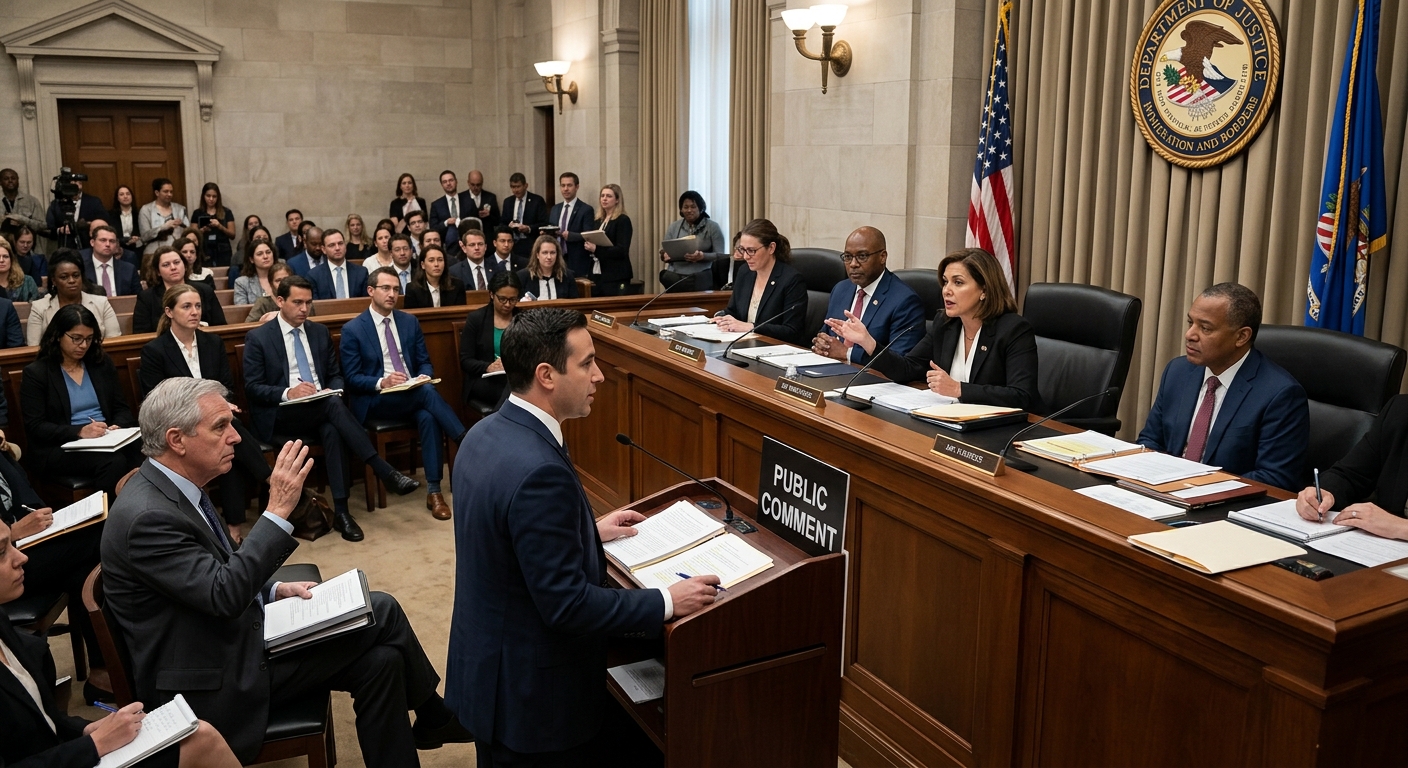
The intersection of local law enforcement and federal immigration control remains one of the most contentious policy arenas in the United States today. At the heart of this multifaceted dispute is the practice of delegating complex, federal immigration enforcement responsibilities directly to local sheriffs and municipal police departments. While proponents often frame this inter-agency collaboration as a necessary force multiplier for federal authorities and an essential, cost-effective tool for public safety, a robust and vocal coalition of civil rights organizations, legal scholars, and community advocates argues fiercely to the contrary. They contend that deputizing local police forces to act as federal immigration agents fundamentally corrupts the justice system, opening the door to systemic civil liberties violations and deep-seated community mistrust.
The core of the controversy is rooted in a federal program that seamlessly intertwines the daily, routine duties of local policing with the sweeping mandate of the federal deportation machinery. When municipal and county law enforcement officers step into the shoes of federal immigration agents, the fundamental mission of local policing—which is ostensibly to protect and serve the immediate community without prejudice—becomes severely blurred. This amalgamation of duties frequently empowers local jurisdictions with alarming records of racial discrimination, institutional corruption, and constitutional violations. By granting these specific agencies broad discretionary power over vulnerable immigrant populations, the federal government inadvertently endorses a system where justice is unevenly applied, families are disproportionately torn apart, and community trust is severely, sometimes irreparably, fractured.
Understanding the Mechanics of the 287(g) Program
To fully grasp the magnitude and complexity of this issue, one must examine the legal and bureaucratic framework that makes this controversial collaboration possible. The Illegal Immigration Reform and Immigrant Responsibility Act (IIRIRA) of 1996 introduced Section 287(g) to the Immigration and Nationality Act. This obscure statutory provision legally permits the Department of Homeland Security (DHS), and more specifically U.S. Immigration and Customs Enforcement (ICE), to enter into formal, binding memorandums of agreement (MOAs) with state, county, and local law enforcement entities across the country.
Through these detailed written agreements, nominated local officers receive specific, albeit highly abbreviated, training that allows them to perform designated functions of federal immigration agents. While they act under the nominal, top-level supervision of ICE officials, they remain the direct employees of their respective local or state agencies. This creates a deeply confusing jurisdictional overlap, making it exceedingly difficult for the public to discern where local policing ends and federal immigration enforcement begins.
The Three Core Models of Federal-Local Collaboration
The delegation of these immense powers generally manifests in three distinct operational models. Each of these models presents its own unique set of operational challenges, legal liabilities, and implications for the community at large:
| Program Model | Operational Description | Primary Community and Legal Concerns |
|---|---|---|
| Jail Enforcement Model (JEM) | Allows local correctional officers to interrogate individuals already booked into local jails about their immigration status, verify their identities in DHS databases, and hold them for ICE custody. | Leads to prolonged detentions for minor offenses, strains local jail budgets, and heavily incentivizes pretextual arrests just to funnel individuals into the county jail system. |
| Task Force Model (TFM) | Empowers officers to execute immigration enforcement duties during routine public policing activities, such as neighborhood patrols, emergency responses, and traffic stops. | Creates an extremely high risk of immediate racial profiling on the streets, as officers may use minor civil infractions to stop individuals based on physical appearance or language. |
| Warrant Service Officer (WSO) Program | Deputizes local jail officers solely for the purpose of executing administrative immigration warrants within their specific custodial facilities, rather than processing them independently. | Frequently bypasses local “sanctuary” or trust policies established by city councils and deliberately blurs the legal distinction between criminal warrants and civil administrative warrants. |
These specialized models drastically expand the operational footprint of federal immigration enforcement by heavily leveraging local municipal infrastructure and local taxpayer dollars. However, this unchecked expansion comes at a severe cost to the fundamental constitutional principles of unbiased policing and local governmental autonomy.
Civil Rights Implications and Systemic Vulnerabilities
The direct delegation of federal immigration authority to local agencies has catalyzed a disturbing and well-documented surge in civil rights abuses. When local law enforcement officers, who are primarily trained to handle local criminal statutes, are tasked with enforcing incredibly complex civil immigration laws, the strict boundaries of constitutional policing are frequently overstepped. Over the years, numerous civil rights organizations and independent legal watchdogs have meticulously documented how the 287(g) program serves as a direct catalyst for widespread racial profiling, unlawful and extended detentions, and a general, pervasive degradation of fundamental civil liberties.
The Proliferation of Racial Profiling
One of the most insidious and damaging consequences of this delegated federal authority is the systematic normalization of racial profiling. In various jurisdictions currently operating under active 287(g) agreements, independent data consistently reveals a sharp, disproportionate increase in the arrests of individuals from marginalized—particularly Latino and Hispanic—communities for incredibly minor, non-violent infractions. Routine traffic stops for a broken taillight, slightly expired vehicle registration tags, or failing to use a turn signal become highly calculated pretexts.
In these instances, the underlying motive of the officer is not to ensure immediate traffic safety, but rather to use the stop as a concerted effort to interrogate the driver’s legal immigration status and subsequently funnel them directly into the federal deportation pipeline. This toxic environment fosters a terrifying reality where everyday people are targeted primarily based on their physical appearance, the language they happen to be speaking, or the ethnic origin of their surnames. Local sheriffs, some of whom have well-documented histories of making inflammatory, xenophobic, or discriminatory statements regarding immigrant populations, are essentially handed a federally sanctioned mandate to act on their personal prejudices under the guise of national security.
Oversight Deficits and the Shield of Federal Authority
A critical, foundational flaw in the architecture of the 287(g) program is the glaring deficit in meaningful federal oversight and legal accountability. While local officers deputized under the program are technically acting under federal authority and guidelines, ICE’s day-to-day supervision is frequently nominal, administrative, and largely conducted from a distance. This bizarre operational setup creates a dangerous accountability vacuum. When a local sheriff’s deputy commits an egregious civil rights violation while acting as a de facto ICE agent, determining the ultimate legal liability becomes a labyrinthine, frustrating legal challenge.
Local law enforcement agencies often aggressively defend themselves by claiming they were merely following strict federal directives and executing federal priorities. Simultaneously, federal authorities often distance themselves from the specific misconduct by pointing out that the officers involved are ultimately local municipal employees. This complex jurisdictional shell game leaves victims of police abuse with very little legal recourse. Furthermore, delegating these sweeping federal powers to county sheriffs—who are intrinsically political, elected officials—often politicizes immigration enforcement entirely, turning aggressive, localized deportation tactics into highly partisan campaign tools rather than objective, fair applications of the law.
The Deepening Crisis of Community Trust
The unquestionable cornerstone of effective, successful local policing is robust community trust. When residents firmly believe that their local police force is fair, objective, and dedicated solely to their immediate safety, they are significantly more likely to cooperate proactively with criminal investigations, promptly report suspicious activities, and willingly engage in neighborhood safety initiatives. However, directly intertwining local policing responsibilities with federal immigration enforcement systematically dismantles this essential trust, creating a widespread environment of pervasive fear and deep suspicion.
The Dangerous Chilling Effect on Crime Reporting
The most immediate and demonstrably devastating impact of the 287(g) program is the profound chilling effect it directly imposes on vulnerable, marginalized communities. When local police officers are viewed by the public not as civic protectors, but rather as potential, lurking agents of federal deportation, undocumented immigrants—and importantly, even their legally residing, citizen family members—become profoundly reluctant to interact with any form of law enforcement.
This dynamic is particularly catastrophic and life-threatening for victims of severe, violent crimes, including domestic violence, sexual assault, and human trafficking. Abusers, human smugglers, and exploiters frequently and deliberately use the looming threat of deportation as a powerful tool of psychological coercion, knowing full well that their victims will not dare call 911 if doing so risks their immediate removal from the country and permanent separation from their children. Consequently, a program that is ostensibly designed under the guise of enhancing broad public safety inadvertently creates a secure safe haven for violent predators who intentionally prey on the extreme vulnerability of immigrant populations. When a significant portion of a city’s residents are too terrified to report violent crimes or serve as critical witnesses in court, the overall safety and security of the entire jurisdiction is severely and undeniably compromised.
The Disconnect Between Political Promises and Policy Reality
The long-term trajectory of the 287(g) program has been heavily, and often chaotically, influenced by shifting political winds in Washington D.C., yet a profound and frustrating disconnect remains between soaring campaign promises and harsh administrative reality. The previous Trump administration aggressively and intentionally expanded the 287(g) program, effectively utilizing it as the very cornerstone of its highly controversial interior enforcement strategy, even going so far as to remove expiration dates from numerous standing agreements. In direct response to this escalation, during the 2020 presidential campaign, there was a loud, clear, and repeated promise from the Biden administration to immediately roll back these aggressive partnerships and fundamentally reform the fraught immigration enforcement landscape.
Despite early, highly publicized commitments to sever the agreements that controversially deputize local police as immigration agents, the current administration’s actual policy follow-through has been deeply and consistently criticized by prominent immigrant rights advocates. While the administration did take some initial, highly targeted steps—such as terminating specific agreements with a few sheriffs who were nationally known for egregious, undeniable civil rights violations—a vast, sprawling network of active 287(g) contracts quietly remains in place across the nation.
Civil rights groups, progressive federal lawmakers, and even international human rights bodies have voiced their immense frustration with this incredibly slow pace of reform. In recent years, United Nations racial justice experts explicitly and publicly called on the Biden administration to end the 287(g) program in its entirety, citing its undeniable, inextricable link to indirect racial profiling and deeply systemic human rights concerns. The administration’s continued reluctance to unilaterally terminate these hundreds of remaining memorandums of agreement suggests a highly complex, internal political calculus, likely attempting to balance the loud demands of civil rights advocates against the fierce political pushback from conservative local officials and aggressive tough-on-crime political rhetoric.
Charting a Path Forward: Decoupling and Community Safety
Reversing the immense institutional damage inflicted by the blending of federal immigration enforcement and local municipal policing requires a fundamental, immediate paradigm shift at both the local and federal levels. The only sustainable path forward necessitates strictly decoupling these two entirely distinct law enforcement responsibilities, thereby ensuring that local police and county sheriffs return to their core, fundamental mission of ensuring immediate local public safety, free from the heavy, complex burden of enforcing federal administrative immigration laws.
Many forward-thinking jurisdictions across the United States have proactively and successfully rejected 287(g) agreements, choosing instead to enact comprehensive “sanctuary” or “trust” policies. These vital legal frameworks explicitly prohibit local law enforcement agencies from utilizing limited municipal resources, funds, or personnel to aid federal immigration enforcement sweeps. By clearly and legally delineating the strict boundaries of local policing, these communities have taken crucial, measurable steps toward actively rebuilding the deeply fractured trust between local law enforcement agencies and their resident immigrant populations. True community safety cannot be achieved through the use of systemic intimidation and racial profiling; it must fundamentally be built on a strong foundation of mutual community trust, strict constitutional adherence, and the equitable, fair application of justice for all residents.
Frequently Asked Questions (FAQs)
What exactly is the Section 287(g) program?
Section 287(g) is a highly controversial statutory provision embedded within the U.S. Immigration and Nationality Act. It legally permits U.S. Immigration and Customs Enforcement (ICE) to enter into formal memorandums of agreement with state and local law enforcement agencies. These binding agreements delegate specific, federal immigration enforcement powers directly to local officers, effectively allowing them to act as federal immigration agents within their local, municipal jurisdictions.
How does the 287(g) program directly impact local public safety?
Critics, legal scholars, and major civil rights organizations strongly argue that the program negatively impacts overarching public safety by systematically destroying community trust. When local immigrants fear that any interaction with local police could swiftly lead to their deportation, they become far less likely to report violent crimes, serve as vital witnesses, or seek urgent help in emergencies, making the entire community much more vulnerable to unchecked criminal activity.
Does the 287(g) program lead to systemic racial profiling?
Yes, extensive independent reports and rigorous data analyses strongly suggest a direct link between active 287(g) agreements and dramatically increased instances of racial profiling. Because deputized local officers are specifically tasked with identifying undocumented individuals, there is a well-documented, statistical rise in pretextual traffic stops and minor arrests targeting marginalized communities based heavily on their physical appearance, spoken language, or perceived ethnicity.
Has the Biden administration fully ended the 287(g) program?
No. While President Biden explicitly promised during his election campaign to end the 287(g) agreements entered into by the previous administration, his administration has to date only terminated a very select few agreements that were associated with the most egregious, high-profile civil rights violators. Hundreds of these controversial partnerships still remain active across the country today.
References
- Delegation of Immigration Authority Section 287(g) Immigration and Nationality Act — U.S. Immigration and Customs Enforcement (ICE). 2026-06-02. https://www.ice.gov/identify-and-arrest/287g
- Shock, awe, and economic fallout — Brookings Institution. 2025-01-15. https://www.brookings.edu/articles/shock-awe-and-economic-fallout/
- Over 60 Members of Congress Push President Biden and DHS to End Programs that Conscript Local Police to Work as Federal Immigration Enforcement — American Civil Liberties Union (ACLU). 2021-02-12. https://www.aclu.org/press-releases/over-60-members-congress-push-president-biden-and-dhs-end-programs-conscript-local
- Biden’s Unfulfilled Promise to End 287(g) Agreements with Local Law Enforcement — American Immigration Council. 2021-06-24. https://www.americanimmigrationcouncil.org/research/biden%E2%80%99s-unfulfilled-promise-end-287g-agreements-local-law-enforcement
Similar Articles








Read full bio of medha deb


