
Cannabis, Jobs, and the Law: Evolving Workplace Rules
How changing cannabis laws are reshaping employer policies, worker rights, and drug testing standards across the United States.
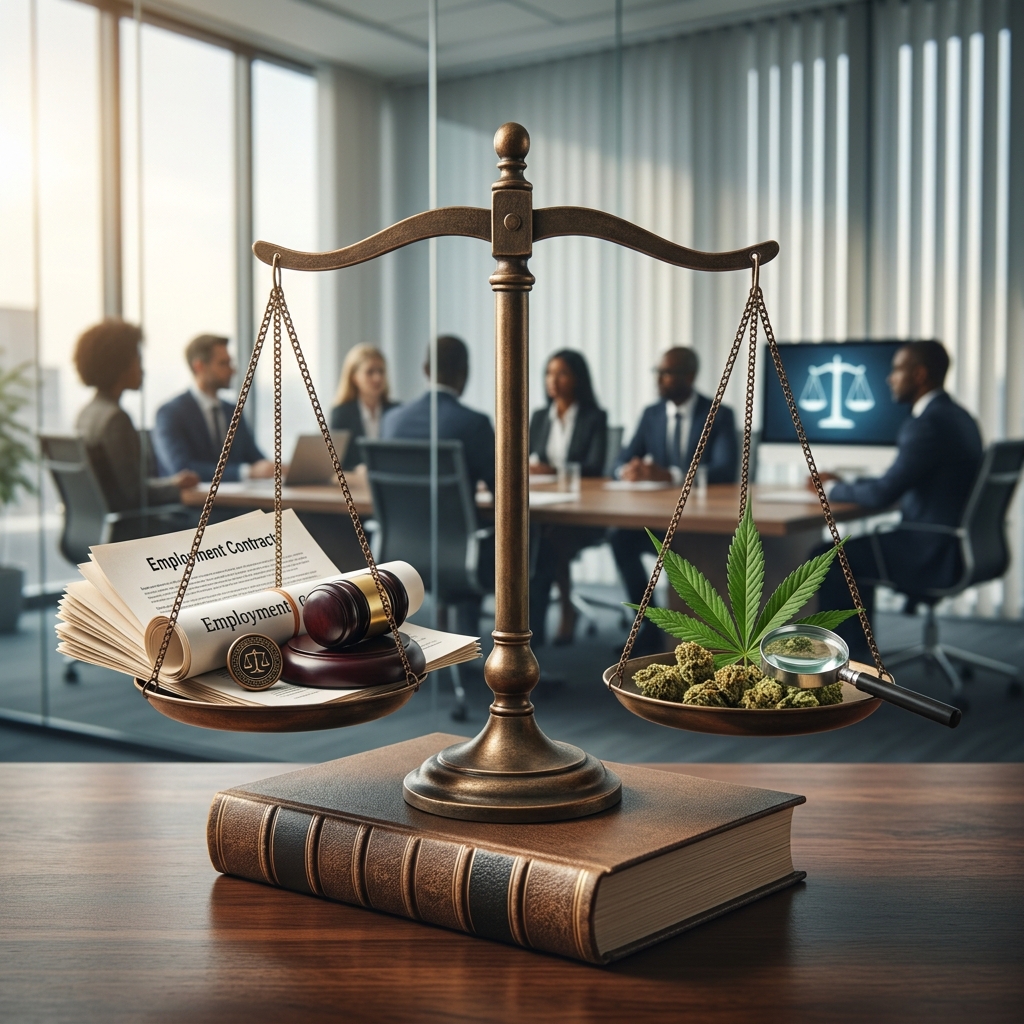
As more U.S. states legalize cannabis for medical and adult use, a critical question has emerged: what happens at work? Employees may be allowed to consume cannabis legally off the job, but many still face discipline or termination when workplace drug tests show use. At the same time, employers are responsible for ensuring safety, productivity, and compliance with federal law. This article explains how cannabis legalization intersects with workplace rules, what protections some states now offer workers, and how both employers and employees can navigate this changing landscape.
Federal Law vs. State Legalization: The Core Conflict
At the heart of cannabis and employment issues lies a legal contradiction: under federal law, cannabis remains a Schedule I controlled substance, legally comparable to drugs such as heroin. But many states have legalized cannabis for medical use, adult use, or both, treating it more like alcohol for many purposes.
This creates several overlapping realities:
- Under federal drug policy and many federal workplace programs, any cannabis use detected by testing is treated as illegal.
- Under state law in legalization states, off-duty, lawful cannabis use is permitted and sometimes explicitly protected from employment discrimination.
- Employers that hold federal contracts or are subject to federal mandates may need to maintain stricter rules than state law would otherwise allow.
As a result, employees in legalization states may still be fired for cannabis use, and employers must carefully design policies that balance state rights, federal requirements, and workplace safety.
Key Principles Behind Modern Workplace Cannabis Policies
Across states, three broad principles now shape cannabis-related employment rules:
- Off-duty legal use: Many laws differentiate between consumption outside work hours and on-the-job impairment.
- Impairment at work: No state requires employers to accept impaired employees at work; safety remains paramount.
- Drug testing and evidence: A positive drug test may indicate past use but not current impairment, leading many states to refine what employers can do with test results.
These principles are expressed differently in each state, but they help explain why some workers now enjoy protections while others do not.
Off-Duty Cannabis Use: Emerging Employee Protections
A growing number of states have enacted specific protections for employees who legally use cannabis outside the workplace and off work hours. These protections generally apply to lawful, off-duty use and do not shield employees who are impaired at work.
Examples of State Protections
Policy details vary, but common features include:
- Prohibiting employers from refusing to hire someone solely because they use cannabis lawfully during personal time.
- Barring termination or discipline based only on a positive test result for non-psychoactive cannabis metabolites, which indicate past use rather than current impairment.
- Protecting both medical cannabis patients and adult-use consumers, depending on the statute.
Advocacy organizations have identified at least nine adult-use legalization states with employment protections for recreational consumers, including California, Connecticut, Nevada, New Jersey, New York, Minnesota, Montana, Rhode Island, and Washington. Research published in 2022 found that, as of 2020, 19 states prohibited employer discrimination against workers solely due to medical cannabis use outside the workplace.
Illustrative State Approaches
| State | Off-Duty Use Protection | Key Exceptions |
|---|---|---|
| New York | Treats legal cannabis as a consumable product; employers cannot discriminate based on lawful off-duty use outside workplace and work hours. | Employers may act if required by federal or state law, risk losing federal funding, or if there are specific articulable symptoms of impairment at work. |
| California | Prohibits firing or penalizing employees solely for lawful off-hours cannabis use, and restricts testing for non-psychoactive metabolites. | Excludes certain safety-sensitive positions, construction trades, and roles tied to federal clearance or contracts. |
| Rhode Island | Bars adverse action based solely on private, lawful cannabis use outside the workplace, provided the employee is not working under the influence. | Exceptions may apply where federal law, licensing, contracts, or some collective bargaining agreements require different treatment. |
These examples show a trend: states increasingly treat cannabis like other legal substances when used off-duty, while still preserving employer authority over on-the-job behavior.
Employers’ Rights: Safety, Productivity, and Compliance
Although some states limit action based solely on lawful off-duty use, employers retain significant rights and responsibilities. Every state allows employers to act when an employee is impaired at work.
Maintaining a Safe and Drug-Free Workplace
Employers generally may:
- Prohibit cannabis use during work hours, on company property, and while operating employer equipment.
- Discipline employees who display specific, articulable signs of impairment that reduce performance or create safety risks.
- Develop and enforce policies aimed at preventing accidents, ensuring quality, and meeting industry safety standards.
National safety experts emphasize that even where carrying small amounts of cannabis is legal, employers are not obligated to permit its use or possession in the workplace, especially in safety-sensitive environments.
Federal Contracts and Legal Obligations
Many employment statutes explicitly recognize that employers may need stricter rules if they are subject to federal requirements. For example, New York’s labor guidance allows employment action where a state or federal statute requires it, where federal law would be violated, or where an employer would risk losing federal contracts or funding. Similar exceptions appear in other state laws.
The federal Drug-Free Workplace Act still considers cannabis a controlled substance, and workplaces subject to that Act may need to maintain policies that prohibit unlawful drug use, regardless of state legalization.
Drug Testing: Between Past Use and Present Impairment
Drug testing is one of the most contested aspects of cannabis and employment policy. While most states still allow employers to test for cannabis use, a growing number restrict how test results may be used, especially for off-duty conduct.
Limits on Testing and Adverse Action
Recent laws and guidance often address two issues:
- Pre-employment testing: Some jurisdictions limit or ban cannabis tests for job applicants, particularly in roles that are not safety-sensitive.
- Metabolite-based discipline: Several laws specify that a positive result for non-psychoactive cannabis metabolites, which linger long after use, cannot by itself justify adverse action against an otherwise unimpaired employee.
At the same time, most states still permit testing after accidents, on reasonable suspicion of impairment, or in accordance with collectively bargained agreements for safety-sensitive positions.
Challenges in Measuring Impairment
A central practical problem is that cannabis testing does not neatly map onto impairment. Unlike alcohol breath tests, which correlate directly with intoxication at a given moment, standard urine or hair tests detect metabolites that may reflect use days or weeks earlier. This has prompted policy shifts toward behavioral evidence and “articulable symptoms” of impairment, such as:
- Markedly slowed reaction times
- Confusion or inability to follow basic instructions
- Visible changes in coordination or balance
- Significant reduction in the quality or speed of work output
Guidance from states like New York encourages employers to rely on specific, documented signs of impairment rather than drug test results alone when making disciplinary decisions. Occupational safety organizations likewise encourage training supervisors to recognize and respond to impairment, regardless of substance.
Medical Cannabis Patients in the Workplace
Medical cannabis programs add another layer of complexity. Many states now protect registered patients from discrimination solely due to their status or lawful medical use outside work, while allowing employers to prohibit on-the-job use or impairment.
Common policy themes include:
- Prohibiting adverse employment action based only on an employee’s status as a medical cannabis patient.
- Allowing employers to restrict tasks performed while an employee is under the influence, especially in safety-sensitive roles.
- Encouraging accommodation discussions, similar to those held for other prescribed medications, with attention to job duties and safety risks.
Researchers have proposed models in which employers collaborate with medical professionals, attorneys, and HR specialists to craft policies that account for medical use, testing protocols, and clear thresholds for investigating suspected impairment.
Practical Policy Design for Employers
Given the rapidly shifting legal landscape, experts recommend that employers develop cannabis policies that are clear, fair, and adaptable.
Core Policy Elements
Effective workplace cannabis policies typically address:
- Scope: Which locations, roles, and work contexts the policy covers.
- Definitions: What constitutes “work hours,” “impairment,” “reasonable suspicion,” and “safety-sensitive” positions.
- Testing protocols: When and how tests are used, how results are interpreted, and under what circumstances they lead to action.
- Disciplinary procedures: Clear, consistent steps for addressing suspected impairment or policy violations.
- Support resources: Access to employee assistance programs and treatment services for substance use concerns.
National safety organizations encourage employers to pair these formal policies with broader cultural efforts: building trust so workers feel safe reporting substance use issues, and training supervisors to spot and document potential impairment.
Balancing Rights and Responsibilities
Thoughtful policies aim to balance several interests:
- Worker privacy and autonomy outside work hours, particularly where state law protects lawful off-duty use.
- Workplace safety, especially in industries such as transportation, healthcare, construction, and manufacturing where impairment can have serious consequences.
- Legal compliance with both state employment protections and federal mandates for drug-free workplaces.
- Fairness and consistency, avoiding arbitrary or discriminatory application of cannabis rules.
Organizations that revisit their policies regularly and consult legal counsel are better positioned to keep pace with new legislation and court decisions.
What Employees Should Know
Employees in legalization states often assume that legal cannabis use cannot affect their job. In reality, protections vary greatly by state, industry, and employer status. Workers should familiarize themselves with both public law and internal policy.
Practical Tips for Workers
- Review your employer’s drug and alcohol policy, including any sections specific to cannabis.
- Understand whether your state has off-duty use protections or medical cannabis anti-discrimination provisions, and any exceptions for federal contractors.
- Recognize that impairment at work can still lead to discipline, even if your consumption was legal.
- Discuss medical cannabis use with HR or management where appropriate, especially if you seek accommodation for a qualifying condition and your role involves safety-sensitive duties.
- Keep documentation, such as medical authorizations or relevant state registration, in case questions arise.
Because laws change frequently, employees may benefit from consulting legal resources or advocacy groups specific to their state when facing complex situations.
Frequently Asked Questions (FAQ)
Can I be fired for legal cannabis use off the job?
In some states, employers cannot fire or refuse to hire you solely because of lawful off-duty cannabis use or a positive test for non-psychoactive metabolites. In other states, no such protection exists, and employers may still take action. Always check your state’s laws and your employer’s policies.
Does my employer have to tolerate cannabis impairment at work?
No. Employers in all states are allowed to respond to on-the-job impairment, particularly when specific, observable symptoms reduce performance or pose safety risks. Many policies explicitly prohibit cannabis use during work hours.
Are federal contractors treated differently?
Often, yes. Laws in states like New York and others allow employers to impose stricter cannabis rules when necessary to comply with federal law or preserve federal funding or contracts. Employees in federally regulated roles may have fewer protections for off-duty use.
Can my employer still drug test me for cannabis?
In most states, employers may continue to test for cannabis, but some jurisdictions restrict pre-employment testing or limit adverse actions based solely on metabolite-positive results, especially for non-safety-sensitive roles. Check local law and any collective bargaining agreements.
Do medical cannabis patients have special protections?
Many states protect medical cannabis patients from discrimination based only on their patient status or lawful off-duty use. However, employers may still restrict work performed under the influence and may decline accommodation where safety or federal compliance is at stake.
References
- Cannabis Legalization and Employment Protections — Marijuana Policy Project. 2023-07-10. https://www.mpp.org/issues/legalization/cannabis-legalization-and-employment-protections/
- Adult Use Cannabis and the Workplace (New York Labor Law 201-d) — New York State Department of Labor. 2023-05-10. https://dol.ny.gov/adult-use-cannabis-and-workplace-p420
- Marijuana Laws by State: Employee Protections — GovDocs. 2024-01-15. https://www.govdocs.com/marijuana-laws-by-state-employee-protections/
- Attorney’s Guide to Cannabis and the Workplace — Bloomberg Law. 2022-11-01. https://pro.bloomberglaw.com/insights/labor-employment/cannabis-and-the-workplace/
- Workplace Cannabis Policies: A Moving Target — National Library of Medicine (PMC). 2022-02-22. https://pmc.ncbi.nlm.nih.gov/articles/PMC8864412/
- Cannabis and Safety: It’s Complicated — National Safety Council. 2023-03-01. https://www.nsc.org/workplace/safety-topics/drugs-at-work/cannabis-its-complicated
- Workplace & DUI Laws — New Jersey Cannabis Regulatory Commission. 2023-06-30. https://www.nj.gov/cannabis/adult-personal/workplace-dui-laws/
- Cannabis and Employment: Medical and Recreational Policies in the States — National Conference of State Legislatures. 2022-08-25. https://www.ncsl.org/health/cannabis-and-employment-medical-and-recreational-policies-in-the-states
Similar Articles








Read full bio of Sneha Tete




