
Cancelling an Online Order in British Columbia
Understand when you can cancel an online order in British Columbia, how refunds work, and what to do if a seller refuses.
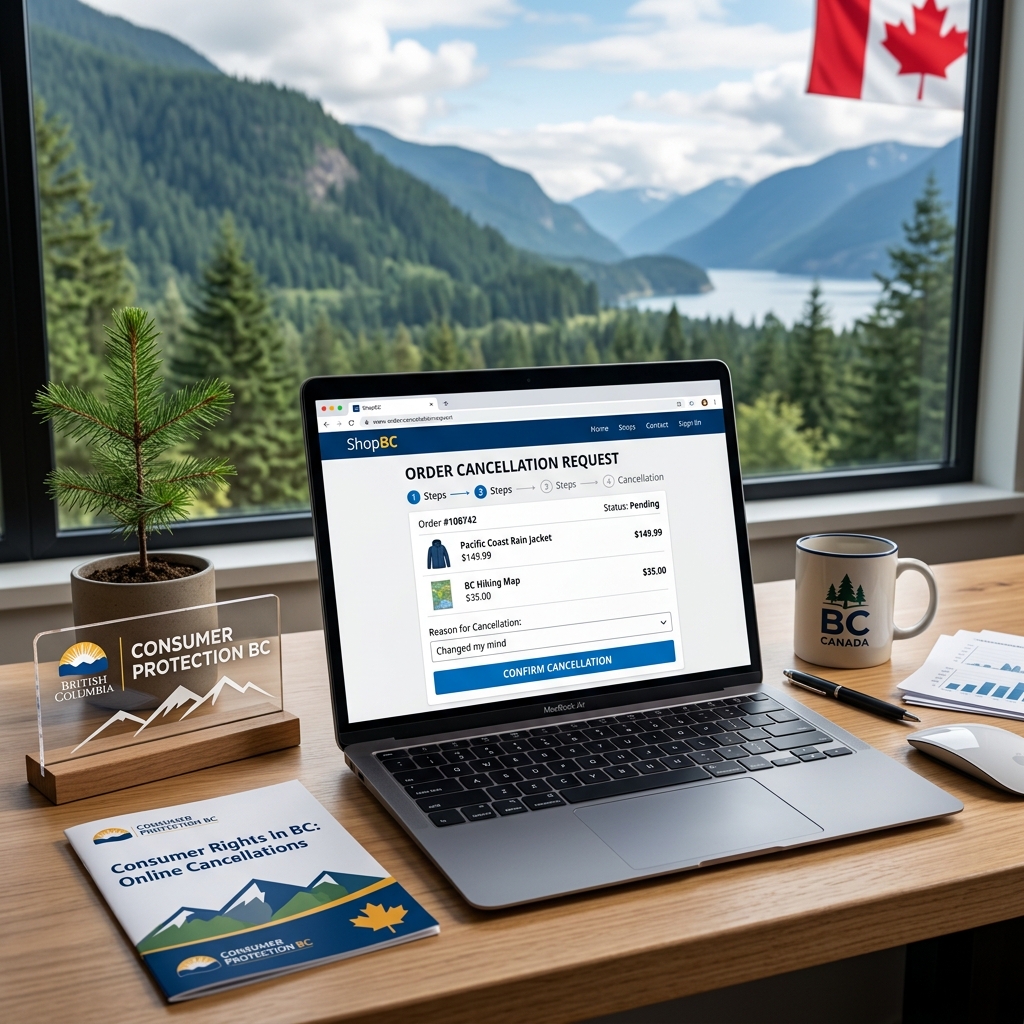
Ordering online is convenient, but it also comes with risk: you may change your mind, spot a mistake, or discover that the seller is not what you expected. This guide explains when you can cancel an online order if you live in British Columbia, what the law requires from sellers, and what you can do if a business refuses to cancel or refund.
This article focuses on consumer purchases made over the internet where you buy for personal, household, or family use, not for business or commercial purposes.
1. Key Takeaways at a Glance
- No general “cooling-off” period for regular online shopping in BC: you usually cannot cancel just because you changed your mind.
- Store policies matter: many businesses allow cancellations or returns as a customer service choice, but they are not always legally required to do so.
- Special rules for distance sales apply to many online purchases in BC, including requirements for written information and delivery within a set time.
- You may have a legal right to cancel if the seller does not give required information, does not deliver on time, or misleads you.
- If a seller won’t cooperate, you can contact your card issuer, complain to regulators, or consider legal options.
2. When Are Online Purchases Covered by BC Consumer Law?
Most online shopping by a BC resident from a business located in or doing business in the province will be treated as a distance sales contract under BC’s consumer protection law. A distance sale is generally a transaction where:
- you and the seller are not together in person at the time of the sale, and
- communication happens by internet, phone, mail, or similar means.
Common examples include:
- ordering clothes, electronics, or furniture from an online retailer
- buying digital services like streaming or software subscriptions
- signing up online for gym memberships or other recurring services
BC consumer legislation does not usually apply to:
- purely private sales between individuals with no business involved
- purchases made for business or commercial purposes
- some types of financial and insurance products governed by separate laws
3. Common Myths About Cancelling Online Orders
Before looking at specific rights, it helps to clear up a few misconceptions that often cause confusion.
3.1 Myth: “I always have 24 hours to cancel”
There is no automatic 24-hour or 48-hour cancellation period for regular online purchases in BC. Any such time window usually comes from the business’s own policy, not from law. Some companies let you cancel within a short period before they start processing or shipping your order, while others will not cancel once the order is placed.
3.2 Myth: “I can cancel any online contract within 10 days”
BC law does give cooling-off periods for certain special contracts, such as door-to-door sales, timeshares, and some prepaid services. Those rules generally do not apply to ordinary online shopping for goods like clothing or electronics. The right to cancel an online purchase depends on the specific circumstances discussed later in this guide, not on a general 10-day rule.
3.3 Myth: “If they refuse to cancel, they are breaking the law”
A seller is not automatically violating the law by refusing to cancel or take back an order when you change your mind. The legal question is whether they have complied with their duties on disclosure, delivery, and misrepresentation. If those duties are met, they may legally refuse cancellation, even if their decision feels unfair.
4. Your Legal Rights in Distance Sales
BC’s consumer protection legislation creates specific rights for distance sales contracts. The most important areas are: information the seller must provide, how quickly they must deliver, and your remedies if those obligations are not met.
4.1 Required written information
Before or at the time you agree to buy, the seller must give you certain key details in writing or in another durable form (for example, an email or downloadable document). These typically include:
- the seller’s name and contact information
- a description of the goods or services
- the total price and any additional charges (such as taxes, fees, or shipping)
- payment terms and any recurring payments
- delivery arrangements and timelines
- information about how to cancel, if cancellation rights exist under the contract
After you place your order, you should receive a confirmation that repeats the essential contract terms. If the seller fails to provide the required information, you may gain a right to cancel the contract within a set period.
4.2 Delivery time requirements
BC law creates default expectations for how quickly the seller must deliver. Under distance sales rules, if the contract does not specify a delivery date, the seller must deliver within a reasonable time, often interpreted with reference to typical shipping times.
If the contract gives a specific delivery time and the seller does not deliver within that time (or within an extended period you have agreed to), you may have a right to cancel and get a refund. The exact process and timelines depend on the details of the legislation and the contract itself.
4.3 Misrepresentation and unfair practices
BC consumer protection law also prohibits unfair practices, including misleading or deceptive statements about the goods or services. Examples could include:
- false claims about key features or performance
- misleading information about price or limited-time offers
- suggesting a product is of a particular quality or origin when it is not
If you were induced to buy because of a misrepresentation, you may have a legal right to cancel or seek other remedies such as damages. In practice, this often involves contacting the seller to explain the problem and, if necessary, seeking legal advice or help from consumer protection authorities.
5. Cancelling Because You Changed Your Mind
For many shoppers, the most common question is simple: “Can I cancel just because I don’t want the item anymore?” The answer depends mainly on the seller’s policies.
5.1 Contractual rights vs. voluntary policies
When you place an order online, you form a contract with the seller. That contract may include terms about cancellation, returns, or exchanges. These terms might appear in:
- checkout screens
- terms and conditions or terms of service
- a returns and refunds policy
If the contract gives you a right to cancel within a certain period, you can rely on that right and insist that the seller honour it. If the contract does not give a cancellation right, any flexibility offered by the seller is voluntary. Many companies choose to offer generous return windows as a business decision, but they are not always legally obligated to do so.
5.2 When timing matters: before vs. after shipping
Businesses often treat orders differently depending on whether they have begun to process or ship them.
| Stage of order | What usually happens |
|---|---|
| Immediately after placing the order | Some retailers provide a short window in which you can cancel using an online button or through your account. |
| Order processed but not yet shipped | Cancellation may still be possible, but you may need to contact customer service; some systems lock the order once processing starts. |
| Order shipped | Retailers often refuse cancellation at this stage; you may have to wait for delivery and then follow the return process or refuse delivery. |
These practices are not legal requirements; they are operational choices made by each business. Always review the specific seller’s policy.
6. When You May Have a Legal Right to Cancel
Even if a seller’s policy says “no cancellations,” BC law may still give you a cancellation right in specific situations involving distance sales.
6.1 Missing or incomplete contract information
If the seller fails to give the required written information for a distance sales contract, the law allows you to cancel within a defined period after receiving the goods or after entering the contract, depending on the type of omission. The law outlines:
- what information must be provided
- how long you have to cancel if it is missing
- how any refund should be handled
This remedy aims to protect consumers who commit to purchases without receiving clear details about what they are buying.
6.2 Non-delivery or late delivery
If the seller does not deliver within the time specified in the contract, or within a legally defined maximum period, you may be entitled to cancel. Typically, the process includes:
- giving the seller an additional reasonable time to deliver, unless this is clearly pointless or impossible
- if delivery still does not occur, notifying the seller in writing that you are cancelling
- expecting a refund within a set timeline
Exact periods and steps depend on the applicable legislation and the terms of your contract. If a seller refuses to refund after lawful cancellation, further steps may be needed, including contacting your card issuer.
6.3 Misleading or deceptive conduct
Where a business engages in misleading advertising or omits important information, the law may allow you to rescind (cancel) the contract. In practice, you should:
- collect screenshots, advertisements, and emails showing the misrepresentation
- write to the seller citing the misleading statements and requesting cancellation and refund
- seek legal advice if the seller refuses to cooperate
7. Digital Products, Subscriptions, and In‑App Purchases
Online purchases are not limited to physical goods. Many consumers now buy software, apps, games, and streaming subscriptions. These products often have unique terms about cancellation and refunds.
7.1 Digital goods
For digital items like downloadable software, e‑books, or games, sellers sometimes state that all sales are final once the download begins or the content is accessed. Consumer protection rules still apply, but the practical ability to cancel may be limited because the product is immediately delivered and not returnable in the traditional sense.
7.2 Subscription services
Streaming platforms, online fitness classes, and other subscriptions usually allow cancellation going forward but may not refund for periods already used or started. You may need to:
- log in to your account and turn off auto‑renewal
- confirm the end date of your access
- check any minimum term commitments
Misleading promotion (for example, an unclear “free trial” that converts to a paid subscription) can raise consumer protection issues, and you may be able to seek cancellation in those cases.
8. Practical Steps to Try to Cancel an Online Order
If you want to cancel an order, acting quickly and documenting your actions is critical. Here is a practical sequence you can follow.
8.1 Move fast
- Check your email for the order confirmation and any links to manage your order.
- Log into your account on the seller’s website or app and look for options such as “Cancel order” or “Modify order”.
- If the order does not yet show as shipped or “fulfilled,” cancellation may be easier.
8.2 Use the official channels
- Use any self‑service cancellation button first; it is often the fastest way to stop processing.
- If no such option exists, contact customer support by chat, email, or phone.
- Clearly state your request to cancel and include your order number, name, and contact details.
8.3 Keep a written record
- Take screenshots of any online cancellation confirmation screens.
- Save confirmation emails and chat transcripts.
- Make notes of phone calls, including dates, times, and names of representatives.
These records can be crucial if a dispute later arises about whether you cancelled in time.
8.4 If the order has already shipped
If the seller tells you the order has shipped and cannot be cancelled:
- Ask whether you can refuse delivery; some retailers treat refused parcels as returned goods.
- Check the returns policy to see if you can send the item back after it arrives.
- Verify who pays for return shipping and whether restocking fees apply.
9. Refunds: What You Can Expect
If you successfully cancel or if you return goods according to the seller’s policies or your legal rights, the next question is what refund you receive.
9.1 Refund method and timing
Businesses generally refund to the original payment method (such as your credit card or payment service), especially where required by law or card network rules. Many payment systems also allow store credit, but you do not have to accept credit if the law entitles you to a cash refund.
Consumer protection rules usually require sellers to provide refunds within a reasonable period after cancellation, often defined in the legislation itself. Check your statement to ensure the refund appears; card issuers sometimes take several days to post it.
9.2 Deductions and fees
Depending on the terms of your contract, a seller may be able to deduct certain amounts from your refund, such as:
- shipping costs already incurred
- restocking fees for returned goods, if clearly disclosed in advance
- charges for services already provided before cancellation
However, excessive or hidden fees may be unfair or unlawful. If the fee structure was not clearly disclosed before you committed to the purchase, you may have grounds to challenge it.
10. If a Seller Refuses to Cancel or Refund
Sometimes a business will refuse to cancel or refund even when you believe you have followed all the rules. In that situation, consider the following steps.
10.1 Escalate within the company
- Ask to speak with a supervisor or a dedicated complaints department.
- Write a formal complaint email summarizing the facts, including dates, relevant policy terms, and any legal provisions you rely on.
- Attach supporting documents and set a reasonable deadline for response.
10.2 Contact your card issuer or payment platform
If you paid by credit card or certain digital payment services, you may be able to dispute the charge. Card networks typically have policies for disputes involving non-delivery, misrepresentation, or failure to process a lawful cancellation. While the card issuer’s decision is separate from your legal rights, it can provide practical relief.
10.3 Seek help from consumer protection bodies
BC residents can contact provincial consumer protection agencies for information about their rights, the complaint process, and potential enforcement against businesses that consistently violate the law.
10.4 Consider legal advice
For larger purchases or complex disputes, consulting a lawyer can help you understand your options, including negotiation, mediation, or court proceedings. Time limits (limitation periods) apply to legal claims, so do not delay if you are considering this route.
11. Frequently Asked Questions
11.1 Do I have a right to cancel any online order within a few days?
No. BC law does not create a general cooling‑off period for regular online shopping. Your ability to cancel depends on the seller’s policy and on whether the legal rules for distance sales, misrepresentation, or non‑delivery give you a specific cancellation right.
11.2 Can a store refuse to cancel even 10 minutes after I order?
Yes. A store can choose not to cancel if its policy does not allow it or if its systems process orders immediately. Some businesses do allow short cancellation windows, but these are policy choices, not legal obligations.
11.3 If the item hasn’t shipped, does that mean they must cancel?
Not necessarily. Many retailers are willing to cancel unshipped orders as a courtesy, but they are not usually legally forced to do so unless your contract or consumer law gives a specific right in your situation.
11.4 What if the seller never sends an order confirmation?
If a distance sales contract does not come with the required written confirmation of key terms, you may gain a statutory right to cancel within a particular period. Keep records of your purchase and any communication, then seek legal information or advice about the specific timelines.
11.5 Are digital downloads and game purchases treated differently?
Digital products can be harder to cancel because they are delivered instantly and cannot be returned in the same way as physical goods. However, consumer protection rules against misrepresentation and unfair practices still apply, and platform-specific refund policies may give you some flexibility.
11.6 Does this guide apply if I order from a company outside Canada?
It may, but cross‑border purchases are more complicated. BC law aims to protect residents who are targeted by businesses selling into the province, but enforcing your rights against an overseas seller can be challenging. Payment‑provider disputes and platform complaint tools often become especially important in these cases.
References
- Business Practices and Consumer Protection Act (SBC 2004) c. 2 — Government of British Columbia. 2024-01-01. https://www.bclaws.gov.bc.ca/civix/document/id/complete/statreg/04002_01
- Distance Sales Contract Regulation, B.C. Reg. 144/2004 — Government of British Columbia. 2024-01-01. https://www.bclaws.gov.bc.ca/civix/document/id/complete/statreg/144_2004
- Cancel or Change Your Online Order — Verizon Support. 2023-08-01. https://www.verizon.com/support/cancel-online-order/
- Cancel Your Wireless Online Order — AT&T Wireless Support. 2023-05-15. https://www.att.com/support/article/wireless/KM1001045/
- Canceling Orders — Shopify Help Center — Shopify Inc. 2024-02-10. https://help.shopify.com/en/manual/fulfillment/managing-orders/canceling-orders
- Cancelling an Order: A Simple Guide (video transcript) — YouTube. 2023-04-20. https://www.youtube.com/watch?v=TpY_Mobq39I
Similar Articles








Read full bio of medha deb


