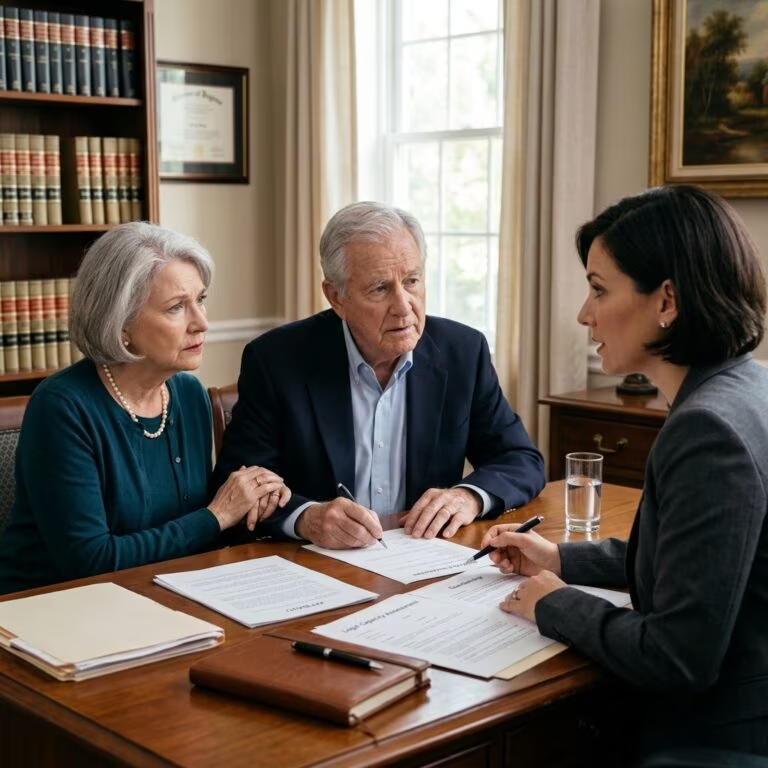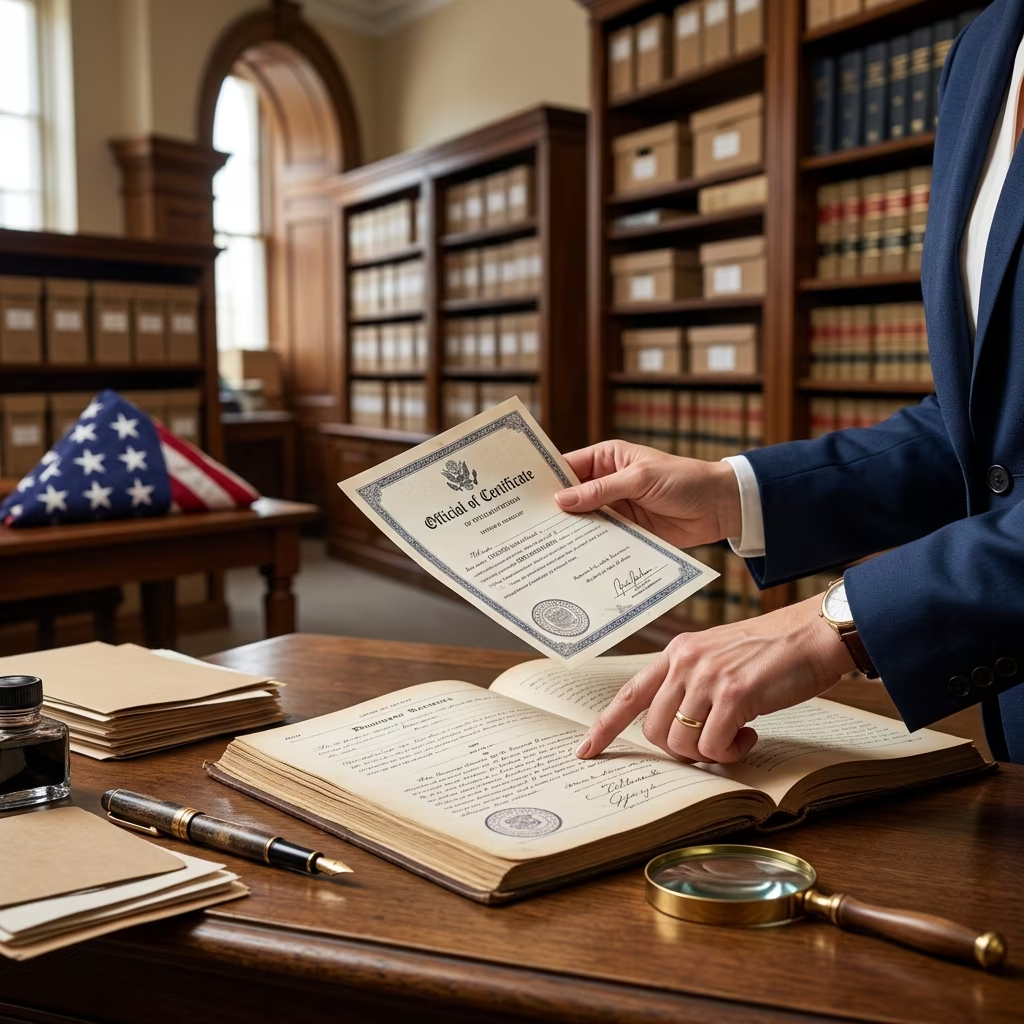
When a marriage legally ends, it leaves behind more than emotional and financial consequences; it also creates an official paper trail. That trail is captured in divorce records, which are key legal documents used to prove that a divorce occurred and to show the specific terms of the court’s decision.
This guide explains what divorce records are, how they differ from divorce decrees and divorce certificates, what information they contain, who can see them, and how you can request copies for legal, personal, or genealogical purposes.
Core Concepts: Divorce Record, Decree, and Certificate
The phrase divorce records is often used loosely, but in practice different documents serve different purposes. Understanding the distinctions helps you request the right document and protect your privacy.
| Document Type | Issued By | Main Purpose | Typical Contents |
|---|---|---|---|
| Divorce Certificate | State or local vital records office | Proof that a divorce occurred | Names of spouses, date of divorce, place of divorce |
| Divorce Decree | Court that granted the divorce | Legal terms of the divorce | Orders on property division, support, custody, and other terms |
| Full Divorce Record | Court (case file) | Complete case history | Pleadings, motions, evidence, docket sheet, orders, and judgment |
What Is a Divorce Certificate?
A divorce certificate is a concise vital record confirming that a divorce was finalized. It is similar in format to a birth or marriage certificate and is usually kept by a state or local vital records office.
- Contains basic identifying details: names of the parties, date, and location of the divorce.
- Does not include specific terms about property, children, or support.
- Used as proof of divorce for purposes such as remarriage, changing your name, or updating government records.
What Is a Divorce Decree?
A divorce decree is the formal court order that ends the marriage and sets out the rights and obligations of each former spouse. It is issued by the judge at the conclusion of the case.
You may need a decree when you:
- Enforce or modify child support, custody, or visitation arrangements.
- Resolve disputes about asset division or debt responsibility.
- Clarify terms of spousal maintenance or alimony.
Because it contains detailed orders, the decree is typically obtained directly from the court clerk in the county or city where the divorce was granted.
What Is a Full Divorce Record?
A divorce record, in the broadest sense, refers to the entire case file created during the divorce proceedings. In most court systems, the file includes a docket sheet and every document filed in the case.
Common components of a full divorce record include:
- The initial petition or complaint starting the divorce.
- Responses and counterclaims by the other spouse.
- Temporary orders, motions, and hearing notices.
- Evidence filed with the court, such as financial affidavits or agreements.
- The final decree and any subsequent modification orders.
These records provide a detailed picture of how and why the divorce was granted, which can be especially valuable for legal disputes or historical and genealogical research.
Are Divorce Records Public or Private?
In the United States, court records are generally presumed to be public unless a law or court order limits access. This presumption applies to most divorce case files, decrees, and related documents.
Public Access to Divorce Case Files
According to federal and state court practices, most case files can be inspected by the public, either online or in person, unless they are sealed or subject to specific privacy protections.
- Many state courts offer online case search tools where users can look up divorce cases by name or case number.
- Federal court case files are accessible through the Public Access to Court Electronic Records (PACER)
- Physical records can usually be reviewed at the courthouse clerk’s office if the case is not sealed.
However, public access does not mean that every detail is freely available. Sensitive information, such as Social Security numbers or financial account numbers, is often redacted or protected by court rules.
When Divorce Records Are Sealed
Courts have the authority to seal divorce records in specific circumstances, limiting who can view them. Reasons might include protection of minors, domestic violence concerns, or highly sensitive financial or medical information.
Common privacy measures include:
- Sealing entire case files so that only parties, attorneys, or those with court permission can access them.
- Redacting or removing particular documents or data fields while keeping the rest of the record public.
- Limiting public access to certain exhibits or transcripts but leaving the docket and orders available.
In some situations, a party may request that the court redact portions of a divorce record instead of sealing it completely, balancing privacy concerns with the public’s right to access court documents.
What Information Do Divorce Records Contain?
The contents of divorce records vary by jurisdiction and time period, but they typically include a mix of identifying information, case history, and final orders.
Typical Data in Historic and Modern Records
Historical guidance from archives and genealogical organizations shows that even older divorce records often contain rich details about the couple’s life and family.
- Names of both spouses and sometimes their parents.
- Date and place of marriage and date of divorce.
- Residences of each spouse at the time of the divorce.
- Names and ages of children or mentions of custody arrangements.
- Grounds for divorce, such as cruelty, abandonment, or adultery, particularly in older records.
Modern divorce decrees and records add detailed rulings on financial and parental responsibilities.
Key Legal Terms Often Covered
A contemporary divorce decree typically addresses several core issues:
- Division of property and debts – how assets and liabilities are split.
- Spousal support (alimony) – whether one spouse must support the other, and on what terms.
- Child custody – allocation of legal and physical custody and decision-making authority.
- Visitation schedules – how parenting time is shared or scheduled.
- Child support – amount, frequency, and enforcement mechanisms.
Because these details have long-term effects, keeping accurate copies of your decree and record is essential for future enforcement or modification.
Where Divorce Records Are Kept
The location of divorce records depends on whether you are seeking a certificate, a decree, or the full case file. State law and court structure determine which office maintains the official record.
Court Clerks and Case Files
Courts keep the primary case file for each divorce. For most divorces, the relevant office is:
- A county or city district court or superior court for state-law divorces.
- A federal court only in rare situations where federal jurisdiction is involved, with records accessible via PACER.
State archives sometimes hold older divorce records, especially for historical research, while more recent and active case files remain with the local court clerk.
Vital Records Offices and Certificates
Divorce certificates are usually maintained by the state’s vital records office, alongside birth, death, and marriage records.
- Some states issue divorce certificates through a central office of vital records.
- Other states may only confirm that a divorce occurred and direct you to the court for a full record.
- Certified copies of divorce decrees themselves are typically available only from the court clerk, not from vital records offices.
Because practices vary by state, it is important to check the specific procedures where the divorce took place.
How to Obtain Divorce Records
Requesting divorce records involves identifying the right office, gathering necessary information, and submitting an application. The process differs slightly for certificates and decrees.
Steps to Get a Copy of a Divorce Decree
To obtain a divorce decree, you typically must contact the clerk of the court that issued the decree.
- Find the county or city where the divorce was granted.
- Contact the court clerk’s office and ask about their request procedures and fees.
- Provide details such as names of the parties, date of divorce, and, if possible, the case number.
- Submit the request online, by mail, or in person, depending on the court’s options.
Processing times vary, and some courts charge per page or per certified copy. Requests for certified decrees may require proof of identity or a legitimate interest in the case.
Steps to Get a Copy of a Divorce Certificate
For a divorce certificate, you will usually work with the state vital records office where the divorce occurred.
- Confirm that the state issues divorce certificates and identify the correct office.
- Gather basic information: full names, date of divorce, and location.
- Choose a request method: online, mail, or in-person, as permitted by the state.
- Pay the required fee, which typically ranges from a modest amount depending on the state and service.
Some states allow applicants to use third-party vendors authorized to process vital records requests, while others require direct applications to government offices.
Special Considerations for Older or Archived Records
Older divorce records may be stored at state archives or specialized record centers. For example, state archives may maintain indexed records for divorces from earlier decades while current records remain with the court.
- Check archive catalogs or online databases for available counties and years.
- If you cannot find a case number, archives may help you search by name or approximate date.
- If the archive does not hold the record, contact the district or superior court in the county where the divorce was filed.
Genealogical organizations also provide guidance on locating divorce records and related documents such as newspaper notices or legislative acts for very early divorces.
Practical Uses of Divorce Records
Divorce records are more than bureaucratic documents; they play a central role in legal compliance, personal planning, and research.
Legal and Administrative Uses
You may need access to divorce records for a variety of legal and administrative tasks:
- Proving that you are legally divorced before remarrying or applying for a marriage license.
- Enforcing or modifying child support, custody, or visitation orders.
- Resolving disputes about property or debt allocation after the divorce.
- Updating government benefits, tax filings, or Social Security records.
Genealogical and Historical Research
For researchers, divorce records can provide insights into family structures, migration patterns, and social history. Historical divorce actions are often documented in court minutes, case files, and sometimes in legislative records.
Researchers may use divorce records to:
- Confirm family relationships and timelines.
- Understand changes in custody, name changes, or inheritance.
- Contextualize social norms and legal practices around marriage and separation in a given era.
Frequently Asked Questions About Divorce Records
1. Who is allowed to see my divorce records?
In most jurisdictions, divorce case files and decrees are part of the public court record. Anyone may request copies or view them unless the court has sealed the case or restricted access to certain documents. However, sensitive information may be redacted to protect privacy.
2. How do I find out which court handled my divorce?
Start by identifying the county or city where you or your former spouse lived at the time of the divorce. In many states, divorces are handled by district or superior courts at the county level. You can then contact the clerk of that court or use online case search tools where available.
3. Can I request a divorce record online?
Many courts and vital records offices offer online request options. You may be able to order a divorce certificate through a state vital records website or authorized third-party vendor. For court records and decrees, some systems provide online access or case search, while others require mail or in-person requests.
4. What if I only need proof of divorce, not all the details?
If you only need to show that a divorce occurred, a divorce certificate is usually sufficient. It provides basic information without revealing financial or custody terms. If a certificate is not available in your state, a certified copy of the decree may serve the same function, though it contains more detail.
5. How long do courts and vital records offices keep divorce records?
Retention periods vary. Courts generally keep case files indefinitely or transfer older records to archives. Vital records offices typically maintain certificates as part of permanent vital statistics. Because policies differ by state, it is best to consult the relevant court or vital records office.
References
- How to get a copy of a divorce decree or certificate — USAGov. 2024-01-05. https://www.usa.gov/divorce-decree
- Are Divorce Records Public? — LawDepot. 2023-05-10. https://www.lawdepot.com/us/resources/family-articles/are-divorce-records-public/
- United States Divorce Records — FamilySearch. 2022-09-15. https://www.familysearch.org/en/wiki/United_States_Divorce_Records
- Divorce Records — Colorado State Archives. 2021-06-01. https://archives.colorado.gov/collections/legal-records/divorce-records
- Request Vital Records — Georgia.gov. 2023-02-20. https://georgia.gov/request-vital-records
- Marriage and Divorce Records — Texas Department of State Health Services. 2023-08-01. https://www.dshs.texas.gov/vital-statistics/marriage-divorce-records
- Court Records — United States Courts. 2024-03-12. https://www.uscourts.gov/court-records